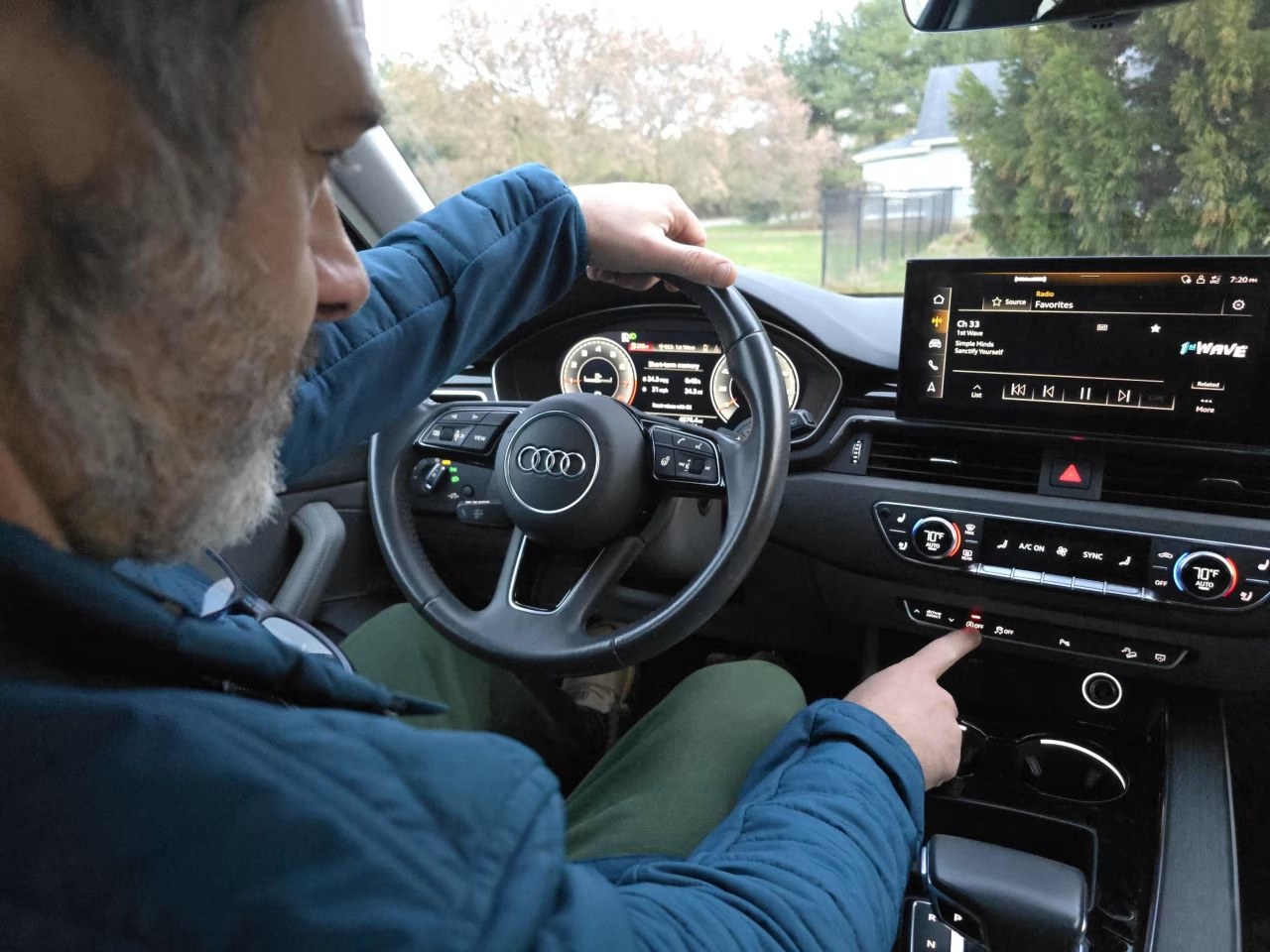
Motorists Express Widespread Relief Over the Fading Presence of the Often-Maligned Stop-Start Car Feature
- Mike Donio recounts a frustrating “first” experience with a stop-start system in a rental car, where the engine abruptly cut out at a stop sign.
- The stop-start car feature has earned the reputation among many drivers as “the most hated feature” in contemporary automobiles.
- A significant number of drivers are now reportedly celebrating the gradual “demise” of this specific automotive technology.
- The broader context of the article’s original publication implies a link between this feature’s status and regulatory bodies like the EPA, alongside political figures such as Donald Trump and Lee Zeldin.
The Road to Relief: Why a Popular Dislike for Auto-Stop Technology Signals a Shift in Automotive Priorities
NEW YORK—The cacophony of modern life is often punctuated by small, daily irritations, and for countless drivers, one particular automotive innovation has consistently topped that list: the stop-start car feature. Designed with admirable intentions, this system, which automatically shuts off a vehicle’s engine when stationary and restarts it upon accelerator engagement, has instead become a source of profound exasperation. The collective sigh of relief emanating from car enthusiasts and everyday commuters alike signals a significant shift in the automotive landscape, moving away from features that, however well-meaning, detract from the driving experience. This shift underscores a broader industry pivot towards prioritizing driver satisfaction alongside efficiency metrics, hinting at a future where user preference dictates technological implementation more forcefully.
For individuals like Mike Donio, the introduction to this technology was less an upgrade and more a moment of stark disorientation. Donio vividly recalls one of his most memorable “firsts”—not the joyous milestones of meeting his wife or witnessing his daughter’s initial steps—but the unsettling sensation of an engine clicking off unexpectedly. This memorable encounter occurred years ago in a rental car, a scenario often presenting drivers with unfamiliar controls and unexpected functionalities. As he approached his first stop sign, the engine’s abrupt cessation, intended as a fuel-saving measure, instead delivered a jolt of mechanical disconnect, instantly cementing the stop-start system’s place in his personal pantheon of automotive grievances.
The narrative surrounding the stop-start feature, therefore, is not merely one of technical implementation but of visceral, day-to-day interaction. It highlights a critical tension between engineering objectives, such as enhanced fuel economy and reduced emissions, and the practical realities of driver comfort and seamless vehicle operation. The celebration over its “demise” is a testament to the power of collective consumer sentiment to influence even deeply integrated automotive design choices. As the industry evolves, understanding the nuances of driver perception—what truly grinds their gears versus what genuinely enhances their journey—becomes paramount for sustained innovation. The trajectory of the stop-start feature serves as a poignant reminder that technological advancement, without a sympathetic understanding of the human element, can inadvertently create more problems than it solves, shaping the future direction of in-car innovations.
The Unintended Friction of Automotive Innovation
The introduction of the stop-start car feature into mainstream automotive design was initially heralded as a step forward in environmental consciousness and fuel efficiency. Yet, for many drivers, its actual implementation proved to be a source of persistent annoyance rather than a boon. This technology, which automatically powers down the engine when the vehicle comes to a halt—at a traffic light or a stop sign, for instance—and seamlessly restarts it when the driver releases the brake, was engineered to reduce idle emissions and conserve fuel in urban driving conditions. However, the theoretical benefits often clashed with the practical realities of daily commutes, leading to widespread dissatisfaction. For Mike Donio, his initial encounter with the system years ago was not merely a minor inconvenience but a memorable point of irritation, standing out vividly among life’s more significant milestones. He described the moment with a distinct sense of mechanical disruption: “Donio stepped into a rental car, put it in drive and quickly felt the engine click off when he hit his first stop sign.” This abrupt shutdown, designed to be imperceptible, instead registered as a jarring interruption, fundamentally altering the expected rhythm of driving. This sentiment is crucial because it highlights the psychological impact of automotive technology. Drivers often expect a predictable and consistent response from their vehicles, and any deviation, even if technically beneficial, can lead to a perception of malfunction or discomfort.Understanding Driver Discontent
The primary drivers of discontent often stem from several factors: the perceived lag in engine restart, which can feel unsafe in certain traffic situations; the subtle but noticeable vibration upon restart; and the general feeling of a loss of control over the vehicle’s operation. While engineers focused on metrics like gallons saved per 100 miles, consumers were more attuned to the subjective quality of their driving experience. The feature, intended to offer a subtle optimization, instead became a prominent, often irritating, characteristic of the vehicle. The phrase “most hated feature” is a strong indicator of how deeply this sentiment resonated across the driving population. The tension between engineering goals and user experience is a common challenge in technological development. In this instance, while the Environmental Protection Agency (EPA) may implicitly champion technologies that reduce emissions, and manufacturers aim to meet stringent fuel economy standards, the ultimate arbiter of success is often the end-user’s satisfaction. The collective sigh of relief among drivers over the feature’s perceived “demise” suggests that the balance between efficiency and driver comfort was, for many, tipped too far in one direction. This ongoing dynamic between regulatory push, manufacturer innovation, and consumer acceptance continues to shape the future of in-car technologies.The Reputation of the ‘Most Hated Feature’
The designation of the stop-start car feature as “the most hated feature” in modern automobiles is not a hyperbolic exaggeration but a reflection of broad public sentiment. This characterization suggests a fundamental disconnect between the intended purpose of the technology and its actual reception by the driving public. While vehicle manufacturers often highlight the environmental and economic benefits—namely, reduced fuel consumption and lower carbon emissions in congested urban environments—these advantages have frequently been overshadowed by the perceived drawbacks that directly impact the driver’s immediate experience. The intensity of this dislike is remarkable, elevating a mere functional component to a status of collective automotive anathema. The source text succinctly captures this widespread aversion, underscoring that drivers are now actively “celebrating the demise” of this specific system. This celebratory reaction speaks volumes about the depth of frustration accumulated over years of encountering the feature. It’s a testament to how even seemingly minor annoyances, when experienced repeatedly day after day, can coalesce into significant dissatisfaction. The personal anecdote of Mike Donio further amplifies this, illustrating how a single, jarring incident can shape a driver’s perspective. For Donio, the engine’s unprompted cessation at a stop sign was not just a technical event but a disruptive one that “really grinds his gears.” This emotional response is a critical data point for understanding consumer behavior in the automotive sector.Evolution of Automotive Features and Driver Expectations
Historically, automotive innovations have been judged on their ability to enhance safety, performance, or convenience. Features like power steering, air conditioning, or anti-lock brakes were generally welcomed for their clear, unambiguous benefits. The stop-start system, however, occupied a more ambiguous space. Its benefits, while real in terms of fuel savings and emissions reduction, are often subtle and long-term, whereas its operational quirks—the slight delay, the vibration, the perception of mechanical intervention—are immediate and palpable. This imbalance in perception often leads to a negative user experience, regardless of the underlying technical merit. The collective rejection of the stop-start car feature provides valuable insight into the priorities of the modern driver. It suggests that for many, an uninterrupted, smooth, and predictable driving experience takes precedence over marginal gains in fuel efficiency, particularly when those gains come at the cost of comfort or perceived control. This trend may influence how future automotive technologies are designed and implemented, with a greater emphasis on user-centric design principles that balance environmental responsibility with an intuitive and enjoyable driving dynamic. The celebration of its fading presence is a clear signal that the industry must listen closely to these nuanced expressions of driver preference to ensure new features genuinely add value.Regulatory Crossroads: Policy, Perception, and the Stop-Start Feature
The journey of the stop-start car feature from a novel efficiency innovation to a widely disdained component is inextricably linked to the broader regulatory and political landscape. While the source text does not explicitly detail legislative actions or specific policy shifts, the mention of “EPA,” “Trump,” and “Zeldin” in the article’s broader contextual metadata strongly implies a connection between political discourse, environmental regulations, and the feature’s eventual “demise.” These entities represent powerful forces that can shape automotive design, particularly concerning fuel economy and emissions standards, which are the primary drivers behind technologies like stop-start. The Environmental Protection Agency (EPA), for instance, plays a crucial role in setting vehicle emissions standards in the United States. Historically, increased regulatory pressure to reduce carbon footprint and improve fuel efficiency has incentivized automakers to adopt technologies such as stop-start systems. These systems contribute to a manufacturer’s overall Corporate Average Fuel Economy (CAFE) numbers by reducing fuel consumption during idle periods. Therefore, any perceived “demise” or reduction in the prevalence of the stop-start car feature could be symptomatic of shifts in these regulatory mandates or changes in the interpretation and enforcement of existing rules.Political Influence on Automotive Technology
The inclusion of “Trump” in the metadata further points to the potential for political administrations to influence environmental policy. The Trump administration, known for its emphasis on deregulation across various sectors, could have initiated or overseen changes in EPA guidelines or CAFE standards that indirectly or directly affected the desirability or necessity of stop-start systems for automakers. Such policy shifts can significantly alter the economic calculus for manufacturers, potentially reducing the incentive to include features that, while technically beneficial, are unpopular with consumers. This dynamic illustrates how macroeconomic and political currents can ripple down to impact the minutiae of vehicle design. Similarly, the presence of “Zeldin” in the contextual information suggests that specific political figures, perhaps through legislative efforts or public advocacy, have contributed to the conversation surrounding automotive regulations and consumer preferences. While the precise nature of their involvement is not detailed in the immediate source, their association underscores the multi-faceted influences—from federal agencies to individual lawmakers—that shape the automotive market. The celebration among drivers over the feature’s diminishing presence thus takes on a dual significance: it’s not just a consumer victory, but potentially the outcome of evolving policy decisions that prioritize a different balance between environmental objectives and driver satisfaction. The interplay between these forces will undoubtedly continue to dictate the future of integrated automotive technologies.The Driver’s Voice: Reshaping Automotive Priorities
The widespread “celebration” among drivers regarding the stop-start car feature’s “demise” is a powerful indicator of the growing influence of consumer preference in automotive design. For too long, some innovations, while technically sound or regulatory-driven, have been implemented without fully appreciating their impact on the everyday driving experience. The story of this particular feature serves as a case study in how a collective, albeit often unspoken, driver consensus can ultimately challenge and reshape industry priorities. It highlights that the “most hated feature” label wasn’t just a casual complaint but a deeply felt sentiment that demanded attention. Mike Donio’s vivid recollection of the engine clicking off at his first stop sign in a rental car years ago is a microcosm of this larger narrative. His frustration was not merely a fleeting moment of surprise; it was an experience that “really grinds his gears,” becoming memorable enough to be recounted alongside personal milestones. This level of impact for an automotive function suggests that the disruption to the expected vehicle behavior was significant. When an automated system designed for efficiency causes such a notable emotional and experiential friction, it invariably invites scrutiny from both consumers and, eventually, manufacturers.Consumer Power in Automotive Design
The automotive industry, increasingly sensitive to market feedback and brand loyalty, cannot long ignore such widespread dissatisfaction. In an era where vehicle choices are abundant and consumer reviews are instantly amplified across digital platforms, the driver’s voice has never been more potent. The collective relief over the stop-start car feature’s fading presence is a clear signal that future automotive innovations must pass a more rigorous test of user acceptance, balancing technical benefits with seamless integration and an intuitive user interface. This shift represents a maturation in how technology is brought to market, moving beyond purely technical specifications to consider holistic user satisfaction. The potential influence of regulatory bodies like the EPA, alongside political figures such as Donald Trump and Lee Zeldin, as indicated in the article’s broader context, could also be seen as responsive to this public sentiment. While their primary focus might be environmental or economic policy, the practical implementation of those policies in vehicle design inevitably affects millions of drivers. If public dissatisfaction becomes sufficiently vocal, it can, over time, create a political and regulatory environment more sympathetic to consumer-centric adjustments. This complex interplay suggests that the “demise” of a feature like stop-start is not just a technological phase-out but a victory for the collective driver’s voice, heralding a future where user experience holds greater sway in the automotive innovation cycle.What Does the Future Hold for In-Car Efficiency Systems?
The perceived “demise” of the stop-start car feature invites critical reflection on the future trajectory of efficiency-driven technologies in the automotive sector. If a system designed with the laudable goals of fuel conservation and emission reduction can become “the most hated feature,” it forces a re-evaluation of how such innovations are conceptualized, developed, and integrated. The celebratory reactions from drivers suggest a clear message: efficiency must not come at the cost of a degraded driving experience. This mandates a more nuanced approach to future in-car systems, emphasizing user-centric design alongside environmental responsibility. The personal narrative of Mike Donio’s unsettling encounter with the system, where his engine “clicked off when he hit his first stop sign” years ago, serves as a poignant reminder of this delicate balance. The core issue wasn’t the intent of the technology but its execution and the subsequent impact on driver comfort and confidence. Future innovations aimed at similar efficiency gains, such as advanced hybrid systems, refined electric powertrains, or smarter traffic management technologies, will need to learn from the stop-start feature’s mixed legacy. The goal should be to deliver tangible benefits without introducing disruptive elements that alienate the user.Redefining Smart Automotive Technology
The evolution of automotive technology will likely pivot towards solutions that are either entirely seamless or offer clear, demonstrable advantages that outweigh any minor inconvenience. This could mean a greater emphasis on electric vehicles, which by their nature eliminate idle emissions, or hybrid systems with highly sophisticated, near-imperceptible engine transitions. Furthermore, the role of software and artificial intelligence in managing vehicle functions could lead to more adaptive and personalized efficiency settings, where systems only engage when they genuinely enhance the driving experience or when the driver explicitly prefers them. The underlying implication is that future systems will need to be smarter about when and how they intervene. The broader political and regulatory context, implicitly linked through mentions of entities like the EPA, Trump, and Zeldin in the article’s metadata, will also continue to shape these developments. Any shifts in federal mandates concerning fuel economy or emissions will invariably influence manufacturer decisions about which technologies to pursue. However, the resounding sentiment of drivers celebrating the stop-start feature’s departure underscores that public acceptance is a co-equal force alongside regulatory compliance. For truly successful automotive innovation, the path forward involves deeper engagement with consumer feedback, ensuring that future technologies are not just environmentally sound and economically viable, but also genuinely appreciated by those who interact with them daily. The quest for greener, more efficient cars will continue, but with a renewed focus on ensuring the journey remains enjoyable and intuitive for every driver.Frequently Asked Questions
Q: Why is the stop-start car feature considered ‘most hated’ by drivers?
The stop-start car feature, designed for fuel efficiency and emissions reduction, often causes driver frustration due to perceived lag in engine restart, noticeable vibrations, and a sense of losing control. These frequent disruptions to the driving experience lead to widespread dislike, overshadowing its environmental benefits for many motorists.
Q: What is the primary benefit of the stop-start car feature?
The primary benefit of the stop-start car feature is to improve fuel efficiency and reduce emissions. By automatically shutting off the engine when the vehicle is stationary, such as at a traffic light or stop sign, it conserves fuel that would otherwise be consumed while idling, thereby lowering the vehicle’s carbon footprint in urban settings.
Q: How are policy and regulation related to the stop-start car feature’s status?
The status of the stop-start car feature is implicitly linked to regulatory bodies like the EPA and political discussions. These entities influence fuel economy and emissions standards, which originally incentivized the feature’s adoption. Shifts in these policies or public sentiment, potentially involving figures like Trump and Zeldin, can affect the feature’s prevalence in new vehicles, leading to its perceived demise.
