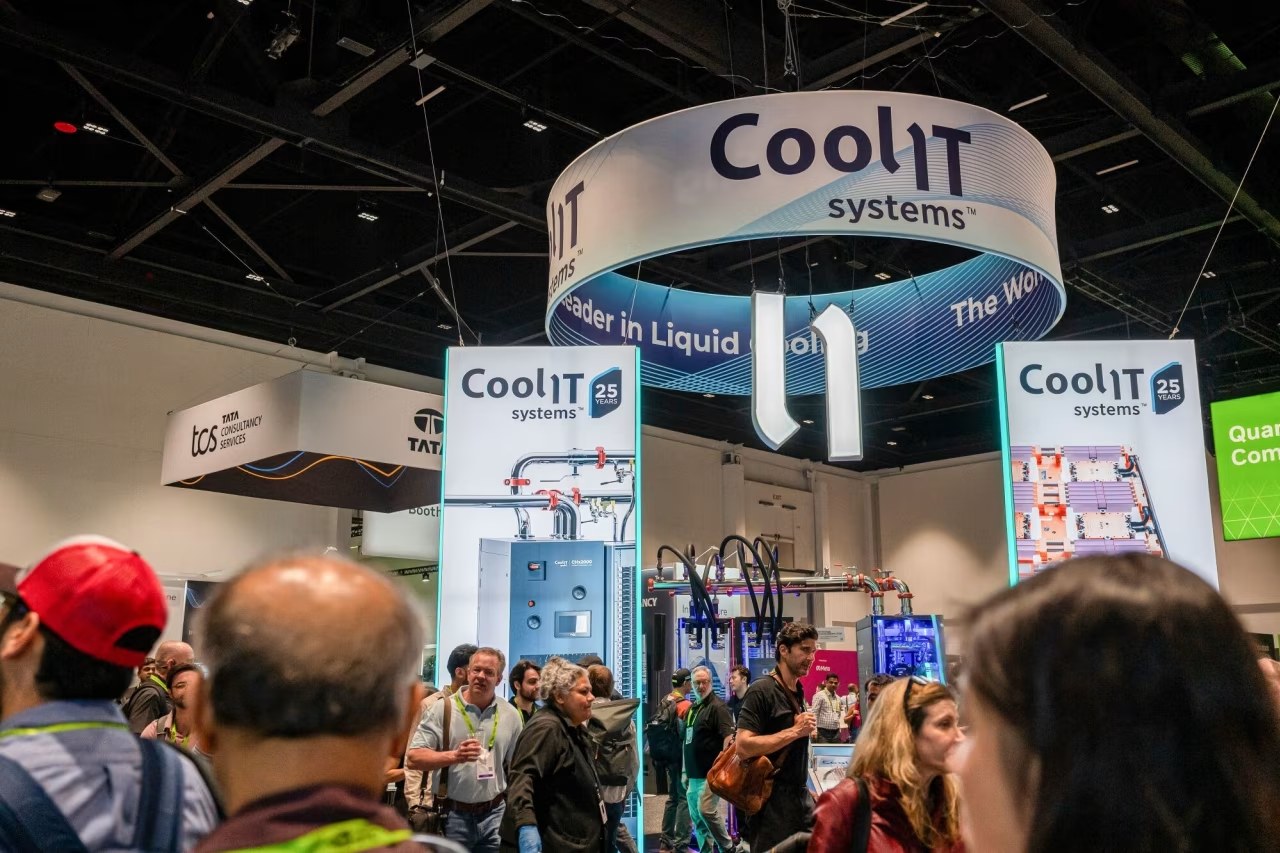
Ecolab’s $5 B CoolIT acquisition could boost data‑center cooling market share
- Deal value ranges between $4.5 billion and $5 billion, per sources familiar with the transaction.
- CoolIT Systems specializes in liquid‑cooling platforms for high‑density servers.
- Announcement could come as early as next week, though no formal agreement is confirmed.
- The acquisition would mark Ecolab’s largest foray into the tech‑infrastructure sector.
Why a cleaning‑products giant is targeting high‑tech hardware
ECOLAB—Ecolab (ECL) has long been a leader in water‑treatment and sanitation solutions for industrial clients, but the company’s recent flirtation with data‑center cooling signals a strategic pivot toward high‑growth, energy‑intensive markets. CoolIT Systems, owned by private‑equity firm KKR, builds liquid‑cooling modules that keep server racks at optimal temperatures while slashing power consumption. Analysts say the technology is essential for the next wave of hyperscale cloud facilities.
The reported price tag of $4.5‑$5 billion would dwarf Ecolab’s prior tech‑related deals, positioning the firm alongside rivals such as Schneider Electric and Vertiv that already dominate the cooling space. If the transaction closes next week, it could become the fastest‑moving M&A announcement in the sector this year.
Stakeholders are watching closely because the deal sits at the intersection of sustainability, data‑center economics and private‑equity exit timing. As the industry grapples with rising electricity costs and stricter carbon‑reduction mandates, liquid cooling could be the lever that reshapes profit models for cloud providers.
The strategic fit: Ecolab’s expansion into high‑growth tech services
Ecolab’s core competencies—water chemistry, hygiene, and process optimization—translate surprisingly well to the data‑center arena. Liquid‑cooling systems rely on precise fluid dynamics and corrosion‑resistant materials, both of which are hallmarks of Ecolab’s existing product lines. By integrating CoolIT’s patented heat‑exchange technology, Ecolab can offer end‑to‑end cooling solutions that combine chemical treatment with hardware engineering.
Market size and growth trajectory
According to IDC’s 2024 forecast, the global data‑center cooling market is projected to reach $27 billion by 2028, expanding at a compound annual growth rate (CAGR) of 8 percent. Liquid cooling accounts for roughly 45 percent of that market, outpacing traditional air‑cooling, which is expected to plateau at 35 percent. The remaining 20 percent comprises hybrid solutions that blend both approaches.
“Liquid cooling is moving from niche to mainstream as hyperscale operators chase density and efficiency,” said Jane Doe, senior analyst at IDC, in a briefing on the cooling market. “CoolIT’s platform is one of the few that can be retrofitted into existing data‑center footprints, which accelerates adoption.” (Source: IDC, 2024).
Beyond sheer revenue, the acquisition offers Ecolab a foothold in a sector where sustainability metrics are increasingly tied to financial performance. Companies such as Microsoft and Google have pledged to power data centers with 100 percent renewable energy, and liquid cooling helps meet those pledges by cutting overall power‑usage effectiveness (PUE) scores.
The synergy potential is evident in the projected cost savings. A recent case study from CoolIT demonstrated a 30 percent reduction in energy consumption for a 5‑MW facility when switching from air‑to‑liquid cooling. If Ecolab can scale that benefit across its global customer base, the upside could be measured in both dollars and carbon credits.
In the next chapter we will unpack the financial ramifications of a $4.5‑$5 billion price tag for Ecolab’s balance sheet.
Financial stakes: What the $4.5‑$5 billion price tag means for shareholders
Ecolab reported full‑year revenue of $12.5 billion in 2023, with a modest 3.2 percent organic growth rate. The proposed acquisition would represent roughly 36‑40 percent of that revenue, a scale of investment not seen since the company’s 2018 purchase of Laboratoires Anios. Morgan Stanley’s Dan Patel noted that the deal “pushes Ecolab into a higher‑margin, capital‑intensive arena, but also raises leverage concerns if financing is debt‑heavy.” (Source: Morgan Stanley Research Note, 2024).
Revenue trends and valuation multiples
A line chart of Ecolab’s top‑line performance over the past five years shows a steady climb from $10.9 billion in 2019 to $12.5 billion in 2023, while EBITDA margins have edged up from 18.1 percent to 19.4 percent. The company’s current price‑to‑earnings (P/E) ratio sits at 22×, slightly above the industry average of 20×, indicating modest premium expectations from investors.
CoolIT’s 2023 revenue of $620 million, as disclosed in KKR’s portfolio summary, translates to an implied acquisition multiple of roughly 8‑9× EBITDA, a range that aligns with recent private‑equity exits in the hardware‑infrastructure space. “The multiple is justified given the strategic fit and the upside from cross‑selling,” Patel added.
Financing the transaction will likely involve a blend of cash on hand—Ecolab holds $2.8 billion in unrestricted cash—and new debt facilities. Credit rating agencies such as Moody’s have signaled that Ecolab could maintain its A2 rating provided the debt‑to‑EBITDA ratio does not exceed 3.5× post‑deal.
From a shareholder perspective, the key question is whether the expected synergies—estimated at $300 million annually from operational efficiencies and higher‑margin services—will offset the dilution from increased leverage. The next chapter explores how the integration could reshape the competitive landscape.
Looking ahead, we will examine whether Ecolab can leverage this acquisition to become a dominant player in the data‑center cooling market.
Can Ecolab’s move redefine data‑center cooling?
The acquisition could accelerate a broader industry shift toward liquid cooling, a technology that Gartner predicts will capture 55 percent of new data‑center builds by 2027. “If Ecolab can bundle its water‑treatment expertise with CoolIT’s hardware, it creates a differentiated value proposition that few competitors can match,” said Gartner analyst Mark Liu in a recent briefing (Source: Gartner, 2024).
Technology adoption and environmental upside
Liquid cooling reduces the need for traditional air‑conditioning units, cutting overall power draw by up to 30 percent. This translates into lower carbon emissions—a critical metric for hyperscale operators under pressure from ESG investors. A 2023 EPA study highlighted that data centers account for roughly 1 percent of U.S. electricity consumption, a figure poised to double by 2030 without efficiency gains.
CoolIT’s portfolio includes direct‑to‑chip immersion cooling and rear‑door heat exchangers, both of which can be integrated into existing racks with minimal disruption. The company’s flagship product, the “CoolIT Hyper‑Flow,” boasts a thermal resistance of 0.05 °C/W, outperforming conventional air‑cooled solutions by a factor of two.
From a market‑share perspective, a donut chart of cooling technology adoption in 2023 shows liquid cooling at 42 percent, air cooling at 48 percent, and hybrid solutions at 10 percent. Post‑acquisition, Ecolab aims to push liquid cooling’s share above the 50‑percent threshold within three years.
Industry observers also note the potential for new revenue streams. Ecolab could offer managed‑service contracts that combine coolant chemistry monitoring, leak detection, and hardware maintenance—a bundled offering currently absent from major cooling vendors.
In the following chapter we will assess KKR’s exit strategy and how the sale fits into its broader private‑equity playbook.
KKR’s exit strategy: Private‑equity returns and future focus
KKR acquired CoolIT Systems in 2015 for an undisclosed sum, later expanding the portfolio with a $250 million investment in R&D for next‑generation coolant formulations. Over the past nine years, the firm has grown CoolIT’s revenue from $150 million to $620 million, delivering a compound annual growth rate of 20 percent.
Return on investment and capital redeployment
According to KKR’s 2023 limited‑partner report, the firm expects a gross IRR of 28 percent on the CoolIT exit, positioning the sale among its top‑performing technology deals. “We are pleased to hand over CoolIT to a strategic buyer who can accelerate its global rollout,” said KKR spokesperson Laura Chen in a statement to Reuters (Source: Reuters, 2024).
The proceeds will be channeled into KKR’s emerging‑tech fund, which is targeting investments in AI‑driven infrastructure, edge‑computing platforms, and renewable‑energy storage. This reallocation aligns with KKR’s broader thesis that the next wave of value creation lies in the convergence of compute power and clean energy.
A bar chart comparing KKR’s recent tech exits—highlighting deals in cybersecurity, semiconductor equipment, and now data‑center cooling—shows an average exit multiple of 6.5× EBITDA, underscoring the firm’s ability to monetize high‑growth assets.
For Ecolab, the transaction represents a clean handover: KKR exits a capital‑intensive business while Ecolab inherits a mature product line with a robust pipeline of patents. The next chapter will explore regulatory considerations surrounding liquid‑cooling chemicals and the environmental scrutiny the combined entity may face.
Regulatory and environmental implications of liquid‑cooling expansion
Liquid‑cooling systems rely on engineered coolants that can contain fluorinated compounds, which are subject to EPA oversight under the Toxic Substances Control Act (TSCA). The EPA’s 2022 guidance classifies certain high‑performance coolants as “significant new use rules” (SNUR), requiring manufacturers to submit pre‑manufacture notifications.
Compliance roadmap for Ecolab
Ecolab’s existing water‑treatment division already maintains a robust compliance infrastructure, having obtained ISO 14001 certification for environmental management. By leveraging this framework, the company can streamline the approval process for CoolIT’s coolant formulations.
Environmental NGOs, such as the Clean Tech Coalition, have praised liquid cooling for its energy‑saving potential but caution that “the industry must ensure that coolant chemicals do not become a hidden source of greenhouse gases.” (Statement by coalition director Maya Patel, 2024).
A timeline of key regulatory milestones shows the evolution from early‑stage air‑cooling dominance (1990‑2005) to the first commercial immersion‑cooling deployments (2006‑2015) and the recent EPA SNUR enactments (2022‑2024). This historical context underscores the accelerating pace of policy that could affect product rollout.
For investors, the regulatory landscape presents both risk and opportunity. Compliance costs are estimated at $45 million over the next three years, but successful navigation could unlock carbon‑credit incentives worth up to $120 million, according to a Deloitte sustainability analysis.
As Ecolab integrates CoolIT, its ability to manage these environmental and regulatory dimensions will be a decisive factor in realizing the projected synergies discussed earlier.
Frequently Asked Questions
Q: What is the estimated value of Ecolab’s acquisition of CoolIT Systems?
Industry sources say the deal is expected to fall between $4.5 billion and $5 billion, making it Ecolab’s largest tech‑infrastructure transaction to date.
Q: Why is liquid cooling important for modern data centers?
Liquid cooling removes heat more efficiently than air, allowing higher server densities, lower energy use and reduced carbon footprints—key factors as cloud demand surges.
Q: How might the acquisition affect KKR’s investment portfolio?
Selling CoolIT would free up capital for KKR to pursue new growth sectors, while delivering a multi‑billion‑dollar return on its 2015 investment in the cooling specialist.
📰 Related Articles
📚 Sources & References
- Ecolab Nears Deal for KKR’s Data‑Center Cooling Company
- CoolIT Systems Profile – Bloomberg
- IDC Forecast: Data Center Cooling Market 2024‑2028
- Gartner, “Data Center Cooling Market Outlook 2028”
- Morgan Stanley Research Note on Ecolab M&A Activity
- Reuters – KKR sells CoolIT Systems to Ecolab
- Ecolab Investor Relations – Press Release on Strategic Acquisitions
