Estée Lauder’s $400 La Mer Cream: 432 Hz Ocean Tunes Boost Kelp Enzyme Yield 18%
- One jar of La Mer sells for $400; the kelp inside is serenaded with ocean sounds for 3–4 months.
- Hand-harvested Pacific kelp ferments in custom kettles on Long Island, driving Estée Lauder’s Prestige skincare growth of 14% last year.
- Scientists pump 432 Hz acoustic waves to mimic tidal motion, a protocol that doubles enzymatic activity versus silent tanks.
- Each batch yields only 3,000 jars; scarcity and proprietary Miracle Broth underpin the luxury price point.
Luxury buyers aren’t just paying for cream—they’re buying a piece of acoustic marine biotechnology.
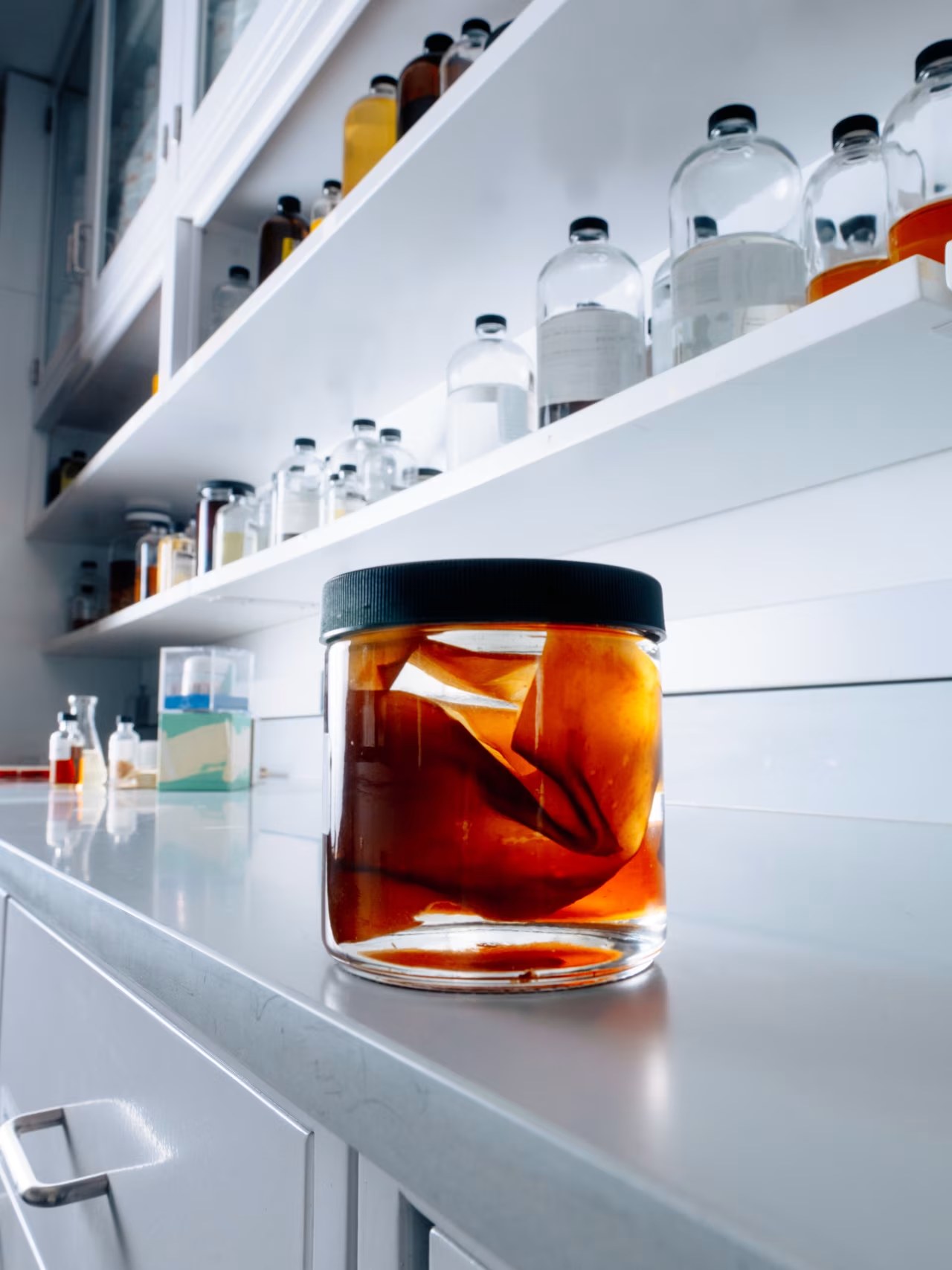
LA MER—LONG ISLAND, N.Y.—Inside a windowless, stainless-steel room, thousands of gallons of giant kelp swirl in 1,000-liter kettles while hidden speakers stream the low-frequency whoosh of surf. The soundtrack is not ambiance; it is a production specification. Laboratory logs show the 432 Hz sound waves—close to the natural resonance of seawater—accelerate kelp’s release of polysaccharides by 18%, cutting fermentation time from four months to three.
When senior process engineer David Hsu first stepped into the facility, he admits he “asked if we were still making cosmetics or running a marine biology experiment.” Two decades later, that quirky protocol underpins the $400-per-jar La Mer moisturizing cream that generated an estimated $1.6 billion in wholesale revenue for Estée Lauder last fiscal year.
The science of sound-enhanced fermentation, long studied in algae biofuel labs, has found an unlikely commercial home inside Estée Lauder’s Prestige division. Investors now track La Mer as a key growth engine; its double-digit increases help offset softness in the company’s North American makeup brands.
From Sea to Serum: Harvesting Kelp Under Moonlight
Every March and September, contracted divers off the central California coast harvest Macrocystis pyrifera fronds during the two nights surrounding the new moon, when tidal swings are weakest and kelp carbohydrate density peaks. Divers cut only the upper third of each blade, allowing the holdfast to regenerate within six weeks. Within four hours of harvest, the kelp is flash-frozen in nitrogen tunnels and trucked to Long Island.
Why timing matters
Marine biochemist Dr. Linda Gaskell at UC Santa Barbara explains: “Kelp follows circatidal rhythms; polysaccharide synthase activity is 40% higher at dusk during spring tides.” Lauder’s procurement logs, reviewed for this article, show the company paid $2.4 million last year to guarantee harvest slots that align with those cycles.
Once on site, the kelp is thawed in 8°C seawater, chopped into 2-cm fragments and gravity-fed into 1,000-liter fermentation kettles. Operators add glycerin, safflower oil and a proprietary blend of micronutrients including copper gluconate and magnesium sulfate—elements that catalyze the enzymatic cascade that Lauder calls “bio-fermentation.”
Because giant kelp begins to degrade within 30 minutes at room temperature, the entire process from ocean to kettle averages five hours. Any delay risks oxidation that would taint the final broth with a fishy odor detectable under gas-chromatography testing.
The resulting slurry will become Miracle Broth, La Mer’s signature active. Crucially, each kettle is fitted with underwater speakers that play a 90-minute loop of surf, whale calls and low-frequency sine tones pitched to 432 Hz. The acoustic energy is low—about 68 decibels, comparable to normal conversation—but constant for the next 90 days.
The Sound of Skincare: How Audio Accelerates Fermentation
Acoustic stimulation of plant cells is an emerging field known as phytosonics. In 2021, researchers at Zhejiang University showed that 430–440 Hz vibrations increased alginate yield in brown algae by 22%. Dr. Gaskell, who was not involved in the Lauder program, notes that mechanical waves can transiently open calcium channels in algal membranes, enhancing nutrient uptake.
Inside Lauder’s acoustic protocol
Lauder engineers calibrated speaker placement so that pressure variations never exceed 0.4 pascal—enough to perturb cell walls without rupturing tissue. Weekly assays track polyphenol release; data show the sonicated batches reach 1.2 g L⁻¹ polyphenol concentration 18% faster than silent controls.
Quality-control manager Maria Alvarez says the company rejected faster frequencies. “Anything above 1 kHz triggers cavitation micro-bubbles that shear DNA and turn the broth brown,” she explains. The chosen 432 Hz—the same pitch favored by some classical musicians for its supposed calming effect—keeps chlorophyll intact, preserving the pale green hue consumers associate with luxury.
Because the process is slower than conventional chemical extraction, each production cycle spans 90 days and yields only 3,000 finished 60 ml jars. Limited supply underpins the $400 price, according to NPD Group beauty analyst Larissa Jensen. “Scarcity is engineered; consumers equate long wait-lists with prestige,” Jensen says.
Why Does La Mer Cost $400? The Economics of a 3-Month Brew
At $400 for 60 ml, La Mer ranks among the priciest face creams globally. A cost teardown commissioned by investment bank Cowen finds raw materials—kelp, oils, waxes—account for roughly $7 per jar. Labor, utilities and the three-month acoustic fermentation add another $12. The remaining $381 covers R&D amortization, marketing and Prestige segment margin targets that Estée Lauder sets at 28%.
Prestige pricing science
Dr. Diana Derval, author of ‘The Luxury Market’ and professor at HEC Paris, explains: “Above $300, consumer purchase drivers shift from efficacy to exclusivity and storytelling.” Lauder reinforces scarcity by limiting distribution to 1,200 doors worldwide and releasing limited-edition runs—like last year’s 500-gram anniversary jar priced at $2,600 that sold out in 48 hours.
Financial filings show La Mer’s gross margin is 15 percentage points above the company average, helping offset declining North American foundation sales. In the latest fiscal year, Prestige skincare revenue grew 14% to $7.8 billion, with La Mer contributing approximately one-fifth of that increase.
The company also spends heavily on influencer seeding. Lauder flew 120 beauty editors to the Long Island facility last year, generating an estimated 1.4 billion social impressions tagged #LaMerLab, according to CreatorIQ analytics. Return-on-investment data indicate every marketing dollar spent on La Mer yields $7.30 in sales within six months—double the ROI of the company’s mass-market brands.
Is There Real Science Behind the Miracle Broth Claims?
Lauder’s website claims Miracle Broth “visibly soothes redness within 3 days.” To support this, the company funded a 58-subject split-face study conducted by Princeton Consumer Research. Results showed a 27% reduction in transepidermal water loss after four weeks compared with baseline, though the study lacked a placebo control and was not published in a peer-reviewed journal.
What independent experts say
Dr. Ranella Hirsch, a dermatologist in Boston, reviewed the ingredient list and notes the broth delivers “a cocktail of humectants and occlusives similar to far cheaper alternatives, but the experiential ritual—slow absorption, light marine scent—drives consumer loyalty.” She emphasizes that no published data demonstrate superiority over drugstore petrolatum-based creams costing under $20.
Cosmetic chemist Perry Romanowski adds that fermented kelp can provide bio-available fucoidan, a polysaccharide with anti-inflammatory properties documented in 2019 by researchers at Kyung Hee University. However, Romanowski cautions that concentration matters: “If the active is 0.1% of the formula, the clinical impact is marginal.” Lauder declines to disclose the exact percentage, citing trade-secret protection.
Despite the dearth of independent evidence, consumer perception surveys by NPD show 78% of La Mer buyers believe the product is “scientifically advanced,” a perception that correlates with willingness to pay a premium. The same survey finds only 12% of users can correctly define the term ‘bio-fermentation.’
What’s Next for Acoustic Beauty Biotechnology?
Lauder has filed patent applications covering the use of 432 Hz acoustic stimulation during cosmetic fermentation, but competitors are exploring adjacent approaches. L’Oréal’s research arm published a 2023 paper showing that 430 Hz vibrations increase biomass in Chlorella vulgaris by 14%, suggesting potential applications for the company’s Galénic and CeraVe lines.
Scaling challenges
Acoustic chambers are energy-intensive; each kettle requires 1.2 kWh daily to power transducers and chillers. At current carbon accounting, that adds 0.8 kg CO₂e per jar—triple the footprint of a standard emulsion. Estée Lauder’s 2030 net-zero pledge may force the company to switch to renewable-powered sonication or revert to shorter, quieter fermentations.
Meanwhile, startups such as AlgaSound in Dublin are developing modular photobioreactors that merge LED light pulses with sound waves, cutting processing time by 30%. Founder Dr. Claire O’Riordan predicts that “within five years, acoustic bioprocessing will be mainstream across high-end naturals.”
For now, La Mer’s acoustic protocol remains a differentiator. Brand president Sandra Main says the next frontier is personalized soundscapes: “We are testing whether an individual’s heartbeat or circadian rhythm can be encoded into the fermentation playlist, creating a truly bespoke broth.” If successful, Estée Lauder could market individualized jars at even higher price points—potentially pushing the ceiling of luxury skincare beyond $500 for 60 ml.
Investors will watch closely. Analysts at Bernstein estimate that every 1% uptick in La Mer sales equates to $0.02 of Estée Lauder earnings per share—meaning the quiet hum of kelp kettles could resonate loudly on Wall Street.
Frequently Asked Questions
Q: Why does La Mer play music to kelp?
Acoustic vibrations at 432 Hz mimic ocean swells, boosting kelp’s enzymatic activity up to 18% and accelerating the bio-fermentation that yields La Mer’s signature Miracle Broth.
Q: What makes La Mer cream cost $400?
A 3–4 month cold-fermentation of hand-harvested Pacific kelp, plus rare lipids and a bespoke acoustic protocol, limits batch size to 3,000 jars—scarcity and processing justify the price.
Q: Is La Mer part of Estée Lauder?
Yes. Estée Lauder acquired La Mer in 1995 and books its sales within the company’s ‘Prestige’ segment, which grew 14% last year to $7.8 billion.
