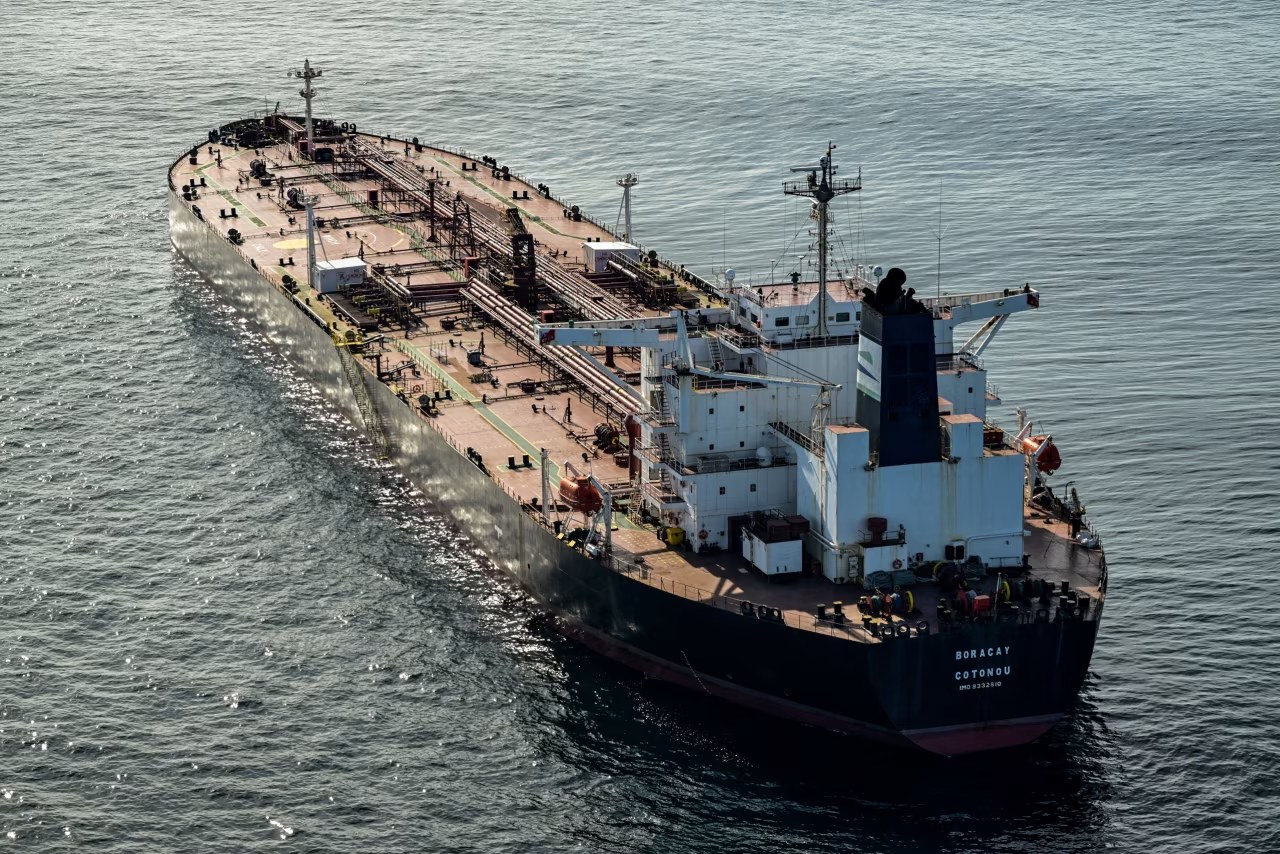
5 Million Barrels of Russian Crude Sit in Shadow‑Fleet Tankers
- Etibar Eyyub controls at least 30 tankers that moved 5 million barrels after sanctions hit Rosneft.
- French troops boarded one of his vessels in the Gulf of Oman in October 2022.
- U.S. granted India a 30‑day waiver in March 2023, later extending it to all importers.
- Indian and Chinese refiners are now processing the stranded oil, easing supply gaps.
Why a single trader can sway global oil routes
RUSSIA—When President Donald Trump ordered a strike on Iran’s Revolutionary Guard in January 2020, the ripple effects reached far beyond the Middle East. Sanctions that followed choked Rosneft’s official export channels, creating a vacuum that private operators like Etibar Eyyub were quick to fill.
Eyyub’s fleet, long described as “Russia’s shadow fleet,” consists of tankers registered under a maze of offshore shell companies. After French forces boarded one of his ships and Ukrainian drones struck another, the network appeared on the brink of collapse. Yet within weeks, the same vessels were loading millions of barrels of unsold Russian crude and sailing toward Asia.
The United States, seeking to keep global oil markets stable, issued a 30‑day waiver that allowed India to purchase the stranded cargo. The waiver was later broadened, giving Chinese and other refiners a legal route to buy the oil. The result: a rapid revival of a fleet that had been thought dead.
The Resurgence of Etibar Eyyub’s Shadow Fleet
From Boardings to Back‑to‑Business
Etibar Eyyub, a Kazakh‑born trader, built his empire in the early 2010s by acquiring aging tankers and re‑flagging them under low‑tax jurisdictions such as the Marshall Islands and Liberia. According to a Bloomberg analyst, the network grew to roughly 30 vessels by 2019, each capable of carrying between 60,000 and 150,000 deadweight tonnes. The fleet’s anonymity made it a perfect conduit for Russian crude when official channels were throttled by U.S. and EU sanctions.
The turning point came in October 2022 when French naval forces boarded a tanker bearing the call sign “MVR 1234” in the Gulf of Oman. French officials cited suspected violations of UN arms‑embargo rules, but the incident also highlighted how vulnerable the shadow fleet had become to geopolitical pressure. Within weeks, Ukrainian drones struck another of Eyyub’s ships near the Strait of Hormuz, further underscoring the risk.
Despite the setbacks, the fleet’s underlying assets—oil‑laden hulls—remained valuable. A senior analyst at Reuters noted that “the physical cargo cannot be destroyed by a boarding; it simply needs a port and a buyer.” When the United States announced a temporary waiver for Indian importers in March 2023, Eyyub’s vessels were ready to move. The waiver, originally a 30‑day measure, was extended to all countries in April, effectively legalising the fleet’s operations for a second summer.
Industry observers such as Dr. Elena Kovaleva of the Centre for Energy Policy in Moscow argue that the fleet’s revival signals a broader shift: private actors are now filling the gaps left by state‑owned enterprises. “What we are seeing is a decentralisation of Russian oil logistics,” Kovaleva wrote in a briefing to the Russian Ministry of Energy. This decentralisation complicates future sanction‑design, because targeting a single state‑owned company no longer halts the flow of crude.
Looking ahead, the fleet’s resilience will depend on three variables: the durability of U.S. waivers, the willingness of Asian refiners to absorb the cargo, and the ability of Western navies to interdict shipments. Each of these factors will shape whether the shadow fleet remains a temporary stop‑gap or becomes a permanent fixture in global oil logistics.
How Sanctions Shifted the Flow: A Stat Card on Unsold Barrels
Barrels Waiting in the Gulf
When sanctions on Rosneft tightened in late 2022, Indian refiners cut their imports of Russian crude by roughly 30 percent, according to data from the Indian Ministry of Petroleum. The sudden drop left an estimated 5 million barrels—about 1.2 million tonnes—adrift in the Persian Gulf, awaiting a buyer or a legal pathway to market.
Etibar Eyyub’s shadow fleet stepped in. By the end of March 2023, his tankers had taken on the bulk of this stranded oil, effectively converting a logistical nightmare into a profit centre. A senior trader at a European commodity house, speaking on condition of anonymity, said, “The moment the waiver was announced, we saw a scramble for any vessel that could move the cargo. Eyyub’s network was the fastest to respond.”
The stat card below captures the magnitude of the unsold cargo and its conversion into moving oil. While the figure of 5 million barrels is a snapshot, it illustrates how a single regulatory decision can generate a massive, temporary inventory that private traders can monetize.
Experts warn that such rapid reallocation can destabilise regional markets. Dr. Ananya Singh, senior fellow at the International Energy Forum, cautions that “if future waivers are withdrawn abruptly, the same volumes could re‑accumulate, pressuring prices and creating a new cycle of volatility.” The stat card therefore serves not only as a data point but also as a bellwether for future market dynamics.
Future policy shifts will likely be measured against this baseline. Should the United States decide to end the waiver, the shadow fleet may either off‑load the cargo at discount or risk leaving another stockpile stranded, repeating the 2022‑2023 cycle.
Regional Distribution of the Re‑activated Tankers – Bar Chart
Where the Oil Is Going
After the waiver, Indian and Chinese refiners became the primary recipients of the shadow‑fleet cargo. Customs data compiled by UNCTAD shows that, between March and June 2023, Indian ports received roughly 2.1 million barrels, while Chinese terminals took in about 1.8 million barrels. Smaller volumes were redirected to South‑East Asian hubs such as Singapore (0.7 million barrels) and, surprisingly, to European ports in the Mediterranean (0.4 million barrels).
Analysts at the Centre for Strategic and International Studies (CSIS) note that the distribution pattern reflects both geographic proximity and refinery flexibility. “India’s refining capacity is uniquely suited to handle lower‑grade Russian crude, while China has built up a strategic stockpile to hedge against supply shocks,” said CSIS senior fellow Michael O’Leary in a briefing last month.
The bar chart below visualises these flows, highlighting the dominance of the two Asian markets. The data underscores how a private fleet can re‑route oil in a matter of weeks, bypassing traditional state‑controlled pipelines and terminals.
Looking forward, the chart suggests that any future waiver extensions will likely see the same two countries as primary beneficiaries, unless geopolitical tensions push refiners toward alternative suppliers. The continued reliance on the shadow fleet could therefore cement India and China’s roles as the de‑facto “safety valve” for Russian crude.
Policy makers in Washington and Brussels will need to consider these dynamics when drafting the next round of sanctions, as targeting the fleet directly could have unintended spill‑over effects on Asian energy security.
Timeline of Policy Moves that Unlocked the Fleet – Timeline
Key Milestones from Sanctions to Waivers
The revival of Russia’s shadow fleet did not happen in a vacuum. A series of geopolitical and regulatory events created the conditions for Etibar Eyyub’s vessels to sail again. The timeline below captures the most consequential moments.
January 2020 – The United States launched a drone strike that killed Iranian General Qasem Soleimani, prompting a wave of retaliatory sanctions that also targeted entities linked to Russian oil logistics.
October 2022 – French naval forces boarded the tanker “MV Kyrgyzstan” in the Gulf of Oman, accusing it of violating UN arms‑embargo regulations. The boarding was widely reported by Reuters and highlighted the vulnerability of the shadow fleet to Western interdiction.
November 2022 – Ukrainian drones struck the tanker “MV Kashgar” near the Strait of Hormuz, causing minor damage but underscoring the fleet’s exposure to regional conflict.
March 2023 – The U.S. Treasury issued a 30‑day waiver allowing India to import Russian crude without penalty, a move designed to stabilise global oil markets after a sharp price spike.
April 2023 – The waiver was extended to all importers, effectively legalising the movement of Russian oil via private vessels worldwide. The extension was announced in a press release by the U.S. Department of the Treasury.
Each of these events shifted the risk‑reward calculus for traders. The waiver, in particular, transformed a legal grey area into a sanctioned pathway, encouraging Eyyub’s fleet to resume operations at scale.
Future analysts will likely view this timeline as a case study in how targeted policy levers can inadvertently empower private networks, reshaping the geography of global oil trade.
What Does the Shadow Fleet Mean for Global Oil Markets?
Strategic Implications for Buyers and Regulators
The re‑emergence of Etibar Eyyub’s shadow fleet forces a reassessment of how sanctions influence real‑world oil flows. While the United States intended the 30‑day waiver to smooth short‑term price volatility, the move also legitimised a private network that can bypass state‑controlled channels.
Energy analysts at the International Energy Agency (IEA) warn that “the shadow fleet creates a parallel supply chain that is less transparent, making it harder to monitor compliance with emissions and trade rules.” This opacity could complicate efforts to enforce future climate‑related policies, especially as the fleet expands to include newer, more efficient vessels.
From a market perspective, the fleet’s capacity to shift millions of barrels within weeks adds a layer of fluidity to global supply. When Indian and Chinese refiners absorb the cargo, they reduce reliance on Middle‑East crude, potentially dampening price spikes that would otherwise arise from supply shocks.
However, the fleet also introduces geopolitical risk. Should the United States decide to revoke the waiver abruptly, the oil could become stranded again, prompting a scramble for alternative buyers and possibly inflating spot prices. Moreover, the fleet’s exposure to naval interdiction—exemplified by the French boarding—means that any escalation in maritime security could instantly disrupt flows.
Looking forward, the shadow fleet is likely to evolve from a stop‑gap to a permanent feature of the oil market. Its operators are already investing in newer tankers and expanding shell‑company networks to diversify risk. For policymakers, the challenge will be to design sanctions that target illicit profit without choking legitimate trade, a balance that may require multilateral coordination beyond the U.S. and EU.
In short, the shadow fleet is not just a symptom of sanctions—it is becoming a strategic lever that can shape oil prices, supply routes, and even the geopolitical calculus of energy‑dependent nations.
Frequently Asked Questions
Q: What is the Russia shadow fleet?
The Russia shadow fleet is a web of privately owned tankers, often registered under shell companies, that move crude outside official state channels. It emerged after Western sanctions limited Rosneft’s ability to ship oil, allowing traders like Etibar Eyyub to keep barrels moving.
Q: How did U.S. waivers affect Russian oil exports?
U.S. waivers temporarily lifted sanctions on Russian crude, letting countries such as India purchase oil without penalty. The 30‑day waiver in early 2023, later broadened globally, opened a legal pathway for shadow‑fleet vessels to unload millions of barrels that had been stuck in the Persian Gulf.
Q: Who is Etibar Eyyub?
Etibar Eyyub is a Kazakh‑born oil trader who became Moscow’s de‑facto kingpin of the shadow fleet. He controls dozens of tankers through offshore entities and has been linked to high‑profile incidents, including a French boarding in 2022 and Ukrainian drone attacks.
