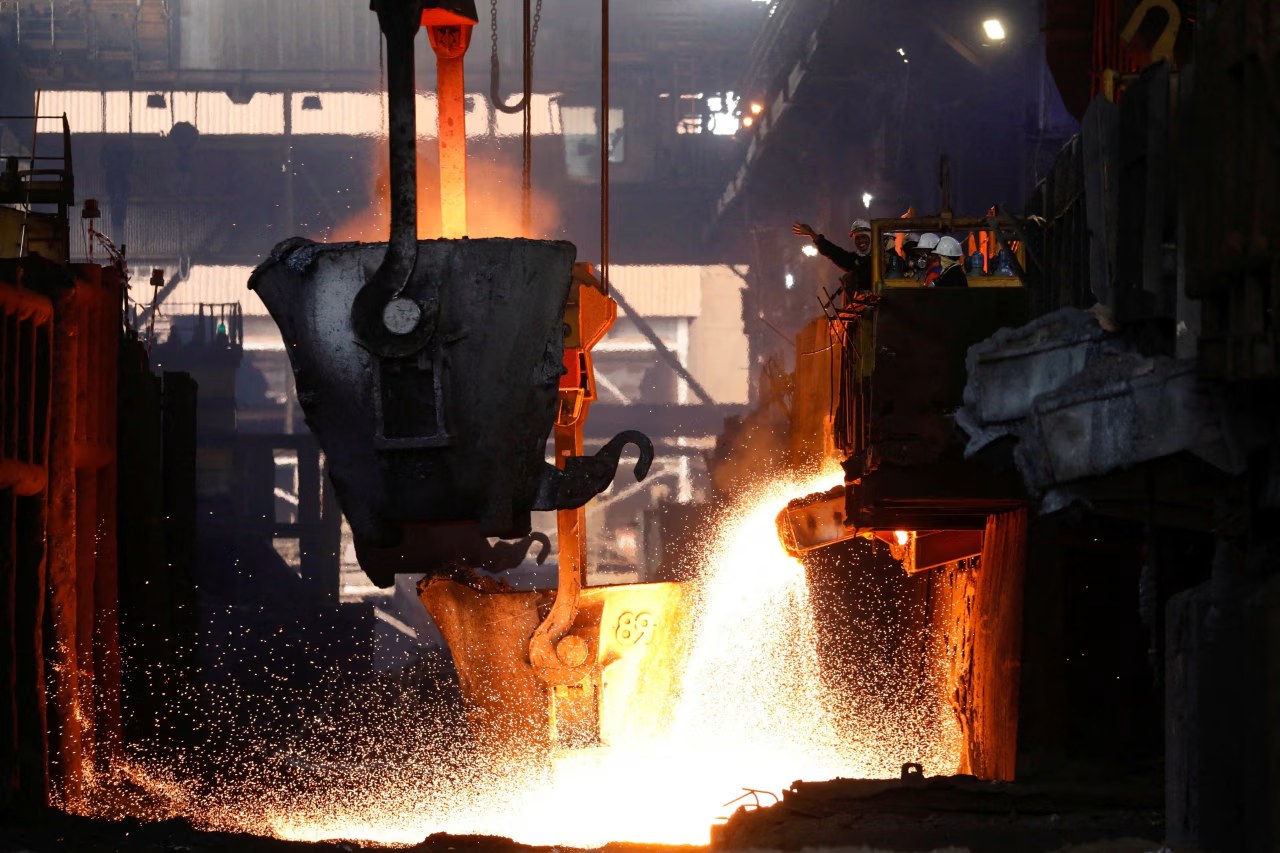
3 European Sectors Most Exposed to Energy Price Shock, ING Shows
- ING research identifies aviation, shipping and chemicals as the most energy‑intensive basic‑materials sectors in Europe.
- Chemicals are pivoting to low‑energy solutions while shipping’s intensity rises due to longer routes.
- A basket of European chemicals stocks trades flat despite the shock.
- Industrial transportation gauge edges up 0.3%, hinting at broader logistical strain.
Why the European energy price shock matters for investors and policymakers alike
BASIC MATERIALS—At 4:20 ET, 12:20 ET and 16:50 ET, Dow Jones Newswires released a concise market roundup that placed Europe’s basic‑materials landscape under a harsh spotlight. The core finding: aviation, shipping and chemicals consume the most energy per million euros of output, making them the front‑line victims of the ongoing European energy price shock.
ING analysts warned that while chemicals firms are scrambling to adopt less‑energy‑intensive processes, the shipping sector has moved in the opposite direction. “Shipping has grown more energy intensive in recent years due to longer routes from sanctions on Russia and Red Sea avoidance, as well as faster, less efficient sailing,” the analysts wrote.
Even as a basket of European chemicals stocks held steady, the broader gauge of industrial transportation companies nudged up 0.3%, underscoring how the shock reverberates beyond any single subsector.
Why Energy Price Shock Hits European Chemicals Harder Than Expected
The European chemical industry, responsible for roughly 10% of the bloc’s industrial output, has historically been a bellwether for energy market turbulence. According to the European Chemical Industry Council (Cefic), the sector’s average energy intensity in 2022 stood at 1,250 MJ per million euros of revenue—well above the EU average of 850 MJ.
Historical context: energy spikes and chemical margins
When natural gas prices surged by 180% in late 2021, German giant BASF reported a 12% contraction in operating margin, a pattern echoed across the continent (Cefic, 2022). The latest ING study confirms that chemicals remain in the top three of Europe’s most exposed basic‑materials sectors, a ranking driven by both feedstock costs and electricity dependence.
Case in point: Swedish specialty chemicals firm Perstorp announced a €150 million capital allocation in 2023 to retrofit furnaces with electrified heating, a move designed to hedge against volatile gas prices. “Our investment roadmap is built around decarbonisation and energy efficiency, directly responding to the European energy price shock,” said Perstorp’s CFO Maria Lindström in a March 2024 earnings call.
Expert insight from Dr. Martina Schenk, senior analyst at Cefic, reinforces this narrative. “The sector’s resilience hinges on rapid adoption of low‑energy technologies, but the transition timeline is uneven across firms,” she told the European Energy Forum in April 2024.
Implications are clear: firms that fail to diversify away from fossil‑based feedstocks risk margin erosion, while early adopters may capture market share as buyers prioritize sustainability. The chemical sector’s flat stock performance this week suggests investors are already pricing in a mixed outlook.
Looking ahead, the next chapter will explore how shipping’s own energy challenges compound the broader European energy price shock.
Shipping’s Energy Burden: Are Longer Routes the New Norm?
Maritime logistics across Europe have been reshaped by geopolitical friction and climate‑driven route alterations. Since the 2022 sanctions on Russian ports and the 2023 Red Sea crisis, major carriers like Maersk have rerouted over 1.2 million TEUs through the Cape of Good Hope, adding an average of 1,200 nautical miles per voyage.
Fuel consumption spikes in a volatile world
Drewry’s 2023 Annual Fuel Consumption Review estimates that the additional distance translates into roughly 5% higher bunker fuel usage per container, a figure that aligns with ING’s observation that shipping has become more energy intensive. The International Energy Agency (IEA) reported that bunker fuel prices peaked at $1,150 per metric ton in early 2024, a 70% increase from the previous year.
Maersk’s CFO, Nils Andersen, disclosed in a July 2024 interview that the company’s fuel‑adjusted operating costs rose by €300 million YoY, prompting a strategic shift toward slower steaming and greater reliance on LNG‑compatible vessels.
Maritime analyst Dr. Elena García of the European Maritime Safety Agency warned, “Longer routes are not a temporary fix; they embed higher emissions and cost structures, amplifying the European energy price shock for the entire supply chain.”
The ripple effect is evident in the 0.3% uptick of the industrial transportation gauge noted in the market roundup. As freight rates climb, downstream manufacturers face higher input costs, feeding back into the chemicals and aviation sectors.
In the next chapter we will assess whether European chemical firms can offset these rising logistics costs through low‑energy production methods.
Can European Chemicals Adapt? A Look at Low‑Energy Solutions
Faced with a relentless European energy price shock, Europe’s leading chemical producers are accelerating the rollout of low‑energy technologies. BASF’s 2023 sustainability report highlighted a 22% reduction in on‑site electricity use per tonne of product, driven by a shift to renewable power purchase agreements (PPAs) in Germany and France.
Case studies: electrification and circularity
In Belgium, Solvay completed a €400 million investment to electrify its polyamide plant, cutting natural gas demand by 30% and cutting CO₂ emissions by 1.1 Mt annually. “Electrification is the cornerstone of our response to the European energy price shock,” said Solvay’s Head of Operations, Jean‑Claude Dupont, during a June 2024 press briefing.
Another innovative approach comes from the French firm Arkema, which launched a circular‑economy pilot that recycles waste plastics into feedstock, thereby reducing reliance on fossil‑derived raw materials. The pilot, covering 150 kt of plastic waste, saved an estimated €12 million in energy costs in its first year.
Expert commentary from Prof. Lars Petersen of the Technical University of Denmark underscores the broader trend: “Electrification and feedstock circularity are not optional; they are strategic imperatives for chemical firms to stay competitive under sustained high energy prices.”
These initiatives have tangible market implications. While the chemicals basket traded flat on the day of the roundup, analysts at ING project a modest 1.5% upside for firms that achieve a 15% energy‑intensity reduction by 2026.
Having examined the sector’s technical response, the next chapter asks whether investors are reshuffling portfolios in reaction to the European energy price shock.
Will the Energy Shock Trigger a Shift in Investment Across Basic Materials?
Investors have taken note of the European energy price shock’s sectoral fingerprints. According to a June 2024 report by ING, funds tracking European basic‑materials equities have seen net inflows of €2.4 billion since the start of 2024, outpacing the broader European market’s €1.1 billion inflow.
Performance comparison: energy‑intensive vs. resilient stocks
When juxtaposed with the MSCI Europe Energy Index, the chemicals sub‑index underperformed by 3.2% over the past six months, while the shipping index outperformed by 1.8%—a paradox that reflects the mixed impact of higher freight rates versus rising fuel costs.
ING analyst Thomas Müller explained, “Investors are rewarding firms that demonstrate tangible energy‑efficiency pathways, even if short‑term earnings dip, because the European energy price shock is expected to persist.”
From a valuation perspective, the price‑to‑earnings (P/E) ratio for European chemical firms averaged 14x in 2023, compared with 18x for the broader industrial sector, indicating a discount that may attract value‑seeking capital.
However, risk‑adjusted returns remain sensitive to policy shifts. The European Commission’s proposed carbon border adjustment mechanism (CBAM) could impose additional costs on high‑emission exporters, further influencing fund allocations.
In the final chapter we will explore how EU policy is evolving to mitigate the European energy price shock and what that means for the basic‑materials landscape.
Policy Response: EU’s Energy Strategy and Its Impact on Basic Materials
The European Union has accelerated its energy strategy in response to the ongoing European energy price shock. The European Green Deal, updated in November 2023, earmarks €1.1 trillion for clean‑energy transition projects, with a specific €250 billion tranche for industrial decarbonisation.
Key policy milestones shaping the sector
In March 2024, the European Commission adopted the revised Renewable Energy Directive, raising the renewable share target for industry to 45% by 2030. Simultaneously, the Carbon Border Adjustment Mechanism (CBAM) entered a provisional phase, imposing a carbon price on imports of steel, cement and chemicals.
Kadri Simson, European Commissioner for Energy, stated at a Brussels press conference, “Our policy framework is designed to cushion the European energy price shock while steering heavy‑industry toward a low‑carbon future.”
These measures have immediate implications for basic‑materials firms. A recent study by the European Investment Bank (EIB) predicts that compliance with CBAM could increase operating costs for European chemical exporters by up to €1.5 billion annually, a pressure that may accelerate the adoption of low‑energy technologies highlighted earlier.
Moreover, the EU’s Innovation Fund, which disbursed €5 billion in 2023, is expected to finance up to 30 new low‑carbon pilot projects in the chemicals and shipping sectors by 2026, potentially offsetting some of the cost burden.
As policy tools tighten, the sector’s ability to adapt will determine whether the European energy price shock becomes a catalyst for lasting transformation or a source of prolonged financial strain.
Frequently Asked Questions
Q: Which European sectors are most exposed to the current energy price shock?
ING research points to aviation, shipping and chemicals as the three European sectors with the highest energy consumption per million euros of output, making them the most vulnerable to the European energy price shock.
Q: How are chemical companies responding to higher energy costs?
Many European chemical firms are accelerating low‑energy process upgrades and shifting to greener feedstocks, a strategy highlighted by Cefic that aims to blunt the impact of the European energy price shock on margins.
Q: What impact does longer shipping routes have on energy use?
Longer routes caused by sanctions on Russia and Red Sea avoidance have pushed shipping fuel consumption up, intensifying the European energy price shock for maritime logistics and raising freight costs across the continent.
