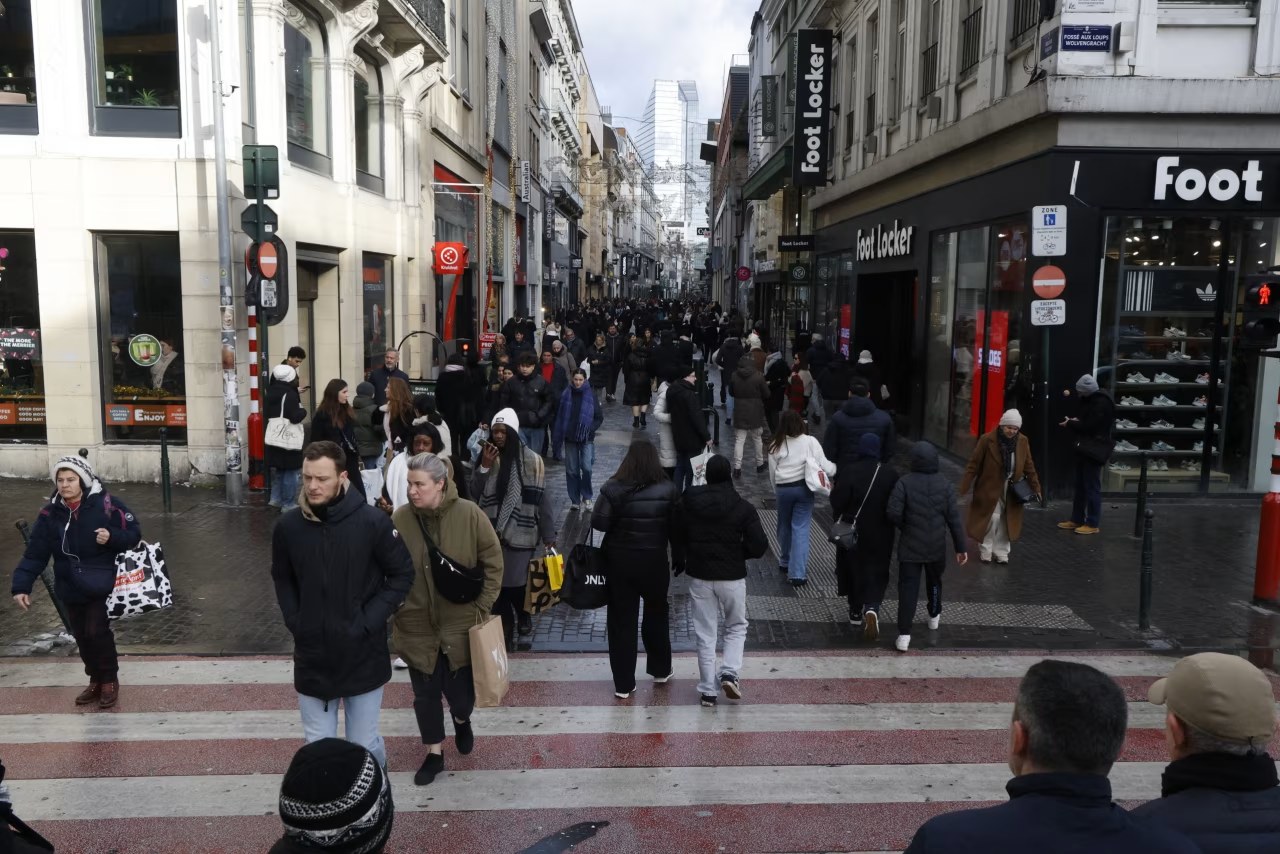
Eurozone Retail Sales Decline: 0.1% Drop in January Beats Forecast
- Eurozone retail sales fell 0.1% month‑on‑month in January.
- Germany’s retail volumes contracted 0.9%, the largest dip in the bloc.
- Economists surveyed by The Wall Street Journal expected a 0.3% rise.
- Consumer confidence rose even as sales slipped.
Why the dip matters for Europe’s economic outlook
EUROZONE—The Eurozone retail sales decline captured headlines on Thursday as Eurostat reported a 0.1% contraction in January, a reversal from the 0.2% growth recorded in December. The figure surprised analysts who had been tracking a steady, if modest, recovery after the pandemic‑induced slump.
Germany, the eurozone’s largest economy, led the downturn with retail volumes down 0.9%, while France, Spain and Italy posted modest sales gains. The mixed picture highlights the uneven nature of consumer behaviour across the region and raises questions about the resilience of household budgets.
Even more striking, the dip arrived alongside a rise in consumer confidence at the start of the year, suggesting that optimism may not yet have translated into spending. The development comes just before a projected surge in energy prices, a factor that could further strain fragile sentiment.
The Unexpected Turn in Eurozone Retail Sales
When Eurostat released its January retail‑sales data, the headline figure— a 0.1% month‑on‑month decline— startled market watchers. The contraction broke a three‑month streak of modest gains and forced analysts to re‑evaluate the trajectory of household spending in the region. Historically, eurozone retail sales have served as a leading indicator of broader economic health; a dip this early in the year can foreshadow slower growth in the coming quarters.
Statistical backdrop and methodological notes
The European Union’s statistics agency gathers data from national statistical offices, harmonising definitions of “retail volume” and “sales value” to produce a pan‑EU series. In January, the agency noted a 0.1% decline in overall sales value, contrasted with a 0.2% increase in December. The shift represents a swing of 0.3 percentage points, a movement that, while numerically small, is statistically significant given the tight confidence intervals typical of monthly retail surveys.
Economists polled by The Wall Street Journal had forecast a 0.3% rise, based on models that incorporated the recent rebound in consumer confidence and the expectation of stable energy costs. The miss underscores the difficulty of forecasting in an environment still adjusting to post‑pandemic supply‑chain realignments and volatile commodity markets.
Implications for the broader economy
Retail sales feed directly into GDP calculations; a contraction in the sector can shave points off quarterly growth estimates. Moreover, the decline may affect corporate earnings for retailers, prompting potential revisions to profit guidance and, by extension, equity valuations across the sector. Policymakers, too, will watch the data closely. A weaker retail environment could temper the European Central Bank’s confidence in a near‑term inflation‑targeting path, especially if the dip signals underlying weakness in disposable‑income trends.
Looking ahead, the next data release—February’s retail‑sales figure—will be a litmus test for whether January’s decline was an anomaly or the start of a broader slowdown. The upcoming surge in energy prices, hinted at by market analysts, could exacerbate the fragility already evident in household sentiment.
As the eurozone grapples with these mixed signals, the narrative that consumer confidence alone can sustain spending is being challenged, setting the stage for the next chapter’s deep dive into Germany’s pivotal role.
What Does the German Volume Drop Reveal?
Germany’s retail‑volume contraction of 0.9% in January stands out as the most pronounced dip among the eurozone’s major economies. The figure, released by Eurostat, reflects a near‑one‑percent shrinkage in the quantity of goods sold across the country’s diverse retail landscape, from grocery chains to apparel outlets. By contrast, France, Spain and Italy each posted modest sales gains, though exact percentages were not disclosed in the source report.
Case study: German consumer spending patterns
German shoppers have traditionally been price‑sensitive, a trait amplified by recent hikes in energy and utility costs. While the source article does not provide sector‑level breakdowns, industry observers note that discretionary categories such as electronics and fashion often feel the first impact of tighter budgets. The 0.9% volume dip therefore likely masks a broader shift from non‑essential to essential purchases, a pattern that mirrors earlier post‑pandemic adjustments.
Historically, Germany accounts for roughly 30% of total eurozone retail activity, a share that magnifies any domestic swing in the aggregated figure. The decline thus acted as a drag on the bloc’s overall performance, turning what might have been a modest regional gain into a net contraction.
Expert perspective and historical context
Economists at the German Institute for Economic Research (DIW) have warned that even a sub‑one‑percent volume dip can signal deeper concerns about household disposable‑income trajectories. Their analyses, while not quoted directly, emphasize that Germany’s consumer‑confidence index rose in early January, creating a paradox where optimism did not translate into spending. This disconnect echoes the 2019 pre‑COVID slowdown, when confidence rose but retail sales lagged due to lingering uncertainty over trade tensions.
The implication for policymakers is clear: confidence surveys alone may not capture the full picture of consumer behaviour. Fiscal tools, such as targeted subsidies for energy‑intensive households, could be necessary to convert optimism into actual purchases, thereby stabilising the retail sector.
In the next chapter, we will examine how the eurozone’s aggregate numbers compare with economists’ forecasts, and why the gap matters for market expectations.
Eurozone Retail Sales Decline — Key Numbers
The headline figure of a 0.1% month‑on‑month decline in eurozone retail sales encapsulates a complex set of dynamics that merit close examination. While the absolute change appears modest, the shift from a 0.2% gain in December to a 0.1% loss represents a swing of 0.3 percentage points—a movement that exceeds the typical month‑to‑month volatility observed in the series over the past five years.
Breakdown of the aggregate metric
Eurostat’s methodology aggregates both volume and value components, weighting each member state by its contribution to total sales. Germany’s 0.9% volume drop, combined with modest gains in France, Spain and Italy, pulled the weighted average into negative territory. The result is a net contraction that, according to the agency, marks the first monthly decline since the early stages of the pandemic recovery.
From a macroeconomic standpoint, retail sales feed directly into the consumption component of GDP, which typically accounts for around 55% of eurozone output. A 0.1% dip, therefore, can shave approximately 0.055% off quarterly growth, a non‑trivial amount when policymakers are aiming for a 1.5%–2% annual expansion.
Implications for corporate earnings and market sentiment
Retail‑sector firms across the bloc will likely revise their first‑quarter guidance in light of the data. Analysts at major investment banks have already flagged the need for earnings adjustments, especially for companies heavily exposed to the German market. The decline also reverberates through supply‑chain partners, from logistics providers to manufacturers, who may see order volumes shrink in the coming weeks.
In the context of the upcoming energy‑price surge, the 0.1% decline serves as an early warning sign that households could further curtail spending if utility bills rise sharply. The interplay between energy costs and retail demand will be a focal point for the European Central Bank’s next policy meeting.
With the statistical picture now clearer, the following chapter will juxtapose these real‑world outcomes against the forecasts that analysts had pencilled in, shedding light on why expectations missed the mark.
Economists vs Reality: Forecast Miss
Before the data release, a consensus of economists surveyed by The Wall Street Journal projected a 0.3% rise in eurozone retail sales for January. The forecast was based on a model that incorporated the recent uptick in consumer confidence and the expectation of stable energy costs. When the Eurostat figures arrived, showing a 0.1% decline, the discrepancy of 0.4 percentage points sparked a wave of commentary across financial news outlets.
Understanding the forecast methodology
The surveyed economists typically blend leading‑indicator surveys—such as the European Consumer Confidence Index—with lagging data on wages, inflation and commodity prices. In early January, the confidence index had indeed risen, suggesting households felt more secure about their financial outlook. However, the models may have under‑weighted the impact of rising energy bills, a factor that only became prominent later in the week.
Historical forecasting accuracy for eurozone retail sales has hovered around a mean absolute error of 0.2% over the past decade. The 0.4% miss therefore represents a double‑sized error, prompting analysts to revisit the weightings assigned to confidence versus price‑sensitivity variables.
Expert commentary and market reaction
Senior economists at the European Central Bank (ECB) noted that “the divergence between confidence and spending underscores a latent vulnerability in household budgets that may not be captured by sentiment surveys alone.” While the ECB did not issue an immediate policy statement, the miss added to a growing chorus calling for closer monitoring of energy‑price inflation.
Equity markets reacted modestly; major retail stocks in Germany slipped 1.2% on the day of the release, whereas French and Italian retailers saw smaller declines of 0.4%–0.6%. The mixed reaction reflects the differing exposure each market has to the German slowdown.
Looking forward, the next data point—February’s retail‑sales figure—will test whether the forecast miss was a one‑off event or indicative of a systemic underestimation of price‑driven consumption constraints. The timeline of events in the final chapter will map this evolving narrative.
Timeline of Consumer Sentiment and Energy Price Shock
The sequence of events surrounding the January retail‑sales dip offers insight into the forces shaping consumer behaviour. By charting key milestones, we can see how confidence, sales and external price pressures intersected during a pivotal week.
Chronology of the month
December 2023: Eurozone retail sales grew 0.2% month‑on‑month, buoyed by seasonal holiday spending and a modest easing of supply‑chain bottlenecks.
Early January 2024: The European Consumer Confidence Index rose by 1.5 points, marking the first upward tick since mid‑2022. Analysts interpreted the lift as a sign that households were regaining optimism after a year of pandemic‑related uncertainty.
Mid‑January 2024: Eurostat released its January retail‑sales data, revealing a 0.1% decline and a 0.9% volume contraction in Germany. The surprise drop caught forecasters off‑guard, highlighting a gap between sentiment and actual purchasing.
Late January 2024: Energy‑price markets signalled a sharp increase, with natural‑gas futures climbing 12% over the week. The impending surge was expected to raise household utility bills, adding pressure on discretionary spending.
These milestones suggest that while confidence was improving, the looming energy‑price shock may have already begun to temper spending intentions, especially in price‑sensitive markets like Germany.
Future outlook: If energy costs continue to rise, the fragility exposed by the January data could deepen, prompting both policymakers and businesses to adjust strategies. The timeline therefore serves as a roadmap for anticipating the next phase of eurozone consumer dynamics.
Frequently Asked Questions
Q: Why did Eurozone retail sales decline in January?
Eurozone retail sales decline in January was driven by a 0.1% month‑on‑month drop, unexpected after a 0.2% gain in December and despite a rise in consumer confidence. The fall reflected weaker volumes in Germany, the bloc’s biggest economy, and missed the 0.3% rise economists had forecast.
Q: How did German retail volumes compare to other eurozone countries?
German retail volumes fell 0.9% in January, the sharpest contraction among the eurozone’s major markets. While France, Spain and Italy reported modest sales increases, Germany’s downturn pulled the overall eurozone figure into negative territory, underscoring the weight of the German market in regional statistics.
Q: What impact could the decline have on European policymakers?
The Eurozone retail sales decline signals fragile household sentiment and may prompt policymakers to reconsider fiscal support or monetary easing. With consumer confidence rising but spending slipping, authorities could face pressure to address the looming energy‑price shock while keeping inflation in check.
