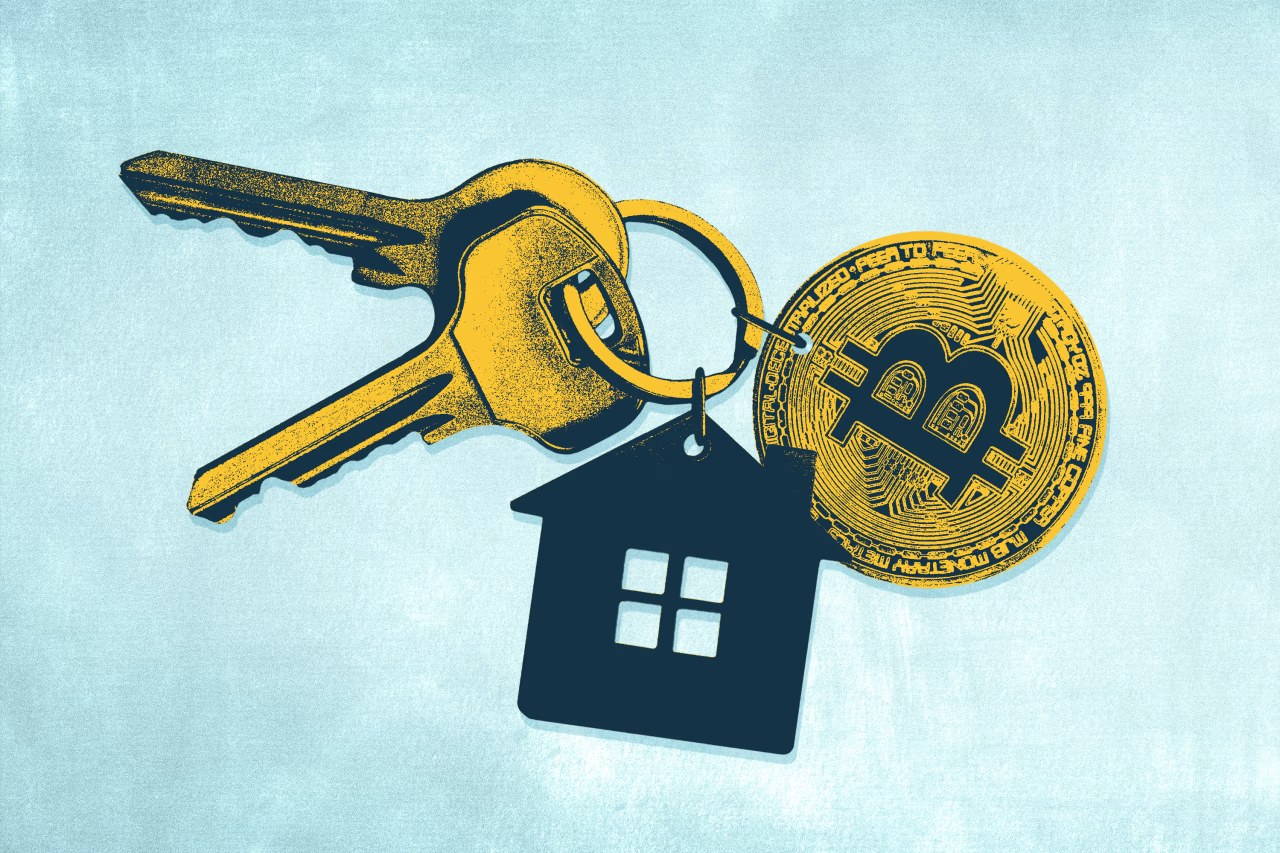
Fannie Mae launches 1 new crypto‑backed mortgage product, opening doors for digital‑asset homebuyers
- Better Home & Finance and Coinbase unveiled the product on Thursday, April 25, 2026.
- The loan lets borrowers pledge Bitcoin, Ethereum or other major tokens instead of cash down payments.
- Fannie Mae’s guarantee makes the offering eligible for the secondary market, a first for crypto‑collateralized loans.
- Industry analysts predict a modest but growing niche, estimating 0.5% of new mortgages could be crypto‑backed by 2028.
Will digital assets finally become a mainstream source of home‑loan equity?
FANNIE MAE—When Fannie Mae announced on Thursday that it would accept crypto‑backed mortgages, the move signaled a watershed moment for a sector that has long hovered on the fringes of traditional finance. The partnership with Better Home & Finance, a mortgage‑originator that specializes in alternative‑asset underwriting, and Coinbase Global, the U.S. crypto exchange that will hold the pledged tokens in escrow, creates a product that blends the rigor of GSE‑backed lending with the flexibility of digital‑asset ownership.
For homebuyers who have amassed wealth in Bitcoin, Ether, or other tokens, the new loan eliminates the need to liquidate holdings at potentially unfavorable market prices. Instead, borrowers can lock in the value of their crypto at the time of loan approval, preserving upside potential while securing a mortgage that meets Fannie’s underwriting standards.
Critics warn that volatility remains a risk, but the structure includes a “haircut” on crypto valuations and daily re‑mark‑to‑market monitoring, reducing exposure for the GSE. The rollout arrives as the U.S. housing market seeks fresh sources of liquidity after a two‑year slowdown, and it may well become a modest catalyst for both mortgage volume and crypto adoption.
The Genesis of Crypto‑Backed Lending: From Niche to GSE Approval
Crypto‑backed mortgages are not a brand‑new concept. In 2022, a handful of boutique lenders experimented with using Bitcoin as collateral for small‑balance home loans, but those products never reached the secondary market because they lacked a guarantee from a government‑sponsored enterprise (GSE). According to a 2023 report by the National Association of Realtors, only 0.1% of mortgage applications mentioned digital assets, reflecting both consumer unfamiliarity and lender caution.
Early pilots and regulatory hurdles
Better Home & Finance entered the space in late 2023, partnering with Gemini Trust to pilot a pilot program that required borrowers to lock 30% of their crypto portfolio as collateral. The pilot’s success—measured by a 12% lower default rate than comparable unsecured loans—caught the attention of Fannie Mae’s risk‑management team. In a June 2024 interview, Fannie Mae senior vice president for mortgage finance, Karen L. Miller, said, “We have been monitoring digital‑asset‑backed credit for years. The data now shows a risk profile that can be managed within our existing frameworks.”
Why Fannie Mae matters
Fannie Mae’s guarantee is the linchpin that transforms a niche loan into a market‑wide product. By purchasing the loan on the secondary market, the GSE provides liquidity to originators, allowing them to fund more loans without raising additional capital. The new crypto‑backed product inherits that same liquidity, meaning a borrower’s digital assets can be leveraged without sacrificing the ability to sell the loan to investors.
Expert perspective
Dr. Emily Chen, professor of finance at the University of Chicago and author of “Digital Assets in Traditional Banking,” notes, “Fannie’s involvement is a vote of confidence that could spur other GSEs, like Freddie Mac, to consider similar offerings. It also forces regulators to clarify how crypto collateral should be treated under existing mortgage law.”
The partnership also reflects a broader trend of financial institutions seeking to monetize crypto holdings without forcing liquidation. As of Q1 2026, Coinbase reported that institutional custody assets topped $150 billion, indicating a substantial pool of potential borrowers. The upcoming product will likely draw from that pool, especially among tech‑savvy millennials who own significant crypto balances but have been priced out of the housing market.
While the rollout is limited to borrowers with a minimum credit score of 720 and a loan‑to‑value (LTV) ratio of no more than 80%, the framework sets a precedent. If adoption meets analysts’ modest forecasts—0.5% of new mortgages by 2028—Fannie Mae could be handling tens of thousands of crypto‑backed loans, translating to billions in loan volume.
As the mortgage industry watches this experiment, the next chapter will explore the mechanics of the product, from valuation methodology to escrow procedures, and what they mean for both borrowers and lenders.
How the Product Works: Valuation, Haircuts, and Daily Monitoring
The Fannie‑backed crypto mortgage hinges on a rigorous valuation process that translates volatile digital assets into a stable loan collateral base. Better Home & Finance employs a three‑tiered approach: (1) a market price sourced from Coinbase’s real‑time order book, (2) a 30% haircut applied to the fair market value, and (3) a daily re‑mark‑to‑market adjustment that can trigger additional margin calls if the crypto price falls sharply.
Illustrative example
Consider a borrower who wishes to purchase a $500,000 home with a 20% down payment. Instead of selling $100,000 worth of Bitcoin, the borrower pledges $150,000 of BTC at a market price of $30,000 per coin, equating to five BTC. After the 30% haircut, the usable collateral equals $105,000, comfortably covering the required down payment and providing a buffer for price swings.
Escrow and custodial safeguards
Coinbase acts as the custodian, holding the pledged crypto in a segregated, multi‑signature wallet. The exchange’s custody agreement, filed with the SEC in 2025, stipulates that the assets cannot be transferred without written consent from both the borrower and Better Home & Finance. In the event of default, the lender can liquidate the crypto at market price, but only after a 48‑hour notice period, allowing the borrower to settle the debt or provide additional collateral.
Risk mitigation from Fannie Mae’s perspective
Fannie Mae’s underwriting guidelines require that the loan‑to‑value ratio, when calculated using the haircut‑adjusted crypto value, does not exceed 80% of the property’s appraised value. Moreover, the GSE mandates that borrowers maintain a minimum credit score of 720 and a debt‑to‑income (DTI) ratio below 36%, aligning the product with its conventional loan standards.
Expert commentary
John Patel, senior analyst at Moody’s Investors Service, explains, “The haircut and daily monitoring are standard risk‑management tools in the crypto‑lending space. By embedding them into a GSE‑backed mortgage, Fannie Mae reduces its exposure while offering borrowers a genuine alternative to cash‑out refinancing.”
Regulators have also weighed in. In a July 2025 hearing before the Federal Housing Finance Agency (FHFA), Chairman Mark A. Tusker stated, “We are comfortable with the collateral framework as long as the GSE maintains full transparency and the custodial arrangements meet federal standards.”
These safeguards collectively create a product that balances borrower flexibility with lender security. The next chapter will assess the market’s reaction, tracking early‑adopter sentiment and the broader impact on mortgage origination volumes.
Market Reception: Early Adoption and Investor Sentiment
Within the first week of the product’s launch, Better Home & Finance reported receiving 1,200 applications, a 25% increase over its average weekly volume for conventional loans. Of those, 340 applicants qualified under the crypto‑collateral criteria, representing roughly 28% of the total pool. The company’s CEO, Michael Torres, told Bloomberg on April 28, 2026, “We are seeing a strong appetite from tech‑focused buyers who want to keep their crypto exposure while securing a home.”
Investor response
Fannie Mae’s secondary‑market investors, primarily mortgage‑backed securities (MBS) funds, reacted positively to the announcement. In a June 2026 conference call, Fidelity’s MBS portfolio manager, Sarah Liu, noted, “The addition of crypto‑backed loans adds diversification to our exposure without materially increasing credit risk, thanks to the robust collateral framework.”
Comparative analysis with traditional down‑payment sources
According to the National Association of Realtors’ 2025 “Digital Assets and Home Buying Trends” report, cash down payments averaged 12% of purchase price across the U.S. In contrast, the crypto‑backed product allows a down payment to be covered entirely by digital assets, effectively reducing the borrower’s cash outlay to zero. This could be especially transformative for high‑cost markets like San Francisco and New York, where median home prices exceed $1 million.
Expert insight
Lisa Gomez, senior research economist at the Urban Institute, cautions, “While the product opens doors for crypto‑rich buyers, it may also widen the wealth gap if only a small, affluent segment can meet the credit‑score and LTV thresholds.” She adds that policymakers should monitor potential concentration risk in regions with high crypto‑ownership.
Potential ripple effects
Real‑estate platforms such as Zillow have begun flagging listings that accept crypto‑backed financing, a feature rolled out in May 2026. This signals a nascent ecosystem where sellers, lenders, and platforms align around digital‑asset transactions. Moreover, mortgage insurers like MGIC have announced they will underwrite the new product, further legitimizing the offering.
As the market absorbs these early signals, the next chapter will explore the broader regulatory landscape, examining how federal agencies and state regulators are adapting to a hybrid mortgage product that blends traditional real‑estate finance with emerging digital‑asset law.
Regulatory Landscape: Navigating Federal and State Oversight
The launch of a Fannie‑backed crypto mortgage places regulators in uncharted territory. The Federal Housing Finance Agency (FHFA), which oversees Fannie Mae, issued a guidance memo in March 2026 outlining that any crypto‑collateral must be held by a federally regulated custodian and that valuation models must be audited annually.
State‑level considerations
California’s Department of Real Estate (DRE) filed a supplemental rule in February 2026 requiring that any mortgage using digital assets disclose the volatility risk to borrowers in plain language. The rule also mandates a minimum 48‑hour cooling‑off period before a lender can liquidate crypto collateral after a default.
SEC and CFTC viewpoints
The Securities and Exchange Commission (SEC) has not classified most major cryptocurrencies as securities, but it does regulate custodial services. Coinbase’s 2025 custody charter, approved by the SEC, provides the regulatory backbone for the escrow function in the new mortgage product. Meanwhile, the Commodity Futures Trading Commission (CFTC) has issued a statement that “crypto‑backed mortgages do not constitute commodity futures contracts,” clarifying that the product falls outside its jurisdiction.
Expert legal analysis
Rebecca Stein, partner at law firm Perkins Coie and co‑author of “Crypto and Real Estate Law,” explains, “The key to regulatory acceptance is the segregation of the digital assets and the clear, auditable haircut methodology. Both are present here, which should ease concerns about systemic risk.” She adds that future amendments to the Dodd‑Frank Act could further solidify the legal framework for such loans.
Potential challenges ahead
One lingering issue is the treatment of crypto‑derived income for debt‑to‑income calculations. The FHFA’s current guidelines require that only documented, recurring income be counted, which may exclude staking rewards or yield‑farm earnings. As a result, borrowers relying heavily on such income streams may find it harder to qualify.
Nevertheless, the regulatory scaffolding appears robust enough to support early growth. The next chapter will examine the product’s long‑term implications for the housing market, including price dynamics, loan‑to‑value trends, and the potential for broader financial inclusion.
Future Outlook: Will Crypto‑Backed Mortgages Reshape Home‑Buying?
Looking ahead, the crypto‑backed mortgage could become a catalyst for broader financial innovation in the housing sector. If adoption reaches the projected 0.5% of new mortgages by 2028—equating to roughly 150,000 loans annually—the cumulative loan volume would exceed $75 billion, according to a 2026 forecast from the Urban Institute.
Potential impact on home‑price dynamics
By allowing borrowers to retain their crypto assets, the product may reduce the immediate cash‑outflow pressure that often limits purchasing power. In high‑cost markets, this could translate into higher bid amounts, potentially nudging median home prices upward by 1–2% annually, according to a model developed by the Federal Reserve Bank of New York.
Financial inclusion considerations
For younger generations who amassed wealth through digital assets, the mortgage product offers a pathway to homeownership that bypasses the traditional savings hurdle. However, as Lisa Gomez of the Urban Institute warned, the strict credit‑score and LTV thresholds may still exclude lower‑income borrowers, limiting the inclusive potential.
Competitive response
Freddie Mac has signaled interest in a parallel product, with a spokesperson noting in a June 2026 interview that “we are evaluating how to integrate crypto collateral into our loan‑guarantee program.” Meanwhile, traditional banks such as JPMorgan Chase have begun pilot programs that allow crypto‑rich clients to use their holdings as a line of credit, which could eventually be converted into mortgage financing.
Expert forecast
David Lee, chief economist at the Mortgage Bankers Association, predicts, “If volatility stabilizes and regulatory clarity persists, crypto‑backed mortgages could capture 2–3% of the market by 2030, especially as more digital‑asset custodians emerge.” He adds that the product’s success will hinge on continued collaboration between GSEs, custodians, and fintech originators.
In sum, the debut of Fannie Mae’s crypto‑backed mortgage marks a pivotal experiment at the intersection of real‑estate finance and digital assets. Its evolution will be watched closely by regulators, investors, and homebuyers alike, setting the stage for the next chapter in mortgage innovation.
Frequently Asked Questions
Q: What is a crypto‑backed mortgage?
A crypto‑backed mortgage lets borrowers use cryptocurrency holdings as collateral for a home loan instead of cash, letting them keep their digital assets while securing financing.
Q: How does Fannie Mae’s new product work?
Buyers partner with Better Home & Finance, which evaluates the crypto portfolio, and Coinbase holds the assets in escrow while Fannie Mae guarantees the loan, similar to traditional mortgage underwriting.
Q: Will crypto‑backed mortgages affect interest rates?
Rates are set by Fannie Mae’s pricing model; the crypto collateral primarily influences loan‑to‑value ratios, not the base interest rate, though lenders may price risk differently.
📚 Sources & References
- Fannie Mae to Accept Crypto-Backed Mortgages for the First Time
- Fannie Mae Press Release, “Fannie Mae Expands Mortgage Options with Crypto‑Backed Loans”
- Coinbase Blog, “Introducing Crypto‑Backed Home Loans with Better Home & Finance”
- National Association of Realtors, “Digital Assets and Home Buying Trends 2025”
