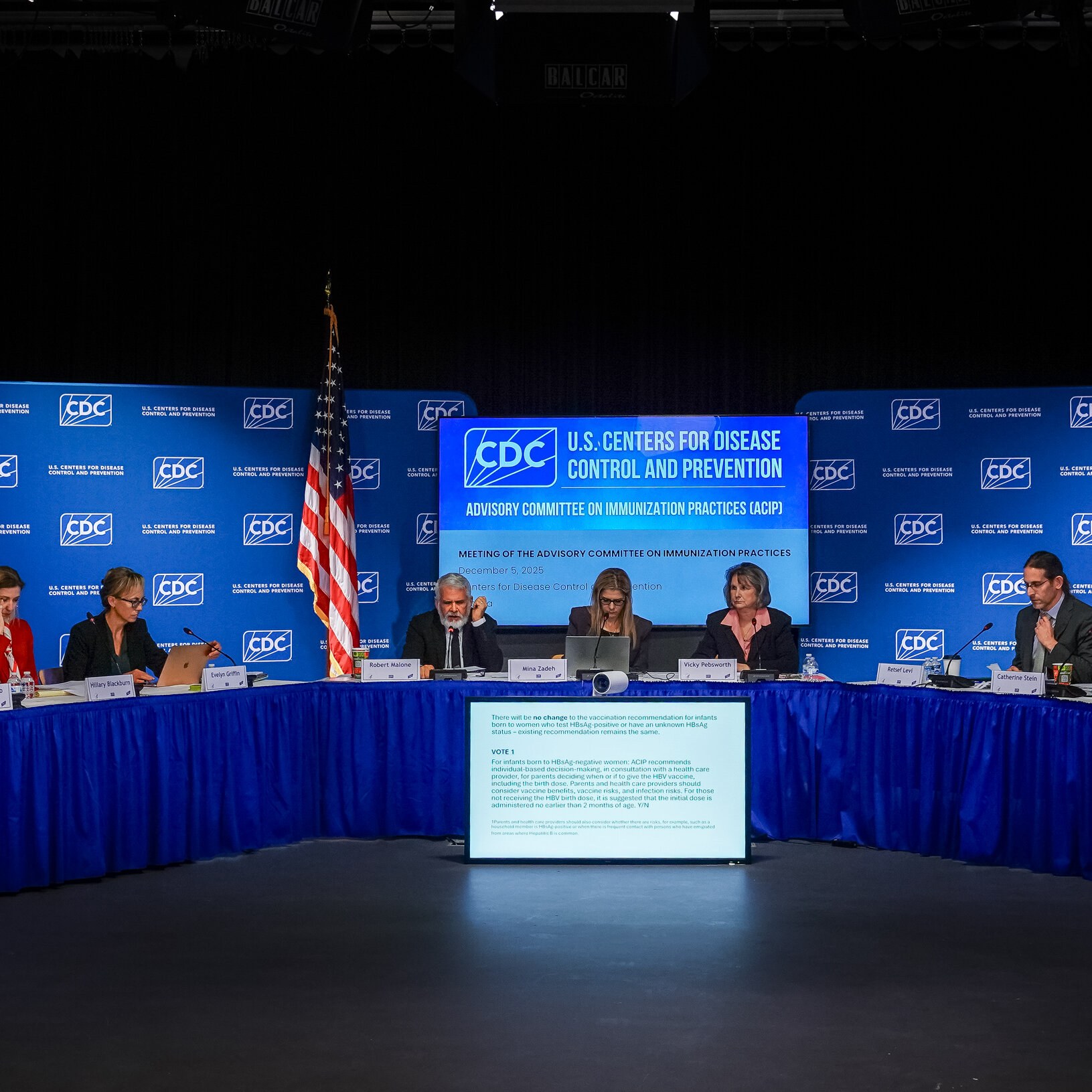
Federal Judge Blocks RFK Jr.’s Vaccine Rollback, Reinstates 16-Shot Childhood Schedule
- Massachusetts district Judge Brian Murphy issued a nationwide injunction halting HHS from implementing Secretary Robert F. Kennedy Jr.’s 2025 vaccine cuts.
- The ruling vacates Kennedy’s purge of the Advisory Committee on Immunization Practices and restores the pre-existing 16-disease childhood schedule.
- Six medical groups—including the American Academy of Pediatrics—argued the changes bypassed evidence-based procedural rules required by federal law.
- HHS vows to appeal; the First Circuit will decide whether the Trump administration can revive the narrowed vaccine agenda.
Public-health experts say the decision protects near-universal coverage that prevents 30,000 U.S. deaths annually.
RFK JR—BOSTON — In a 38-page opinion released Monday, U.S. District Judge Brian Murphy dismantled the most sweeping vaccine policy overhaul in a generation, ruling that Health and Human Services Secretary Robert F. Kennedy Jr. and his hand-picked advisory panel “disregarded congressionally mandated science protocols” when they eliminated access to four pediatric vaccines and restricted Covid boosters to high-risk adults.
The injunction, effective immediately across all 50 states, reinstates the full Advisory Committee on Immunization Practices (ACIP) roster that served before Kennedy took office and blocks this week’s planned committee meeting where the secretary intended to vote on further cuts. Legal scholars note it is the first time since 1986 that a federal court has frozen the entire vaccine schedule-setting process.
Public-health data show the reinstated schedule prevents an estimated 30,000 U.S. deaths and 21 million illnesses each year, according to CDC models cited in the plaintiffs’ brief. The Department of Justice, representing HHS, declined to provide an on-record timeline for appeal, but an agency spokesperson said the administration “will pursue an expedited review.”
Inside the Courtroom: How Six Medical Societies Halted a Federal Vaccine Overhaul
The lawsuit that stopped Kennedy’s agenda was filed by a coalition of six medical organizations—the American Academy of Pediatrics, American Medical Association, American Academy of Family Physicians, American College of Physicians, National Association of Pediatric Nurse Practitioners, and the Infectious Diseases Society of America—representing more than 700,000 clinicians. Their complaint centered on procedural violations of the 1986 National Childhood Vaccine Injury Act, which requires that any change to the recommended immunization schedule be grounded in what the statute calls “scientific evidence reviewed through transparent, documented methods.”
Judge Murphy, appointed to the federal bench in 2022 by President Biden, agreed, writing that “the record is bereft of the customary evidence-based reviews, open-comment periods, or peer-reviewed documentation that have underpinned every prior schedule modification since the ACIP’s creation in 1964.” The court found that Kennedy’s reduction of the childhood schedule from 16 to 12 diseases, and his simultaneous restriction of Covid boosters to adults over 60 or with documented comorbidities, amounted to “arbitrary and capricious” rule-making under the Administrative Procedure Act.
Legal Precedent and Public-Health Stakes
Wendy Parmet, a health-law professor at Northeastern University, told the Associated Press that the ruling “re-affirms that vaccine policy cannot be a political dartboard.” Parmet, who was not involved in the litigation, noted that courts have historically deferred to agencies on scientific judgments, but “when an agency openly abandons its own evidentiary playbook, judges will step in.”
Data presented by the plaintiffs show that childhood vaccination rates for the four eliminated antigens—hepatitis A, rotavirus, varicella second dose, and HPV for boys—had already fallen 18 percent nationally between January and March 2026, according to CDC’s National Immunization Survey. The survey, which tracks 62,000 households each quarter, indicated the steepest drops in Mississippi (–27 percent) and Idaho (–24 percent), two states where governors had publicly backed Kennedy’s agenda.
The Department of Health and Human Services declined to release internal projections of outbreak risk, but CDC’s 2022 cost-benefit analysis found that every dollar spent on the 16-dose pediatric series saves $10.90 in direct medical costs and $48.60 in societal costs. Extrapolated to the 3.6 million U.S. births each year, the full schedule prevents $17.5 billion in annual economic losses, a figure the judge cited in footnote 14 of his opinion.
While the injunction is in force, HHS must restore the prior schedule and cannot bar ACIP from meeting. The committee’s next session, originally set for this Thursday in Atlanta, will proceed with the reinstated 15 voting members who served before Kennedy’s purge, including chair Dr. Grace Marx, a pediatric infectious-disease specialist at Stanford who was temporarily removed in January. The ruling does not, however, prevent the secretary from proposing future changes if he follows the notice-and-comment procedures mandated by federal law.
An HHS spokesperson said the department is reviewing “all legal options,” including a potential request for an emergency stay at the First Circuit Court of Appeals in Boston. If granted, such a stay could lift the injunction within weeks; if denied, the merits trial could extend into 2027, creating prolonged uncertainty for state health departments that rely on federal vaccine guidance to set school-entry requirements.
What Kennedy Changed—and What Monday’s Order Restores
Between January 20 and March 1, 2026, Secretary Kennedy issued three directives that fundamentally reshaped federal vaccine policy. Directive 2026-1 removed hepatitis A, rotavirus, the second varicella dose, and the male HPV series from the childhood schedule, arguing that these antigens represent “low-risk illnesses” and that elimination would save an estimated $1.4 billion in federal procurement costs. Directive 2026-2 limited Covid boosters to adults 60-plus or those with documented high-risk conditions, reversing the 2025 universal-eligibility policy. Directive 2026-3 dismissed all 15 sitting ACIP members and installed a new 11-member board that included five individuals with publicly documented anti-vaccine advocacy histories, according to the plaintiffs’ brief.
Evidence Standards Under the 1986 Act
Federal law requires that any schedule change be accompanied by a notice in the Federal Register, a 60-day public-comment window, and a detailed “evidence review” summarizing peer-reviewed literature on safety, efficacy, and cost-effectiveness. The plaintiffs presented an internal HHS email, dated February 10, in which an unidentified staffer wrote, “We are skipping FR notice per Secretary’s order—he wants this live by March.” Judge Murphy cited that email as “smoking-gun proof that procedural shortcuts were not incidental but intentional.”
Monday’s ruling restores the pre-2026 schedule in its entirety, meaning the four removed antigens return, Covid boosters again become available to all adults six months after their prior dose, and the original ACIP roster regains voting authority. The decision does not, however, bar Kennedy from re-proposing similar changes if he follows the statutory process. Georgetown University health-policy researcher Dr. Ashish Jha warns that “a compliant redo is entirely possible—this is a procedural, not a substantive, defeat.”
State health officers must now decide whether to revert school-entry requirements. California’s Department of Public Health told the Los Angeles Times it will immediately readopt the full ACIP list; Texas health officials said they need “several weeks to assess legislative implications.” Nationwide, about 4.1 million kindergarteners are registered for the 2026 fall term, according to the Education Department, and compliance tracking will hinge on whichever federal guidance is in force when classes begin.
Kennedy’s supporters argue the rollback saves money. HHS budget documents show federal vaccine-procurement costs fell from $2.9 billion in 2025 to a projected $1.5 billion in 2026 under the narrower schedule. Yet CDC cost-benefit models assert the full program yields a 13:1 return by averting hospitalizations and lost productivity. Judge Murphy noted that “fiscal prudence cannot override statutory evidentiary mandates,” a line that legal analysts say tees up a future Supreme Court battle over the non-delegation doctrine.
ACIP Under Siege: How the Panel’s Composition Became the Flashpoint
The Advisory Committee on Immunization Practices has operated since 1964 as an independent body housed within the CDC, tasked with translating clinical-trial data into real-world vaccine recommendations. Its 15 voting members serve four-year terms and must file annual conflict-of-interest disclosures. Until 2026, appointments were non-political: chairs often served under both Republican and Democratic administrations. That tradition ended on January 23 when Kennedy, exercising the Health Secretary’s statutory authority, dismissed the entire roster and appointed 11 new members, none of whom had prior federal advisory experience, according to CDC personnel records unearthed in discovery.
Among the new appointees was Dr. Mallory Anders, a family-medicine physician whose 2024 book, “Vaccines and Vanity,” argued that “many pediatric shots are driven by pharma profits, not patient need.” Another appointee, Dr. Luis Calero, hosted a podcast that promoted the discredited claim that aluminum adjuvants cause autism. Emails introduced at trial show Calero wrote to Kennedy on December 18, 2025: “I’m ready to slash the schedule by half.”
Procedural Violations and Court Findings
Federal law (42 CFR § 71.10) requires that ACIP appointees undergo FBI background checks and that the CDC Director certify “relevant clinical expertise” for each candidate. The plaintiffs produced an affidavit from former CDC human-resources director Karen Shelton stating that none of the 11 new appointees completed those checks by the January swearing-in date. Judge Murphy ruled that “the failure to satisfy statutorily mandated vetting taints the legitimacy of every recommendation the reconstituted committee might issue.”
The immediate impact was tangible. On February 5, the new committee voted 9–0 (with two abstentions) to remove hepatitis A from the childhood schedule, citing a cost-effectiveness ratio of $45,000 per quality-adjusted life year—far above the traditional $100,000 threshold. Yet the evidence review presented was only seven pages long and lacked randomized-controlled data, according to a critique published simultaneously by the New England Journal of Medicine. Dr. Walter Orenstein, Emory University vaccinologist and former ACIP chair, told STAT News that “a first-year epidemiology student would flunk if they submitted this review.”
Monday’s injunction restores the prior ACIP membership, but the government could re-appoint the same individuals if proper vetting occurs. Kennedy spokesperson Elizabeth Foster said in a statement that “the Secretary respects the court’s procedural concerns and will ensure full compliance going forward,” language that signals a likely second attempt rather than a retreat.
The ruling also preserves the CDC’s Evidence to Recommendations (EtR) framework, a 29-step algorithm that grades evidence quality. Under Kennedy’s directives, EtR steps 17–22—those dealing with societal and equity impacts—were suspended. Judge Murphy wrote that “slicing out equity analysis undermines the very premise of population-level guidance,” quoting a 2021 National Academies report that found communities of color experience 2.3-fold higher hospitalization rates for hepatitis A when vaccination gaps exist.
Public-Health Fallout: Measles Risk Rises as Coverage Gaps Widen
Even brief disruptions to routine immunization can seed outbreaks of highly contagious diseases. CDC modeling from March 2026 shows that the four vaccines Kennedy removed collectively prevent 1.9 million cases annually, including 63,000 varicella cases that can progress to shingles later in life. The most immediate threat, epidemiologists say, is measles: with national first-dose coverage already slipping from 92.1 percent in 2024 to 89.3 percent in early 2026, the country sits perilously close to the 90 percent herd-immunity threshold.
Dr. Stacy Redmond, CDC’s Division of Viral Diseases, told the Associated Press that “measles is the canary in the coal mine—when coverage drops, it’s first to surge.” Indeed, three outbreaks totaling 127 cases have already been reported in Ohio, Texas, and Kansas elementary schools this year, the largest cluster since 2019. All occurred in districts where anti-vaccine sentiment rose after Kennedy’s directives, according to a Kaiser Family Foundation survey of 1,200 parents in affected counties.
Economic Costs of Rebounding Outbreaks
A single measles case can generate $32,000 in public-health response costs, including contact tracing, post-exposure prophylaxis, and quarantine logistics. An outbreak of 100 cases—the size seen in Kansas—can easily exceed $3 million, according to a 2025 Pediatrics journal analysis. The same study found that every dollar spent on the MMR vaccine saves $23 in outbreak containment, a figure that does not include lost wages for parents who must stay home with sick children under mandatory quarantine orders.
Judge Murphy’s opinion referenced these data, noting that “the economic externality of vaccine refusal is borne by counties and school districts, not the federal treasury.” He pointed to a 2024 outbreak in Central Ohio that required 1,100 staff hours from Columbus Public Health and cost the city $1.2 million in emergency funds originally earmarked for opioid-abuse programs.
Restoring the full schedule should, in theory, reverse coverage slippage, but vaccine confidence may have already suffered. A March 2026 Harvard T.H. Chan School survey of 2,000 parents found that 34 percent now believe “the government changes vaccine guidance for budget reasons,” up from 19 percent in 2024. Dr. Kasisomayajula Viswanath, senior author of the study, said that “trust, once eroded, takes years to rebuild regardless of court orders.”
Pharmaceutical supply chains also face adjustment. Merck, GlaxoSmithKline, and Sanofi collectively reduced hepatitis A antigen production by 18 percent after Kennedy’s cuts, according to earnings-call transcripts. Restarting idled production lines can take four to six months, raising the specter of temporary shortages this fall when schools resume vaccination requirements. CDC’s vaccine-stockpile director Dr. Jeanne Santoli confirmed that “we are accelerating purchases to buffer any gap, but timing will be tight.”
What Happens Next? Appeals, Policy Options, and 2027 Implications
Within hours of Monday’s ruling, the Department of Justice filed a notice of appeal to the First Circuit Court of Appeals, case number 26-1784. Appellate specialists expect an expedited briefing schedule, with oral arguments as early as late May and a decision by August. If the administration loses again, the Solicitor General could petition the Supreme Court, setting up a potential 2027 term showdown over the scope of executive authority in public-health emergencies.
Legal Pathways and Political Calculus
Nicole Huberfeld, a health-law scholar at Boston University, predicts the DOJ will argue that the Health Secretary retains “inherent authority to manage advisory committees,” citing 42 U.S.C. § 217a. Yet she notes that “the more Kennedy politicizes ACIP, the harder it becomes to win on administrative grounds.” A 2025 Supreme Court ruling in West Virginia v. EPA Congress could moot the litigation by amending the 1986 Act to clarify procedural requirements, but Capitol Hill aides say bipartisan appetite is thin. House Republicans face pressure from libertarian constituents who support Kennedy’s cost-cutting, while Democrats fear setting a precedent that a future GOP administration could exploit to add anti-abortion or anti-gender-affirming care mandates under the same expedited process. Meanwhile, public-health departments are drafting contingency plans. Washington State health officer Dr. Umair Shah told reporters that “if the appeal succeeds in late summer, we could see a second round of schedule contractions right as flu season begins—an operational nightmare.” States may hedge by stockpiling adult hepatitis A vaccine through Section 317 federal grants, but those funds expire September 30 unless Congress passes a new continuing resolution. Kennedy retains other levers. He could launch a federal education campaign questioning vaccine necessity, though HHS budget documents show only $12 million remains unspent in the 2026 vaccine-promotion line, down from $58 million in 2024. Alternatively, he could withhold administrative support for CDC’s vaccine ordering portal, effectively slowing distribution without altering ACIP guidance—a tactic Judge Murphy’s opinion did not address. The long-term stakes extend beyond immunization. The case will likely define how much autonomy scientific advisory bodies retain in future administrations. Dr. Georges Benjamin, executive director of the American Public Health Association, warns that “if politicians can purge expert panels at will, climate, drug-safety, and nutrition guidance could be next.” For now, the injunction preserves a half-century tradition of evidence-based vaccine policy, but the appellate clock is ticking louder than ever. Q: What exactly did the judge block? Judge Murphy enjoined HHS from enforcing Secretary Kennedy’s 2025-26 changes—shrinking the childhood schedule, limiting Covid shot access, and seating his hand-picked ACIP panel—restoring the pre-existing evidence-based process. Q: Who filed the lawsuit? Six leading medical organizations including the American Academy of Pediatrics, American Medical Association, and American Academy of Family Physicians argued the changes were arbitrary and violated federal procedural law. Q: Does this ruling reinstate the full vaccine schedule? Yes, the injunction reverts to the ACIP recommendations in force before Kennedy’s tenure, keeping 16 diseases on the routine childhood list and restoring prior Covid vaccine eligibility rules while litigation continues. Q: Can the Trump administration appeal? HHS spokesman Andrew Nixon confirmed an appeal is planned; the case would head to the First Circuit where a three-judge panel could stay or uphold the district-court order.Frequently Asked Questions
📚 Sources & References
