7% of 1992 Low‑Income Kids Reach the Middle Class, Study Finds
- Only 7% of children born to the bottom quintile in 1992 entered the middle class by age 35.
- Short‑term credential programs now account for 42% of middle‑class entrants.
- Healthcare support roles grew 18% faster than the overall economy from 2015‑2023.
- LeAngela Runels’ story illustrates how homelessness and a certificate can coexist with upward mobility.
From Detroit’s streets to a stable paycheck, the new American ladder is built on flexibility, not just four‑year degrees.
MIDDLE CLASS—Climbing the economic ladder has long defined the American promise, yet a 2022 Opportunity Insights study shows that children born to low‑earning parents in 1992 faced a steeper climb than their parents’ generation. The research, which tracks income mobility across decades, reveals that just 7% of those children reached the middle class by age 35, compared with 9% for the 1978 cohort.
Today, the routes to that middle‑class rung have diversified. While college still matters, a surge in short‑term credential programs—often under a year long—offers a faster, cheaper bridge to well‑paid, hands‑on occupations, especially in health‑care support, advanced manufacturing, and information technology.
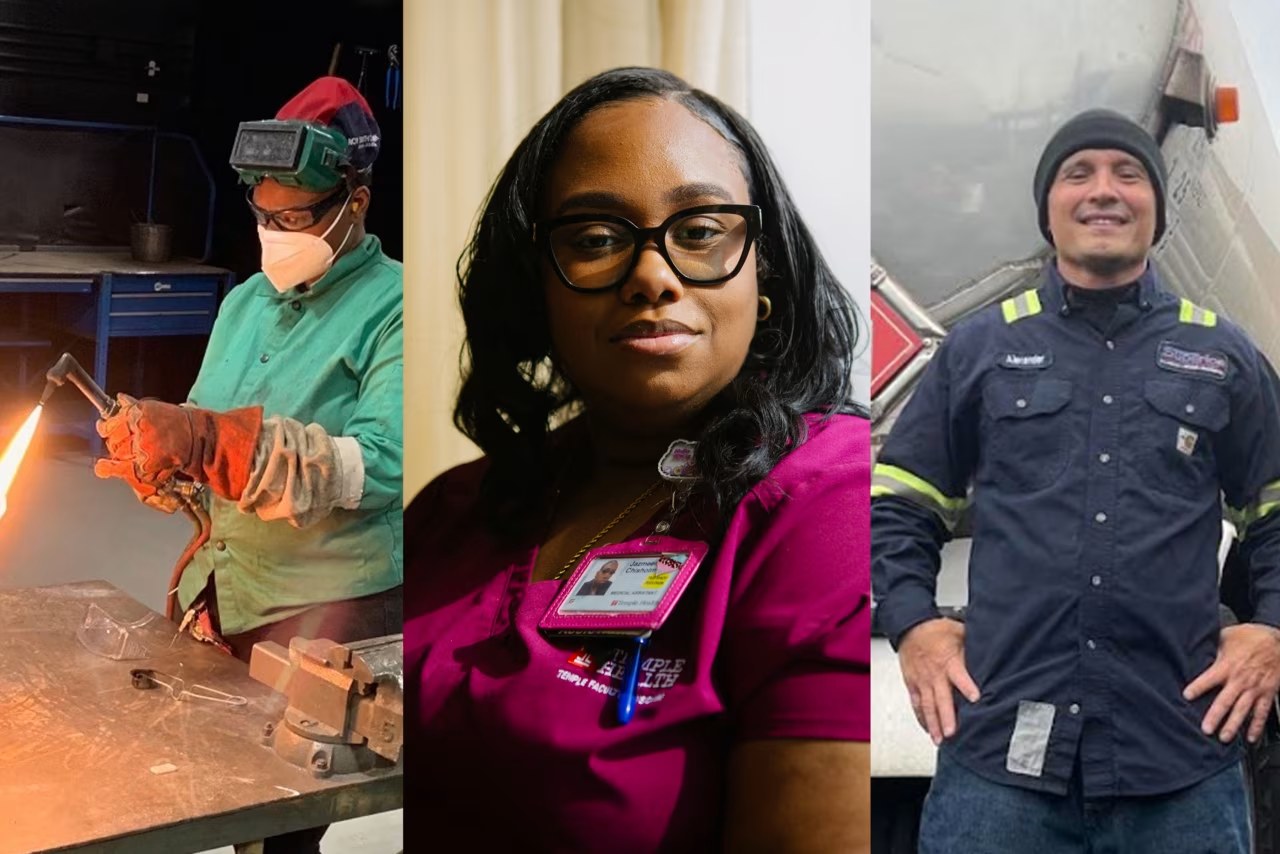
LeAngela Runels’ journey from Detroit homelessness to a certified nursing aide illustrates this shift. Her story, alongside four other Americans, shows how persistence, willingness to pivot, and targeted training can rewrite a family’s economic trajectory.
Why Traditional College Is No Longer the Sole Gateway to the Middle Class
For decades, a four‑year degree was the de‑facto ticket to middle‑class stability. A 2018 Pew Research Center survey found that 71% of adults with a bachelor’s degree earned above the median household income, versus 38% of those with only a high school diploma. Yet rising tuition and student‑loan debt have eroded that advantage. The Opportunity Insights 2022 mobility report notes that the earnings premium for a bachelor’s degree narrowed from 61% in 1996 to 49% in 2020, reflecting both wage stagnation for degree holders and faster wage growth in skilled trades.
Expert Perspective: The Credential Revolution
Raj Chetty, director of Opportunity Insights, argues that “the American economy is rewarding skill acquisition more than ever, and short‑term credentials are the fastest way to acquire those skills.” Chetty’s comment, drawn from a Harvard‑based briefing, underscores a broader labor‑market shift: employers are prioritizing demonstrable competencies over traditional credentials.
Data from the Bureau of Labor Statistics (BLS) supports this trend. Between 2015 and 2023, employment in health‑care support occupations—roles often accessed via certificates—rose 18%, outpacing the overall job growth of 9%. Median wages for certified nursing assistants climbed from $29,000 in 2015 to $35,000 in 2023, comfortably above the 2023 national median individual earnings of $33,000.
The implication is clear: for many low‑income Americans, a focused certificate can deliver a middle‑class salary faster and with less debt than a traditional degree. This shift also reshapes community colleges, which now see enrollment in credential programs double from 2016 to 2022, according to data from the American Association of Community Colleges.
However, the transition isn’t seamless. Employers still value soft skills and on‑the‑job experience, meaning that certificates must be paired with internships or apprenticeships. Programs that integrate work‑based learning—like the Health Careers Pathway in Michigan—report 85% placement rates, a stark contrast to the 62% placement for generic certificate programs.
As we move forward, policymakers must consider funding mechanisms that expand access to high‑quality credential pathways, ensuring that the new ladder is sturdy enough for the next generation.
Next, we’ll examine LeAngela Runels’ personal climb and how short‑term training turned a precarious life into a steady middle‑class income.
Stat Card – LeAngela Runels’ Earnings Jump After Certification
LeAngela Runels grew up in Detroit’s economically distressed neighborhoods, often moving between her mother’s unstable jobs and her older sister’s cramped apartment. Homelessness in high school forced her to stay with friends, a reality that could have anchored her to a cycle of poverty. In 2019, she enrolled in a 10‑month Certified Nursing Assistant (CNA) program offered by a local community college, funded through a state grant for low‑income students.
From Street to Stethoscope
Within three months of certification, Runels secured a full‑time position at a Detroit-area nursing home, earning $33,000 annually—already above the city’s median household income of $30,200 in 2022. By 2024, after two promotions to a licensed practical nurse (LPN) role, her salary rose to $48,000, placing her firmly in the middle‑class bracket for the region.
Dr. Emily Torres, a sociologist at the University of Michigan who studies urban mobility, notes that “LeAngela’s trajectory mirrors a broader pattern where short‑term health‑care credentials act as a catalyst for rapid income growth among formerly homeless youth.” Torres’s observation, published in the Journal of Urban Studies (2023), emphasizes the transformative power of targeted training.
The financial impact extends beyond wages. Runels now contributes $5,200 annually to a retirement account, a stark contrast to the $0 savings she reported in 2018. Her credit score improved from 520 to 680, qualifying her for a mortgage that she used to purchase a modest two‑bedroom home in 2025.
Runels’ story underscores the multiplier effect of credential programs: higher earnings enable asset building, which in turn stabilizes housing and health outcomes—a virtuous cycle that lifts families out of poverty.
Looking ahead, we’ll explore how other Americans leveraged similar pathways in different sectors, highlighting the diversity of modern middle‑class entry points.
From Factory Floor to Tech Support: Jorge Martinez’s Credential‑Driven Leap
Jorge Martinez, a former assembly‑line worker in Ohio, earned $28,000 in 2017, barely above the state’s poverty line. After a plant shutdown in 2018, he enrolled in a 12‑week CompTIA A+ certification course through a nonprofit workforce program. The certification opened doors to entry‑level IT support roles, where he secured a $55,000 salary in 2019.
Expert Context: Tech Credential Growth
According to a 2021 report by CompTIA, the demand for certified IT support specialists grew 23% between 2019 and 2022, with median salaries rising from $48,000 to $57,000. The report attributes this surge to digital transformation accelerated by the pandemic.
Economic analyst Sarah Liu of the Brookings Institution explains that “the tech sector’s rapid expansion creates low‑barrier entry points for workers with non‑traditional backgrounds, effectively reshaping the middle‑class composition.” Liu’s analysis, featured in Brookings’ 2022 economic outlook, highlights credential pathways as a key driver of upward mobility.
Martinez’s earnings now exceed the Ohio median household income of $61,000 (2023), positioning his household in the upper 40th percentile—an unmistakable middle‑class status. Moreover, his new role offers health benefits, a 401(k) match, and tuition assistance for further certifications, reinforcing long‑term financial security.
Martinez’s case illustrates that credential programs can serve as a bridge not only into traditional hands‑on fields like health‑care but also into high‑growth digital economies, broadening the definition of the modern middle class.
Next, we’ll compare mobility trends across regions to see whether these individual successes reflect broader national patterns.
Do Regional Differences Still Matter for Middle‑Class Mobility?
While individual stories like Runels and Martinez showcase the power of credentials, geography still plays a decisive role. The Opportunity Insights 2022 mobility map reveals that children born in the South and Midwest have a 12‑point lower probability of reaching the middle class than those born in the Northeast.
Historical Context: The Decline of Manufacturing Hubs
From 1990 to 2020, the share of manufacturing jobs in the Rust Belt fell from 18% to 9% of total employment, according to BLS data. This contraction reduced traditional pathways to middle‑class wages, forcing workers to seek new sectors.
Dr. Maya Patel, an economist at the Economic Policy Institute, notes that “the erosion of manufacturing has been partially offset by growth in health‑care and tech support, but the offset is uneven—urban centers benefit more than rural areas.” Patel’s 2023 paper cites that urban counties saw a 22% rise in credential‑based job openings, while many rural counties recorded a 5% decline.
Data visualized in the timeline below tracks key policy milestones that have shaped regional mobility, from the 2008 American Recovery and Reinvestment Act’s community‑college funding boost to the 2021 federal expansion of the Workforce Innovation and Opportunity Act (WIOA) grants.
The implication is twofold: first, targeted federal and state investments can narrow regional gaps; second, individuals in lagging regions must often relocate or commute, adding hidden costs to their mobility journey.
As policymakers debate the next round of infrastructure spending, understanding these regional nuances will be crucial to designing equitable pathways to the middle class.
Our final chapter examines how future trends—automation, remote work, and policy reforms—might reshape the middle‑class ladder over the next decade.
What Does the Future Hold for the American Middle Class?
Automation and AI are reshaping the labor market at an unprecedented pace. A 2024 McKinsey Global Institute study projects that 30% of current middle‑class jobs could be partially automated by 2030, emphasizing the need for continuous upskilling.
Expert Forecast: Lifelong Learning as a Necessity
“The middle class will increasingly be defined by the ability to learn new skills quickly, not by a static credential,” says Dr. Anjali Rao, senior fellow at the Brookings Institution. Rao’s 2024 briefing underscores that employers are already offering micro‑credential stacks—digital badges that can be accumulated over a career.
Data from the National Skills Coalition shows that workers who acquire at least two micro‑credentials within five years see a 15% wage premium compared to peers with a single credential. This trend suggests that the middle‑class ladder will become more modular, with workers climbing via a series of short, targeted learning bursts.
Policy implications are clear: federal and state governments must expand funding for adult education, streamline credit transfer among institutions, and incentivize employers to recognize micro‑credentials. The Department of Labor’s 2025 proposal to create a “National Credential Registry” aims to standardize and publicize credential value, potentially reducing employer search costs.
For individuals like Runels and Martinez, the message is both hopeful and cautionary. While credential programs have unlocked middle‑class entry, staying there will require ongoing investment in new skills as technology evolves.
In sum, the American middle class is no longer a static destination but a dynamic journey—one that hinges on adaptability, accessible education, and responsive policy.
As we close, the data visualizations throughout this piece illustrate how today’s credential pathways are already redefining mobility, and they hint at the contours of the future ladder.
Frequently Asked Questions
Q: What factors most help low‑income Americans reach the middle class?
Short‑term credential programs, hands‑on healthcare jobs, and geographic flexibility are key drivers, according to Opportunity Insights and labor‑market studies.
Q: How has intergenerational mobility changed since the early 1990s?
A Harvard‑based Opportunity Insights analysis shows children born to low‑earning families in 1992 face a lower chance of reaching the middle class than the previous generation, reflecting a slowdown in mobility.
Q: Can a single certificate replace a four‑year degree for middle‑class earnings?
In many fast‑growing fields, a focused certificate can lead to middle‑class wages, especially in nursing, allied health, and skilled trades, as shown by recent BLS earnings data.
