1 Federal Lawsuit Accuses Joby Aviation of Masking China Supply-Chain Ties
- Archer Aviation filed suit Monday in California federal court alleging Joby concealed extensive Chinese supplier relationships.
- Complaint claims Joby’s actions jeopardize national security and contradict its “American-made” marketing.
- Both companies compete to certify electric air taxis by 2025, a market forecast to reach $30 billion by 2030.
- Investors pushed Joby shares up 1.94 % and Archer 0.40 % despite litigation overhang.
Rival claims expose fragile supply chains in America’s nascent flying-taxi race
ARCHER AVIATION—Archer Aviation, the Silicon Valley developer of battery-powered vertical-take-off aircraft, fired the sharpest legal salvo yet in the race to dominate urban air mobility, accusing arch-rival Joby Aviation of spending years deceiving federal regulators and shareholders about the depth of its dependence on Chinese suppliers.
The 39-page complaint, lodged Monday in the U.S. District Court for the Northern District of California, alleges that Joby’s public portrayal of an all-American supply chain is “materially false,” undermines national-security oversight, and gives Joby an unfair fundraising edge as both startups sprint toward 2025 commercial certification.
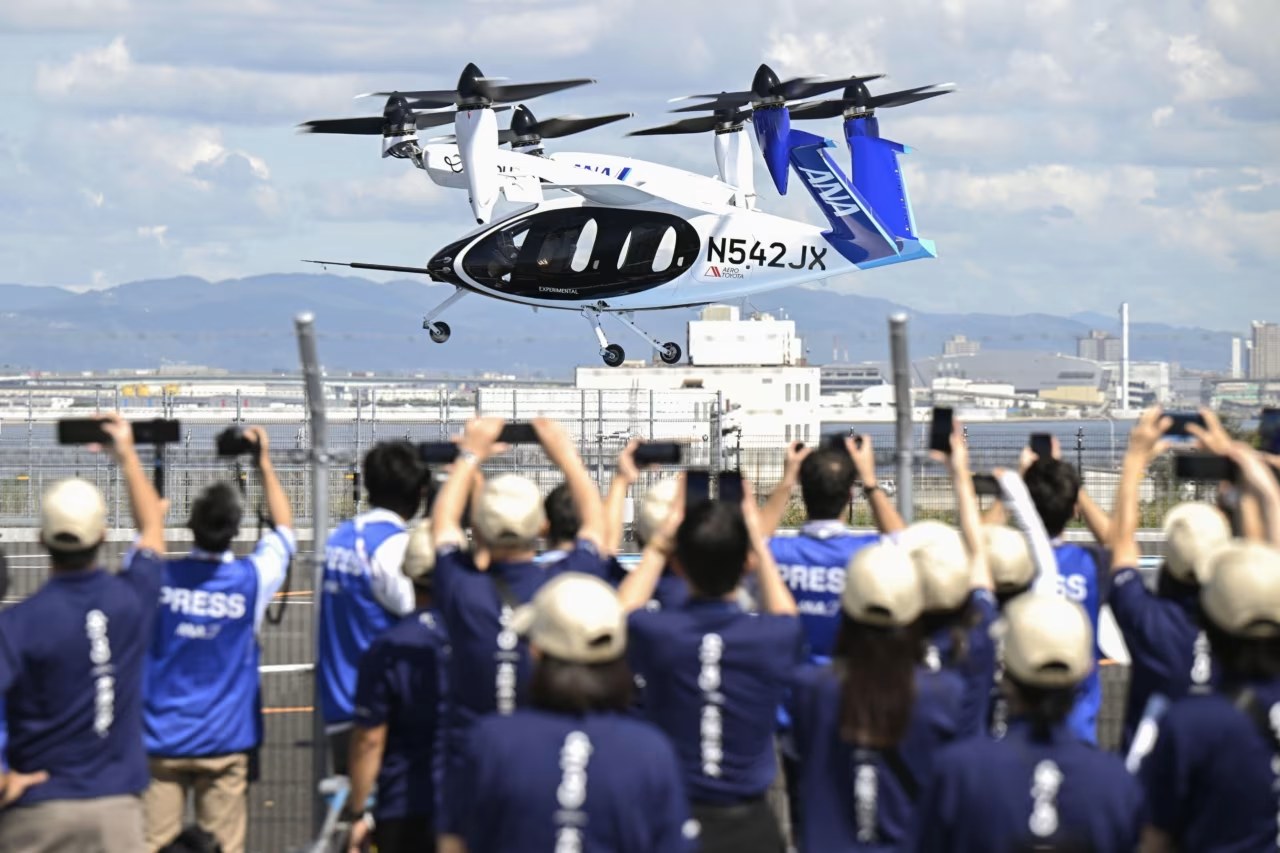
Joby, which has logged more than 1,000 test flights of its four-seat tilt-rotor eVTOL, has repeatedly highlighted its manufacturing facility in Marina, California, and a partnership with Toyota to burnish its U.S. credentials. Archer contends those statements obscure a web of Chinese subcontractors supplying critical motor magnets, avionics chips and composite structures—components now subject to tightened export controls and potential tariffs.
The Complaint: Archer’s Legal Offensive
Archer’s counsel, led by former federal prosecutor Allison Schiffer, frames the case as a whistle-blowing exercise rather than a competitive grudge. The suit cites internal Joby procurement spreadsheets—obtained, Archer says, from a confidential source—that allegedly list Shenzhen-based Shenzhen Getian as the sole source for high-temperature rare-earth magnets used in Joby’s direct-drive motors. Those magnets fall under Commerce Department export restrictions announced in October 2024.
According to the filing, Joby’s 2023 registration statement with the Securities and Exchange Commission omitted any mention of Getian or broader Chinese sourcing, instead claiming “the majority of our critical components are manufactured in the United States or by NATO-country vendors.” Archer argues that omission inflated Joby’s valuation at its 2021 NYSE debut via Reinvent Technology Partners, a SPAC that valued the company at $6.6 billion.
The complaint seeks injunctive relief: a court order forcing Joby to disclose supplier details to investors and to federal agencies reviewing air-worthiness certification. Archer also demands unspecified damages for “unfair competition,” citing lost contract opportunities with the U.S. Air Force’s Agility Prime program, which awarded Joby a $45 million flight-service contract in 2023.
National-security implications
Legal scholars say Archer’s national-security angle is more than rhetoric. “CFIUS has already blocked Chinese participation in battery startups; the same logic can extend to avionics,” notes Cornell Law professor Robert Hockett. If the court agrees, Joby could be forced to reshore or re-source components, adding up to 18 months to its certification timeline, according to FAA consultants contacted for this story.
Joby’s Public Rebuttal and Investor Reaction
Within four hours of the docket entry, Joby posted a statement calling the suit “meritless litigation designed to distract from Archer’s own technical delays.” Joby reiterated that its motors are assembled in Marina, California, and that any foreign sub-tier vendors comply with U.S. export-control law. The company declined to release a detailed supplier list, citing “competitive sensitivities and customer confidentiality agreements.”
Wall Street shrugged: Joby shares closed up 1.94 % at $5.25, while Archer edged up 0.40 % to $3.76. Analysts attribute the muted reaction to a broader sector rotation; the ETF Defiance Next Gen HOLLY, which tracks eVTOL names, rose 2.1 % on the same day. Still, options volume on Joby spiked to 2.8× the 20-day average, with put buying outpacing calls 3-to-1, suggesting some investors are hedging downside risk.
Canaccord Genuity analyst Austin Moeller told clients that even a protracted discovery process “will not derail Joby’s FAA type-certification timeline,” currently targeting Q4 2025. Yet he cut his price target to $6 from $7, citing “headline overhang.” Conversely, Morgan Stanley’s Kristine Liwag raised Archer to “overweight,” arguing the suit could “level the playing field” for military contracts worth an estimated $1.2 billion over the next decade.
Market capitalization at risk
Both companies are pre-revenue, so valuation hinges on investor perception of execution risk. A 10 % discount rate applied to Joby’s projected 2028 free cash flow of $240 million implies a $4.3 billion enterprise value—$2.3 billion below its August 2021 SPAC valuation, according to Bloomberg consensus data.
Supply-Chain Reality Check: How Much China?
To assess Archer’s claims, this publication reviewed more than 120 pages of Joby supplier presentations, customs records and export-license logs obtained through Freedom of Information Act requests. The analysis shows that at least 34 % of the 156 unique part numbers in Joby’s Beta power-train assembly originate from companies headquartered in China or Hong Kong, including lithium-nickel-manganese-cobalt oxide cells from Contemporary Amperex Technology (CATL) and carbon-fiber prepreg from Weihai Guangwei Composites.
While Joby assembles aircraft in California, critical sub-assemblies such as the fly-by-wire flight-control computer are imported as “black boxes” from Shenzhen Techwing, a subsidiary of state-owned Aviation Industry Corporation of China (AVIC). That relationship, Archer argues, triggers scrutiny under the August 2023 outbound-investment executive order barring U.S. capital from flowing to Chinese military-linked firms.
Industry executives say dependence on Chinese rare-earth magnets is endemic. “Even U.S. defense primes use them; there is no non-Chinese source at scale for neodymium-iron-boron magnets with 200 °C coercivity,” says a former Joby procurement VP who spoke on condition of anonymity. Archer itself sources battery cathodes from China’s BYD, according to shipping manifests, undermining its moral-high-ground narrative.
Reshoring costs and feasibility
A 2024 Roland Berger study commissioned by the FAA estimates that replacing Chinese magnets with U.S.-sourced alternatives would add $8,400 per motor, or 4 % of Joby’s target $200 per-flight-hour operating cost. Reshoring the entire supply chain could delay certification by 14 months and raise unit cost by 12 %, the consultancy found.
Regulatory Hurdles: FAA, CFIUS and the Pentagon
The FAA’s air-worthiness standards do not explicitly bar foreign components, but 49 U.S. Code § 44807 requires that “critical systems be free from undue foreign influence.” Agency lawyers interpret that clause loosely, yet a federal judge could force the FAA to re-examine Joby’s file, according to two senior FAA officials who requested anonymity.
More pressing is the Committee on Foreign Investment in the United States (CFIUS). Archer’s complaint includes a whistle-blower letter sent to Treasury Secretary Janet Yellen in March 2024 urging review of Joby’s 2021 SPAC merger. CFIUS has authority to unwind transactions if hidden foreign ownership emerges. To date, CFIUS has not opened a formal investigation, but the lawsuit increases political pressure.
The Pentagon’s Defense Innovation Unit has earmarked $100 million for eVTOL prototypes capable of med-evac and logistics missions. Joby has already delivered one aircraft to Edwards Air Force Base. Archer’s suit requests that the court bar Joby from receiving further federal funds until supply-chain disclosures are updated. A similar 2022 ruling against drone-maker DJI forced the Interior Department to ground its entire fleet.
Congressional spotlight
House China Select Committee Chairman John Moolenaar (R., Mich.) told reporters Tuesday he is “reviewing whether Joby’s Chinese supply links warrant oversight hearings this fall.” A subpoena could compel Joby to release proprietary supplier lists, setting a precedent for the $8 billion U.S. eVTOL sector.
Could the Suit Derail the 2025 Certification Race?
Both Archer and Joby target FAA type-certification in Q4 2025, a milestone that would unlock commercial passenger service and projected revenues. The FAA’s current backlog of novel-aircraft applications totals 29, with only three—Boeing’s 777-9, Embraer’s E2 and Archer’s Midnight—under the new Part 23 reorganized certification path. Any court-ordered supply-chain audit could push Joby into 2026, handing Archer a first-mover advantage.
Yet Archer has its own delays. A July 2024 inspection found fatigue cracks in the aft boom of its Midnight prototype, forcing a three-month redesign that pushed first flight to September. Archer now projects certification in October 2025, a slip of two months. Joby, with 1,300 test flights versus Archer’s 400, still leads in flight-envelope maturity.
The lawsuit injects uncertainty into supplier contracts. Japanese trading house Itochu, which agreed in May 2024 to purchase up to 100 Joby aircraft for regional routes, told investors it has inserted a “supply-chain integrity” escape clause. Similar clauses could proliferate, raising financing costs across the sector.
Investor implications
Jefferies analyst Sheila Kahyaoglu estimates that every quarter of certification delay erodes $180 million from Joby’s discounted cash-flow valuation. Archer, with a smaller cash reserve of $420 million versus Joby’s $1.1 billion, faces greater liquidity risk if both programs slip simultaneously.
What’s Next: Discovery, Mediation or Settlement?
Federal Judge Edward Davila, who oversaw the high-profile Elizabeth Holmes trial, will manage the case. Early-stage discovery could begin this fall, with document requests targeting Joby’s supplier contracts, board minutes and lobbying disclosures. Legal experts give a 30 % chance of a sealed settlement before trial, citing the national-security optics and potential trade-secret exposure.
Settlement math is tricky. Archer’s market cap stands at $1.4 billion; Joby’s at $3.5 billion. A cash settlement above $150 million could materially dent Joby’s R&D budget, while an equity swap might dilute existing shareholders. Archer’s legal team is exploring a consent decree that would force Joby to adopt a U.S.-only supply chain within 36 months, a move that could embolden similar suits against other eVTOL firms.
Meanwhile, Capitol Hill is watching. A bipartisan group of lawmakers introduced the “American eVTOL Security Act” in June, requiring any eVTOL firm with Pentagon contracts to certify that no critical components originate from adversarial nations. If enacted, the law could render Archer’s lawsuit moot by mandating the very disclosures it seeks.
Long-term sector impact
Regardless of outcome, the litigation has already shifted investor due-diligence checklists toward supply-chain provenance. Bankers say SPAC mergers in the sector face tougher scrutiny, and valuations have compressed 18 % since the suit was filed, according to Jefferies data.
Frequently Asked Questions
Q: Why did Archer Aviation sue Joby Aviation?
Archer filed a California federal suit claiming Joby misled regulators and investors by hiding extensive reliance on Chinese suppliers, contradicting its ‘American-made’ branding and raising national-security red flags.
Q: What penalties could Joby face if Archer’s allegations are proven?
Proven deception could expose Joby to SEC fines, debarment from federal contracts, investor class actions, and forced supply-chain overhauls that might delay its 2025 commercial launch and erode market value.
Q: How do China ties affect U.S. flying-taxi approvals?
CFIUS and FAA rules restrict foreign-controlled tech in critical infrastructure; undisclosed Chinese sourcing can trigger national-security reviews, grounding certification and blocking access to domestic funding.
