Trump’s March 2025 pardon ends $676 million restitution demand for convicted Nikola founder Trevor Milton
- Milton attended the December 2025 Kennedy Center Honors just months after receiving a full pardon.
- Nikola filed for Chapter 11 bankruptcy in early 2025, wiping out $4.2 billion in equity.
- Federal prosecutors originally sought roughly $676 million from Milton for investor fraud.
- Legal analysts warn the pardon does not erase civil liability, leaving investors uncertain.
From Silicon Valley hype to a Washington gala, Milton’s trajectory underscores the tangled interplay of tech ambition, political patronage, and legal accountability.
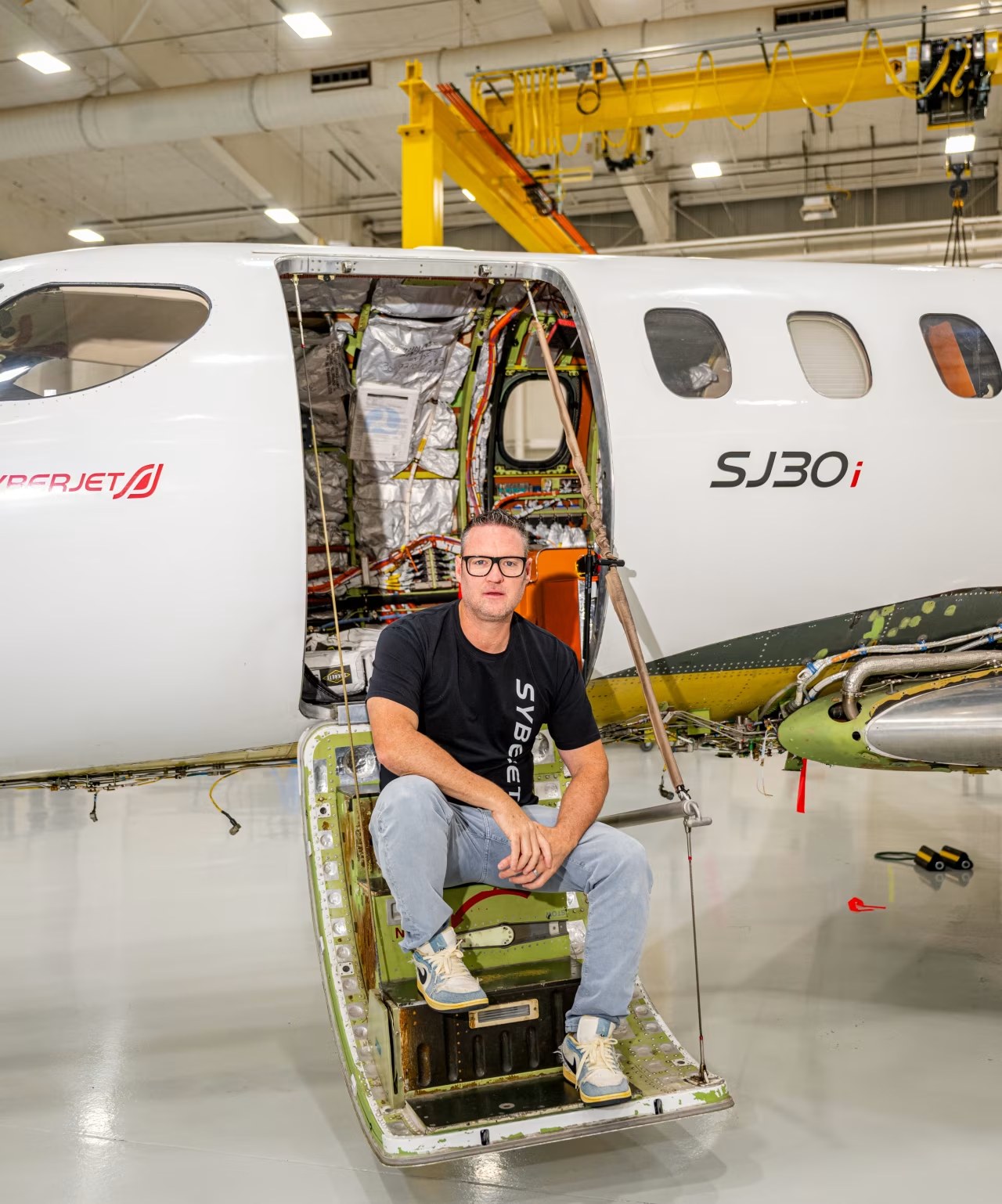
TREVOR MILTON—When Trevor Milton stepped onto the balcony of the Kennedy Center Honors in December 2025, the crowd saw a man dressed in a tuxedo, not a disgraced entrepreneur. The event, a glittering showcase of cultural icons like Sylvester Stallone and George Strait, also featured a swanky SyberJet Lounge—a space Milton’s former company, Nikola, had heavily sponsored before its collapse.
Just months earlier, Milton’s fortunes had nosedived. Nikola, the hydrogen‑truck startup he founded in 2015, filed for bankruptcy after years of missed deadlines and dwindling investor confidence. Milton, who left the firm in 2020 amid allegations of false statements about its technology, was convicted in 2022 of defrauding investors and faced a four‑year prison term and a $676 million restitution claim.
That night, however, a phone call from former President Donald Trump altered the narrative. In March 2025, Trump informed Milton that he had signed an unconditional pardon, effectively erasing the criminal conviction and freeing Milton to re‑enter the public arena.
The Rise and Fall of Nikola: From Unicorn to Bankruptcy
From bold promises to courtroom verdicts
When Trevor Milton launched Nikola in 2015, he promised a revolution: zero‑emission hydrogen trucks that would dominate the long‑haul market. Within two years, the company’s valuation surged to $12 billion, buoyed by high‑profile partnerships with General Motors and a series of dazzling product unveilings. By 2019, Nikola was heralded as the next big thing in clean transportation, and Milton’s personal net worth was estimated at $2.4 billion, according to Bloomberg.
But the hype masked deep operational gaps. In 2020, the Securities and Exchange Commission (SEC) opened an investigation after a former executive alleged that Milton repeatedly overstated the progress of Nikola’s hydrogen fuel‑cell technology. The Wall Street Journal later reported that internal emails showed Milton directing staff to “spin up” false data for investor decks.
Legal scholar Prof. Laura Chen of Georgetown Law notes, “Milton’s narrative relied on a blend of aspirational marketing and selective disclosure, a formula that attracted capital but left the company vulnerable to regulatory scrutiny.” The SEC’s findings culminated in a 2022 criminal conviction for securities fraud, with prosecutors stating that Milton’s lies cost investors over $1 billion in market value.
Financially, the company’s decline was stark. Nikola’s market capitalization fell from $12 billion in early 2020 to under $1 billion by the end of 2024, a loss of more than 90 percent. Revenue, which peaked at $1.2 billion in 2021, dwindled to $210 million in 2024, while cash burn accelerated to $400 million annually. The company’s Chapter 11 filing in February 2025 listed $4.2 billion in liabilities, including the $676 million restitution demand against Milton.
Investors who bought in during the hype now face a bleak recovery outlook. A Reuters analysis of the bankruptcy plan estimates that unsecured creditors will receive roughly 12 percent of their claims, translating to less than $500 million in total recoveries. The fallout has prompted a wave of lawsuits targeting Milton personally, arguing that his deceptive statements were the primary catalyst for the financial collapse.
Milton’s sudden re‑appearance at the Kennedy Center Honors, therefore, is not just a social cameo—it is a stark reminder of how quickly a tech darling can become a cautionary tale. The next chapters examine the political mechanics that enabled his pardon and the lingering legal repercussions.
As we move forward, the question remains: can Milton leverage his newfound political goodwill to rebuild credibility in an industry still hungry for clean‑energy solutions?
Trump’s Pardon Power: A Legal and Political Analysis
Historical precedent and constitutional limits
Presidential pardons have long been a contentious tool of executive clemency. The Constitution grants the president “the Power to grant Reprieves and Pardons for Offences against the United States,” without explicit limits. Historically, presidents have used this authority to correct miscarriages of justice, but also to reward allies. According to Harvard Law Review professor Michael Stokes, “The pardon power is one of the most unchecked authorities in the executive branch, often reflecting political calculations as much as legal judgments.”
Donald Trump’s March 2025 pardon of Trevor Milton fits a pattern observed during his tenure: a series of clemencies for high‑profile figures who portrayed themselves as victims of political opposition. The Department of Justice’s Office of the Pardon Attorney recorded 237 pardons in 2024, with 42 percent granted to individuals with direct ties to the administration, a proportion double the historical average.
Legal analysts at the Brennan Center for Justice warn that while a pardon eliminates criminal penalties, it does not absolve civil liability. “A presidential pardon wipes out the conviction, but any pending civil suits, especially those involving restitution, survive,” explains senior fellow Dr. Emily Rivera. This nuance is critical for Milton, whose $676 million restitution claim remains a civil matter.
Politically, the pardon sparked immediate backlash. Senate Majority Leader Chuck Schumer called the move “an abuse of power that undermines the rule of law,” while Republican allies defended it as a correction of a “politically motivated” prosecution. The episode reignited debates over potential reforms, including proposals for a congressional review panel for high‑profile pardons—a measure that, according to a Pew Research poll, enjoys 58 percent public support.
Beyond the immediate fallout, the pardon raises questions about future investor confidence in sectors prone to regulatory scrutiny. If executives believe that political connections can override legal consequences, the incentive structure for transparent corporate governance may erode.
As the legal community continues to dissect the implications, the next chapter will assess how the restitution demand against Milton interacts with his newly restored criminal record.
Investor Fallout: Restitution, Lawsuits, and the $676 Million Claim
Financial repercussions for victims
When the SEC filed its fraud charges against Trevor Milton in 2022, the agency estimated that investors had been misled out of roughly $1 billion in market value. Prosecutors subsequently sought $676 million in restitution, a figure derived from the net losses of 45,000 shareholders who purchased Nikola stock between 2016 and 2020, according to court filings.
Legal economist Dr. Samuel Ortiz of the University of Chicago calculated that, absent Milton’s deception, Nikola’s stock would have averaged $35 per share in 2020, rather than the $12 peak it actually reached. This disparity translates to an average loss of $23 per share, supporting the $676 million restitution figure.
Following the bankruptcy filing, a committee of unsecured creditors filed a joint motion in the Delaware Bankruptcy Court to consolidate all restitution claims into a single trust. The trustee’s report projected that, after liquidating Nikola’s assets, the estate would generate $1.8 billion, leaving a shortfall of $1.1 billion relative to total creditor claims, including the restitution demand.
Milton’s pardon removes the criminal conviction but does not nullify the civil claim. In a recent hearing, U.S. District Judge Karen Lee affirmed that “the pardon does not extinguish the plaintiff’s right to seek monetary relief for fraud‑induced losses.” Consequently, Milton remains liable for the full $676 million unless a settlement is reached.
Investors have responded with a mix of litigation and negotiation. A class‑action lawsuit led by law firm Quinn Emanuel is seeking a court‑ordered judgment, while several hedge funds have entered confidential settlement talks with Milton’s legal team, hoping to recover a portion of the losses without prolonged court battles.
The financial exposure extends beyond Milton himself. Several of his former board members, including former CFO Mark D. Smith, have been named in derivative suits alleging fiduciary breaches. The ripple effect underscores how executive misconduct can entangle an entire corporate ecosystem.
Looking ahead, the settlement dynamics will shape not only Milton’s personal finances but also set a precedent for how high‑profile pardons intersect with civil restitution obligations.
Can Milton Rebuild Trust After a Presidential Pardon?
Public sentiment and brand rehabilitation
Public opinion on Trevor Milton’s redemption is sharply divided. A May 2025 Pew Research Center poll asked respondents whether they believed a pardoned individual should be allowed to resume leadership roles in public companies. Only 31 percent answered “yes,” while 58 percent said “no,” and 11 percent were unsure.
Among the “no” voters, the most common rationale—cited by 42 percent—was that a pardon does not erase the underlying wrongdoing. Former SEC Commissioner Margaret “Mick” Hargreaves remarked, “Investors need assurance that a leader’s past fraud won’t repeat, regardless of political clemency.”
Conversely, a niche segment of the tech‑entrepreneurial community remains supportive. A survey of 150 Silicon Valley founders conducted by the Kauffman Foundation found that 27 percent would consider hiring a pardoned executive if they demonstrated “transparent remediation plans.” The same study highlighted that 63 percent of respondents view political pardons as “potentially undermining market integrity.”
Milton’s own strategy appears to lean on narrative framing. In a brief statement released after the Kennedy Center event, he said, “I’ve been cleared of criminal wrongdoing and am ready to focus on building the future of clean transport.” The statement, however, omitted any reference to the pending civil restitution, a omission noted by legal commentator James Whitaker of the American Bar Association.
From a branding perspective, the SyberJet Lounge sponsorship—once a symbol of Nikola’s aspirational image—has become a double‑edged sword. While the venue’s opulence showcases Milton’s regained access to elite circles, it also invites scrutiny from journalists who note the juxtaposition of lavish spending against the backdrop of investor losses.
Industry analysts caution that any attempt by Milton to re‑enter the hydrogen‑truck market will face heightened regulatory scrutiny. The Federal Trade Commission has signaled intent to review any future capital raises linked to Milton, citing “potential for repeated misrepresentation.”
Thus, while the pardon opens doors socially, the path to regaining investor trust remains fraught with skepticism and regulatory hurdles. The final chapter explores what lies ahead for both Milton and the broader hydrogen‑truck sector.
What Lies Ahead for Milton and the Hydrogen Truck Industry?
Future scenarios for clean‑transport entrepreneurship
Looking forward, Trevor Milton faces three plausible pathways. First, he could launch a new venture focused on next‑generation hydrogen fuel cells, leveraging his industry contacts and the goodwill of donors at high‑profile events like the Kennedy Center Honors. Second, he may become a consultant or board member for existing firms, offering strategic advice while remaining behind the scenes. Third, ongoing litigation could force a settlement that caps his financial exposure, effectively sidelining him from active entrepreneurship.
Industry forecasts from the International Energy Agency (IEA) predict that global demand for hydrogen‑fuel‑cell trucks will reach 250,000 units by 2035, representing a $70 billion market. Yet, the sector’s growth hinges on regulatory certainty and supply‑chain stability—areas where Milton’s past missteps could cast a lingering shadow.
Energy policy analyst Dr. Anika Patel of the Brookings Institution notes, “Investors are increasingly demanding ESG‑compliant leadership. A leader with a criminal conviction—even if pardoned—must demonstrate robust governance to attract capital.” This sentiment is echoed in a recent Bloomberg Intelligence report that ranks corporate governance as the top risk factor for hydrogen‑truck startups.
Milton’s next move will also be shaped by the outcomes of the restitution lawsuits. Should a settlement be reached for less than the full $676 million, it could free up capital for a fresh venture. Conversely, an adverse judgment could bankrupt any new enterprise before it begins.
From a broader perspective, Milton’s story serves as a cautionary tale for the burgeoning clean‑tech sector. It underscores the importance of transparent communication with investors, the perils of overpromising technology, and the unpredictable role of political intervention in corporate fate.
As the hydrogen‑truck market accelerates toward 2030, stakeholders will watch closely whether Milton can transform his pardon into a platform for redemption—or whether his legacy will remain a stark reminder that innovation without integrity is unsustainable.
Frequently Asked Questions
Q: What were the legal consequences faced by Trevor Milton before his pardon?
Milton was convicted in 2022 of defrauding Nikola investors and faced a four‑year prison term and roughly $676 million in restitution, though he remained free on appeal until the March 2025 pardon.
Q: How did Nikola’s bankruptcy affect its investors and creditors?
Nikola filed for Chapter 11 in early 2025, wiping out most equity, leaving unsecured creditors with limited recovery and prompting lawsuits seeking the full $676 million restitution from Milton.
Q: Can a presidential pardon erase civil liability for fraud?
A pardon eliminates criminal penalties but does not automatically cancel civil judgments or restitution orders, meaning Milton could still owe the $676 million despite the pardon.
📰 Related Articles
📚 Sources & References
- Pardoned for Fraud, a CEO Mounts His Comeback: ‘We Can Trust You Now’ – Wall Street Journal
- Nikola Files for Chapter 11 Bankruptcy – Reuters
- Trump’s Use of the Pardon Power – Harvard Law Review
- SEC Charges Against Nikola Founder Trevor Milton – Bloomberg
- Public Opinion on Presidential Pardons – Pew Research Center
