Gasoline Prices Jump Up to 18¢ Overnight as Persian Gulf War Idles One-Fifth of Global Oil Output
- Persian Gulf conflict shutters Kuwaiti fields that normally export 1.6 million bpd.
- Wholesale gasoline futures surged 11%, the biggest one-day move since the Ukraine invasion.
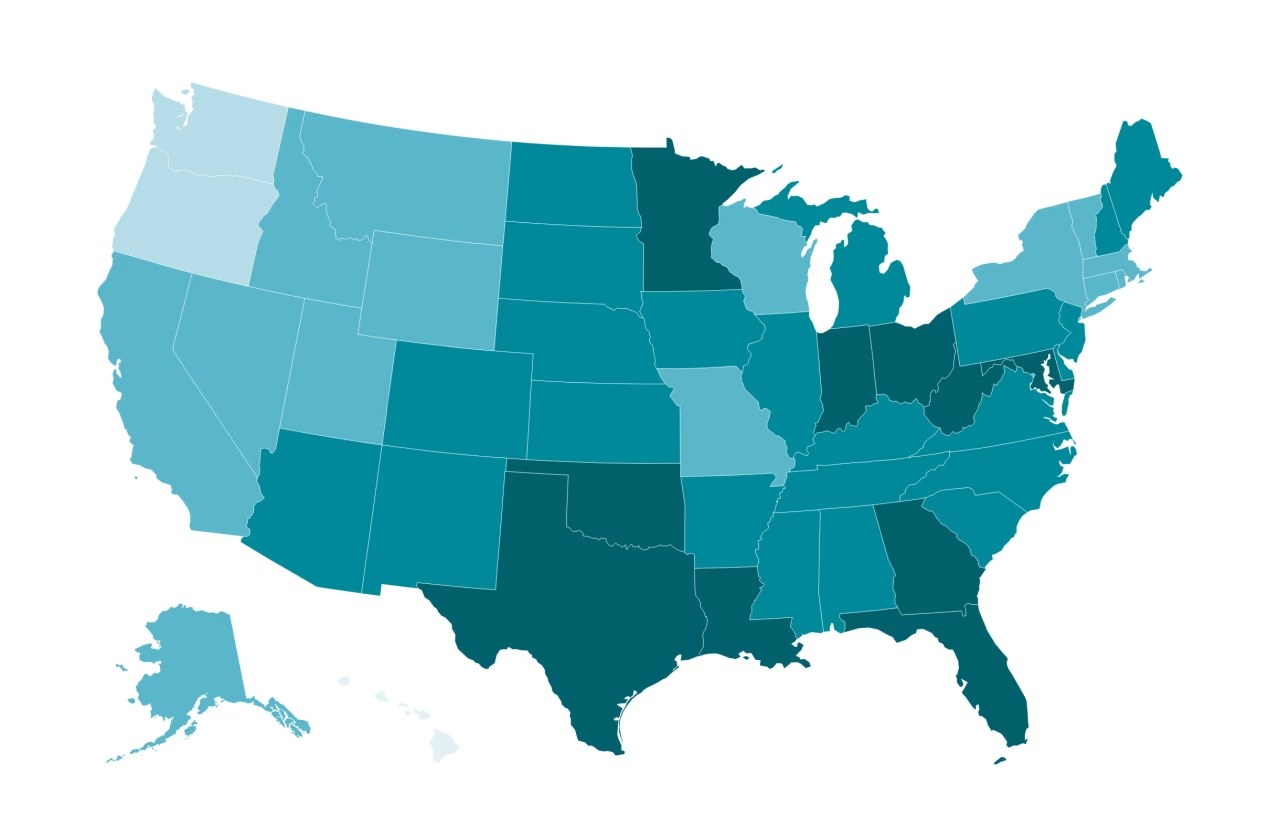
- California drivers already pay $4.15/gal, up 18¢ from yesterday; national average tops $3.60.
- Analysts warn Brent crude could breach $100 if Saudi facilities suffer collateral damage.
- White House weighs another strategic-petroleum-reserve release to blunt pump shock.
Overnight, war replaced surplus with scarcity—and every mile Americans drive just got more expensive.
PERSIAN GULF WAR—Overnight, war replaced surplus with scarcity—and every mile Americans drive just got more expensive. The outbreak of fighting in the Persian Gulf has shut Kuwaiti production facilities and sent benchmark Brent crude up more than $6 a barrel in electronic trade. Within hours, wholesale gasoline prices on the Gulf Coast soared 11%, the steepest single-session leap since Russia rolled tanks into Ukraine. By dawn, motorists from Phoenix to Philadelphia were staring at fresh stickers on pump handles reflecting increases of 12 to 18 cents a gallon.
The speed of the rally is exactly what energy economists fear most. “Geopolitical risk is now front-page news at every suburban breakfast table,” says Tom Kloza, global head of energy analysis at OPIS. “When 20% of the world’s crude is suddenly in harm’s way, retailers don’t wait for inventory costs to catch up—they lift prices immediately.”
War risk premiums are nothing new, yet the juxtaposition is jarring: only three weeks ago the national average for regular grade had slipped below $3.50 for the first time since 2021 on recession chatter. Now, with Kuwaiti pipelines idled and insurance rates for tankers sailing through the Strait of Hormuz doubling, forecasters see $4 gasoline returning before Memorial Day.
Kuwait’s Blackout: How Losing 1.6 Million Barrels Per Day Roils Global Supply
Kuwait Petroleum Corp. confirmed that all export terminals have been placed under force-majeure clauses after military strikes damaged power lines feeding the 615,000-barrel-per-day Al-Ahmadi refinery complex. Roughly 1.6 million barrels per day of Kuwaiti crude are now offline, according to tanker-tracker Kpler. The country normally ships 270,000 bpd to the United States and another 400,000 bpd to Europe, so the lost volumes equate to roughly 1.6% of global demand.
That may sound modest, but spare capacity elsewhere is razor-thin. OPEC’s own data show the cartel’s idle wells at just 3.9 million bpd, the lowest cushion since 2003. “When you remove more than one-third of available headroom in a single country, the market’s margin for error disappears,” says Jim Burkhard, vice-president for oil markets at S&P Global Commodity Insights.
Historical precedent suggests the rebound will be swift once hostilities cease—but the price damage lingers.
During Iraq’s 1990 invasion of Kuwait, it took prices six months to double and three years to retrace. This time, because U.S. shale growth has plateaued, Burkhard warns a quick rebound in output may not translate into equally quick price relief.
American drivers feel the ripple almost instantly. The Colonial Pipeline, which carries 2.5 million barrels per day of refined products from Houston to New Jersey, sources 45% of its Gulf Coast feedstock from imports that are priced off Brent. When Brent spikes, so does the pipeline’s tariff-ridden tariff, pushing rack prices higher from Atlanta to Newark.
GasBuddy’s live gauge shows the national average for regular grade at $3.61, up from $3.47 yesterday. Analysts at Goldman Sachs now forecast a peak of $4.10 by mid-May if the strait remains threatened, a level last seen in July 2008. The forward curve for RBOB gasoline futures implies an additional 28-cent retail increase over the next two weeks, enough to erase the 5.6% year-to-date decline in pump prices.
From Crude Futures to Corner Stations: How Fast the Shock Travels
The lag between a Middle-East explosion and your neighborhood Chevron sign is now measured in hours, not days. Algorithmic traders push Brent futures higher within minutes of headlines; by 6 p.m. ET the previous day’s wholesale “rack” price is obsolete. Jobbers—intermediaries who haul 8,500-gallon loads to retailers—receive revised nominations overnight and pass through 80% of any futures jump before sunrise.
“Retailers know consumers comparison-shop on the drive to work,” says Patrick De Haan, head of petroleum analysis at GasBuddy. “They’d rather over-correct upward and trim later than risk selling below replacement cost.” The result: yesterday’s 11% spike in Gulf Coast gasoline futures translated into an average 14-cent retail increase across Texas, Louisiana and Arkansas by 9 a.m. this morning.
Transport geography dictates who gets hit first.
Because the West Coast is cut off from Gulf-refined supply by the Jones Act, California wholesalers bid aggressively for scarce cargoes from Korea and Singapore. Spot CARBOB prices jumped 17 cents, nudging the state average to $4.15—an 18-cent overnight leap that matches the largest in GasBuddy’s 24-year database.
East-coast markets have some insulation. Inventories in the New York Harbor region sit 6% above the five-year average, so Boston and Philadelphia stations raised prices only 6–8 cents. Yet that cushion evaporates quickly if Brent holds above $95 for more than two weeks, says Clay Seigle, managing director of Vortexa Analytics.
Macroeconomic stakes are rising. Every 10-cent increase at the pump siphons roughly $11 billion in annual consumer spending, according to Moody’s Analytics. With personal savings rates already at a 15-year low, a sustained $4-per-gallon regime could shave 0.3 percentage points off U.S. GDP growth in the second quarter.
What $4 Gasoline Could Mean for the Fed, Auto Sales and Summer Travel
The Federal Reserve’s inflation models treat energy as a “transitory” component, but consumers don’t. When gasoline crosses the psychologically heavy $4 threshold, households historically freeze discretionary spending within 30 days. Bureau of Labor Statistics data show restaurant traffic fell 7% and apparel sales dropped 4% during the 2008 and 2022 episodes of $4 fuel.
Auto dealers feel the whiplash first. Hybrid inventory days-on-hand shrank to 17 in April, down from 34 in January, according to Cox Automotive. Meanwhile full-size pickup trucks—the industry’s most profitable segment—are languishing at 62 days. “Every 50-cent move at the pump shifts our mix 2–3 percentage points toward smaller vehicles,” says Jeff Dyke, president of Sonic Automotive.
Airlines hedge, but fares still rise.
Jet-fungible kerosene prices have climbed 14% since the conflict began. Cowen analyst Helane Becker expects carriers to add $6–$8 per one-way domestic ticket if oil sustains above $100. That could temper the 8% increase in summer seat capacity that airlines had planned, undercutting a key source of jet-fuel demand.
Politically, the White House has few tools left. Last year’s 180-million-barrel release from the Strategic Petroleum Reserve sliced 17–21 cents off retail prices, according to a Treasury analysis. Yet inventories in the caverns are now at a 40-year low of 347 million barrels, enough to cover only 55 days of imports. Energy Secretary Jennifer Granholm hinted yesterday that a smaller, 30-million-barrel swap could be authorized within weeks, but traders doubt such volume would bridge a prolonged Gulf outage.
Bottom line: $4 gasoline would push headline CPI above 4% in May, complicating the Fed’s rate-cut narrative and raising the odds of a summer growth stall. Markets now price only a 35% probability of a September rate reduction, down from 65% before the conflict, CME FedWatch shows.
Can U.S. Shale or SPR Releases Stop the Rally Before $5?
American shale executives insist they can add 500,000 barrels per day of new output within six months if futures hold above $80, but that is too late for summer driving season. The rig count has already crept up by 23 units since January, yet frack-crew availability remains the chokepoint. “We’re at 85% equipment utilization; adding another 200 rigs requires steel and people that don’t exist overnight,” says Scott Sheffield, CEO of Pioneer Natural Resources.
Meanwhile, the Strategic Petroleum Reserve is structurally diminished. Congress mandated 2027 sales of 140 million barrels to fund deficit reduction, leaving limited firepower. A senior Department of Energy official told reporters yesterday any new release would be “targeted and finite,” likely 20–30 million barrels swapped to refiners with contractual return obligations.
The only quick relief valve is demand destruction.
Gasoline demand in the United States hit 9.4 million barrels per day last week, up 3% year-on-year and well above the five-year average. Tom Kloza notes that if prices reach $4.50, historical elasticity suggests a 300,000–400,000 bpd demand drop—enough to balance a Kuwait-size loss but only at the cost of consumer pain.
Internationally, the picture is darker. China’s teapot refiners have booked 2 million barrels per day of U.S., Brazilian and West African crude for May arrival, soaking up any Atlantic basin surplus. Europe, facing its own Russian supply gap, now competes with Asia for U.S. barrels, raising Brent differentials versus West Texas Intermediate to $6.50, the widest since December.
Bottom line: without diplomatic de-escalation, traders see a structural deficit persisting through year-end. Bank of America’s global commodities team raised its 2024 Brent forecast to $94 from $81, implying an average U.S. retail price of $3.85—high enough to slow growth but not crash it.
Is There Any Chance Pump Prices Fall Before Labor Day?
History says yes, but the catalysts are grim. A cease-fire that restores Kuwaiti output to 1.6 million bpd within 30 days could lop 25–30 cents off futures, sending retail back toward $3.40. Yet energy economists assign only a 25% probability to such a rapid resolution, based on past Gulf conflicts. More likely is a protracted standoff that keeps 700,000–900,000 bpd offline through the summer, holding Brent near $90 and gasoline around $3.80.
Hurricane season adds another wild card. NOAA forecasts 17 named storms, five of them major. If a storm shutters even 10% of Gulf refining capacity—about 1.8 million bpd—prices could spike another 15 cents irrespective of Middle-East diplomacy. “We’re pricing a geopolitical risk premium on top of a weather premium,” says Amrita Sen, co-founder of Energy Aspects.
Retailers will keep volatility high.
Because margins compress when wholesale costs leap, stations typically raise prices faster than they cut them. OPIS data show the average retailer margin has already narrowed from 31 cents a gallon in February to 21 cents today. If crude stabilizes, that margin could rebuild over six weeks, allowing gradual pump declines even if oil stays flat.
For consumers, the best near-term hope is conservation. Telework adoption remains 30% above 2019 levels, and every 1% drop in highway miles trims gasoline demand by roughly 90,000 bpd—about half the Kuwait shortfall. Politically, Congress is debating a federal gas-tax holiday that would shave 18.4 cents, but analysts call passage unlikely before the August recess.
Looking ahead, futures curves currently price December RBOB at $2.63 per gallon, implying a retail average near $3.50 if margins normalize. Yet curve backwardation—near-month contracts trading above distant ones—signals traders expect tightness to persist. Absent diplomatic breakthrough or demand collapse, motorists should budget for $3.70–$4.00 gasoline through the peak summer driving season, a reality that will shape everything from vacation plans to voter sentiment come November.
Frequently Asked Questions
Q: How much of the world’s oil comes from the Persian Gulf?
Roughly 20% of global crude originates in the Persian Gulf, according to the U.S. Energy Information Administration. The region includes Kuwait, Saudi Arabia, Iraq and the UAE, so any military disruption there quickly tightens supply and pushes gasoline prices higher.
Q: Why do gasoline prices rise so fast after a war breaks out?
Traders price in a supply-risk premium within hours, bidding up crude futures. Refineries pass that increase to wholesalers, who lift rack prices overnight. By the next morning, retailers reset pump signs, creating the ‘fast’ spike drivers notice.
Q: Where are drivers seeing the biggest increases right now?
Early spot checks show California’s state-wide average up most, followed by the Great Lakes region where refineries draw heavily from Cushing, Oklahoma. East-coast states lag slightly because inventories were higher, but analysts expect nationwide convergence within a week.
