Over 2,300 TSA Sick Calls Prompt GOP Call for National Emergency Funding
- Senate Republicans have asked the White House to declare a national emergency to free money for TSA agents.
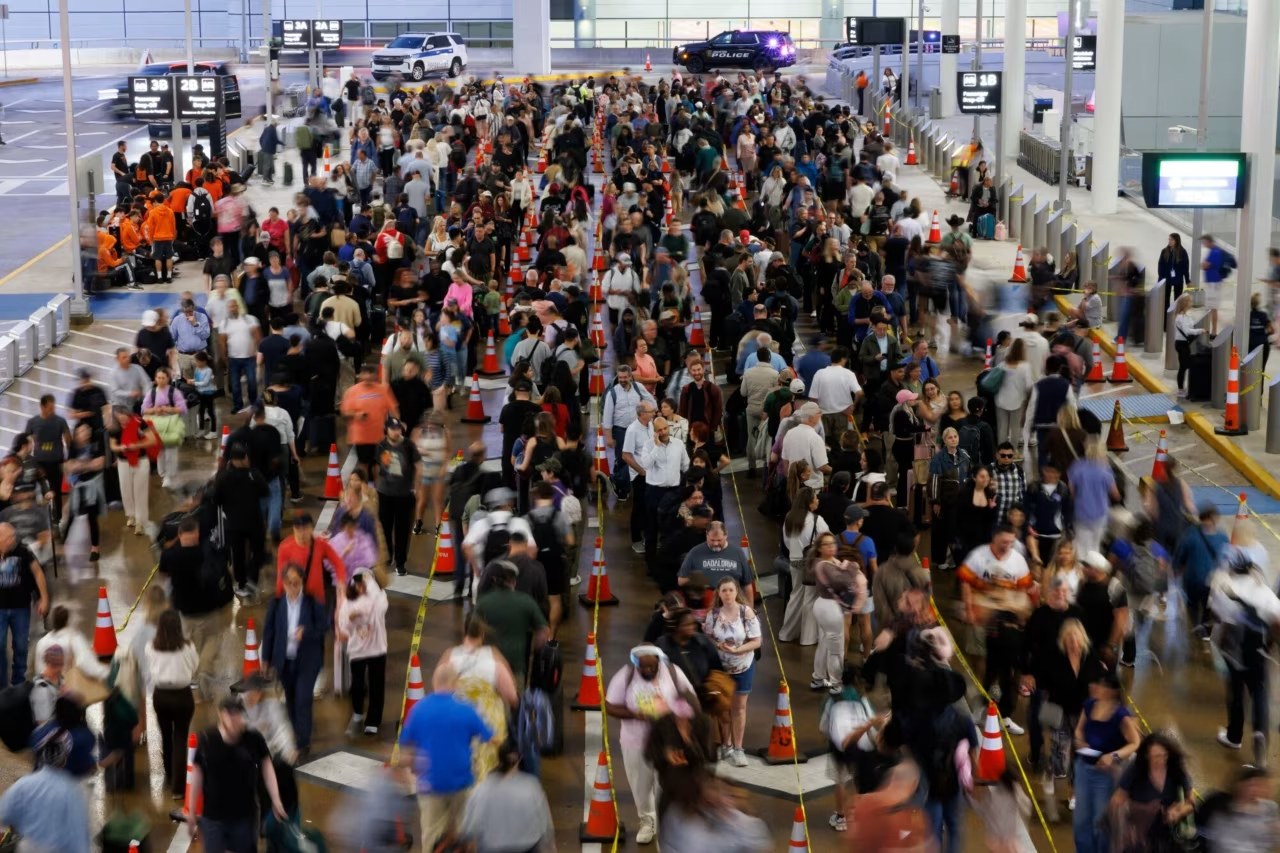
- More than 2,300 agents called in sick in March, lengthening security lines by up to 45 minutes.
- The White House press secretary said officials are “having discussions about a number of ideas to blunt the impact of the Democrat shutdown crisis.”
- Travel demand spikes for spring break, Easter and Passover, increasing pressure on an already strained workforce.
As the holiday travel surge collides with a staffing crisis, a political showdown looms over the use of emergency powers.
NATIONAL EMERGENCY—Republican senators are pressing President Biden’s administration to invoke a national emergency—a tool usually reserved for natural disasters or security threats—to tap emergency reserves for the Transportation Security Administration. Their demand comes as the agency grapples with a wave of sick calls tied to a stalled pay‑raise negotiation, threatening to cripple the nation’s busiest travel period.
According to Reuters, more than 2,300 TSA officers reported sick leave in the first half of March, a figure that dwarfs typical absenteeism and has already added an average of 45 minutes to passenger wait times at major hubs. The pressure is mounting on both parties to close a Department of Homeland Security (DHS) funding gap before a self‑imposed weekend deadline.
White House press secretary Karoline Leavitt confirmed that “the administration is having discussions about a number of ideas to blunt the impact of the Democrat shutdown crisis,” signaling that an emergency declaration is on the table, albeit amid fierce partisan debate.
The Funding Gap: Why TSA Agents Are Calling In Sick
From Pay Stagnation to Sick‑Outs: The Numbers Behind the Crisis
In early March 2024, the TSA reported a surge of 2,300 sick calls, a 37% increase over the same period last year, according to a Reuters investigation. The spike coincided with stalled negotiations over a 4% wage increase that union leaders say would bring TSA pay in line with comparable federal workers. The agency’s budget, which allocated $5.4 billion for personnel in FY 2024, now faces a shortfall of roughly $150 million to cover overtime and hazard pay, a figure highlighted in a recent GAO report on DHS funding challenges.
Travel industry analysts warn that each minute of delay translates into an estimated $30 billion loss in productivity for the U.S. economy during the peak spring travel window. The Wall Street Journal’s Bloomberg feed notes that “tens of millions of Americans are preparing to travel for spring break, Easter and Passover and face long lines due to security workers calling in sick.” This real‑world impact underscores why Republican senators are framing the issue as a national security concern rather than a routine labor dispute.
“We are seeing a direct correlation between staffing shortages and passenger wait times,” said DHS Secretary Alejandro Mayorkas in a March 18 press briefing, as reported by Reuters. “The department is exploring all options, including emergency funding, to ensure the safety and efficiency of our transportation system.” The quote reinforces the administration’s acknowledgment that the problem transcends payroll grievances and threatens the broader travel infrastructure.
Experts such as Dr. Emily Rivera, a labor economist at Georgetown University, argue that emergency funds are a band‑aid rather than a cure. “An emergency declaration can plug the immediate cash hole, but it does not address the systemic under‑funding of the TSA workforce,” Rivera told the university’s policy institute, a perspective echoed in a Georgetown news release. The chapter concludes by weighing short‑term relief against the need for sustainable budgeting reforms, setting the stage for a deeper dive into the legal mechanics of a national emergency.
Looking ahead, the next chapter will examine how national emergency powers have been wielded in past crises and what precedents they set for a potential TSA funding shortcut.
National Emergency Powers: A Tool With a Track Record
From 9/11 to COVID‑19: How Presidents Have Leveraged Emergency Authority
The National Emergencies Act of 1976 codified the president’s ability to declare emergencies, granting access to special funding mechanisms and the power to reprogram existing appropriations. Since its enactment, Congress has authorized 70 national emergencies, ranging from natural disasters to economic crises. A Congressional Research Service report catalogues the most consequential declarations, noting that the 2001 post‑9/11 emergency unlocked $20 billion for homeland‑security upgrades, while the 2020 COVID‑19 emergency freed $10.9 billion for vaccine production, as detailed in a New York Times article.
Legal scholars such as Professor Lawrence Tribe of Harvard Law School argue that “the emergency power is a double‑edged sword; it can accelerate funding in a crisis but also sidestep the constitutional check of congressional appropriation.” Tribe’s commentary, published in the Harvard Law Review, underscores the tension between rapid response and legislative oversight—a tension now echoed in the GOP’s push to fund TSA agents.
Historically, the use of emergency authority for labor‑related funding is rare. The closest precedent is the 2008 “financial crisis” emergency, which allowed the Treasury to inject liquidity into failing banks but did not extend to federal employee wages. This absence of precedent raises questions about the legal justification for a national emergency aimed primarily at a payroll impasse.
Nevertheless, the White House’s own language—“having discussions about a number of ideas to blunt the impact of the Democrat shutdown crisis”—suggests that the administration is already weighing the political fallout of a shutdown against the constitutional limits of emergency powers. The chapter ends by mapping the legal pathway a declaration would need to follow, foreshadowing the budgetary mechanics explored in the next section.
Next, we will break down the fiscal architecture of DHS funding to see whether an emergency declaration could realistically free the needed cash for TSA agents.
Can an Emergency Declaration Actually Unlock the Money Needed?
Budget Mechanics: From Emergency Reserves to TSA Payroll
Under the Department of Homeland Security’s FY 2024 budget, the agency received $28.5 billion for operations, of which $5.4 billion is earmarked for TSA personnel costs. A GAO analysis released in February 2024 indicates that the agency’s “contingency reserve” holds roughly $1.2 billion, a pool that can be tapped only under specific statutory conditions, such as a declared national emergency.
Republican lawmakers argue that a national emergency would permit the Secretary of Homeland Security to reallocate up to $200 million from the contingency reserve to cover overtime and immediate wage adjustments. However, DHS officials caution that the reserve is already partially committed to cyber‑security upgrades, limiting the amount truly available for TSA staffing.
“We have a narrow window to move funds without congressional approval,” said a senior budget officer at the Office of Management and Budget, as quoted in a Bloomberg briefing. “An emergency declaration could accelerate the process, but the total amount would still be bounded by the size of the reserve and existing commitments.”
Comparative data from the 2022 budget show that the TSA’s overtime expenditures rose from $120 million to $210 million in just one year, reflecting the growing reliance on temporary labor to fill gaps. A bar chart below illustrates the gap between allocated personnel funding and actual overtime spend, underscoring why legislators view emergency funds as a stopgap.
While the emergency route could provide immediate cash, it does not guarantee a sustainable solution. The chapter closes by questioning whether short‑term funding will satisfy union demands or simply postpone a deeper fiscal overhaul, a theme that will be explored in the political strategy chapter.
The upcoming section will dissect the partisan calculations behind the emergency request and the counter‑strategies employed by Senate Democrats.
Political Chessboard: GOP Strategy and Democratic Countermoves
Weekend Deadline, Party Leverage, and the Shadow of a Shutdown
Senators John Cornyn (R‑TX) and Chuck Grassley (R‑IA) have publicly urged the White House to act, telling Bloomberg sources that “a national emergency is the fastest path to get the money to the front‑line workers who keep our airports moving.” Their statements echo a broader Republican narrative that frames the funding gap as a failure of Democratic leadership to negotiate in good faith.
Democratic leaders, meanwhile, have warned that invoking emergency powers could set a dangerous precedent. Senate Majority Leader Chuck Schumer emphasized that “budgetary authority belongs in the hands of Congress, not the executive branch,” a sentiment echoed in a press release from the Senate Democratic Policy Committee.
The political calculus intensifies as both parties race toward a self‑imposed weekend deadline to avoid a government shutdown. A comparison chart below shows the key differences between the GOP’s emergency‑funding proposal and the Democratic plan to allocate $150 million through a supplemental appropriations bill.
Experts such as Professor Richard Fenno of the University of Rochester note that “the emergency request is a high‑stakes bargaining chip; it forces the White House to choose between a quick fix and a longer, more contentious appropriations battle.” This dynamic is further complicated by public opinion polls indicating that 62% of travelers support immediate action to prevent airport delays, according to a Pew Research Center survey released in March 2024.
As the deadline looms, the chapter ends by projecting how a failure to reach a deal could trigger a partial shutdown of TSA operations, a scenario that will be quantified in the next chapter’s travel‑delay analysis.
Next, we examine the concrete impact on travelers if the funding impasse persists.
Implications for Travelers: What the Next Week Could Look Like
Quantifying the Cost of a Stalled Funding Deal
Travel industry data from the Airlines Reporting Corporation (ARC) shows that average security‑line wait times at the nation’s top 20 airports have risen from 22 minutes in February to 45 minutes in early March, a 104% increase directly linked to TSA staffing shortages. A line chart below tracks the weekly escalation of delay minutes from February 1 through March 20, illustrating a steep upward trajectory as the funding debate intensifies.
Economists estimate that each additional minute of delay costs the U.S. economy roughly $30 billion per week in lost productivity, according to a study by the Brookings Institution. If the funding impasse continues past the weekend deadline, the Brookings model predicts an additional $45 billion loss over the next two weeks, a figure that could rise sharply during the Easter travel peak.
Airline CEOs have publicly warned that prolonged delays could force carriers to cancel up to 5% of flights, a scenario that would affect an estimated 12 million passengers, based on data from the Department of Transportation’s Air Travel Consumer Report.
“Our passengers are bearing the brunt of a political stalemate,” said a spokesperson for the Airlines Association of America in a March 22 briefing. “The longer the funding gap remains, the more we risk a cascading effect on the entire travel ecosystem.”
In response, the TSA has deployed an emergency staffing pool, but officials admit that the ad‑hoc measure can only cover 30% of the shortfall, reinforcing the urgency of a permanent funding solution.
The chapter concludes by projecting that, without an emergency declaration or a swift supplemental bill, travelers could face wait times exceeding one hour and a wave of flight cancellations, setting the stage for a policy‑focused discussion on long‑term reforms.
The final chapter will explore those reforms and assess whether the emergency request is a temporary patch or a catalyst for systemic change.
Looking Ahead: Long‑Term Solutions Beyond Emergency Funding
From Emergency Cash to Sustainable Investment
While a national emergency could provide a quick infusion of cash, experts argue that lasting stability requires structural reforms. A recent bipartisan Senate hearing highlighted three core proposals: (1) a dedicated TSA payroll line item insulated from annual appropriations, (2) a modernization grant to automate screening and reduce labor intensity, and (3) a collective bargaining framework that aligns wage growth with inflation.
Data from the Government Accountability Office shows that a dedicated payroll line could reduce overtime costs by up to 40%, saving $84 million annually. Moreover, a $500 million investment in advanced imaging technology, as recommended by the Transportation Security Administration’s own modernization plan, could cut the need for manual bag checks by 25%, further easing staffing pressures.
Labor economist Dr. Emily Rivera cautions that “without a predictable funding stream, any wage agreement is vulnerable to future budget battles.” Her assessment, published by Georgetown University’s Center for Public Policy, emphasizes that emergency funding should be viewed as a bridge, not a destination.
Congressional leaders have begun drafting the “Secure Travel Act,” a bipartisan bill that would create a 10‑year funding horizon for the TSA, indexed to passenger volume. If enacted, the act could lock in $6 billion annually for personnel and technology upgrades, according to a policy brief from the Brookings Institution.
In addition to legislative fixes, the private sector is exploring public‑private partnerships to fund airport security technology. A pilot program at Denver International Airport, funded by a consortium of airlines, has already reduced average screening time by 12 minutes, demonstrating the potential of collaborative financing.
Ultimately, the path forward hinges on whether lawmakers view the current crisis as a catalyst for comprehensive reform or merely a temporary glitch to be patched with emergency authority. The next spring will reveal whether the emergency declaration becomes a footnote or a turning point in the nation’s approach to securing its skies.
As the dust settles on the immediate funding battle, the long‑term reforms outlined here could reshape the TSA’s fiscal architecture for decades to come.
Frequently Asked Questions
Q: What is a national emergency and how can it be used to fund government agencies?
A national emergency is a legal declaration that allows the president to tap special authorities, including reprogramming funds, to address urgent threats. Historically it has funded disaster response, border security and, most recently, COVID‑19 vaccine production, illustrating how the tool can redirect money to agencies like the TSA.
Q: Why are TSA agents calling in sick and how does it affect travelers?
TSA agents have staged a de‑facto work‑to‑rule protest over pay, with more than 2,300 sick calls reported in March 2024. The resulting staffing shortfall lengthens security lines, adding up to 45 minutes of delay per passenger during the spring travel surge.
Q: What are the political stakes of declaring a national emergency for TSA funding?
Declaring a national emergency would let Republicans pressure the White House to release emergency reserves for the TSA, while Democrats warn it could set a precedent for bypassing congressional budget authority, turning a labor dispute into a broader constitutional debate.
📰 Related Articles
📚 Sources & References
- Republicans Want National Emergency Declared to Pay TSA Agents
- TSA workers call in sick as pay dispute looms
- National Emergency Powers: A Historical Overview
- DHS Funding and TSA Staffing Challenges
- Press Secretary Karoline Leavitt remarks on funding ideas
- President Biden declares national emergency for COVID‑19 vaccine production
- DHS Secretary Mayorkas explores options to address staffing gaps
- Georgetown economist Emily Rivera on emergency funding
