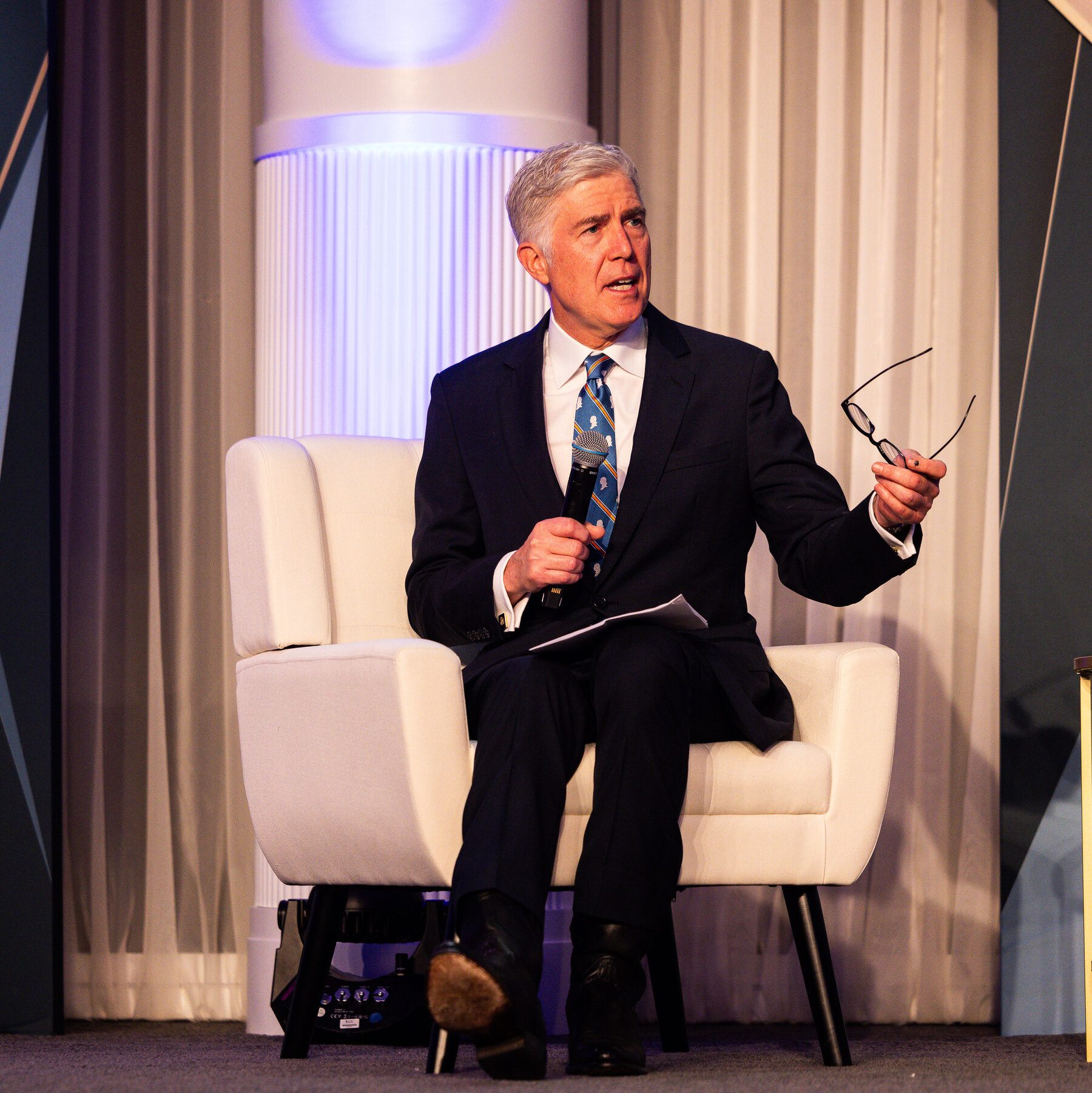
SUPREME COURT—In a remarkable display of judicial statesmanship, Justice Neil M. Gorsuch’s concurrence in the recent ruling on President Trump’s tariffs has ignited a heated debate about the role of the legislative branch in the United States. While the ruling itself marked a significant blow to the executive branch’s authority, Gorsuch’s opinion conveyed a more profound message – one that underscored the importance of a functioning legislative process and, by extension, criticized the current state of congressional dysfunction.
The Legislative Process and the Sanctity of Congressional Authority
Justice Gorsuch’s concurrence was, at its core, a powerful homage to the legislative process. By emphasizing the primacy of congressional authority, Gorsuch reaffirmed the fundamental principles of the Constitution, which vests lawmaking power in the hands of elected representatives. This stance not only reflects a commitment to the separation of powers but also underscores the vital role that Congress plays in ensuring that the federal government remains accountable to the people.
The Constitutional Framework
The Constitution’s system of checks and balances is designed to prevent any one branch of government from dominating the others. In this context, the legislative branch is tasked with making the laws, while the executive branch is responsible for enforcing them. The judiciary, meanwhile, serves as a check on both, ensuring that the laws and their enforcement comply with the Constitution. Gorsuch’s opinion reinforced this framework, arguing that the legislative process is essential for guaranteeing that the will of the people is translated into law.
A Critique of Congressional Dysfunction and Its Implications for Governance
While Gorsuch’s concurrence was notable for its robust defense of legislative authority, it also contained a subtle yet significant critique of the current state of congressional dysfunction. The justices’ observations highlighted the ways in which Congress has increasingly ceded its lawmaking authority to the executive branch, often through mechanisms like delegation and waiver. This trend has contributed to a situation in which the executive branch exercises undue influence over policy, undermining the principles of democratic governance.
Consequences of Dysfunction
The consequences of congressional dysfunction are multifaceted and far-reaching. Not only does it lead to a lack of transparency and accountability in the lawmaking process, but it also undermines the public’s trust in government. Furthermore, when Congress fails to assert its authority, it creates power vacuums that the executive branch is more than willing to fill, often with measures that are not in the best interests of the nation as a whole. Gorsuch’s implicit critique, therefore, serves as a reminder of the urgent need for congressional reform and a more vigorous assertion of legislative power.
The Ruling on Trump’s Tariffs: A Case Study in the Exercise of Legislative Power
The ruling that prompted Gorsuch’s concurrence – the invalidation of President Trump’s tariffs – offers a compelling case study in the dynamics of legislative and executive power. The decision, which was made in response to a challenge by affected parties, underscored the limits of executive authority, particularly in areas where Congress has explicitly delegated its power. By striking down the tariffs, the court reaffirmed the principle that the Constitution vests the power to regulate commerce with foreign nations in Congress, not the president.
Separation of Powers in Action
This ruling demonstrates the separation of powers in action, with each branch playing its role in checking and balancing the others. The executive branch, through the imposition of tariffs, had overstepped its constitutional mandate. The judiciary, through its decision, reasserted the primacy of congressional lawmaking, thereby restoring the balance between the branches. Gorsuch’s opinion, in this context, provided a nuanced exploration of the interplay between legislative intent, executive discretion, and judicial review.
Conclusion: Revitalizing Legislative Power in the Face of Dysfunction and Executive Overreach
In conclusion, Justice Gorsuch’s concurrence serves as a powerful reminder of the importance of a vibrant legislative process in American democracy. At a time when congressional dysfunction threatens the very fabric of governance, Gorsuch’s homage to legislative power is both timely and necessary. By emphasizing the critical role that Congress must play in lawmaking and oversight, the justice has issued a clarion call for reform and a reassertion of legislative authority.
A Path Forward
Revitalizing legislative power will require concerted effort from both within and outside Congress. Internally, lawmakers must strive to rebuild the institution’s capacity for deliberation and lawmaking, perhaps through reforms aimed at reducing partisanship and increasing transparency. Externally, the public and civil society organizations must demand more from their representatives, insisting on a Congress that is active, engaged, and committed to upholding its constitutional duties. As the United States navigates the complexities of the 21st century, the health of its democracy depends on the vitality of its legislative branch.