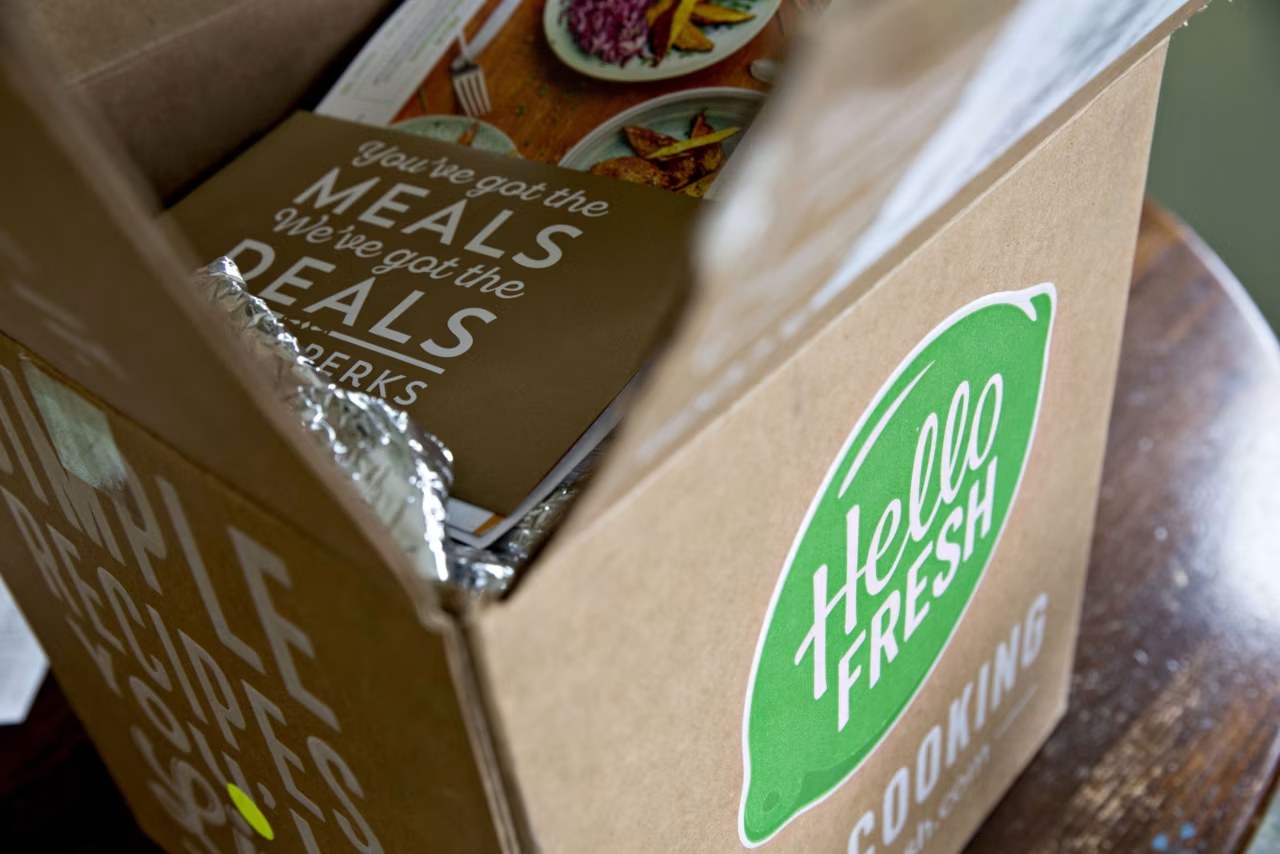
HelloFresh Plunges 13% as 2026 Revenue Seen Shrinking Up to 6%
- HelloFresh guided to 2026 revenue falling 3-6% on constant currency, surprising analysts.
- Shares dropped 13% to €3.98 in European morning trade, extending 2024 loss to 35%.
- Weak outlook signals deeper structural headwinds beyond currency swings.
- No specific quarterly numbers were released; guidance was the only metric disclosed.
Meal-kit pioneer faces post-pandemic normalization and cash-strapped consumers
HELLOFRESH—BERLIN—HelloFresh SE sent investors heading for the exits Wednesday after warning that 2026 sales will contract at a mid-single-digit pace, a rare admission of prolonged decline for a company that once doubled revenue every two years.
The grim forecast, released without accompanying earnings details, pushed the Frankfurt-listed stock down 13% to €3.98 by mid-morning, compounding a 22% slide already recorded in 2024.
Analysts say the guidance underscores how the pandemic-era boom in home cooking has fully unwound, leaving HelloFresh vulnerable to inflation-hit shoppers and rising competition from grocery ready-meals.
From Lockdown Darling to Decline: How HelloFresh Lost Its Momentum
The constant-currency revenue decline projected for 2026 marks a stark reversal for Europe’s largest meal-kit provider. Between 2018 and 2021 HelloFresh posted compound annual growth of 37%, propelled by lockdowns and widespread restaurant closures. Management now concedes that normalizing mobility, higher grocery inflation, and cautious consumer spending have permanently reset demand.
Customer fatigue meets macro chill
CEO Dominik Richter told investors on the last earnings call that average order frequency in the U.S.—HelloFresh’s biggest market—has fallen below 3.8 meals per active customer per month, the lowest since late 2019. Rising chicken and beef prices also eroded gross margin by 90 basis points in the most recent quarter, according to company filings.
Neil Wilson, chief market analyst at Markets.com, argues the 2026 guidance confirms the sector’s structural deceleration. “A mid-single-digit sales contraction is not a blip; it’s evidence that the addressable market is shrinking faster than HelloFresh can cut costs,” Wilson said.
The firm’s active customer base peaked at 8.5 million in Q2 2021; the latest disclosed figure is 6.9 million, down 1.6 million or 19% from the top. Even aggressive promotional campaigns—discounts of up to 60% off the first box—have failed to re-ignite growth, highlighting how discretionary meal budgets have shifted back to restaurants and discount supermarkets.
Looking ahead, investors worry that HelloFresh has few levers left. Price hikes risk accelerating churn, while additional marketing spend would compress already thin EBITDA margins that dipped to 8.4% last year from 13.6% in 2020.
What a 3-6% Revenue Drop Signals for Meal-Kit Economics
A 3-6% top-line contraction might appear modest, but for a subscription model it sets off alarm bells. Revenue visibility is the cornerstone of HelloFresh’s valuation; predictable weekly shipments underpin cash flow projections and lender covenants. When sales fall, fixed procurement and fulfillment costs—warehouses in California, New Jersey, Yorkshire and the Ruhr—become a burden.
Fixed cost leverage works in reverse
Each HelloFresh box incurs roughly €2.30 of fulfillment labor and €1.90 of packaging, regardless of volume. Jefferies analyst Giles Thorne calculates that a 5% revenue decline, assuming flat pricing, could slash 2026 EBITDA by €110 million, or 12%, pushing the margin below 7% and testing the company’s 3× net-debt-to-EBITDA loan ceiling.
Management has already scrapped plans for a new 180,000-square-foot distribution hub in Texas, saving €55 million in capex, but that will only offset a fraction of the earnings pressure. Thorne notes that HelloFresh has limited ability to trim recipe variety—the main driver of customer retention—without risking additional churn.
The guidance also raises questions about the firm’s pricing power. Average revenue per customer per month has stagnated at €57, barely covering food inflation of 8% in Germany and 5% in the United States over the past two years. Passing through higher chicken breast or parmesan costs risks pushing price-sensitive subscribers back to Aldi and Lidl, which have expanded their own €3 ready-to-cook kits.
Investors are therefore modeling a worst-case spiral: lower volumes → higher unit fixed costs → reduced marketing flexibility → further churn. Absent a clear path to stabilize volumes, the stock rerating that followed the 2020 boom is now working in reverse, compressing HelloFresh’s enterprise value to roughly 0.9× 2024 sales, a discount to U.S. peer Blue Apron when it was taken private at 1.1× sales last year.
Is Meal-Kit Saturation HelloFresh’s Biggest Strategic Threat?
HelloFresh’s weak outlook is symptomatic of a saturated Western meal-kit market that has seen penetration stall at 11% of households in the U.S. and 9% in Germany, according to Euromonitor. Unlike streaming or cloud software, meal-kit adoption carries high churn once promotional credits expire, and the re-subscription rate is under 15%, making growth increasingly expensive.
Competitive intensity ramps up
Grocery chains have entered with cheaper, flexible alternatives. Kroger’s Home Chef now sells individual kit pouches in 1,700 stores at $6.99, undercutting HelloFresh’s delivered $9.50 price. In the U.K., Tesco’s “Hearty Food Co.” one-pan boxes at £2.50 have cannibalized demand for premium subscriptions, says Catherine Shuttleworth, CEO of retail consultancy Savvy Marketing.
Venture funding for pure-play meal-kit startups has also collapsed to $94 million globally in 2023 from $1.2 billion in 2018, according to PitchBook, starving smaller rivals of promotional capital but also signaling venture capital’s loss of faith in long-term category expansion.
HelloFresh’s response—diversifying into ready-to-eat meals and green-grocer boxes—has yet to move the needle. The Factor brand, acquired for $277 million in 2020, now generates €550 million annual revenue, yet growth decelerated to 4% last quarter, a far cry from the 50%-plus recorded two years ago.
Shuttleworth believes the strategic ceiling is demographic: “Meal kits appeal mainly to urban, time-pressed, dual-income professionals. Once that niche is tapped, volume plateaus unless pricing drops to frozen-pizza levels, which destroys the margin structure,” she said.
Cash and Covenant Risks Loom as EBITDA Shrinks
HelloFresh ended last quarter with €1.4 billion in net debt, equal to 2.6× trailing EBITDA. A 12% EBITDA haircut from falling sales could push the ratio dangerously close to the 3× covenant embedded in its €800 million revolving credit facility led by Deutsche Bank and Commerzbank. Breaching that threshold would trigger higher interest margins and potential restrictions on shareholder returns.
Liquidity headroom is thinning
Free cash flow turned negative in the second half of 2023 as inventory rose and receivables stretched. Management guided to €50-70 million operating free cash outflow for 2024, implying further drawdown on credit lines. The company’s cash pile fell to €287 million from €421 million a year earlier.
Barclays analyst James Bell calculates that if HelloFresh’s revenue decline materializes and EBITDA margins compress to 7%, net debt-to-EBITDA would hit 3.3× by late 2025. “That would force either asset sales, equity issuance, or drastic capex cuts,” Bell wrote in a note to clients.
Factor brand, HelloFresh’s U.S. ready-meal unit, could be monetized; analysts value it at €1.1-1.3× sales, implying a potential €600 million disposal. Yet divesting the only growth engine risks accelerating top-line erosion.
Cost-saving initiatives—headcount reduction of 5% announced last month—will yield €45 million annually, but severance charges of €18 million offset near-term cash benefits. Management has also paused dividend payments until leverage falls below 2×, removing a prior equity support.
Bond investors are signaling caution: HelloFresh’s €500 million 1.5% 2026 notes trade at 94 cents on the euro, up 120 basis points over Bunds, double the spread seen two years ago. Covenant negotiations with lenders are expected to dominate the next quarterly update.
Can Global Expansion Offset HelloFresh’s Domestic Slump?
With U.S. and German households saturated, HelloFresh is banking on newer geographies—Japan, Australia, Latin America—to plug the 2026 gap. Yet combined revenue from these markets is only €600 million, 13% of the total, and growth is decelerating. Japan’s subscriber base shrank 7% last quarter after rival Oisix Ra Daichi launched half-price salmon recipes, while Australia faces wage inflation above 5%.
Localization costs erode margins
Entering Asian markets required bespoke cold-chain infrastructure, lifting unit logistics cost to €3.40 versus €2.30 in the U.S., according to internal slides leaked to the Financial Times. Regulatory hurdles add drag: Japanese law bans fresh chicken beyond seven days, forcing daily inventory turnover and higher wastage.
CEO Richter still sees a path to 10 million international customers by 2027, but that implies adding 3 million subscribers in three years—more than the entire current overseas base. Achieving it would require €350 million of capex, management estimates, at a time when cash conservation is paramount.
Meanwhile, currency volatility complicates planning. A 10% appreciation in the yen versus the euro would boost reported revenue by roughly €60 million, yet constant-currency guidance strips out such gains, meaning operational outperformance must come purely from volume or pricing—both challenging.
Some investors advocate franchising or joint ventures to mitigate risk, but HelloFresh’s vertically integrated model relies on proprietary recipe development and data analytics that are hard to outsource. Absent a decisive pivot, overseas expansion seems unlikely to offset domestic decline before 2026.
Frequently Asked Questions
Q: Why did HelloFresh shares drop today?
HelloFresh flagged 2026 revenue declining 3-6% on constant currency, triggering a 13% intraday share slide to €3.98 and extending its 2024 loss to 35%.
Q: What does constant-currency guidance mean?
Constant-currency guidance strips out foreign-exchange swings, so HelloFresh’s 3-6% projected decline reflects lower order volumes, not euro strength.
Q: How far have HelloFresh shares fallen this year?
Before the latest drop, HelloFresh had already lost 22% year-to-date; Wednesday’s slide pushed the cumulative decline to 35% in 2024.
