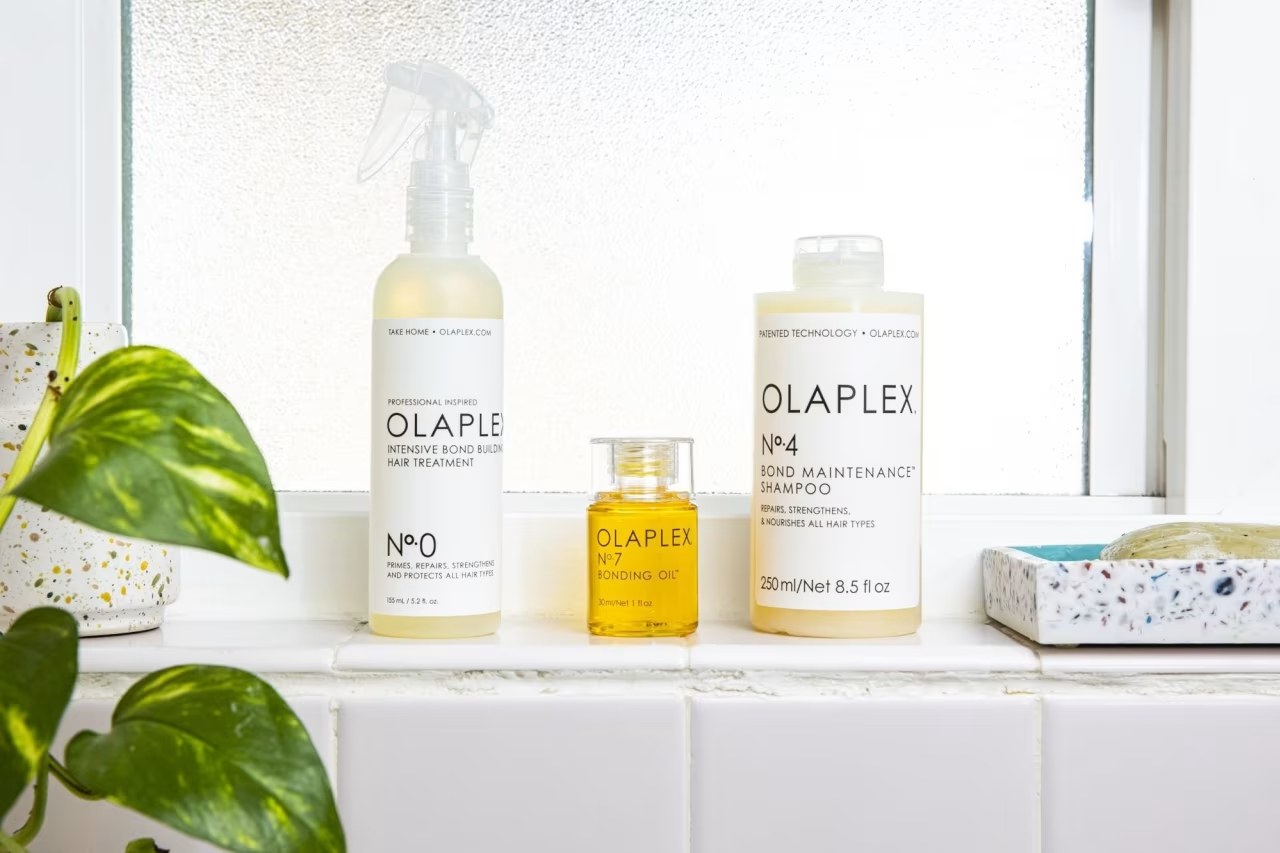
Henkel’s $1.4 Billion Olaplex Takeover Adds 8th Premium Brand to Its €9.5 Billion Beauty Stable
- Henkel will acquire all outstanding Olaplex shares for roughly $2.06 apiece in an all-cash transaction.
- The $1.4 billion equity value equates to 2.9× Olaplex’s last-twelve-month sales of $458 million.
- Deal is expected to close in the third quarter pending customary antitrust approvals.
- Combined portfolio will serve 100+ countries and over 250 000 hair salons worldwide.
After a 92 % share-price slide since its 2021 IPO, Olaplex finds a deep-pocketed German buyer.
HENKEL—FRANKFURT—Henkel AG & Co. KGaA on Monday announced a definitive agreement to purchase Santa Barbara-based Olaplex Corp. for approximately $1.4 billion, injecting fresh capital into the once high-flying bond-builder brand while giving the Düsseldorf conglomerate a bigger slice of the fast-growing premium hair-care segment.
The transaction, pegged at $2.06 per Olaplex share, represents a slender premium to recent trading but vaults Henkel into the upper end of salon-only and direct-to-consumer hair repair, an arena where its Schwarzkopf label has traditionally played in the mid-market.
“Olaplex’s patented bis-aminopropyl diglycol dimaleate technology is complementary, not cannibalistic, to our existing portfolio,” Henkel CEO Carsten Knobel told analysts on a hastily arranged call, underscoring plans to keep Olaplex as a stand-alone division.
From Red-Hot IPO to Buyout: How Olaplex Lost $11 Billion in Market Value
When Olaplex went public at $21 a share in September 2021, stylists and investors alike hailed the company as the next cult beauty phenomenon. Valuation peaked at $14.9 billion within weeks, propelled by viral TikTok routines and net revenue of $598 million that year.
Then came the brutal comedown. By early 2024 the stock traded below $1.50, wiping out roughly $11 billion in equity value. Same-store sales slid 36 % in the most recent quarter as pandemic-fueled demand for at-home treatments cooled and competitors flooded the bond-builder space.
What changed the narrative?
“Celebrity backing turned into celebrity over-exposure,” said Erin Schmidt, senior beauty analyst at Coresight Research. “When every influencer has a dupe, prestige equity erodes.”
Henkel’s entry price—2.9 times trailing sales—mirrors the multiple Unilever paid for Dollar Shave Club in 2016, suggesting buyers no longer award tech-style premiums to single-SKU beauty stories. Still, Henkel sees upside: Olaplex’s gross margin hovers around 72 %, far above Henkel Beauty Care’s 17 % segment average, according to the German group’s 2023 annual report.
The takeover rescues long-suffering public shareholders, but employees hold unvested options struck well above the deal price. Roughly 14 % of fully diluted shares are underwater, regulatory filings show, meaning staff will rely on retention packages Henkel has promised to “maintain key talent.”
Bottom line: Henkel is wagering that Olaplex’s science-backed IP can rebound if paired with global supply-chain heft—yet the path will depend on reviving brand heat, not just cutting costs.
Henkel’s Beauty Rebalancing: Why Premium Hair Care Beats Mass-Market Peers
Henkel’s beauty division generated €3.9 billion in 2023 sales, yet organic growth lagged at 0.8 %, dragged by mass-market price wars in Western Europe. Meanwhile, premium hair treatments—products retailing above $25 per bottle—expanded 9 % globally, per Euromonitor.
“Acquiring Olaplex instantly tilts Henkel’s mix toward high-margin niches,” noted Olivia Guinaugh, senior analyst at Mintel. “It’s the same playbook L’Oréal used with CeraVe: buy science-centric brands, scale across pharmacies and salons.”
Margin math
Henkel’s Adhesive Technologies division earns 19 % EBITDA margins, while Beauty Care sits at 17 %. Olaplex, even after its slump, delivers 35 % EBITDA margins. Folding those numbers into Henkel’s segmental reporting could lift group beauty profitability by roughly 250 basis points, according to Barclays estimates.
Geography also matters. Roughly 60 % of Olaplex revenue is North American, offsetting Henkel’s European concentration where private-label pressure is intense. Conversely, Henkel’s emerging-market footprint—Brazil, Turkey, Southeast Asia—gives Olaplex entry into 25 countries where it currently has no distributor.
Still, integration risk looms. Henkel’s last big beauty deal, the 2016 acquisition of laundry-to-cosmetics portfolio from Sun Products, took three years to yield cost synergies. Investors will watch whether Henkel’s cautious German engineering culture can coexist with Olaplex’s California social-media DNA.
Forward view: If Henkel rejuvenates Olaplex’s top-line while keeping 70 %-plus gross margins intact, the deal could become a blueprint for legacy consumer giants seeking premium bolt-ons.
Will Henkel Keep Olaplex’s Cult Status or Dilute the Brand?
Cult beauty brands survive on scarcity and stylist evangelism. Olaplex’s No. 3 Hair Perfector became iconic precisely because it was salon-exclusive at launch, then trickled to Sephora in prestige packaging. Henkel’s Schwarzkopf, by contrast, is ubiquitous in drugstores from Berlin to Bangalore.
“The biggest post-merger pitfall is channel over-expansion,” cautioned Andrew McDougall, director of beauty at Euromonitor International. “When you can buy Olaplex at a discount grocer, the halo fades.”
Protective covenants
Henkel has agreed to “maintain separate creative direction” for Olaplex for at least five years, according to transaction documents. That means same Santa Barbara R&D team, same violet packaging, same influencer partnerships. Retail rollout will be selective—no immediate plans for dollar-channel distribution.
Yet cost savings must come from somewhere. Henkel expects €75 million in annual procurement and logistics efficiencies within 24 months, largely by folding Olaplex into its global warehouse network. Analysts at Bernstein warn that pushing SKUs through Henkel’s pallet-scale supply chain could threaten the small-batch narrative that underpins premium pricing.
Employee retention is another flashpoint. Olaplex’s co-founder and chief scientist Dean Banning will sign a three-year employment pact, receiving performance-vesting stock in Henkel worth up to €30 million if EBITDA hurdles are met, people familiar with the contract said.
Bottom line: Maintaining mystique while achieving scale is the same tightrope L’Oréal walked with Urban Decay. Henkel’s ability to keep Olaplex “special” will determine whether consumers still pay $30 for 100 ml of bond-building serum.
What the $1.4 Billion Price Tag Means for Beauty M&A Multiples
Henkel’s offer equates to 3.1× Olaplex’s 2023 revenue and 8.2× trailing EBITDA—well shy of the 6–8× sales multiples paid during 2019-21, when Estée Lauder grabbed Too Faced for $1.45 billion (5.5× sales) and Shiseido acquired Drunk Elephant for $845 million (8× sales).
“We’re back to sanity,” said Stephanie Bower, consumer M&A partner at KPMG. “Buyers now demand double-digit EBITDA margins and defendable IP, not just Instagram heat.”
Financing mix
Henkel will fund the takeover with €1.0 billion in cash plus a €400 million term loan arranged by Deutsche Bank and Goldman Sachs. The combined entity is expected to carry a net-debt-to-EBITDA ratio of 2.1×—within Henkel’s self-imposed ceiling of 2.5×, leaving headroom for further deals.
Credit-rating agencies reacted cautiously. Moody’s placed Henkel’s A3 rating under review for downgrade, citing execution risk, though S&P maintained a stable outlook, arguing the company’s adhesives division provides counter-cyclical cash flow.
For bankers the deal is a bright spot in a moribund M&A market. Global beauty and personal-care transaction volume hit only $18 billion in the first half, down 44 % year-over-year, according to Dealogic. Henkel-Olaplex accounts for 8 % of that tally, signaling that strategic buyers with strong balance sheets can still dictate terms.
Look ahead: If Olaplex regains double-digit growth under Henkel’s wing, the 8× EBITDA multiple could look cheap by 2026, setting a floor for future premium-brand valuations.
Timeline: From Patented Chemistry to $1.4 Billion Takeover
Olaplex’s journey from garage start-up to billion-dollar exit spans barely a dozen years, illustrating how fast beauty chemistry can turn into Wall Street gold—and vice versa.
Dean and Darcy Banning, two California chemists, invented the original bis-aminopropyl diglycol dimaleate molecule designed to relink broken disulfide bonds in hair. Early kits were sold exclusively to stylists in 2014, creating buzz among Hollywood colorists who credited the product for allowing dramatic platinum transformations without severe damage.
By 2016, Olaplex had filed 28 patents and secured a minority investment from private-equity firm Advent International. Revenue that year surpassed $70 million, according to PitchBook. The brand’s first retail SKU, No. 3 Hair Perfector, debuted in Sephora in 2017 and promptly amassed a 50,000-person wait-list.
The 2021 IPO raised $1.8 billion at a $13.6 billion valuation, minting instant paper millionaires among stylists who received equity grants. But the pandemic-driven DIY boom faded, competitors like K18 and Living Proof launched rival bond builders, and a customer lawsuit alleging benzene contamination—later dismissed—sent the share price spiraling.
Henkel entered talks in late 2023 after Olaplex’s market cap fell below $2 billion. Negotiations took six months, with due diligence focused on IP durability, pending litigation, and social-media sentiment analysis. Final terms were struck at $2.06 per share, a 62 % premium to the 52-week low but a 90 % discount to the all-time high.
What’s next: If the deal closes in Q3 as planned, Olaplex will report as a separate unit within Henkel’s Beauty Care division, with founder Dean Banning retaining R&D oversight and a seat on Henkel’s extended management committee.
Frequently Asked Questions
Q: Why is Henkel buying Olaplex?
Henkel wants to widen its premium hair-care shelf space. Olaplex’s patented bond-building formulas complement Henkel’s mass-market Schwarzkopf range and lift group margins above the current 17 % baseline.
Q: How much is Henkel paying per Olaplex share?
The all-cash offer values Olaplex at approximately $2.06 per share, a slender 7 % premium to the 30-day volume-weighted average but 62 % above the stock’s all-time low set earlier this year.
Q: Will Olaplex keep its brand name after the takeover?
Henkel’s press release explicitly promises to ‘preserve and globally scale the Olaplex brand’, so salons and consumers should see no immediate re-branding—only wider retail reach.
Q: Does the deal need regulatory clearance?
Because the two companies operate in complementary geographies—Henkel strong in Europe, Olaplex in the U.S.—antitrust lawyers at Cleary Gottlieb expect a routine review, with closing targeted for late summer.
