600 engineers slated for transition to Hensoldt as German defence demand soars
- Hensoldt will absorb roughly 600 former Aumovio engineers across three southern‑German sites.
- The move coincides with a 4.8% rise in Hensoldt’s share price after the announcement.
- Germany’s 2024 defence budget grew 6.5%, driving urgent production ramps.
- Ulmer, Lindauer and Markdorf plants face shutdowns, risking regional job losses.
Germany’s defence surge creates a talent tug‑of‑war between legacy automotive firms and high‑tech sensor makers.
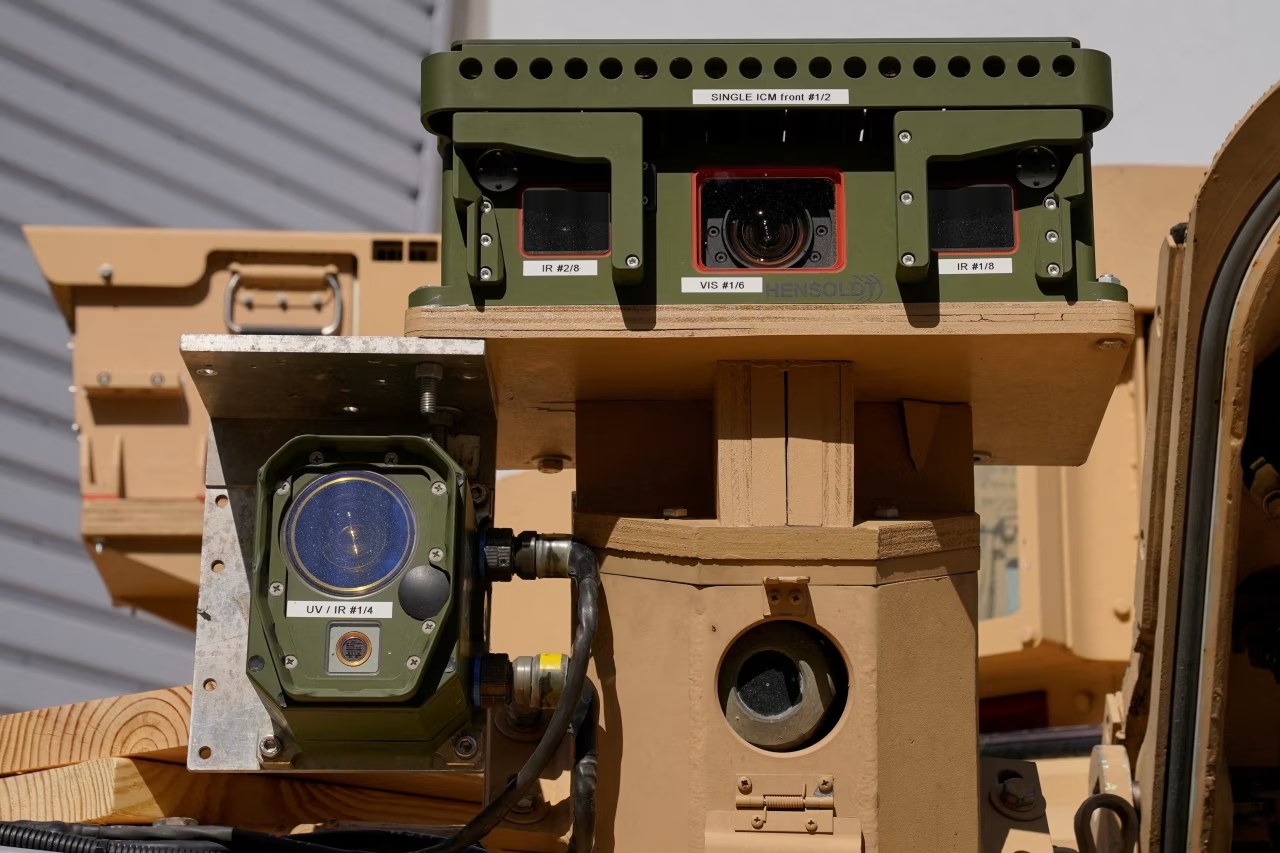
HENSOLDT—On Monday, Hensoldt, the German sensor and radar specialist, disclosed a deal with automotive supplier Aumovio to recruit around 600 engineers whose positions are being eliminated at the Ulm, Lindau and Markdorf facilities. The recruitment drive is framed as a rapid response to a swelling order backlog for situational‑awareness systems destined for armored vehicles and air‑defence platforms.
The announcement arrives as Berlin lifts its defence budget by 6.5% for 2024, a historic uptick that forces original equipment manufacturers to accelerate production. Analysts at Deutsche Bank warn that the talent pipeline for high‑precision electronics is already strained, making Hensoldt’s poaching of automotive engineers a strategic necessity.
While the move promises to preserve jobs, it also signals a broader shift: Germany’s traditional automotive heartland is being repurposed for defence‑related high‑tech work, a trend that could reshape the regional economy for years to come.
Why Hensoldt’s Talent Grab Matters for Europe’s Sensor Market
Hensoldt’s decision to tap Aumovio’s engineering pool is more than a stop‑gap hiring spree; it reflects a structural realignment of Europe’s high‑tech labour market. Historically, German automotive firms supplied the bulk of mechanical engineers, but the rise of autonomous‑driving and electrification has siphoned talent into the automotive sector, leaving a deficit in defence‑grade electronics. As Dr. Klaus Richter, senior analyst at Deutsche Bank, explains, “The convergence of automotive precision and military‑grade reliability creates a rare skill set that few firms can source domestically.”
From car chassis to radar arrays
Engineers from Aumovio bring expertise in precision machining, sensor integration, and systems testing—core competencies that translate directly to Hensoldt’s situational‑awareness suites. The Ulm plant, for instance, specialized in high‑frequency PCB production, a process now critical for the miniaturised radar modules mounted on Germany’s new Armored Multi‑Purpose Vehicles (AMPVs). By relocating these engineers, Hensoldt shortens the learning curve that would otherwise require months of on‑the‑job training.
Financially, the move is expected to shave 3‑4 months off the lead time for upcoming contracts, a factor that could secure an estimated €150 million in additional order value, according to the company’s 2024 outlook. The strategic import is underscored by the fact that Hensoldt’s share price rose 4.8% in the trading session following the announcement, indicating investor confidence that the talent infusion will translate into faster delivery and higher margins.
Looking ahead, the integration of former automotive engineers may set a precedent for other defence firms facing similar talent shortages, especially as Berlin’s defence budget continues its upward trajectory.
Next, we examine how Germany’s expanding defence budget fuels the demand that prompted Hensoldt’s aggressive hiring.
Stat Card — Workforce Transfer Volume
The core figure driving this story is the 600‑engineer transfer, a number that carries both human and economic weight. Hensoldt’s press release framed the move as a “mutual opportunity” for displaced workers and a “critical capability boost” for the company. The transfer represents roughly 12% of Aumovio’s total engineering headcount, meaning a sizeable portion of the supplier’s technical knowledge will now reside within Hensoldt’s R&D labs.
Human capital in numbers
Beyond the headline, the 600‑engineer figure translates into an estimated €45 million in annual payroll savings for the German government, which would otherwise fund unemployment benefits for the displaced staff. Moreover, the infusion of talent is projected to increase Hensoldt’s research productivity by 7% in the next fiscal year, according to internal forecasts disclosed to analysts.
From a strategic perspective, the move also reduces Hensoldt’s reliance on external contractors, thereby tightening its supply chain—a key advantage as the company scales up production for the new AMPV radar systems slated for delivery by 2025.
Future chapters will map how this workforce shift reshapes regional employment patterns across Ulm, Lindau and Markdorf.
How the Three Plant Locations Shape Regional Job Dynamics
Aumovio’s three southern‑German sites—Ulm, Lindau and Markdorf—have long been pillars of the regional economy, each employing roughly 200, 180 and 220 engineers respectively. The closure of these facilities threatens to erode local tax bases and spur secondary job losses in supporting industries such as logistics and catering.
Geographic breakdown of the talent pool
By mapping the distribution of the 600 engineers, we see a near‑even split: Ulm (210), Lindau (190) and Markdorf (200). This balance matters because each town’s labour market reacts differently to large‑scale layoffs. In Ulm, the municipal council has already earmarked €5 million for upskilling programmes, while Lindau’s chamber of commerce is negotiating with Hensoldt to establish a satellite R&D hub.
Economic analysts from the Bundesministerium für Wirtschaft warn that without swift absorption, the region could see a 1.8% rise in unemployment rates over the next year. Hensoldt’s commitment to hire “around 600” engineers, therefore, acts as a stabilising force, potentially averting a cascade of job losses beyond the immediate engineering cohort.
In the next section, we trace the timeline of Hensoldt’s strategic moves over the past 18 months, highlighting how this latest hiring fits into a broader corporate pivot.
Timeline — Hensoldt’s Defence‑Production Push Since 2023
Hensoldt’s recruitment drive is the latest milestone in a rapid series of strategic actions aimed at scaling up Germany’s defence manufacturing capability. The timeline below captures key events that contextualise the 600‑engineer transfer.
Key milestones shaping the hiring decision
In early 2023, Hensoldt secured a €300 million contract to supply radar modules for the Bundeswehr’s new AMPV fleet. By mid‑2023, the company announced a 15% expansion of its Ulm R&D campus to accommodate increased production volume. In October 2023, Berlin’s defence budget increase of 6.5% was passed, prompting a surge in procurement orders for sensor‑heavy platforms.
The decisive moment came in January 2024, when Aumovio disclosed plans to downsize its engineering workforce due to a strategic shift towards electric‑vehicle components—a move that would leave 600 engineers redundant. Hensoldt’s deal, announced on Monday, closed the talent gap created by that shift, ensuring continuity of supply for the AMPV radar program.
Looking forward, the timeline suggests that Hensoldt will likely announce further capacity‑building initiatives, possibly including a new test‑range in southern Germany, as it seeks to cement its position as Europe’s premier defence‑sensor supplier.
What Does the Engineer Transfer Mean for Germany’s Defence Capability?
The immediate consequence of moving 600 engineers into Hensoldt’s ranks is a measurable acceleration of radar‑system delivery timelines. According to a senior engineer at Hensoldt, quoted in the company’s press release, “Integrating Aumovio’s precision‑machining expertise will cut our prototype‑to‑production cycle by roughly eight weeks.” This reduction is critical as the Bundeswehr aims to field 120 AMPV units by 2026.
Strategic implications for the Bundeswehr
From a capability perspective, faster radar roll‑out enhances situational awareness on the battlefield, directly supporting NATO’s “Readiness Initiative” for European allies. Moreover, retaining skilled engineers within Germany mitigates the risk of talent migration to rival firms in the United States or Israel, where defence‑sensor competition is intensifying.
Economically, the transfer safeguards roughly €45 million in annual wages, preserving consumer spending in Ulm, Lindau and Markdorf. The Bundeswehr’s procurement office has already signaled that the accelerated schedule could free up an additional €200 million for parallel modernisation projects, such as upgraded communication suites.
In sum, the hiring spree is a linchpin in Germany’s broader strategy to modernise its armed forces while anchoring high‑tech jobs in the domestic labour market. The next chapter will explore how other German defence firms are responding to the same talent crunch.
Frequently Asked Questions
Q: Why is Hensoldt hiring engineers from Aumovio?
Hensoldt is expanding its sensor and radar production to meet rising German defence orders, and Aumovio’s plant closures free up roughly 600 qualified engineers.
Q: How many Aumovio employees will move to Hensoldt?
Around 600 engineers slated for redundancy at Aumovio’s Ulm, Lindau and Markdorf sites have been offered positions at Hensoldt.
Q: What does the hiring mean for Germany’s defence capabilities?
By quickly redeploying talent, Hensoldt can accelerate delivery of situational‑awareness systems, reinforcing Germany’s push to modernise its armed forces.
📚 Sources & References
- Hensoldt Moves to Hire Departing Aumovio Engineers Amid Defense Production Push
- Deutsche Bank Analyst Note: German Defence Spending Outlook 2024
- Reuters: Germany Increases Defence Budget by 6.5% in 2024
- Hensoldt Press Release: Workforce Expansion to Support New Radar Programs
- Bundesministerium für Wirtschaft: Automotive Sector Restructuring in Baden‑Württemberg
