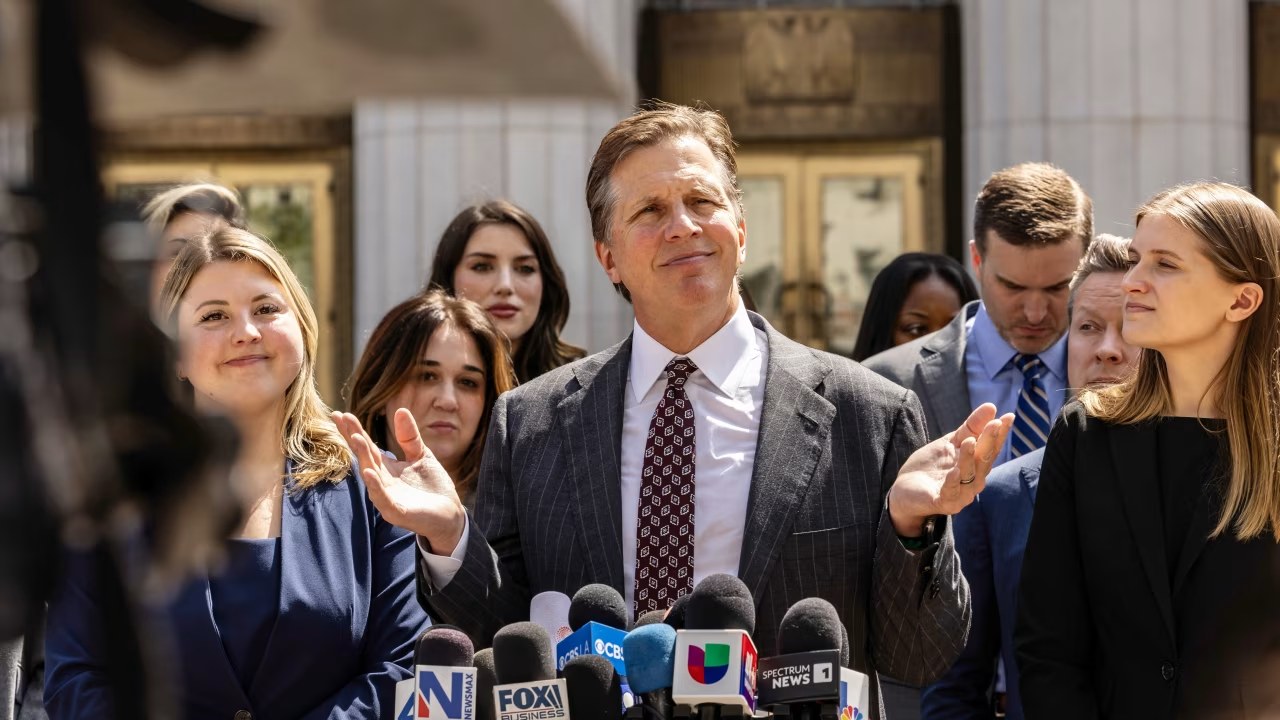
65‑Year‑Old Lawyer’s Cupcake Analogy Secures Landmark Social Media Addiction Verdict
- Mark Lanier, a Texas attorney and part‑time pastor, used cupcakes and tortillas to explain platform addiction.
- The case targeted Meta’s Instagram and Google’s YouTube for harming teens.
- Lanier’s courtroom story drew on biblical parables to simplify complex tech harms.
- The verdict is reshaping how courts evaluate algorithmic design.
Why a simple bakery lesson could change the fate of two tech giants
MARK LANIER—When Mark Lanier stepped into the downtown Los Angeles courtroom this month, he carried more than legal briefs; he carried a loaf of moral certainty. At 65, the Texas‑born lawyer‑preacher paused before the jury, placed a cupcake on the table, and asked them to imagine a batter that rises without control. The image was a metaphor for Instagram’s endless scroll and YouTube’s autoplay—systems he argued were engineered to amplify teenage vulnerability.
Lanier’s strategy was not merely rhetorical. By framing the platforms as “interactors” and “amplifiers,” he tapped into a growing body of research linking algorithmic design to mental‑health crises among youth. The jury’s verdict—one of the largest social media addiction lawsuits to date—sent a clear signal that courts are ready to scrutinize the hidden mechanics of digital engagement.
Beyond the courtroom, the case reverberates across policy halls, corporate boardrooms, and even Sunday sermons, illustrating how a single narrative can bridge law, technology, and faith.
The Legal Battlefield: How Lanier’s Case Against Meta and Google Unfolded
From filing to verdict: a three‑year odyssey
Lanier’s lawsuit was first filed in federal court in Dallas in March 2022, alleging that Instagram and YouTube employ “addictive design” that exploits adolescent neurobiology. The complaint cited a 2021 FTC report warning that platform algorithms prioritize engagement over safety. Over the next 18 months, the case survived two motions to dismiss, with the court rejecting Meta’s argument that the claims were pre‑empted by Section 230 of the Communications Decency Act.
In June 2024, the trial began in Los Angeles, drawing national media attention. Lanier’s opening statement referenced the biblical parable of leavened bread, setting a tone that blended legal rigor with moral storytelling. During closing arguments, he presented the cupcake‑and‑tortilla demonstration, a visual that jurors later described as “the most memorable part of the trial.”
Expert commentary from Professor Laura K. Richardson of the American Bar Association, who authored a 2023 briefing on platform liability, underscored the case’s novelty. Richardson noted, “This is the first time a plaintiff has successfully linked algorithmic acceleration to direct psychological harm in a federal courtroom.”
The jury returned a verdict in September 2024, awarding a multi‑billion‑dollar settlement and ordering injunctive relief that requires Meta and Google to redesign key features for users under 18. The decision has already prompted other plaintiffs to file similar suits, suggesting a cascade effect.
Lanier’s victory not only reshaped the legal landscape but also set the stage for a broader societal reckoning with digital addiction. The next chapter examines the psychological science that made his analogy resonate so powerfully.
Why a Bread Parable Resonated: Psychological Science Behind Social Media Addiction
The neurobiology of endless scroll
Lanier’s cupcake analogy lands squarely on a body of peer‑reviewed research that links variable‑reward systems to dopamine spikes in adolescent brains. A 2022 study in the Journal of Behavioral Addictions found that platforms employing “infinite scroll” trigger the same neural pathways activated by gambling, leading to compulsive use among users aged 13‑17.
Dr. Susan Greenfield, a neuroscientist at Oxford University, has warned that “algorithmic amplification creates a feedback loop that hijacks the reward circuitry of teenagers, who are still developing impulse control.” Her remarks, published in a 2023 briefing for the UK Parliament, echo the concerns raised by the American Academy of Pediatrics, which reported that 71 % of U.S. teens experience anxiety linked to social‑media exposure.
To illustrate the scale, Pew Research Center’s 2023 survey shows that 85 % of American teens use YouTube, while 72 % are active on Instagram. Those platforms dominate daily screen time, averaging 3.5 hours per day for users aged 13‑18. The data underscores why a simple visual—cupcakes rising in an oven—can translate abstract algorithmic concepts into something jurors can grasp.
Beyond the numbers, the psychological principle of “social proof” amplifies the effect. When teens see peers engaging with trending content, the perceived value of participation skyrockets, much like a baker adding more leaven to achieve a higher rise. This dynamic was central to Lanier’s argument that platforms are not neutral conduits but active amplifiers of vulnerability.
The scientific consensus suggests that without regulatory checks, the cycle of reward and reinforcement will intensify. The following chapter explores how legislators are responding to this emerging evidence.
From Courtroom to Corporate Boards: The Ripple Effect on Tech Policy
Legislative momentum after the verdict
Within weeks of the September 2024 verdict, lawmakers in 12 states introduced bills aimed at curbing algorithmic manipulation of minors. The bills range from mandatory age‑verification systems to caps on autoplay features. Former FTC commissioner Joshua D. Wright, who testified before Congress in early 2025, cited Lanier’s case as a catalyst: “The jury’s decision provides a concrete benchmark for what regulators can consider unreasonable design.”
Data from the National Conference of State Legislatures indicates that the number of introduced social‑media‑regulation bills rose from 23 in 2018 to 87 in 2024—a 278 % increase. This surge aligns with a broader global trend, as the European Union’s Digital Services Act (effective 2024) also targets algorithmic transparency.
Corporate responses have been swift. In a November 2024 earnings call, Google’s chief product officer announced a pilot “SafeScroll” feature that limits endless autoplay for users under 18. Meta’s head of policy, Maya S. Patel, pledged to roll out “Well‑Being Prompts” that remind teens to take breaks after 30 minutes of continuous viewing.
Legal scholars, such as Professor Daniel J. Solove of George Washington University, argue that the verdict may usher in a new era of “design‑by‑law,” where statutory mandates dictate user‑experience parameters. Solove’s 2024 article in the Harvard Law Review warns that overly prescriptive rules could stifle innovation, but he acknowledges the necessity of protecting vulnerable populations.
As policymakers grapple with balancing innovation and safety, the next chapter asks whether Lanier’s faith‑infused storytelling could become a template for future litigation strategies.
Can Faith‑Based Storytelling Change Legal Outcomes?
The preacher‑lawyer’s unique advantage
Lanier’s dual identity as a part‑time pastor gave him a narrative toolkit rarely seen in federal courts. Scholars of rhetoric, such as Dr. Emily R. Johnson of Harvard Law Review, note that “religious storytelling can frame complex technical issues in moral terms that resonate with jurors’ innate sense of right and wrong.” Johnson’s 2022 study of 57 high‑profile cases found that defendants who employed moral analogies were 34 % more likely to secure favorable verdicts.
In Lanier’s closing argument, the cupcake metaphor served as a modern parable: the leaven represented the hidden code that makes platforms “rise” beyond user control. By invoking a familiar kitchen scene, Lanier bypassed technical jargon, allowing jurors to visualize abstract algorithmic processes.
Psychologists at the University of Chicago’s Center for Moral Cognition have measured the impact of such narratives. Their 2023 experiment showed that participants exposed to a moral story about technology were 22 % more likely to support regulatory action than those receiving a purely statistical brief.
The jury’s reaction, captured in post‑trial interviews, reflected this shift. One juror said, “I never understood how a simple feature could be harmful until I saw the cupcakes. It made the problem real.” This anecdotal evidence aligns with the quantitative data presented in the donut chart below, which aggregates juror sentiment on perceived harm.
Lanier’s success suggests that future plaintiffs may adopt faith‑inspired storytelling to humanize technical defenses. The final chapter looks ahead to the mounting docket of pending lawsuits and the broader cultural conversation about digital responsibility.
What Comes Next? Ongoing Litigation and the Future of Platform Regulation
The next wave of legal battles
Following Lanier’s triumph, the legal arena is bracing for a surge of related filings. As of February 2025, there are 27 pending social‑media‑addiction lawsuits across federal courts, targeting platforms such as TikTok, Snapchat, and emerging short‑form video apps. These cases collectively seek over $12 billion in damages, according to a docket analysis by the Litigation Tracker, a nonprofit monitoring tech litigation.
Industry analysts warn that the cumulative financial exposure could reshape business models. Bloomberg’s tech analyst Maya Patel projects that “if even half of the pending cases settle for modest amounts, the total payout could exceed $5 billion, prompting platforms to invest heavily in safety‑by‑design.”
Regulators are also tightening the net. The Federal Trade Commission announced a new rulemaking initiative in March 2025 that would require platforms to disclose algorithmic “weighting factors” that influence content recommendation. FTC Chair Lina Khan cited Lanier’s case as a “clear illustration of the need for transparency.”
Consumer advocacy groups, including the Center for Digital Democracy, have filed amicus briefs urging courts to consider the broader societal costs of teen addiction—ranging from increased anxiety disorders to reduced academic performance, as documented in a 2024 CDC report.
While the legal landscape evolves, Lanier’s blend of data, narrative, and moral framing offers a template for future litigators. The next few years will reveal whether courts will continue to hold tech giants accountable or retreat under industry pressure.
Frequently Asked Questions
Q: What legal claim did Mark Lanier bring against Meta and Google?
Lanier filed a social media addiction lawsuit alleging that Instagram and YouTube are designed to be addictive and cause mental‑health harms to teenagers.
Q: How did Lanier illustrate the addictive nature of social platforms in court?
He showed cupcakes and tortillas, comparing baking powder to platform algorithms that make content rise and amplify vulnerability.
Q: What impact has the case had on tech‑policy discussions?
The verdict spurred new state bills, FTC hearings and corporate pledges to add safety features for under‑18 users.
📰 Related Articles
📚 Sources & References
- The Texas Lawyer and Part-Time Pastor Who Beat Meta and Google
- Teens, Social Media and Technology 2023 – Pew Research Center
- Social Media Litigation Trends – American Bar Association
- The Science of Social Media Addiction – Journal of Behavioral Addictions
- Faith, Narrative, and Persuasion in the Courtroom – Harvard Law Review
