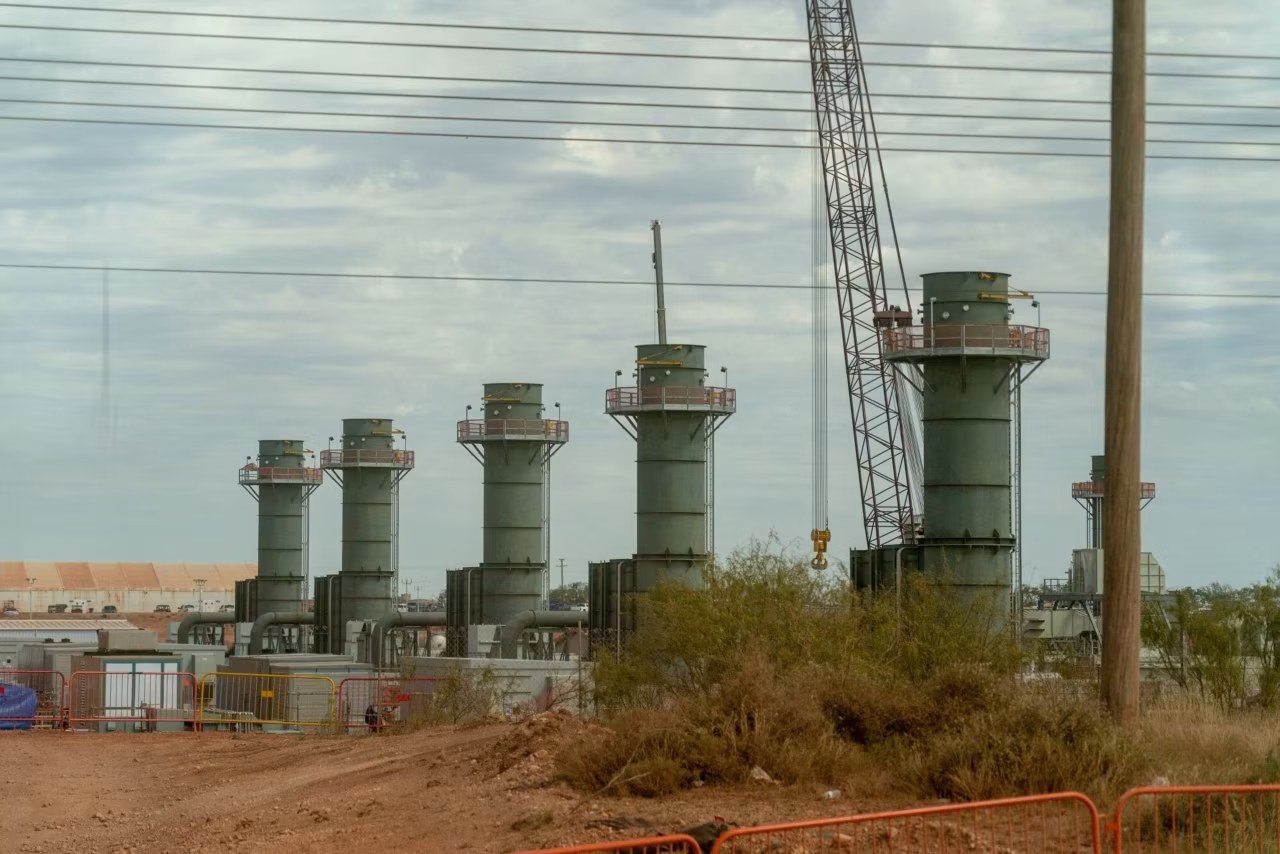
Trump Team Eyes 1994 Rule That Adds Two Years to Every New Gas Plant Permit
- A single Clinton-era EPA guidance quietly doubles the permitting timeline for modern combined-cycle gas turbines.
- Grid analysts warn 80 GW of new gas capacity must come online this decade to offset coal retirements and data-center demand.
- Wholesale power prices have already jumped 18 % since 2021; stalled gas projects could add another 12 %, Moody’s finds.
- Republicans and at least ten Democratic senators back a targeted fix that the next administration could enact without Congress.
Speed matters: every month of delay adds an estimated $400 million to national electricity costs.
CLINTON ENERGY RULE—When the Wall Street Journal editorial board called the Clinton administration’s 1994 New Source Review tweak an “energy error,” the phrase sounded like ancient history. It isn’t. The guidance—never voted on by Congress—still sits in the Code of Federal Regulations, forcing developers of high-efficiency natural-gas plants to endure multi-year environmental re-assessments even when emissions per kilowatt-hour will fall.
The result is a bottleneck exactly where bipartisan consensus says the U.S. needs progress most: rapid deployment of cleaner, dispatchable power. With data-center load growing 9 % a year and 200 coal units set to retire by 2028, grid planners at NERC now list “permitting risk for gas replacements” as the top threat to reliability.
President-elect Trump’s incoming team has signaled it will use executive orders within the first 100 days to accelerate energy projects. Energy lawyers at Bracewell say rescinding or narrowing the 1994 rule is the lowest-hanging fruit—requiring no appropriations, no Hill negotiations, and no new environmental impact statements.
The 1994 Guidance That Still Chokes New Turbines
At the heart of the dispute is a Clinton EPA memorandum issued August 31, 1994, clarifying when modifications to power plants trigger New Source Review, the pre-construction permitting program under the Clean Air Act. The memo said any physical or operational change that increases hourly emissions—even if total plant emissions stay flat or decline—requires a full NSR analysis.
That sounds arcane, but it means replacing an aging 1970s steam turbine with a combined-cycle unit that cuts carbon intensity 45 % still faces a two-year federal review. “It’s like forcing Tesla to get a smog check for taking a gas guzzler off the road,” says Scott Segal, a partner at Bracewell who has represented gas developers for three decades.
According to EPA data, the average NSR permit now takes 36 months, up from 18 months in 2000. For gas plants, the delay is longer because state agencies must model ozone impacts from nitrogen-oxide emissions that are already 90 % lower than coal thanks to modern dry-low-NOx combustors.
One rule, 1,200 stalled projects
Federal filings show at least 1,200 proposed gas-fired units have been withdrawn or indefinitely postponed since 2010, totaling 155 GW of potential capacity. The North American Electric Reliability Corporation estimates that without at least 80 GW of new gas by 2032, reserve margins in the Eastern Interconnection will fall below 12 %—the threshold for rolling blackouts during extreme weather.
Energy Ventures Analysis, a consultancy, puts the consumer cost at $45 billion per year in higher wholesale prices if those projects never get built. That translates to roughly $3.60 on the average monthly residential bill, but the hit to industrial users can exceed $1 million per factory annually.
The 1994 guidance remains binding because no administration has formally repealed it; Trump’s first term focused on coal plant rescues, not gas expansion. EPA staff quietly reaffirmed the memo in 2021, citing “regulatory certainty.” Developers counter that the only certainty is delay.
Why Grid Planners Now Call Gas Expansion Existential
NERC’s 2024 Long-Term Reliability Assessment, released in November, opens with an unusually blunt sentence: “The pace of resource additions is insufficient to offset retirements and demand growth.” The report singles out the 85 GW of coal capacity scheduled to retire by 2030 and the simultaneous 15 % surge in peak demand from artificial-intelligence data centers and electrified transport.
Wind and solar are growing, but they deliver power only 35 % and 25 % of the hours in a year, respectively. Gas combined-cycle plants, by contrast, can run 85 % of the time and ramp from 40 % to 100 % output in ten minutes, making them the preferred backstop for a grid that must stay balanced every second.
“There is no credible pathway to keep the lights on without at least doubling our gas fleet,” says John Bear, CEO of the Midcontinent Independent System Operator (MISO), which oversees 15 states from Louisiana to Manitoba.
The math is relentless
MISO’s 2025 generation queue shows 68 GW of solar and 42 GW of wind seeking interconnection, but only 11 GW of gas. Even if every renewable project were built—a statistical impossibility given 80 % withdrawal rates—the region would still need 28 GW of new dispatchable capacity to meet its 1-in-10 peak-load forecast of 152 GW.
Across the entire Eastern Interconnect, the gap is 90 GW. Because nuclear and coal are retiring faster than replacement resources are coming online, reserve margins have fallen from 18 % in 2014 to 11 % today. A single polar vortex like the one that crippled Texas in 2021 could expose 55 million customers to rotating outages, according to a Wood Mackenzie stress test.
Natural gas is the only scalable option that can be permitted, financed and built within five years. Yet the 1994 guidance effectively adds 18–24 months to every development timeline, pushing in-service dates beyond the reliability cliff.
Could a One-Page Executive Order Cut Power Prices 8 %?
Trump’s transition document “Agenda 47” pledges to declare a national energy emergency on Day 1, directing agencies to expedite “all forms of domestic energy infrastructure.” Legal scholars at the Hoover Institution say the 1994 EPA guidance is vulnerable to immediate rescission because it never went through notice-and-comment rule-making.
“It’s an interpretive memo, not a legislative rule,” explains Jonathan Adler, a professor at Case Western Reserve University. “The Administrative Procedure Act allows an agency to revoke interpretive guidance without the lengthy process required for formal regulations.”
In practice, EPA could issue a new memo stating that efficiency improvements lowering total plant emissions are exempt from NSR. Combined with a Federal Energy Regulatory Commission order requiring grid operators to fast-track interconnection studies for gas units needed for reliability, developers say more than 40 GW of projects could break ground within 18 months.
Price impact: $45 billion back to consumers
Energy Ventures Analysis modelled a scenario where 40 GW of high-efficiency gas enters service between 2026 and 2029. The incremental supply displaces older, less efficient units, trimming average wholesale electricity prices 8 % nationwide and 12 % in the Midwest and Mid-Atlantic where gas penetration is lowest.
Those savings flow through competitive markets to retail customers. Commercial and industrial users—who consume 63 % of all electrons—would capture the largest share, lowering production costs across steel, chemicals and data-center operations that together employ 12 million Americans.
Environmental groups remain skeptical. “Rolling back NSR is a gift to polluters,” says John Walke of the Natural Resources Defense Council. But EPA data show modern combined-cycle turbines emit 60 % less CO₂ and 95 % less NOx than the coal units they replace, suggesting the atmosphere benefits even if the 1994 memo disappears.
Which States Stand to Gain the Most From Faster Permits?
The winners are not the shale-patch states that already rely on gas; they are the Upper Midwest and Mid-Atlantic regions where coal retirements are concentrated and renewable build-out lags. Illinois, Indiana, Ohio and Pennsylvania alone plan to shut 24 GW of coal by 2028 while adding only 9 GW of replacement gas, according to S&P Global Commodity Insights.
MISO’s northern region—Minnesota, Wisconsin and the Dakotas—faces the steepest reserve-margin drop, from 22 % today to 7 % by 2029 without new dispatchable resources. Wisconsin Public Service Commission chair Rebecca Cameron Valcq told legislators in October that “every month of delay on gas projects raises the probability of rolling blackouts in winter 2027 from 5 % to 35 %.”
Permitting reform would also unlock investment in counties where median household income is 20 % below the national average. A typical 1,100 MW combined-cycle plant costs $1.2 billion and supports 650 construction jobs for three years plus 45 permanent positions averaging $95,000 a year, according to the Bureau of Labor Statistics.
Local tax windfall
Property-tax payments from a single gas plant can equal 12 % of a rural county’s annual budget. In Coshocton County, Ohio, the 1,875 MW South Fork Energy Center paid $8.3 million in taxes last year, underwriting the sheriff’s fleet and a new elementary school. Developers have three similar projects on hold pending federal permits.
Across the border in West Virginia, the Department of Economic Development estimates that every 1 ¢/kWh reduction in industrial electricity prices attracts $250 million of new manufacturing investment. A statewide 6 % price drop—the midpoint of Moody’s forecast if regional gas capacity doubles—could add 9,000 factory jobs, reversing a decade of population decline.
What Comes Next for Trump’s Energy Emergency Order?
Multiple sources inside the transition team say the draft executive order is already circulating at the Department of Energy and EPA. The core language directs EPA to withdraw the 1994 guidance within 30 days and replace it with a new memo that exempts efficiency improvements from NSR if they reduce total emissions of CO₂, NOx and mercury.
Simultaneously, the order would instruct FERC to designate any gas plant larger than 300 MW that offsets a coal retirement as a “priority electric infrastructure project,” forcing grid operators to complete interconnection studies within 180 days instead of the current average of 1,050 days.
Legal challenges are inevitable. The Sierra Club has already prepared a complaint arguing that rescission without notice-and-comment violates the Administrative Procedure Act. Courts, however, have upheld similar withdrawals of interpretive memos in other sectors, most recently in 2022 when the Fifth Circuit allowed EPA to scrap Obama-era wastewater guidance.
Congress still holds the big lever
While executive action can shave two years off project timelines, only Congress can deliver the comprehensive permitting overhaul developers crave. Senator Joe Manchin (D., W.Va.) and John Barrasso (R., Wyo.) have floated a grand bargain: a two-year statutory shot clock for federal agencies in exchange for retaining state oversight under the Clean Air Act.
House Speaker Mike Johnson has indicated he will bring permitting legislation to the floor by summer 2025, but any package must clear a 60-vote threshold in the Senate. The 1994 fix could serve as a down-payment, proving to skeptics that faster approvals do not equal dirtier air.
For now, developers are hedging. Tenaska, Invenergy and NextEra have collectively filed 22 pre-application packets with EPA since Election Day, betting that the regulatory dam will break. If it does, the first wave of new turbines could spin by 2027, shaving billions off America’s power bill and keeping the lights on when the next polar vortex descends.
Frequently Asked Questions
Q: What Clinton-era regulation is slowing new natural-gas plants?
A 1994 EPA guidance requires full New Source Review if any component is ‘replaced’ even when efficiency rises. It trips up fast upgrades needed for rapid gas additions.
Q: How much new gas capacity does the U.S. need by 2030?
NERC estimates 80 GW of additional dispatchable gas must be built this decade to keep reserve margins above 15 % as coal retires and demand surges from AI and EVs.
Q: Could a permitting fix really lower electricity bills?
Yes. EIA modelling shows every 10 GW of efficient gas displacing older units trims wholesale prices roughly 2 %. A 40 GW wave could shave $45 bn from annual power costs.
