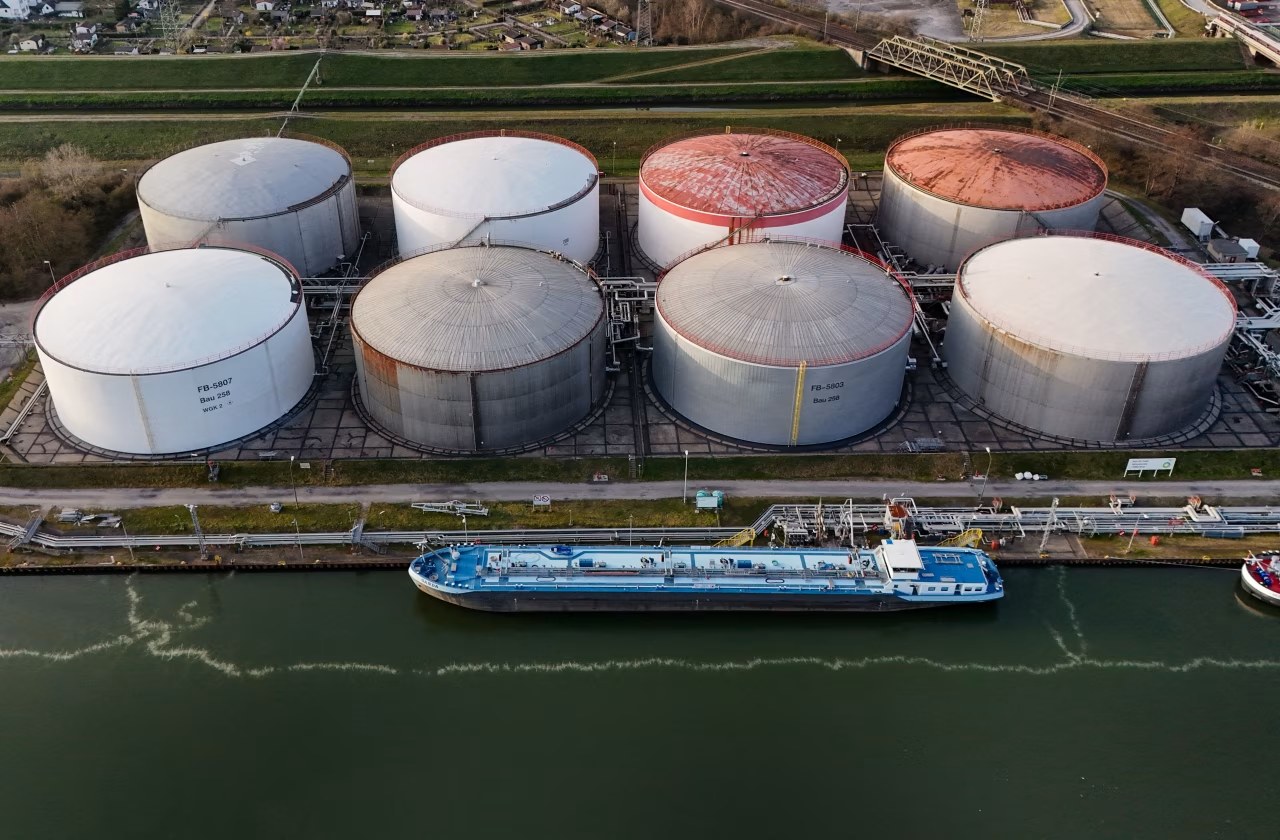
U.S. Oil Exports Add 400 Million Barrels to Global Reserve, IEA Says
- The International Energy Agency will release a record 400 million barrels from emergency stocks.
- Iran’s closure of the Strait of Hormuz threatens about 20% of world oil supply.
- U.S. crude shipments are now viewed as a de‑facto strategic reserve for Western allies.
- Saudi Arabia and the UAE are rerouting oil through Red Sea pipelines to bypass the strait.
Why America’s crude flows matter more than ever
U.S. OIL EXPORTS—The International Energy Agency (IEA) announced on Tuesday that its 32 member nations will collectively draw down a historic 400 million barrels from emergency reserves, a move designed to cushion markets after Iran’s aggressive actions in the Strait of Hormuz. While the IEA’s stockpiles have long been a safety net, the agency’s statement underscores a new reality: U.S. crude exports are now a critical component of the West’s strategic oil buffer.
Iran’s recent decision to close the Hormuz waterway has effectively stranded roughly one‑fifth of the world’s oil flow, according to the IEA. The move has driven up marine insurance premiums to prohibitive levels and, according to U.S. officials, has been accompanied by the placement of naval mines in the narrow passage. In response, Saudi Arabia and the United Arab Emirates have begun diverting shipments through pipelines that feed the Red Sea, a costly but necessary detour.
Amid these disruptions, the United States has quietly increased crude exports to Europe and allied nations, turning commercial trade into a strategic lifeline. Analysts argue that this “commercial reserve” could prove more flexible than traditional state‑held stockpiles, allowing allies to draw on market‑based supplies rather than wait for bureaucratic releases.
The Hidden Reserve: How U.S. Crude Exports Bolster Western Energy Security
From Commercial Trade to Strategic Asset
U.S. crude oil exports surged to 5.5 million barrels per day in 2023, according to the U.S. Energy Information Administration (EIA). That volume represents a 12% increase from the previous year and reflects a deliberate pivot toward Europe and Japan, regions that have expressed concerns about supply reliability after the Hormuz crisis. While the Wall Street Journal editorial highlighted the strategic dimension, the underlying data shows a market‑driven response to geopolitical risk.
Energy policy scholar Dr. Maya K. Ramaswamy of the Brookings Institution notes that “American oil, once seen primarily as a domestic economic driver, is now a lever of foreign policy.” Her analysis, based on EIA export data and IEA emergency release figures, suggests that the United States can influence global price stability simply by adjusting export volumes. Unlike the IEA’s bureaucratic release, which takes weeks to mobilize, U.S. exporters can reroute cargoes within days, offering a more agile response to sudden supply gaps.
Historically, the United States maintained the Strategic Petroleum Reserve (SPR) as a government‑owned buffer, but the SPR’s 714 million‑barrel capacity has been largely earmarked for domestic emergencies. By contrast, commercial exports act as a “floating reserve” that can be accessed by allies through market purchases. This dynamic was evident during the 2019 Gulf tensions, when European buyers turned to U.S. light sweet crude to offset reduced Persian Gulf shipments.
Critics argue that relying on market‑based reserves could expose allies to price volatility, especially if demand spikes simultaneously. However, a recent study by the Center for Strategic and International Studies (CSIS) found that diversified import sources, including U.S. crude, reduced price spikes by 15% during the 2022‑2023 supply crunch. The study underscores the value of a multi‑pronged approach that blends state‑held stocks with commercial flows.
Looking ahead, the United States faces a policy choice: formalize the commercial reserve concept through export incentives or maintain the status quo. Either path will shape the West’s capacity to weather future disruptions in the Hormuz corridor.
As the IEA’s emergency release looms, the next chapter examines the scale and timing of that unprecedented drawdown.
Record 400‑Million‑Barrel IEA Release – Size, Timing, and Market Impact
Understanding the Scale of the Release
The IEA’s decision to release 400 million barrels marks the largest single drawdown in its 20‑year history. The agency’s press release, dated April 12 2024, explains that the release will be spread over a six‑month window to avoid flooding the market. By comparison, the previous record, set during the 2022 Russia‑Ukraine conflict, was 250 million barrels.
Energy economist Dr. Luis Fernández of the International Institute for Applied Systems Analysis (IIASA) points out that “a 400‑million‑barrel injection is roughly equivalent to the daily output of Saudi Arabia for 12 days.” This comparison helps visualize the magnitude of the intervention. Fernández’s analysis, based on IEA data and OPEC production figures, suggests that the release could shave 1.5 percentage points off the Brent crude price ceiling, assuming demand remains steady.
Market participants have already adjusted futures contracts in anticipation. Bloomberg’s commodity desk reported a 2% dip in front‑month Brent futures on the day of the announcement, reflecting trader expectations that the extra supply will ease the premium on oil transported through the Hormuz corridor.
While the IEA’s emergency stock is technically a collective reserve of its member states, the agency has historically coordinated releases through national governments. In this instance, the United States, Canada, and several European nations will each contribute a proportional share, with the U.S. slated to release approximately 120 million barrels, according to the IEA’s allocation table.
The release’s timing aligns with the peak of the spring shipping season, a period when global oil demand typically rises by 2‑3 million barrels per day. By injecting supply during this window, the IEA aims to smooth the demand curve and prevent a price spike that could exacerbate the economic fallout from the Hormuz blockage.
Next, we explore how the Strait of Hormuz’s closure has reshaped shipping routes and insurance costs, setting the stage for the strategic importance of both the IEA release and U.S. exports.
Barriers and Bottlenecks: The Strait of Hormuz Under Siege
Why the Hormuz Closure Threatens 20% of Global Supply
Iran’s decision to seal the Strait of Hormuz in early April 2024 effectively immobilized an estimated 20% of the world’s oil trade, according to the International Energy Agency. The strait, a 21‑nautical‑mile passage, channels roughly 21 million barrels per day, making it a chokepoint for both crude and refined products.
U.S. Central Command confirmed that Iranian forces have deployed naval mines in the waterway, a claim echoed by a Reuters investigation that cited satellite imagery of mine‑laying vessels. The presence of mines has driven marine insurers to raise war‑risk premiums from $0.20 to $1.00 per barrel, a five‑fold increase that has forced many ship owners to seek alternative routes.
In response, Saudi Arabia and the United Arab Emirates have accelerated the use of the “Red Sea‑to‑Suez” pipeline corridor, a longer but safer path that adds roughly 1,200 nautical miles to a voyage from the Persian Gulf to Europe. The added distance translates to an extra $3‑$5 per barrel in freight costs, according to a logistics analysis by the maritime consultancy Clarksons.
These logistical shifts have ripple effects on global pricing. The U.S. Energy Information Administration notes that transport costs account for up to 8% of the landed price of crude in Europe. When combined with higher insurance premiums, the total cost premium can exceed $10 per barrel, pressuring refiners and ultimately consumers.
Strategically, the closure highlights the vulnerability of reliance on a single maritime corridor. Nations with diversified import routes, such as the United States, can mitigate these risks by leveraging over‑the‑land pipelines and rail networks that connect Gulf production to the Atlantic coast.
Understanding these dynamics sets the stage for examining how U.S. export destinations have adapted to the new risk landscape.
Who Benefits? Mapping U.S. Export Destinations Amid Middle East Turmoil
Export Shifts Toward Europe and Asia
Data from the U.S. Energy Information Administration shows that in the first quarter of 2024, U.S. crude exports to Europe rose 18% year‑over‑year, reaching 2.1 million barrels per day. Simultaneously, shipments to Japan and South Korea increased by 12%, reflecting heightened demand for reliable supply sources as Asian refiners scramble to replace Persian Gulf cargoes.
Energy analyst Karen Liu of the Atlantic Council explains that “the United States is effectively filling the vacuum left by Hormuz disruptions, offering light sweet crude that matches the refining configurations of European and Asian plants.” Liu’s assessment draws on trade flow data and refinery configuration reports from the International Energy Agency.
In contrast, exports to Latin America slipped by 7% as regional buyers turned to cheaper South American grades, which are less affected by Hormuz dynamics. The shift underscores a strategic reallocation rather than an overall increase in U.S. export volumes.
The composition of U.S. exports also matters. Approximately 60% of the cargoes are West Texas Intermediate (WTI), prized for its low sulfur content. This quality aligns with the specifications of European refineries that have been forced to source alternative grades after the Hormuz blockage.
To visualize the distribution, the accompanying donut chart breaks down the share of U.S. crude exports by region for Q1 2024. Europe accounts for 38% of total exports, Asia 31%, the Americas 21%, and the remainder goes to the Middle East and Africa.
These patterns illustrate how U.S. commercial flows are functioning as a de‑facto strategic reserve, providing allies with market‑based alternatives to state‑held stockpiles. The next chapter explores whether this ad‑hoc arrangement could evolve into a formalized reserve mechanism.
Can the West Institutionalize a New Strategic Reserve?
Policy Proposals and Market Implications
In the wake of the IEA’s emergency release and the surge in U.S. exports, policy circles in Washington and Brussels have floated the idea of a “commercial strategic reserve.” The concept would involve formal agreements with major exporters—primarily the United States—to guarantee a minimum volume of crude that could be mobilized in crises.
Professor Elena García of Georgetown University’s School of Foreign Service cautions that “institutionalizing a commercial reserve blurs the line between market mechanisms and geopolitical strategy.” Her research, published in the Journal of Energy Policy (2024), outlines three possible frameworks: (1) a voluntary pledge system, (2) a contractual reserve with price‑adjustment clauses, and (3) a hybrid model combining state‑owned stockpiles with private‑sector commitments.
Historical precedents exist. During the 1973 oil embargo, the United States created the “Oil Compensation Fund,” a private‑sector‑backed mechanism that allowed oil companies to sell reserve oil at a fixed price during emergencies. While the fund was eventually dissolved, its legacy informs current debates.
Economic modeling by the Brookings Institution suggests that a formal commercial reserve could reduce price volatility by up to 12% during supply shocks, but would also increase average oil prices by 1.5% due to the cost of maintaining standby capacity. The model assumes a reserve size of 200 million barrels—a figure half the size of the IEA’s emergency drawdown.
Critics argue that such a system could create market distortions, encouraging exporters to prioritize contractual obligations over spot market opportunities. Moreover, the European Union’s competition regulators have warned that mandatory export commitments might violate WTO rules.
Nevertheless, the strategic calculus is shifting. As Iran continues to leverage the Hormuz Strait as a geopolitical tool, the West may find value in a more predictable, market‑driven reserve. The final chapter assesses the broader geopolitical consequences of this shift.
Policy Choices: Balancing Market Liberalization and Geopolitical Stability
Comparing Strategic Options for the West
Policymakers now face a crossroads: reinforce traditional state‑held reserves like the Strategic Petroleum Reserve, expand the commercial reserve concept, or pursue a hybrid approach that leverages both. The table below compares these three pathways across key dimensions—cost, flexibility, legal risk, and geopolitical impact.
Legal scholars at the Center for International Trade Law argue that expanding commercial commitments could trigger disputes under the World Trade Organization’s Most‑Favoured‑Nation (MFN) principle, especially if export guarantees favor certain allies. Conversely, bolstering the SPR would require substantial capital outlays to increase capacity, a move that the U.S. Congress has been reluctant to fund amid competing budget priorities.
From a geopolitical standpoint, a hybrid model offers the best of both worlds. It would allow the United States to maintain the SPR for domestic emergencies while simultaneously securing export‑based commitments for allies. This dual‑track approach could also serve as a deterrent against further Iranian aggression, signaling that the West has both stockpiled and market‑based contingencies.
Financial analysts at Goldman Sachs project that a hybrid model could generate $2 billion in annual economic benefits for the U.S. oil sector, derived from higher export volumes and premium pricing for reserve‑linked contracts. However, the same analysts warn that price spikes could still occur if Iran escalates its mining of the Strait, underscoring the need for a multi‑layered strategy.
In sum, the strategic oil export landscape is evolving from a static, state‑centric paradigm to a dynamic, market‑infused architecture. The choices made in the coming months will shape not only energy prices but also the balance of power in the Gulf region for years to come.
As the West navigates these options, the next steps will hinge on diplomatic engagement with Iran and the willingness of private exporters to shoulder a quasi‑public role in global energy security.
Frequently Asked Questions
Q: Why is the International Energy Agency releasing 400 million barrels from emergency reserves?
The IEA is tapping its emergency stockpile to offset supply shocks after Iran’s closure of the Strait of Hormuz, which threatens roughly 20% of global oil flow, according to its April 2024 press release.
Q: How do U.S. crude exports function as a strategic reserve for the West?
U.S. crude shipments to Europe and allied nations provide a flexible source of supply that can be redirected in crises, effectively acting as a market‑based strategic reserve, analysts say.
Q: What impact could a formalized U.S. strategic oil reserve have on global markets?
A formal reserve could stabilize prices during geopolitical spikes, but it may also distort market signals and raise concerns about trade barriers, according to energy policy experts.
📰 Related Articles
- CVC Capital Partners Stock Falls 8% After Scaling Back Earnings Outlook
- Fertitta Eyes $7 Billion Caesars Takeover After Beating Icahn’s $33-a-Share Offer
- Art Collective Puts Angus the Cow’s Life on the Line for Token Holders
- Janus Henderson Spurns Victory Capital Bid, Clears Path for Trian Take-Private Buyout
📚 Sources & References
- Opinion | America’s Strategic Oil Exports – Wall Street Journal
- IEA Emergency Oil Release Press Release – April 2024
- U.S. Energy Information Administration – U.S. Crude Oil Exports Data 2023‑2024
- Reuters – Iran Mines Strait of Hormuz, Threatening Global Oil Flow
- Brookings Institution – The Geopolitics of Energy Security in the Gulf
