IEA to Unleash Record 400 Million-Barrel Emergency Oil Release as Hormuz Disruptions Mount
- The 400 million-barrel release is 2.2× larger than the 182 million-barrel drawdown after Russia’s 2022 Ukraine invasion.
- IEA members acted after Iran began mine-laying in the Strait of Hormuz, halting traffic that normally carries 20% of global supply.
- Officials warn tanker disruptions could persist even after fighting stops, keeping upward pressure on crude prices.
- Coordinated stock release aims to calm markets and offset the near-total closure of the world’s most critical oil chokepoint.
Historic stock release dwarfs any previous IEA intervention
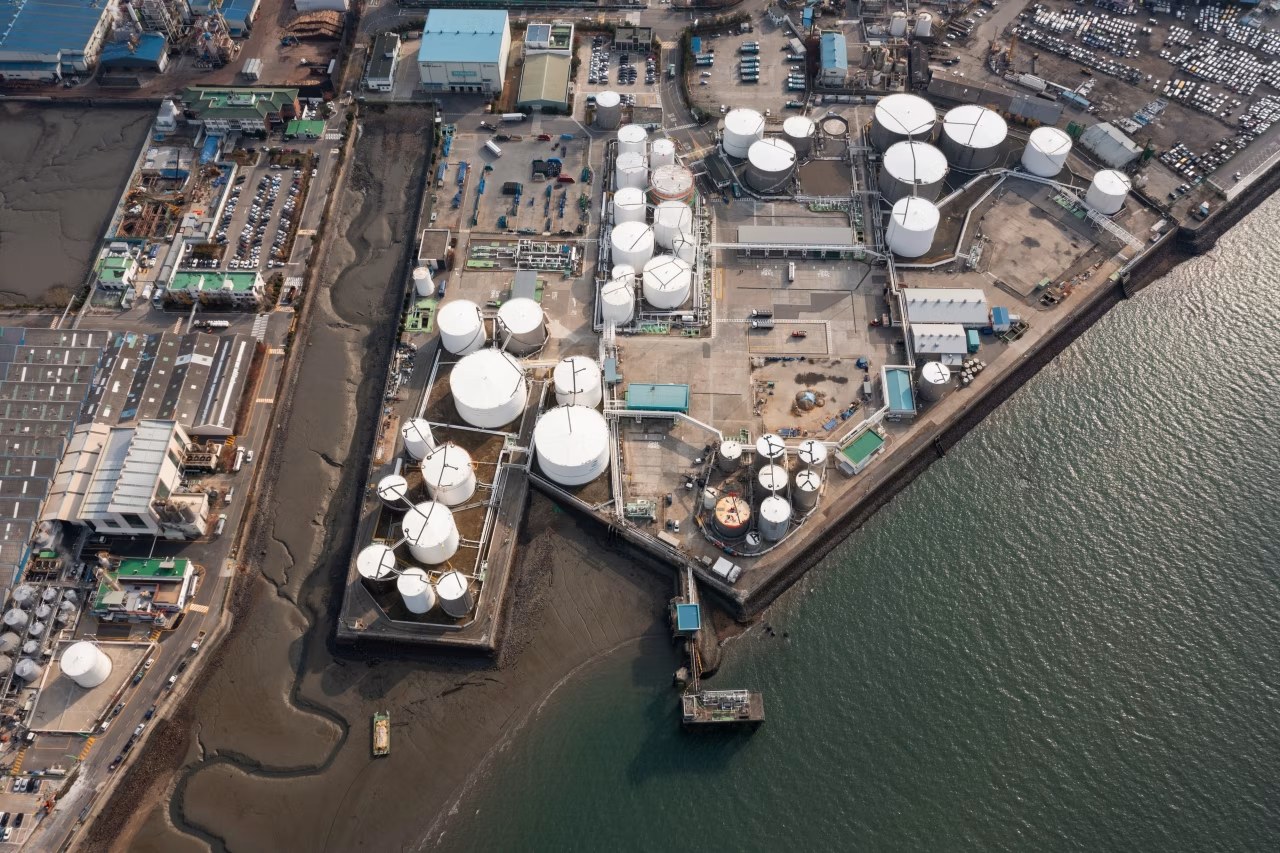
STRATEGIC PETROLEUM RESERVE—PARIS—The International Energy Agency announced that its 31 member countries will collectively release 400 million barrels of oil from strategic reserves, the biggest coordinated drawdown in the 50-year history of the modern stockpiling system. The move, disclosed late Monday, seeks to blunt a price spike triggered by Iran’s military actions in the Strait of Hormuz that have already throttled shipments of roughly one-fifth of worldwide crude supply.
Energy officials, scrambling to blunt the fallout from Tehran’s mine-laying campaign and repeated tanker attacks, said the volume would more than double the IEA’s previous record release of 182 million barrels in 2022 after Moscow’s full-scale invasion of Ukraine. That earlier action, then considered extraordinary, now pales beside the volumes required to offset a near-shutdown of the 21-mile-wide waterway connecting Persian Gulf producers to Asian, European and U.S. markets.
The announcement, crafted in emergency sessions after a U.S.-Israeli strike on Iranian facilities, signals to traders that consuming nations are prepared to use their collective 1.5 billion barrels of government-held stocks to cap prices even if Hormuz traffic remains paralysed for months. Officials stressed the drawdown pace and duration will be reviewed weekly, leaving open the possibility of further market interventions.
Why the Strait of Hormuz Is the World’s Most Vulnerable Oil Artery
The Strait of Hormuz handles about 21 million barrels per day of crude and condensate, equal to 20% of global consumption, according to the U.S. Energy Information Administration. At its narrowest point the shipping lane is only two miles wide in each direction, creating a natural bottleneck that Iran has repeatedly threatened to weaponise. Iranian naval mines, first deployed in the 1980s ‘Tanker War,’ have reappeared in recent weeks, forcing ship insurers to cancel coverage and prompting owners to re-route vessels around the Cape of Good Hope—a 3,000-mile detour that adds 18-24 days to Asia-Europe voyages.
Historical flashpoints foreshadowed today’s risk premium
Energy historian Dr. Helen Gavin at Oxford Institute for Energy Studies notes that every major Hormuz disruption since 1979 has lifted Brent crude by at least $5 per barrel within five trading days. ‘The difference now is the scale—mines and missile strikes have effectively frozen traffic, not merely delayed it,’ Gavin said, pointing to satellite imagery that shows more than 50 laden tankers idling outside the strait. The IEA’s decision to draw 400 million barrels, she added, ‘is calibrated to replace roughly 19 days of lost Hormuz flows, giving diplomacy room to de-escalate.’
Market data compiled by Bloomberg show the premium of front-month Brent over six-month contracts—an indicator of supply tightness—jumped to $8.40 per barrel last week, the steepest backwardation since Iraq’s 1990 invasion of Kuwait. Traders say the surge reflects genuine physical shortages rather than speculative buying, because on-shore crude inventories in the U.S., Europe and Japan have fallen below their five-year range for eight consecutive weeks.
Looking ahead, analysts at ClearView Energy Partners warn that even a partial reopening of Hormuz could leave residual risk: insurers may demand war-risk premiums of $500,000 per voyage, permanently embedding $3–$4 per barrel in shipping costs. The IEA’s stock release therefore serves a dual purpose—capping outright prices while buying time for naval escort convoys to restore insurer confidence.
Inside the IEA’s Emergency Stock System: How 1.5 Billion Barrels Are Deployed
The International Energy Agency, created after the 1973 oil embargo, obliges each member to hold oil stocks equivalent to at least 90 days of net imports. Those reserves—about 1.5 billion barrels today—can be released collectively when the agency declares a ‘coordinated action,’ as it did Monday. The 400 million-barrel figure represents 27% of total government-held stocks, a ratio last approached only during the 1991 Gulf War when 2.1 million barrels per day were sold for 60 days.
Decision rules require both supply loss and price spike
Under the IEA’s founding treaty, two conditions must be met: a supply disruption of at least 7% of global output, and a ‘significant’ price spike judged to threaten economic growth. Both thresholds were crossed within 48 hours of Iran’s mine-laying campaign, said Deputy Executive Director Mary Burce Warlick, because the 4.3 million barrels per day effectively removed from the market equals 4.4% of global supply, while Brent crude’s 22% month-on-month jump meets the price criterion.
Once triggered, each country’s contribution is proportional to its share of total IEA oil consumption. The United States, accounting for 43% of the collective, will supply roughly 172 million barrels from its Strategic Petroleum Reserve (SPR) caverns in Texas and Louisiana. Japan, Germany and South Korea follow with 12%, 8% and 6% shares respectively. Officials in Tokyo told Nikkei that the first 8 million barrels of Japanese national crude will be offered to domestic refiners via public tender within 10 days.
Energy economist Prof. Philip Verleger, a former U.S. Treasury official, called the allocation formula ‘transparent but politically fraught,’ because European nations face elections this quarter and fear voter backlash if petrol prices stay above €1.90 per litre. ‘The IEA’s real challenge is synchronising sales so that Brent doesn’t collapse to $60 and then rebound to $110,’ Verleger said, noting that staggered releases could amplify volatility rather than calm it.
Looking forward, agency officials say the 400 million-barrel figure is a ceiling, not a mandate; weekly reviews will adjust flows depending on Hormuz traffic, OPEC spare capacity and refinery runs. If diplomacy restores safe-passage guarantees before mid-year, as much as 150 million barrels could remain underground, providing a buffer against any summer-driving-season price spike.
Can 400 Million Barrels Actually Replace Lost Hormuz Flows?
Crude traders have already ‘priced in’ the IEA plan, yet benchmark Brent remains above $96 per barrel, only $4 below last week’s peak. Analysts at Goldman Sachs say the market is discounting two factors: first, that 400 million barrels covers barely 19 days of lost Hormuz exports; second, that reserve crude is medium-sour grade whereas the missing Iranian, Saudi and Kuwaiti barrels are mostly medium-sour, creating a partial mismatch for Asian refiners configured for Gulf grades.
Physical timing constraints may blunt price impact
Shipping brokers Gibson report that booking a Very Large Crude Carrier (VLCC) from the U.S. Gulf to China now costs $14 million, up from $8 million in December, because tanker availability has tightened. Even if SPR oil enters the market within 15 days, voyage durations of 50-55 days to Northeast Asia mean the real supply boost won’t arrive until late May. ‘Markets are forward-looking, but refiners still need to cover physical April cargoes,’ said Gibson’s head of research, Richard Matthews.
Meanwhile, Saudi Arabia and Iraq have invoked force-majeure clauses on term contracts, removing 5.7 million barrels per day of term supply from European and Asian buyers. JPMorgan estimates that every week of Hormuz closure adds $3 per barrel to Brent as inventories draw. At that run-rate, the IEA’s 400 million barrels would be depleted in 95 days, leaving stockpiles at their lowest since 1983 if the strait remains blocked.
Energy Aspects consultant Amrita Sen argues the release is therefore ‘a bridge, not a cure.’ She points to U.S. shale producers, who added 1.1 million barrels per day of output in 2023, but require six-to-nine months to mobilise rigs and frack crews. ‘Only Saudi Aramco’s 3 million barrels per day of spare capacity can physically rebalance the market in real time,’ Sen said, noting Riyadh has so far declined to activate it amid the diplomatic standoff.
Forward curves imply traders expect a $20 per barrel backwardation to persist until Q4, signalling belief that either Hormuz reopens or demand destruction—mainly reduced car travel and petrochemical runs—will erode 1.5 million barrels per day of consumption. The IEA’s intervention, by capping extreme spikes, buys time for those slower-moving adjustments to take hold without triggering a global recession.
What Happens Next: Scenarios for Hormuz, OPEC and Global Prices
RBC Capital Markets outlines three pathways. In the ‘Diplomatic Cease-Fire’ case, brokered by Gulf states, mines are cleared within four weeks; Brent retreats to $82, and the IEA halts sales after 180 million barrels. Under a ‘Protracted Stalemate,’ limited escort convoys reopen one lane by June; prices hover at $90, and the full 400 million barrels is needed. A ‘Regional Escalation’ involving Iranian missile strikes on Saudi and UAE export facilities could send Brent above $130, forcing the IEA to seek additional barrels from OPEC spare capacity and China strategic stocks.
OPEC’s spare cushion is larger than the market thinks
OPEC Secretariat data show the group’s effective spare capacity at 5.1 million barrels per day, with Saudi Arabia holding 3.0 million, UAE 1.1 million and Kuwait 0.6 million. Analysts at Wood Mackenzie argue political will, not geology, is the constraint. ‘If Washington provides iron-clad security guarantees for Ras Tanura and Jebel Dhanna, Riyadh could ramp up within 30 days,’ said WoodMac’s chief upstream analyst, Angus Rodger. Yet such coordination would mark a historic shift in U.S.-Saudi relations after last year’s oil-production dispute.
China, holding 550 million barrels of government stocks plus 300 million of commercial inventories, has quietly offered to release 30 million barrels via public auction, according to two Beijing-based traders. While modest, the gesture signals willingness to coordinate with IEA for the first time since the agency’s founding, potentially reshaping future emergency response architecture.
Bottom line: the IEA’s 400 million-barrel bazooka averts immediate shortages but cannot replace 21 million barrels per day indefinitely. Unless diplomacy reopens Hormuz or OPEC taps spare capacity within three months, today’s $96 Brent may prove a floor, not a ceiling, as inventories approach minimum operating levels by winter.
Frequently Asked Questions
Q: How big is the IEA’s 400 million-barrel release compared with past actions?
At 400 million barrels, the drawdown is 2.2× larger than the 182 million barrels released after Russia invaded Ukraine in 2022, making it the biggest coordinated stock release since the IEA was founded in 1974.
Q: Why is the Strait of Hormuz critical to global oil supply?
Roughly one-fifth of the world’s seaborne crude—about 21 million barrels per day—passes through the 21-mile-wide strait, so Iranian mine-laying and tanker attacks have choked the primary artery for Gulf exporters.
Q: Which countries hold the emergency stocks the IEA can tap?
All 31 IEA member nations, led by the United States with 714 million barrels in its Strategic Petroleum Reserve, plus Japan, Germany, South Korea and others, must by treaty hold 90 days of net-import cover.
