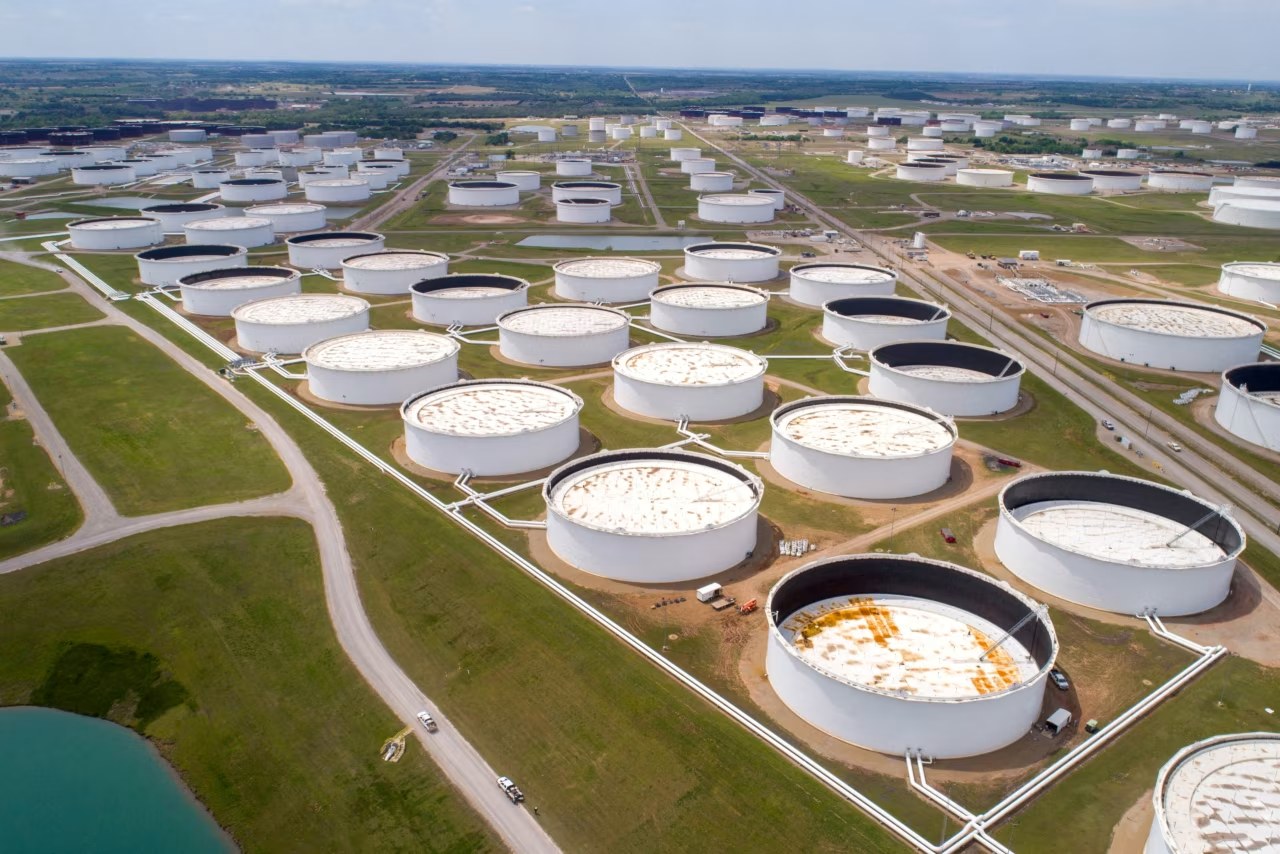
400 Million Barrel IEA Release Leaves Brent Stuck at $91 as Hormuz Remains Shut
- International Energy Agency confirmed a 400 million barrel strategic release, the largest in history.
- Brent crude settled only 3.8% higher at $91.14 while WTI rose 3.4% to $82.15—both well within recent ranges.
- Goldman Sachs sees a potential $7 price drop if the Strait of Hormuz reopens and half the barrels enter storage.
- FxPro’s Alex Kuptsikevich warns past releases in 2022 actually spiked prices as traders read the move as a sign of market fragility.
Traders shrug at record stock draw, betting the real fix is a reopened waterway—not emergency barrels.
IEA OIL RELEASE—LONDON—Oil futures barely flinched after the International Energy Agency locked in a historic 400 million barrel release from strategic reserves, underscoring how the market’s fear gauge has shifted from inventory math to mine-strewn shipping lanes in the Persian Gulf.
Brent crude, the global benchmark, ended the session up 3.8% at $91.14 a barrel, while U.S. West Texas Intermediate added 3.4% to $82.15. Both contracts remain within the volatile but well-defined $80–$95 band that has held since Iran’s alleged mining of the Strait of Hormuz ignited supply-risk premiums.
IEA executive director Fatih Birol framed the release as a bridge until tanker traffic resumes, but front-month spreads continue to price in a protracted disruption. “The emergency stocks will be made available to the market over a time frame that is appropriate to the national circumstances of each member country,” the agency said, leaving traders to model opaque refill schedules rather than count on a flood of prompt barrels.
Why Strategic Barrels Are No Longer Market Movers
The era when a headline of strategic barrels could knock $10 off crude is over, say veteran oil strategists, and the IEA’s own data explains why. OECD commercial oil inventories stood at 2.85 billion barrels in the most recent survey, already at the bottom of the five-year range. Against that backdrop, 400 million emergency barrels equate to roughly 14% of visible stocks—significant, but not game-changing if the volumes arrive in slow motion.
From glut to razor-thin cushion
“Strategic reserves are designed for sudden outages, not to replace a geopolitical chokepoint for months,” notes Norbert Rücker, head of economics at Julius Baer. The Swiss bank still regards the price spike as “short-lived,” yet concedes that replenishment flows will eventually return as incremental demand—an irony that could tighten the market it is meant to soothe.
Goldman Sachs analysts quantify the offset: the release covers about 12 trading days of lost Persian Gulf exports assuming 15.4 million bpd is offline. If half of the barrels are absorbed into OECD storage rather than burned immediately, Brent could ease by $7. The key condition is that the strait reopens; otherwise, the buffer merely delays a physical shortage.
FxPro’s Alex Kuptsikevich reminds clients that prices actually rose after the 2022 coordinated draw-down because traders interpreted the move as “a sign of a fragile market.” Historical precedents are mixed: crude fell when the U.S. tapped reserves during the 1991 Iraq invasion, but that release coincided with a swift military resolution and a quick resumption of Kuwaiti output.
Today, investors confront two unknowns: how long Iran’s suspected mining campaign keeps insurers from covering tankers, and whether IEA members will synchronise refills or compete for spot barrels later this year. The forward curve already prices Brent above $90 for December 2025, signalling an expectation that today’s emergency barrels will need to be bought back.
Inside the Numbers: How 400 Million Barrels Compare
The 400 million barrel figure dwarfs every previous IEA action since the agency’s founding in 1974. The closest parallel is 2022, when members offered 182 million barrels across two tranches after Russia invaded Ukraine. That release, however, unfolded while Russian barrels still reached India and China, so the market never lost physical supply. Today, the calculus is reversed: exports are physically blocked at source.
Scaling the stock draw
Of the 31 IEA member countries, the United States controls the largest share—roughly 250 million of the pledged volume—via its 714 million barrel Strategic Petroleum Reserve. The EU, Japan, South Korea and Australia will supply most of the remainder through a mix of government-owned barrels and obligations on commercial importers.
The U.S. Department of Energy can deliver 4.4 million bpd via pipeline and marine manifolds, but sale notices require roughly 18 days between announcement and first deliveries. European stocks held in the Netherlands and Germany can reach refineries faster via barge, yet German data show commercial crude holdings already 11% below pre-Ukraine levels, leaving limited room to absorb extra barrels into private tanks.
IEA rules oblige members to hold oil equivalent to 90 days of net imports. Current days of import cover range from 230 in the U.S. to barely 95 in France, meaning any prolonged draw-down risks pushing some states below the legal threshold and forcing future repurchases.
Analysts at ClearView Energy Partners estimate Washington will need to repurchase 120–140 million barrels starting in 2026 to respect congressional mandates, adding a structural bid to future prices. “The bill comes due,” says Kevin Book, managing director at the consultancy. “Market tightness today is being traded for market tightness tomorrow.”
Is the Strait of Hormuz the Only Metric That Matters?
Shipping data show only three very-large-crude-carriers (VLCCs) have transited the strait since Iran allegedly laid mines two weeks ago, compared with an average of 21 per day in 2024. Roughly 15.4 million bpd of seaborne crude, condensate and refined products are now displaced, equivalent to 15% of global demand. No inventory release can replace that volume indefinitely.
Insurance blackout
London’s marine insurance market has widened the Listed Areas to include Omani waters, triggering war-risk premiums of $3 million per VLCC voyage—more than the cargo’s value in some cases. Asian refiners report offers of Abu Dhabi crude at discounts of $8–9 a barrel to Brent, yet few lift because they cannot secure hull cover.
U.S. naval officials say escorted convoys are logistically feasible but politically sensitive. Energy Secretary Chris Wright briefly posted, then deleted, a claim that a U.S. warship had already shepherded a tanker through the channel, highlighting the messaging fog surrounding any military option.
Against that backdrop, the IEA’s 400 million barrels act more like a liquidity injection for refiners with existing inventories than a physical replacement for lost barrels. “Prices won’t normalize until insurers, not governments, give the all-clear,” says Richard Bronze, head of geopolitics at Energy Aspects.
What Happens When Countries Race to Refill Reserves?
History shows the post-release buying phase can be as price-supportive as the release was bearish. After the 1991 draw-down, the U.S. government purchased 12 million barrels per month for nine months, adding an estimated $2–3 premium to dated Brent. With today’s larger volumes and tighter markets, the refill bid could be steeper.
Structural bid ahead
Under U.S. law, the Department of Energy must begin restocking once prices fall below $75 on a five-day average. Front-month WTI is still $7 above that trigger, yet calendar spreads already imply backwardation through 2026, suggesting limited downside. Analysts at Wood Mackenzie estimate global government repurchases could reach 250 million barrels in 2026–2027, equal to India’s annual import growth.
IEA guidelines allow members flexibility, but political pressure to “top up” will intensify if days-of-import cover drops toward 90 days. Japan’s industry ministry has already budgeted ¥200 billion for fiscal-year 2026 crude purchases, while Germany’s economy ministry is debating whether to shift part of the obligation to commercial stockholders, effectively mandating industry buying.
“The replenishment cycle collides with forecasted supply growth plateaus in the U.S. shale patch and OPEC+ discipline,” says Louise Dickson, senior oil market analyst at Rystad Energy. She models a $5–8 contango shift into 2027 as deferred demand from governments competes with emerging-market refinery expansion.
Forward Curve Signals Stubborn Premium Despite Record Release
Strip pricing shows Brent for December 2025 delivery trading at $91.60, only 50 cents below the prompt contract—an indication that traders expect little relief. Typically, a large inventory injection steepens the contango, but the current flat structure implies either skepticism about actual deliveries or belief the strait will stay shut.
Curve refuses to flatten
“The forward curve is telling you the release is a temporary liquidity tool, not a supply solution,” says Michael Tran, global energy strategist at RBC Capital Markets. He notes that front-month volatility has fallen from 68% to 52% since the announcement, yet deferred volatility remains elevated, a pattern consistent with geopolitical risk rather than inventory surplus.
Money-manager positioning in ICE Brent futures rose 7% last week, but the bulk of new longs were in December 2025 and 2026 contracts, suggesting funds are betting on higher prices once today’s emergency barrels are burned off. CFTC data show producers increased short hedges at $90–$92, indicating industry confidence that prices will not collapse.
Refiners are responding by maximising middle-distillate output. U.S. Gulf refinery utilisation hit 93.4%, the highest for April since 2018, while European runs rose to 87%, according to Euroilstock. The implicit bet: if crude shortages persist, margins on diesel and jet will outperform, cushioning against feedstock inflation.
Frequently Asked Questions
Q: How big is the IEA’s latest strategic oil release?
The International Energy Agency confirmed its member countries will collectively offer 400 million barrels, the largest coordinated draw-down in the agency’s history, to offset supply lost while the Strait of Hormuz is effectively closed.
Q: Why didn’t oil prices fall after the release was announced?
Traders view strategic reserves as an emergency buffer, not a durable supply source. With Hormuz exports still blocked, the market is focused on when tanker traffic resumes rather than on temporary stock releases.
Q: What price impact do banks expect?
Goldman Sachs estimates the release could lower Brent by roughly $7 a barrel—assuming half the barrels enter OECD storage—but only if the strait reopens and physical barrels can reach refiners.
📰 Related Articles
- Valor’s Electrochemical Breakthrough Could Free US Critical Minerals From Smelters
- Gold Margins, Mining Records, Power Shield: 3 Surprises That Moved Basic-Material Stocks Today
- Basic Materials Face Divergent Paths: Coal Surges, Lithium Sees Slow Recovery, Aluminum Slides
- Oil Hits $120 Then Drops to $90: Why the Strait of Hormuz Risks Recession
