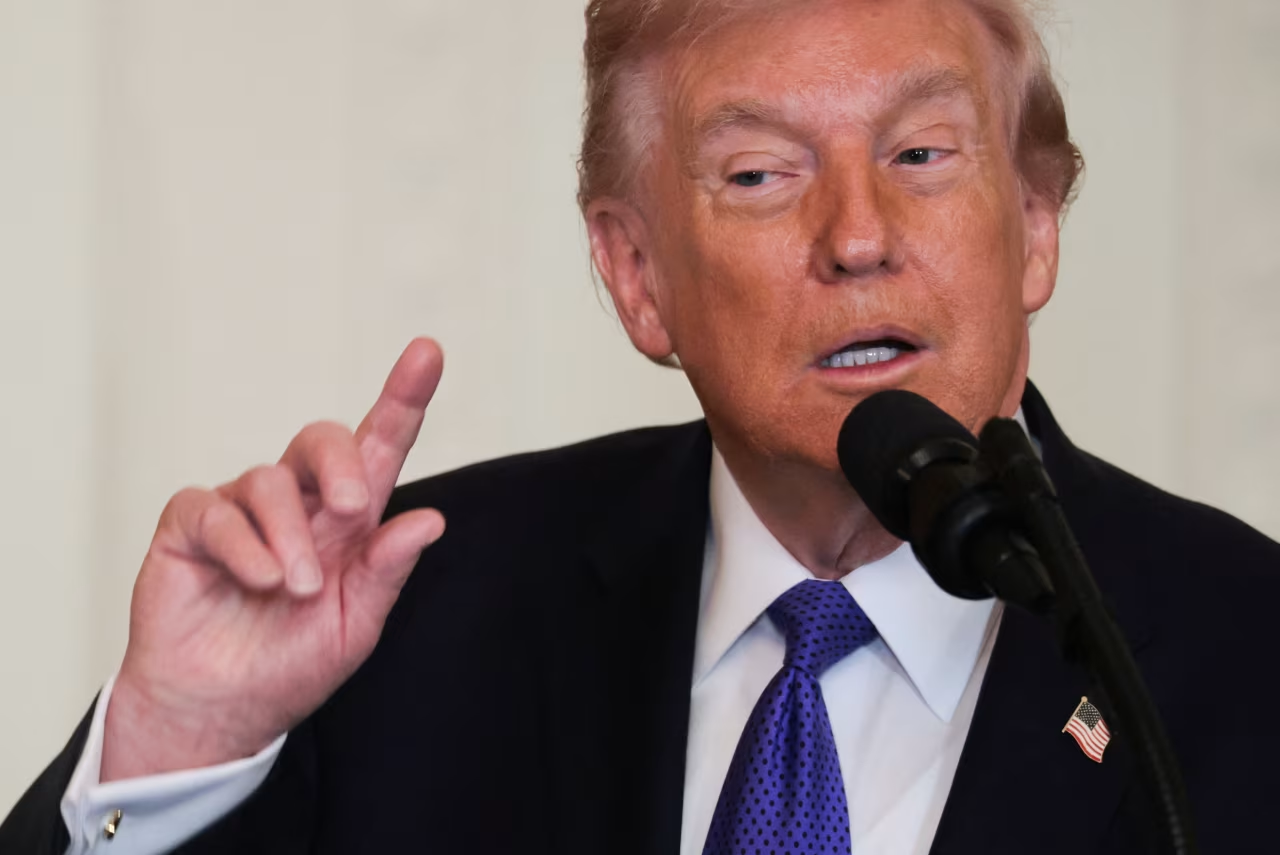
Imagining Donald Trump as a Democrat
- Potential impact on US political landscape
- Shift in policy priorities
- Effects on the Republican Party
A Hypothetical Scenario
DONALD TRUMP—The idea of Donald Trump, the 45th President of the United States, as a Democrat is a fascinating thought experiment. It allows us to consider how his presidency and policies might have differed if he had been a member of the opposing party.
This hypothetical scenario raises important questions about the nature of Trump’s political ideology and how it might have been received by the Democratic Party. In this article, we will delve into the possibilities and implications of a Democratic Donald Trump.
Donald Trump’s Political Ideology
Donald Trump’s political ideology is a unique blend of populist, nationalist, and conservative views. As a Democrat, his ideology might have been influenced by the party’s progressive values, potentially leading to a more moderate stance on issues like healthcare and economic policy.
Trump’s Democratic platform might have focused on issues like job creation, infrastructure development, and trade policy, which are traditionally Democratic strongholds. However, his populist appeal and ability to connect with working-class voters could have also led to a more nuanced approach to issues like immigration and social welfare.
It is also possible that a Democratic Trump would have been more receptive to the party’s stance on climate change, social justice, and civil rights. This could have resulted in a more comprehensive approach to addressing these issues, potentially leading to more effective policies and greater bipartisan support.
Ultimately, the nature of Trump’s political ideology as a Democrat would have depended on his ability to balance his own views with the party’s principles and values. This balancing act would have been crucial in determining the success of his presidency and the impact of his policies on the country.
As we consider the possibilities of a Democratic Donald Trump, it is essential to examine the historical context of his presidency and the factors that contributed to his rise to power. By doing so, we can gain a deeper understanding of the complexities and challenges that a Democratic Trump would have faced, and how he might have navigated the intricacies of party politics.
The intersection of Trump’s ideology and the Democratic Party’s values would have been a critical factor in shaping his policy agenda and legislative priorities. This intersection would have required careful negotiation and compromise, as Trump would have needed to reconcile his own views with the party’s platform and the expectations of its constituents.
The Impact on US Politics and Policies
If Donald Trump were a Democrat, the impact on US politics and policies would have been significant. A Democratic Trump would have likely altered the party’s stance on various issues, potentially leading to more moderate or even conservative policies in certain areas.
One of the most notable effects would have been on the Republican Party, which would have been forced to adapt to a new political landscape. The GOP might have become even more conservative in response to a Democratic Trump, potentially leading to a greater divide between the two parties.
The policy implications of a Democratic Trump would have been far-reaching, with potential consequences for issues like healthcare, taxation, and national security. Trump’s populist appeal and ability to connect with working-class voters could have led to more effective policies in areas like job creation and infrastructure development.
However, a Democratic Trump would have also faced significant challenges and criticisms from within his own party. Progressive Democrats might have viewed him as too conservative or too willing to compromise with Republicans, potentially leading to internal party conflicts and divisions.
Despite these challenges, a Democratic Trump could have potentially achieved greater bipartisan support for his policies, particularly in areas like trade and economic development. His ability to connect with working-class voters and his willingness to challenge traditional party orthodoxy could have led to more innovative and effective solutions to pressing national problems.
Ultimately, the impact of a Democratic Donald Trump on US politics and policies would have depended on his ability to navigate the complexities of party politics and to balance his own views with the party’s principles and values. This would have required careful negotiation, compromise, and a deep understanding of the political landscape.
The implications of a Democratic Trump would have been felt beyond the realm of politics, with potential consequences for the economy, social justice, and national security. As we consider the possibilities of this hypothetical scenario, it is essential to examine the potential risks and benefits of a Democratic Trump and to evaluate the potential consequences of his policies and actions.

Donald Trump as a Democrat: A New Era of Politics
A Democratic Donald Trump would have marked a new era of politics in the United States, one characterized by a unique blend of populist, nationalist, and progressive values. This new era would have been defined by Trump’s ability to connect with working-class voters and his willingness to challenge traditional party orthodoxy.
The implications of a Democratic Trump would have been far-reaching, with potential consequences for the future of the Democratic Party and the nature of US politics. A Democratic Trump would have potentially led to a more moderate or even conservative Democratic Party, one that is more receptive to populist and nationalist sentiment.
This new era of politics would have required a reevaluation of the traditional party platforms and a willingness to adapt to changing voter demographics and preferences. A Democratic Trump would have needed to balance his own views with the party’s principles and values, while also navigating the complexities of party politics and negotiating with other political stakeholders.
Ultimately, the success of a Democratic Donald Trump would have depended on his ability to inspire and mobilize voters, to build coalitions and forge alliances, and to develop effective policies that address the pressing challenges facing the nation. This would have required a deep understanding of the political landscape, a willingness to compromise and negotiate, and a commitment to putting the interests of the country above those of party or ideology.
As we consider the possibilities of a Democratic Trump, it is essential to examine the potential benefits and drawbacks of this hypothetical scenario. By doing so, we can gain a deeper understanding of the complexities and challenges of US politics and the potential consequences of a Democratic Donald Trump.
The future of US politics would have been shaped by the intersection of Trump’s ideology and the Democratic Party’s values, as well as the responses of other political stakeholders and the broader electorate. This would have required a nuanced and multifaceted approach to understanding the implications of a Democratic Trump and the potential consequences of his policies and actions.
