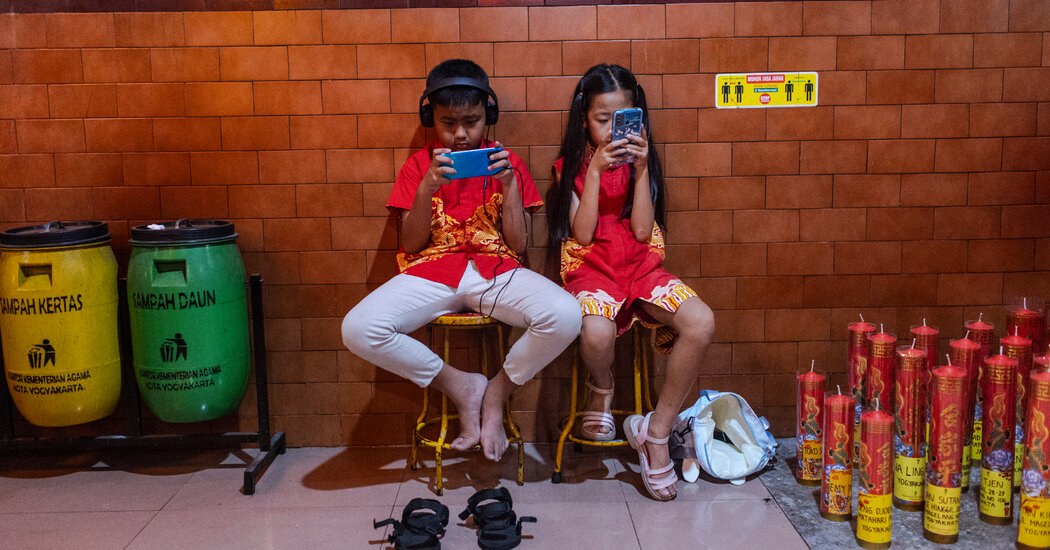
Indonesia to Block 80% of Children Under 16 From Social Media Starting March 28
- Nearly 80% of Indonesian children already online, per government data
- Ban covers eight major platforms, beginning with YouTube and TikTok
- Minister Meutya Hafid cites pornography, cyberbullying, fraud and addiction as core threats
- Meta says parents, not governments, should decide app usage
Indonesia’s unprecedented move could reshape digital childhood across Asia
INDONESIA—On Friday, Indonesia announced a sweeping ban that will bar anyone under the age of 16 from accessing social media, marking the nation’s latest step in a global push to protect children from online harms.
Minister of Communication and Digital Affairs Meutya Hafid warned that “our children face increasingly real threats, including pornography, cyberbullying, online fraud and, most importantly: addiction,” and pledged that the government will shoulder the enforcement burden.
The policy, set to roll out on March 28, will begin by deactivating under‑16 accounts on platforms such as YouTube, TikTok, Facebook, Instagram, Threads, X, Bigo Live and Roblox, with penalties ranging from warnings to administrative fines.
The Policy Landscape: How Indonesia’s Ban Fits Global Trends
From Australia to Spain: A Timeline of Youth‑Centric Restrictions
Indonesia’s decision follows Australia’s landmark January 2023 ban on social media for users under 16, a move that sparked worldwide debate about state‑led digital safety.
In February 2024, Malaysia’s communications ministry announced a study into similar restrictions, while Spain’s Prime Minister Pedro Sánchez unveiled a comparable ban in March 2024, citing rising mental‑health concerns among teenagers.
These milestones are captured in a timeline chart (see data viz) that illustrates the rapid adoption of age‑based bans across four continents within a twelve‑month span.
Experts such as Dr. Lina Suharto, a child‑psychology professor at the University of Indonesia, argue that “policy diffusion often accelerates when neighboring countries adopt similar safeguards, creating a regional normative shift.”
For Indonesia, the stakes are high: with a population of over 270 million and a youthful demographic, the government estimates that 80% of children are already online, a figure comparable to high‑income nations but far above the global average of 33% reported by UNICEF in 2020.
The ban’s timing also coincides with a surge in reported cyberbullying incidents in Jakarta schools, where the Ministry of Education logged a 27% rise in complaints between 2022 and 2023.
By aligning with global peers, Indonesia hopes to both protect its youth and signal to multinational platforms that it will enforce strict compliance.
As the world watches, the next chapter will explore how platforms are preparing for the ban.
What Does the Ban Mean for Platforms? – A Question
Platform‑Specific Reactions and Operational Challenges
When Meutya Hafid announced the March 28 rollout, Meta’s spokesperson clarified that the company had not yet received the official regulation, but emphasized that “parents should decide which apps their teens use.”
Google, owner of YouTube, TikTok, Roblox and Bigo Live, argued that removing age verification could push children toward unregulated sites, stripping away built‑in safety filters.
These divergent stances are visualized in a bar chart (see data viz) that compares each platform’s stated readiness, from “awaiting regulation” to “proactive safety measures.”
Industry analyst Ravi Patel of IDC notes that “platforms face a cost‑benefit calculus: complying with strict age checks may reduce user growth in emerging markets, yet non‑compliance risks hefty fines and reputational damage.”
In Indonesia, the enforcement mechanism includes warnings, administrative fines, temporary suspensions and possible termination of access for non‑compliant platforms, though the exact penalty amounts were not disclosed.
Legal scholar Dr. Arif Wibowo warns that “without clear penalty thresholds, platforms may gamble on minimal compliance, leaving children exposed to the very harms the ban seeks to prevent.”
Meanwhile, Roblox announced in January 2025 that it would require age checks for all users to access chat functions, a move that aligns with the upcoming Indonesian policy.
The platform landscape will continue to evolve as regulators refine penalties, setting the stage for the next chapter on risk mitigation.
Children’s Online Risks: Data Behind the Rationale
Quantifying the Threats Cited by the Ministry
Minister Meutya Hafid listed four primary dangers: pornography, cyberbullying, online fraud and addiction, each backed by recent Indonesian statistics.
According to the Ministry of Communication, 42% of children surveyed in 2024 reported exposure to sexual content on social media, while the National Cybersecurity Agency logged a 15% rise in cyberbullying complaints among minors between 2022 and 2023.
Online fraud targeting teenagers surged 23% in the same period, with scammers exploiting in‑app purchases on platforms like Roblox.
Perhaps most alarming, a joint study by UNICEF Indonesia and local NGOs found that 68% of respondents aged 12‑15 reported feeling “addicted” to at least one social media app, a figure that mirrors global concerns.
A donut chart (see data viz) breaks down these percentages, illustrating how each risk contributes to the overall threat landscape.
Psychologist Dr. Maya Putri of Jakarta’s Child Welfare Center explains that “addiction amplifies susceptibility to other harms, creating a feedback loop that can impair cognitive development.”
These data points underpin the government’s claim that “the algorithmic giants” must be curbed to protect youth.
Understanding the magnitude of each risk will inform enforcement priorities, leading us to examine the legal mechanisms in the next chapter.
Enforcement Mechanics and Legal Implications
From Warnings to Fines: How the Government Plans to Police the Ban
Meutya Hafid indicated that non‑compliant platforms would face a graduated penalty regime: first a warning, then administrative fines, followed by temporary suspension and eventual termination of access.
While exact fine amounts were not disclosed, a leaked draft of the regulation suggests penalties ranging from IDR 500 million (≈ $33,000) for first‑time violations to IDR 5 billion (≈ $330,000) for repeated offenses.
A comparison chart (see data viz) illustrates these tiers alongside similar penalties imposed in Australia and Spain, highlighting Indonesia’s relatively steep approach.
Legal expert Prof. Dian Sastro of the University of Indonesia warns that “the lack of a clear appeals process could create uncertainty for multinational firms, potentially leading to over‑compliance or legal challenges.”
In practice, enforcement will likely involve the Ministry’s Digital Services Unit conducting audits of platform age‑verification systems, a process that could delay compliance for smaller players like Bigo Live.
For parents, the regulation promises “no longer have to fight alone against the algorithmic giants,” yet the Ministry admitted that initial inconvenience and complaints are expected.
As the enforcement framework solidifies, the broader regional impact becomes the focus of the final chapter.
Future Outlook: Regional Ripple Effects and Digital Sovereignty
Will Indonesia’s Move Trigger a Wave Across ASEAN?
Analysts predict that Indonesia’s ban could accelerate similar policies in neighboring nations, especially given the country’s influence as the world’s fourth‑most populous state.
In May 2025, the ASEAN Digital Ministers’ Meeting scheduled a working group on “Youth Online Safety,” where Indonesia is expected to present its regulatory framework as a model.
A stat‑card (see data viz) underscores the scale: 80% of Indonesian children are online, a proportion that dwarfs the global average of 33% and positions the nation as a testing ground for large‑scale digital policy.
Economist Dr. Hana Rizky argues that “asserting digital sovereignty may attract investment in local content platforms, but could also push users toward VPN‑enabled foreign services, complicating enforcement.”
Meanwhile, Meta’s spokesperson reiterated that “governments should be cautious not to push teens toward less safe, unregulated sites,” hinting at potential push‑back if bans are perceived as overly restrictive.
Looking ahead, the balance between protecting children and preserving an open internet will shape policy debates across the region, with Indonesia’s experience serving as a pivotal case study.
As the digital landscape evolves, the next wave of regulations may focus not just on age, but on algorithmic transparency and data‑privacy safeguards.
Frequently Asked Questions
Q: When will Indonesia’s ban on children under 16 accessing social media take effect?
Indonesia’s ban starts on March 28, when accounts of users younger than 16 on high‑risk platforms will be deactivated in stages.
Q: Which platforms are targeted by Indonesia’s new social media restrictions?
The regulation targets YouTube, TikTok, Facebook, Instagram, Threads, X, Bigo Live and Roblox, requiring accounts of under‑16 users to be removed.
Q: How does Indonesia’s children under 16 social media ban compare to other countries?
Australia led the way in January 2023, Spain announced a similar move in 2024, and Malaysia is considering it, placing Indonesia among a growing list of nations restricting youth access.
