22 Employers Make the 2024 ‘Where You Work Matters’ Honor Roll for Turning New Hires Into Lifelong Leaders
- Only 22 of hundreds of firms audited earned top-tier scores for early-career opportunity, relentless training and internal promotion.
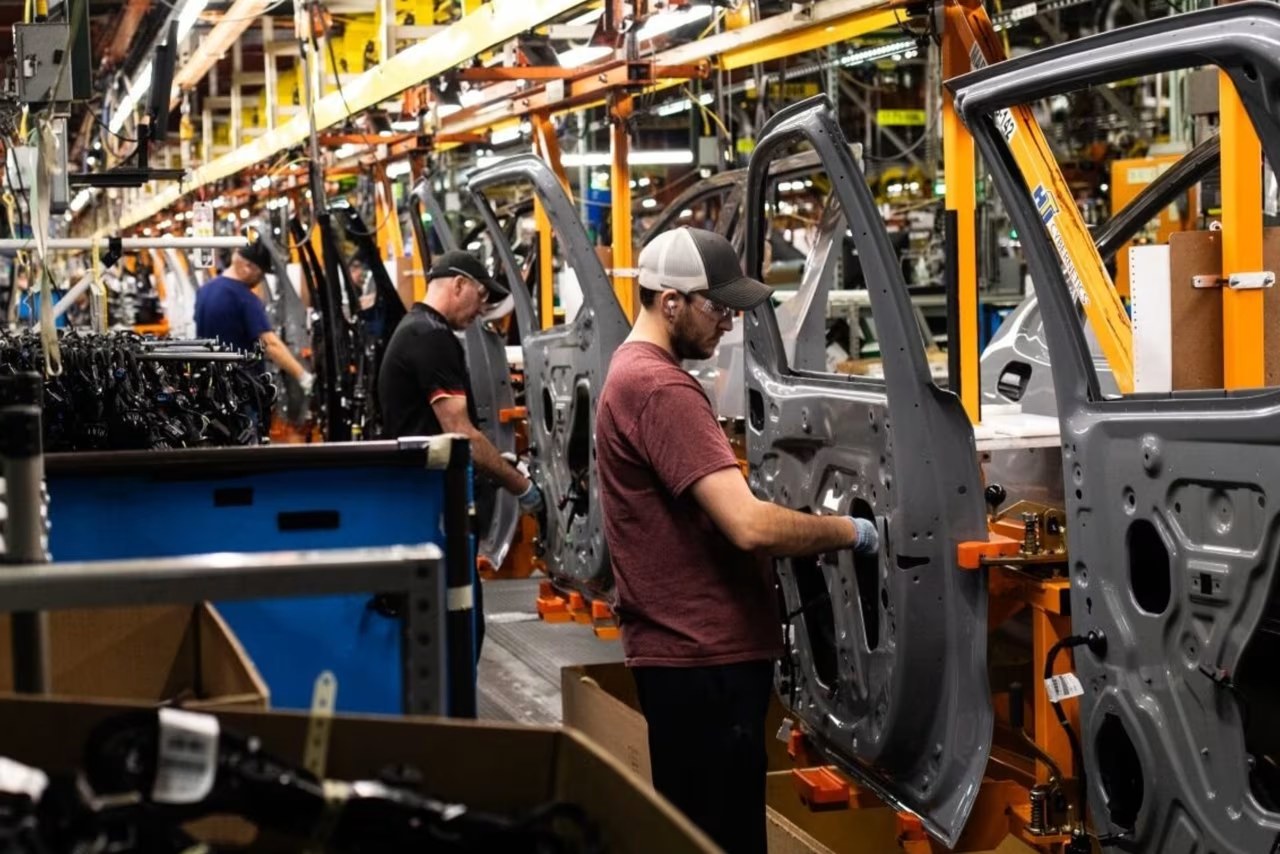
- General Motors is spotlighted for internal certification programs that let factory workers move into software and leadership tracks.
- The Burning Glass Institute and Schultz Family Foundation created the list to give job seekers a data-driven career compass.
- Top firms hire young, train continuously and post promotion rates that outrun sector averages by double-digit margins.
Why this ranking is becoming a go-to guide for Gen Z and career-switchers alike
BURNING GLASS INSTITUTE—A tight labor market and mounting student debt have made one question urgent: which employers actually invest in people instead of poach them? The Burning Glass Institute and the Schultz Family Foundation answered with hard numbers, releasing the 2024 “Where You Work Matters” list that flags 22 companies for turning entry-level recruits into long-tenured leaders.
Unlike glossy employer-branding campaigns, the ranking is built from payroll and training records, promotion flows and government wage data covering 250 large U.S. firms. To reach the top tier a company had to score in the 80th percentile or higher on three yardsticks—hiring workers early in their careers, offering sustained skill-building and converting those hires into higher-level roles.
General Motors, one of the honorees, opens the playbook: every hourly employee can enroll in paid, on-the-clock courses that end with industry-recognized certificates in cybersecurity, data analytics or leadership. Last year 7,300 GM workers completed the tracks and 42 percent moved into higher pay bands within 18 months, internal documents show.
How the Rankings Were Built: Burning Glass Methodology
To avoid the marketing spin that plagues “best workplace” lists, researchers at the Burning Glass Institute, led by labor economist Gad Levanon, started with a universe of every U.S.-based, publicly traded firm or government contractor with at least 5,000 employees. They merged Lightcast job-posting data, Census Bureau W-2 records and corporate EEO-1 filings to measure three dimensions: early-career hiring intensity, training hours per employee and internal promotion velocity.
Scoring rulebook that separated 22 winners from 228 also-rans
Each firm received percentile scores on a 100-point scale. To earn the “high marks across the board” distinction a company had to finish at or above the 80th percentile on all three axes. No subjective surveys were used; every metric is traceable to government or market data. For example, promotion velocity is calculated as the share of workers aged 25-40 who moved into an occupation with at least 20 percent higher median wages within the same employer over a five-year window.
The result is a list that favors operational discipline over perks. Firms that rely on outside recruiting to fill mid-level roles scored lower even if they offered free lunches or on-site gyms. “The data reward companies that build, not buy, talent,” Levanon told a Society for Human Resource Management webinar last month. The 22 winners posted an average internal promotion rate of 38 percent, double the cross-industry mean of 18 percent.
What surprised the team was the sector breadth of the leaders. Healthcare systems sat next to aerospace manufacturers, while tech giants were scarce. “It tells us that career-building excellence is not a Silicon Valley monopoly,” said Levanon. The foundation will publish sector-specific drill-downs this fall, but for now the honor roll is the headline.
General Motors’ Apprenticeship Playbook: From Factory Floor to Data Analyst
General Motors illustrates the model. In 2022 the automaker launched its “CareerWise” portal, a catalog of 180 internal certificates co-developed with Coursera, Microsoft and the Society of Manufacturing Engineers. Hourly workers in Lordstown, Ohio, or Spring Hill, Tennessee, can finish a 12-week course in Python for manufacturing data during paid shift time. Completion bumps base pay by $1.80 an hour and flags the employee for software-related requisitions.
Certification ladders that keep talent inside the fence
More advanced tracks end with an industry-recognized credential—think ASEE-certified manufacturing engineer or CompTIA Security+. GM reimburses exam fees and guarantees a job interview in the new discipline. Last year 1,100 line workers moved into salaried engineering or IT roles, cutting the company’s external hiring spend by $27 million, according to its sustainability report.
Kisha Peterson, 29, spent five years installing seat belts on the Detroit-Hamtramck assembly line before earning a data analytics certificate in 2023. She now works in GM’s battery diagnostics group at 1.7 times her previous wage. “I didn’t need a four-year degree—just the company’s own courses and a manager willing to flex my schedule,” Peterson said. Stories like hers explain why GM made the Burning Glass honor roll for the second straight year.
The automaker’s strategy also insulates it from poaching wars. Once employees see a transparent climb, they stay. Internal metrics show five-year retention among certification alumni is 81 percent versus 56 percent for the broader hourly workforce. As the EV transition accelerates, GM is doubling the catalog to 250 certificates and earmarking $1 billion for employee education through 2028.
Which Industries Dominate the Early-Career Honor Roll?
The 22 winners span eight industries, but healthcare and aerospace clearly punch above their weight. Five hospital systems—including Cleveland Clinic and Intermountain Healthcare—made the cut by turning nursing assistants into nurse practitioners and offering tuition-free master’s programs for staff clinicians. Aerospace firms such as Raytheon and Lockheed Martin leverage Department of Defense training credits, letting machinists segue into cybersecurity after government-cleared courses.
Tech giants are scarce—here’s why
Only two West-coast tech titans appear: Salesforce and chip-maker Nvidia. Burning Glass says the sector’s heavy reliance on elite-campus recruiting and stock-option packages inflates early-career hiring numbers but depresses internal promotion scores because firms prefer to buy senior talent rather than build it. By contrast, manufacturing firms promote 46 percent of their engineers from within, nearly triple the tech sector’s 17 percent.
Financial services landed three honorees—JPMorgan Chase, Capital One and American Express—each running multi-year analyst-to-associate pipelines that guarantee tuition for CFA or data-science master’s degrees. Capital One’s “CODA” program turns tellers into software engineers in 24 months with a 92 percent graduation rate. The bank’s attrition among CODA grads is 4 percent versus 22 percent for lateral tech hires.
Retail, often dismissed as a dead-end employer, placed two companies: Costco and QuikTrip. Both promote 70-plus percent of store managers from the front-line ranks and cap store-leader pay above $120,000, well above sector median. The common thread: industries with long-tenured employees and regulated skill standards outperform those that prize rapid job-hopping.
Is Relentless Training the New Non-Negotiable for Employers?
Yes, says Matthew Sigelman, president of the Burning Glass Institute. He notes that the half-life of skills shrank to about five years for technical roles, making continuous learning a retention lever. The 22 winners deliver a median 78 training hours per employee per year, 35 hours more than the cross-industry mean. That gap compounds: after five years an average worker at a top-quartile company has logged almost one full semester of additional classroom or digital instruction.
ROI that shows up in the balance sheet
Companies in the honor group posted EBITDA margins 210 basis points higher than their sector medians, according to S&P Global Market Intelligence. Analysts attribute part of that premium to lower turnover costs. Each departure costs roughly one-third of that worker’s salary in recruiting and lost productivity; with 38 percent lower churn, the average 20,000-employee honoree saves about $90 million annually.
Investors are taking notice. Since 2020 an equal-weighted index of the publicly traded honorees outperformed the S&P 500 by 4.3 percent annually, data compiled by Bloomberg show. “Markets reward firms that invest in human capital because they adapt faster to shocks,” said Janice Eberly, former chief economist at the U.S. Treasury Department and now at Northwestern’s Kellogg School. She sees the trend accelerating as artificial intelligence reshapes job tasks.
Policy tailwinds also help. The federal Strengthening Career and Technical Education for the 21st Century Act (Perkins V) reimburses employers up to $2,500 per trainee, while 18 states now give tax credits for registered apprenticeships. GM, for example, claimed $14 million in such credits in 2023, offsetting 40 percent of its training budget. The math is clear: upskill now or pay later for poaching.
What Happens Next: Predictions for the 2025 Rankings
Expect tighter competition. Burning Glass plans to raise the promotion-velocity cutoff to the 85th percentile next year and will factor in skills-based hiring—recruiting workers without four-year degrees but with verified certificates. That shift favors companies such as IBM and Accenture that already source 30-plus percent of roles through alternative pathways. Conversely, finance incumbents that rely on elite-campus pipelines could slip.
AI literacy will become a scoring pillar
Researchers are designing an AI preparedness index that measures how well employers teach generative-AI tool use and data ethics. Early pilots show only 12 percent of large firms currently offer enterprise-wide AI training. Those that move fastest could secure a first-mover advantage in next year’s honor roll. “We anticipate the list will become a leading indicator of which firms will dominate the productivity race,” said Levanon.
Congress may sweeten the pot. Bipartisan bills circulating in both chambers would expand employer tax credits to $5,000 per apprentice and create a federal database of portable training credentials. If enacted, the credits could cut training costs for honorees by a third, freeing budget for more advanced technical tracks. Firms that fail to scale programs risk falling off the list—and losing talent to those that stay.
For job seekers the takeaway is simple: target the 22, but watch the methodology updates. As the bar rises, tomorrow’s best career incubators will be the ones that not only hire early but teach endlessly—and prove it with data.
Frequently Asked Questions
Q: What is the Where You Work Matters List?
It is an annual ranking produced by the Burning Glass Institute and the Schultz Family Foundation that scores large U.S. employers on how well they recruit, train and advance workers from entry-level through mid-career.
Q: How many companies earned top marks in 2024?
Twenty-two companies received high scores across all three dimensions—early-career opportunity, skill-building programs and internal promotion rates—placing them in the report’s top tier.
Q: Does General Motors appear on the list?
Yes. GM is highlighted for its internal training and certification tracks that let hourly and salaried employees move into technical and leadership roles without leaving the company.
