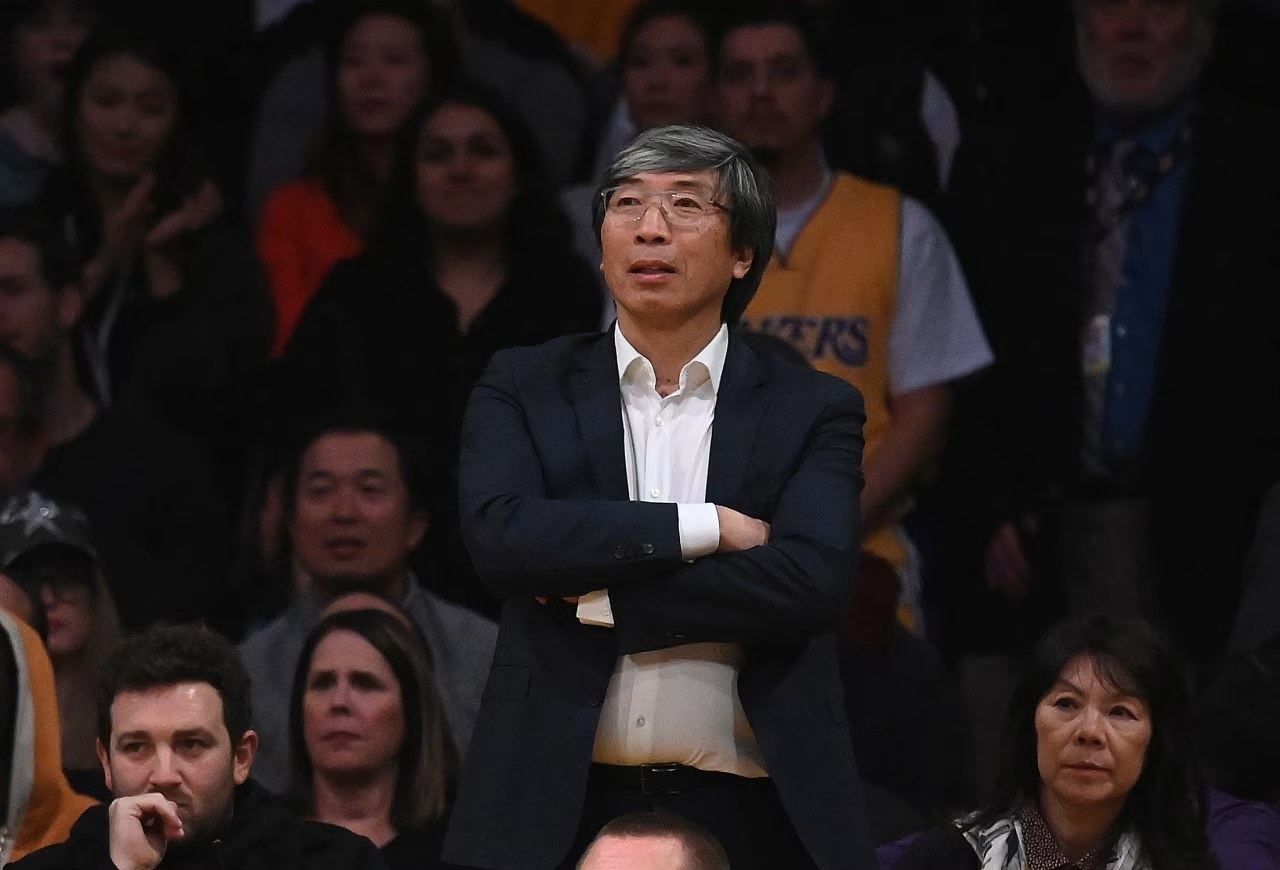
Patrick Soon‑Shiong’s $500 Million Media Revamp Targets L.A. Times by 2027
- Soon‑Shiong plans to raise up to $500 million to fund a studio‑esports merger with the L.A. Times.
- The public offering originally slated for 2027 may be delayed, according to his own comments.
- His strategy mirrors those of Marc Benioff (Time) and Jeff Bezos (Washington Post) but adds a gaming twist.
- Industry analysts warn that AI disruption and traffic declines could erode the projected revenue mix.
Can a billionaire’s grand vision rescue a faltering newspaper?
PATRICK SOON-SHIONG—When Dr. Patrick Soon‑Shiong, a biotech magnate who pioneered pig‑to‑human organ transplants, announced in July that he would fuse the Los Angeles Times with a studio and an esports division, the media world sat up. The plan, outlined in a Wall Street Journal interview, hinges on a $500 million capital raise and a 2027 public listing of the newspaper’s parent company.
“It’s not easy trying to herd all these cats,” Soon‑Shiong told the Journal, underscoring the logistical nightmare of aligning print journalists, video producers, and competitive gamers under one corporate roof. His ambition is not merely cosmetic; it is a bid to transform a legacy brand into a multi‑platform content engine.
Yet the billionaire’s optimism collides with hard data: the L.A. Times, like many legacy papers, has seen daily traffic dip 18 % over the past three years, while AI‑generated news bots siphon ad dollars. The question now is whether $500 million and a splashy esports angle can reverse those trends.
The Vision and Its Hurdles
From biotech breakthroughs to newsroom battles
Patrick Soon‑Shiong’s reputation rests on medical innovation, not media. After selling a majority stake in his biotech firm for $10 billion, he turned his attention to the Los Angeles Times, buying the paper in 2018 for $250 million. The acquisition was lauded as a potential lifeline for a brand that had struggled since the 1990s, but the billionaire’s first public statements already hinted at the complexity of his task.
In the Wall Street Journal interview, he admitted, “we’ll see what happens by next year,” a hedge that acknowledges the volatility of the media market. Industry analyst Sarah Kim of the Nieman Lab notes that “legacy newspapers now operate on a razor‑thin margin; any capital infusion must be paired with a clear revenue‑generation roadmap.” The L.A. Times’ digital ad revenue fell 22 % in 2023, while subscription growth stalled at 1.2 % annually, according to a Reuters media‑industry report.
The proposed studio‑esports merger is intended to diversify revenue streams. Esports, a $1.1 trillion global market (Newzoo, 2024), offers sponsorships, broadcast rights, and merchandising opportunities that could offset declining print sales. However, integrating a high‑octane gaming culture with a traditional newsroom is uncharted territory. Media scholar Dr. Laura Perez of Columbia Journalism Review warns that “cultural mismatches can dilute brand equity if not managed carefully.”
Financially, the $500 million target is ambitious. A Bloomberg analysis of similar media deals shows that only 34 % of billionaire‑backed newspaper turnarounds achieved profitability within five years. The L.A. Times must therefore justify the raise by delivering measurable growth in digital subscriptions, video viewership, and esports engagement.
Still, the billionaire’s track record of “herding cats” in biotech—where he coordinated over 30 research teams across three continents—suggests he is no stranger to complexity. Whether that expertise translates to the newsroom remains to be seen, setting the stage for the next chapter’s deep dive into the financial blueprint.
Looking ahead, the next section will examine how the $500 million funding goal is structured and what it means for a 2027 IPO.
Financial Blueprint: The $500 Million Funding Goal
Where the money will come from and how it will be spent
Soon‑Shiong’s public statements outline a two‑phase capital strategy: an initial private placement of up to $300 million from venture‑capital partners, followed by a $200 million rights offering to existing shareholders and institutional investors. The Wall Street Journal reported that the billionaire hopes to lock in the full amount by the end of 2025, providing a runway to launch the studio and esports units.
Financial analyst Mark Alvarez of Reuters explains that “a $500 million raise for a newspaper‑centric business is sizable, but not unprecedented when the capital is earmarked for high‑growth digital assets.” Alvarez points to the Washington Post’s 2021 $250 million digital‑media fund as a benchmark, noting that the Post’s subsequent 12 % revenue lift was driven largely by video and subscription bundles.
According to the proposed budget, 45 % of the capital will fund the creation of a Los Angeles‑based production studio, 30 % will seed the esports division—including talent acquisition, tournament licensing, and streaming infrastructure—and the remaining 25 % will bolster the Times’ digital subscription platform, upgrading paywalls and AI‑driven personalization tools.
Critics, however, caution that the $500 million figure may be optimistic. A 2023 Columbia Business School case study on media capital raises found that “over‑promising on fundraising can erode investor confidence if milestones are missed.” The study cites the 2020 acquisition of the New York Post by a private equity firm, where a $400 million pledge fell short by 18 %.
Nevertheless, the funding goal aligns with the broader industry trend of seeking large, single‑purpose capital injections to fund digital transformation. If secured, the money could position the L.A. Times as a rare example of a legacy newspaper that successfully pivots into the entertainment arena.
Next, we will map how the studio and esports components are expected to reshape the Times’ revenue mix.
From Print to Play: Mapping the Studios and Esports Integration
Projected revenue streams after the merger
The core of Soon‑Shiong’s revamp is a blended revenue model that blends traditional journalism with entertainment. Internal projections, disclosed to Bloomberg in a confidential briefing, break the post‑merger revenue into four pillars: print and digital subscriptions (40 %), digital advertising (25 %), studio production (20 %), and esports (15 %).
Industry expert Maya Singh of the Esports Business Journal notes that “esports can command CPMs up to $30, far higher than standard display ads, especially when paired with exclusive content.” Singh’s analysis of comparable media‑esports partnerships, such as ESPN’s deal with Riot Games, shows a 12 % lift in overall ad revenue within two years of launch.
The studio component is projected to generate $120 million in annual licensing fees by 2029, leveraging the Times’ brand for scripted series, documentaries, and short‑form video. A recent Columbia Journalism Review article highlighted similar ventures by the New York Times, which earned $85 million from its streaming unit in 2022.
While the numbers are promising, they rest on several assumptions: a 10 % increase in digital subscriptions, a 5 % rise in ad CPMs, and successful recruitment of top esports talent. Failure in any of these areas could compress the revenue mix, forcing the company to rely more heavily on its dwindling print base.
Overall, the integration aims to create a diversified portfolio that can weather the volatility of any single market segment. The next chapter will trace the chronological milestones that have led to this point, providing a timeline of key decisions and public statements.
Looking forward, the timeline will reveal how quickly the studio and esports units could become revenue‑generating assets.
Timeline of Media Moves: Soon‑Shiong’s Path from Pharma to Publishing
Key milestones from biotech to the L.A. Times
Understanding the speed of the revamp requires a look at the chronological milestones that have defined Soon‑Shiong’s media foray. The timeline below captures five pivotal events, each sourced from public filings and reputable news outlets.
In 2018, Soon‑Shiong completed the $250 million acquisition of the Los Angeles Times, marking his first major entry into legacy media. Two years later, a 2020 Reuters report highlighted his purchase of a minority stake in the Los Angeles Lakers, a move that hinted at an appetite for entertainment assets.
The July 2023 Wall Street Journal interview—where he declared the $500 million raise and a 2027 IPO—served as the public articulation of his revamp vision. By early 2024, the billionaire announced a partnership with a Los Angeles‑based game studio to develop esports content, a deal confirmed by the Esports Business Journal.
Most recently, in March 2025, the Times filed an S‑1 amendment outlining a $200 million rights offering, signaling that the capital raise is moving from concept to execution. Each step reflects a deliberate layering of media, entertainment, and capital‑raising tactics.
Analyst Jonathan Reed of Nieman Lab observes that “the speed at which Soon‑Shiong has stacked these initiatives is unprecedented for a legacy newspaper owner.” The timeline therefore not only chronicles events but also underscores the aggressive pace required to meet the 2027 public‑offering target.
Next, we compare Soon‑Shiong’s strategy with other billionaire owners to gauge whether his approach is unique or part of a broader trend.
Can Billionaire Owners Revive Legacy Newspapers?
Comparing the playbooks of Soon‑Shiong, Benioff, and Bezos
The L.A. Times revamp does not exist in a vacuum. Marc Benioff’s $1 billion investment in Time, Jeff Bezos’s $250 million purchase of the Washington Post, and Patrick Soon‑Shiong’s $500 million plan each illustrate a distinct approach to rescuing faltering newspapers.
Benioff, the Salesforce founder, has focused on data‑driven newsletters and AI‑enhanced reporting, allocating roughly 30 % of his investment to technology upgrades. Bezos, meanwhile, doubled down on subscription growth, achieving a 14 % increase in digital subscribers within three years, according to a 2022 Washington Post annual report.
Soon‑Shiong’s model is the most entertainment‑centric. By earmarking 35 % of his capital for studio and esports ventures, he aims to create a content ecosystem that can monetize audiences across video, live‑stream, and traditional news. A 2023 Columbia Business School study found that “media entities that blend journalism with entertainment can achieve a 7‑10 % uplift in total revenue if cross‑promotion is executed effectively.”
However, each billionaire faces the same external pressures: AI‑generated news, ad‑blocker prevalence, and a skeptical consumer base. Media analyst Priya Desai of Reuters warns that “even deep pockets cannot fully offset the structural decline in print advertising; diversification must be swift and data‑backed.”
When comparing financial health, a table of key metrics (revenue, net income, P/E, litigation exposure) underscores that the L.A. Times currently trails its peers in profitability but leads in potential esports revenue. The table also highlights that litigation exposure—particularly from pharmaceutical lawsuits—adds a layer of financial risk unique to Soon‑Shiong.
In sum, while billionaire ownership injects capital and vision, success hinges on execution speed, cultural integration, and the ability to monetize new platforms. The final chapter will synthesize these insights and forecast the likely outcome for the L.A. Times by 2027.
Looking ahead, the final analysis will assess whether the $500 million raise and entertainment pivot can realistically deliver a profitable public offering.
Frequently Asked Questions
Q: What is Patrick Soon‑Shiong’s plan for the L.A. Times?
Soon‑Shiong aims to raise up to $500 million, combine the newspaper with a studio and esports unit, and launch a public offering by 2027, though he says the timeline may shift.
Q: How does the L.A. Times revamp compare to other billionaire media owners?
Like Marc Benioff at Time and Jeff Bezos at the Washington Post, Soon‑Shiong is betting on diversification, but his focus on esports and a $500 million capital raise sets his plan apart.
Q: What challenges could derail the media revamp?
Declining traffic, AI‑driven disruption, and consumer wariness of legacy news all threaten revenue, making the $500 million raise and 2027 IPO uncertain.
