INTEL—
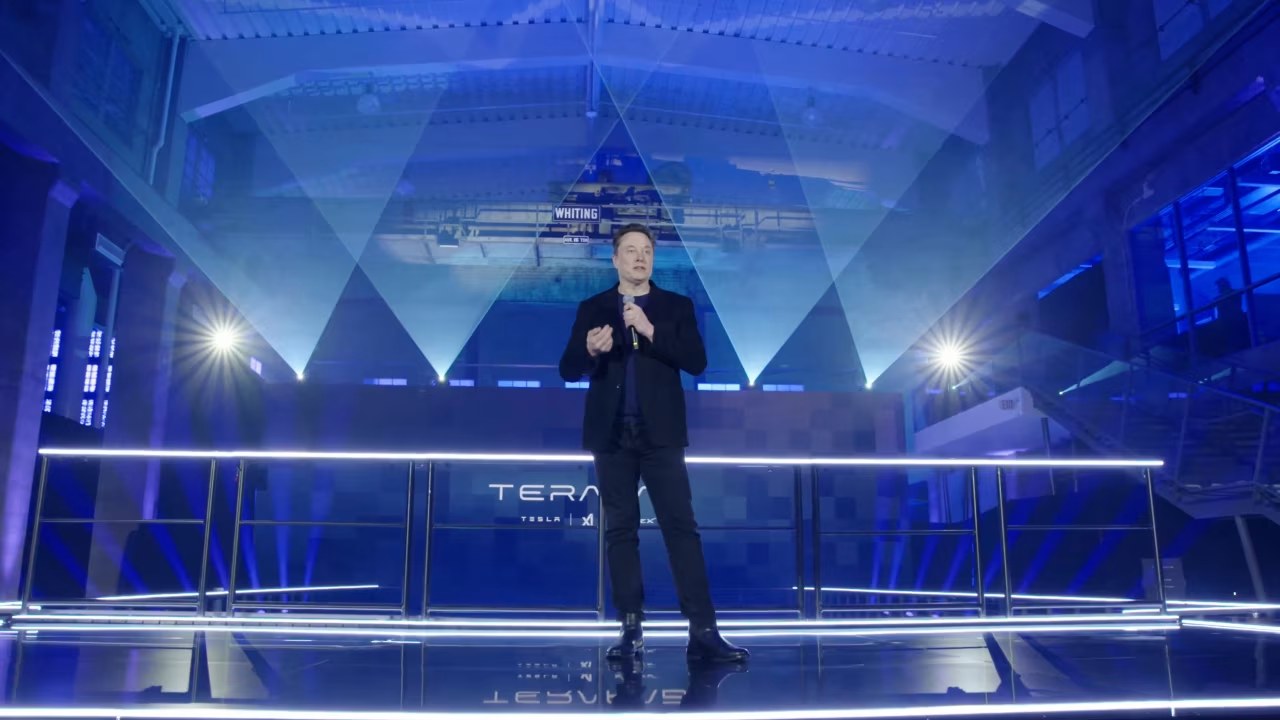
Intel announced on Tuesday that it will produce custom, ultra-high-performance chips for Elon Musk’s SpaceX and Tesla, signaling a new frontier in semiconductor manufacturing. This ambitious collaboration, part of Intel’s Terafab project, aims to fabricate specialized chips designed for AI, automotive, and aerospace applications, potentially reshaping the landscape of high-end chip production by leveraging Intel’s manufacturing might.Intel’s Terafab Ambitions Meet Musk’s Vision
Intel’s foray into manufacturing specialized chips for Elon Musk’s ventures is deeply intertwined with its ambitious ‘Terafab’ project, a strategic blueprint aimed at establishing massive, cutting-edge semiconductor fabrication facilities. This initiative is not merely about expanding production capacity; it’s a deliberate pivot towards catering to the highly specific and demanding requirements of leading technology firms that require custom silicon. The partnership with Musk’s SpaceX and Tesla, as well as xAI, represents a significant validation of Intel’s strategy to secure large-scale, long-term manufacturing contracts for advanced chip designs. Intel’s existing fabrication infrastructure, while substantial, is being augmented and reoriented to accommodate the unique specifications of these custom chips. The company’s Chief Executive, Lip-Bu Tan, has been actively engaging with industry leaders like Musk to forge these critical relationships. The photo shared publicly, showing Tan and Musk in discussion, serves as a visual testament to the seriousness and high-level commitment behind this collaboration. This is not a speculative venture but a concrete plan to design, fabricate, and package ultra-high-performance chips that will power next-generation AI algorithms, autonomous driving systems, and advanced satellite communications. The implications for Intel are profound. Traditionally, Intel has focused on producing its own line of processors for PCs and servers. However, the semiconductor industry has seen a surge in ‘fabless’ chip designers who outsource manufacturing. Intel’s move with Musk aims to capture a significant portion of this custom silicon market. The demand for specialized chips in AI, driven by the need for massive parallel processing, is particularly explosive. By partnering with a major player like Musk, Intel not only secures orders but also gains invaluable insights into the future direction of chip requirements in these critical sectors. This proactive approach is crucial for maintaining its leadership in a rapidly evolving technological landscape, moving beyond commoditized chip production to high-value, bespoke solutions that command premium pricing and strategic importance. The sheer scale of operations envisioned by Musk suggests a multi-year commitment, providing Intel with a stable revenue stream and a platform to showcase its advanced manufacturing prowess. The collaboration underscores a growing trend where large technology companies are seeking greater control over their silicon destiny, moving away from off-the-shelf solutions towards custom-designed chips optimized for their specific workloads. Intel, with its deep expertise in semiconductor manufacturing, is uniquely positioned to capitalize on this trend. The successful execution of the Terafab project with Musk’s companies could pave the way for similar partnerships, further solidifying Intel’s role as a critical enabler of technological innovation across diverse industries. This strategic alignment is a bold step, positioning Intel not just as a manufacturer but as a pivotal partner in shaping the future of intelligent systems and advanced connectivity.Why Custom Chips Matter for SpaceX, Tesla, and xAI
The decision by Elon Musk’s companies—SpaceX, Tesla, and the nascent xAI—to partner with Intel for custom chip manufacturing underscores a fundamental shift in how advanced technology is developed. In an era where proprietary hardware can offer significant competitive advantages, relying on off-the-shelf processors is no longer sufficient for companies pushing the boundaries of innovation. The need for specialized, ultra-high-performance chips is paramount for optimizing complex tasks, from training advanced AI models to managing the intricate computational demands of autonomous vehicles and space missions. For Tesla, custom chips have already been a cornerstone of its Autopilot and Full Self-Driving (FSD) capabilities. By designing its own silicon, Tesla achieves performance levels and energy efficiency tailored to its specific neural network architectures and vehicle hardware, a feat difficult to replicate with generic processors. Similarly, SpaceX requires specialized chips to manage its Starlink satellite constellation, ensuring efficient data transmission and command control across thousands of satellites in low Earth orbit. The sheer scale and complexity of its operations demand hardware optimized for these unique communication and networking challenges. Then there is xAI, Musk’s artificial intelligence venture, which aims to compete at the forefront of AI research and development. The computational power required to train and deploy sophisticated AI models is immense, often necessitating custom-designed hardware that accelerates specific types of computations, such as matrix multiplications and tensor operations. Partnering with Intel for its Terafab project ensures that xAI will have access to cutting-edge fabrication capabilities to produce chips that can significantly outperform standard GPUs or CPUs for its AI workloads. This strategic move by Musk’s companies is about more than just performance; it’s about control, specialization, and future-proofing. By collaborating with Intel, they gain direct influence over the chip design and manufacturing process, allowing for tighter integration between hardware and software. This level of control is essential for rapidly iterating on designs and adapting to evolving technological requirements. Furthermore, it reduces reliance on third-party chip designers and foundries, potentially mitigating supply chain risks and ensuring priority access to advanced manufacturing nodes as they become available. The partnership signifies a commitment to leveraging the most advanced silicon technology to maintain their leadership positions in highly competitive and rapidly advancing fields.Intel’s Strategic Pivot: From Foundry to Bespoke Solutions Provider
Intel’s collaboration with Elon Musk’s companies marks a significant strategic evolution for the semiconductor giant, moving beyond its traditional role as a developer of x86 processors to become a high-volume manufacturer of bespoke silicon for external clients. This initiative is a core component of CEO Pat Gelsinger’s IDM 2.0 strategy, which aims to revitalize Intel’s manufacturing prowess and position it as a major foundry player capable of serving the complex needs of the global technology industry. The announcement is a clear signal that Intel is aggressively pursuing opportunities in the custom chip market, a segment that has seen explosive growth fueled by advancements in artificial intelligence, machine learning, and the proliferation of connected devices. Companies like Apple, Amazon, and Google have already demonstrated the benefits of custom silicon, designing chips optimized for their specific hardware and software ecosystems. Intel, with its vast manufacturing infrastructure and deep engineering expertise, aims to capture a substantial share of this market by offering end-to-end solutions, from chip design assistance and fabrication to advanced packaging services. By partnering with Musk’s ventures—SpaceX, Tesla, and xAI—Intel is not only securing a substantial contract but also gaining critical experience in fabricating chips for some of the most demanding applications. These include high-performance computing for AI, power-efficient processors for electric vehicles, and specialized chips for satellite communications. Each of these requires unique design considerations and manufacturing processes, providing Intel with invaluable technical feedback and a proving ground for its advanced node technologies. The ‘Terafab’ project, in this context, represents a focused deployment of Intel’s most advanced manufacturing capabilities to meet these stringent demands. This strategic pivot is crucial for Intel’s long-term competitiveness. The traditional PC market has matured, and competition in the server space remains intense. By diversifying into custom chip manufacturing, Intel can tap into new revenue streams and reduce its dependence on its historical product lines. Furthermore, it allows Intel to leverage its substantial investments in leading-edge process technologies, such as Intel 4 and Intel 3, by filling its fabrication lines with high-value customer orders. This is a departure from its previous foundry efforts, which were often seen as secondary to its internal chip development. The emphasis now is on becoming a premier foundry partner, capable of competing with Taiwan Semiconductor Manufacturing Company (TSMC) on both technology and scale. The success of this partnership with Musk could be a bellwether for Intel’s future in the foundry business.The Race for Advanced AI Silicon: Who is Intel Competing Against?
Intel’s strategic alliance with Elon Musk’s enterprises to produce bespoke, ultra-high-performance chips places it squarely in the burgeoning race for advanced AI silicon, a sector currently dominated by a few key players and characterized by rapid technological advancement. While Intel has historically been a leader in general-purpose processors, the AI chip market demands specialized architectures and massive parallel processing capabilities, areas where competitors have made significant inroads. NVIDIA remains the undisputed leader in AI acceleration, primarily through its powerful GPUs, which have become the de facto standard for training deep learning models. Their CUDA ecosystem and continuous innovation in GPU architecture give them a substantial advantage. Intel’s own efforts in AI accelerators, such as its Gaudi processors, aim to challenge NVIDIA, but securing large-scale, custom design wins like the one with Musk’s companies is a crucial step in diversifying its AI strategy beyond general-purpose CPUs. The partnership allows Intel to bypass some of the direct competition for training-focused GPUs by offering tailored solutions for specific AI workloads. Beyond NVIDIA, the landscape includes established semiconductor giants like AMD, which is rapidly expanding its AI-focused CPU and GPU offerings, and custom silicon designers within major tech firms. Companies like Google (with its Tensor Processing Units or TPUs), Amazon (with Inferent chips), and Microsoft are increasingly designing their own specialized AI hardware to optimize their cloud services and AI products. This trend highlights the growing demand for custom solutions, a segment Intel aims to capture with its Terafab project. Furthermore, emerging players and specialized AI chip startups are continuously innovating, often focusing on specific niches like edge AI or neuromorphic computing. While Intel’s collaboration with Musk targets high-performance computing for AI, it also indirectly competes with these efforts by offering a platform that could support a wide range of future AI applications. The fact that Musk’s xAI is involved signals a direct play in the foundational AI model development space, requiring massive computational power that Intel aims to supply. This partnership is thus a high-stakes maneuver by Intel to secure a significant position in the lucrative and strategically vital AI silicon market, leveraging its manufacturing scale to challenge incumbents and meet the bespoke needs of industry pioneers.Frequently Asked Questions
Q: What is Intel’s Terafab project?
Intel’s Terafab project is an ambitious initiative focused on building specially designed, ultra-high-performance chips at scale. This project leverages Intel’s manufacturing capabilities to meet the advanced processing needs of companies like SpaceX and Tesla.
Q: What kind of chips will Intel manufacture for SpaceX and Tesla?
Intel will be designing, fabricating, and packaging ultra-high-performance chips. These are intended for AI applications by xAI, satellite communications by SpaceX, and advanced automotive systems by Tesla, pushing the boundaries of current chip technology.
Q: What is the significance of this partnership for Intel?
This partnership represents a significant opportunity for Intel to secure high-volume orders for its advanced chip manufacturing services. It positions Intel as a key player in the burgeoning market for specialized AI and automotive chips, beyond its traditional server and PC markets.
Q: How does this partnership involve xAI?
xAI, Elon Musk’s artificial intelligence company, will also benefit from this collaboration by having access to ultra-high-performance chips designed and fabricated by Intel. This is crucial for developing and deploying advanced AI models and applications.
📰 Related Articles
- Siloam International Hospitals’ Strategic Acquisition Poised to Transform Financial Outlook
- Bill Ackman’s Pershing Square Targets Universal Music Group in $63 Billion Takeover Bid
- Trump’s Iran Ultimatum Jolts Oil Markets Amid Rising Middle East Tensions
- Anthropic Explores $200 Million Private Equity AI Venture Amid Business Expansion
