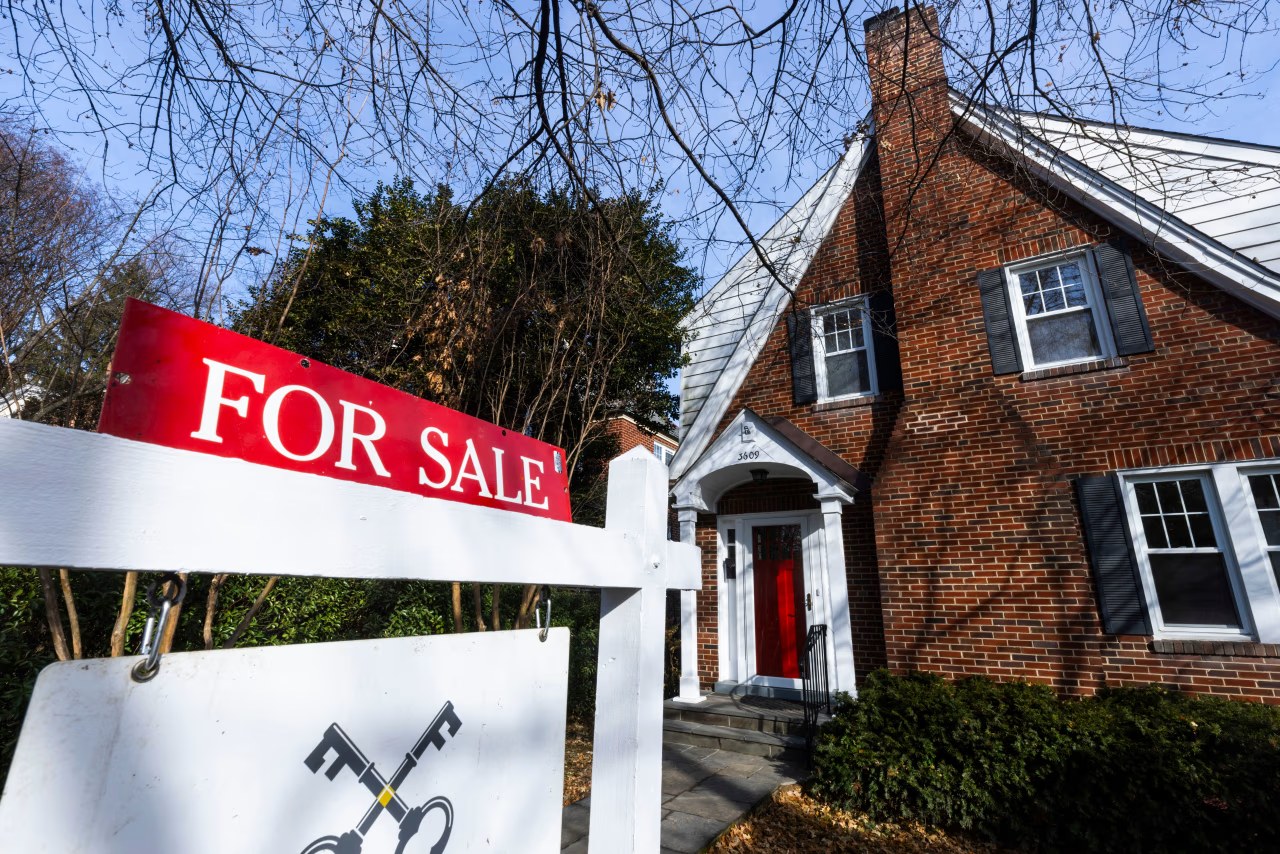
30% Discount on U.S. Homes Signals a Rare Housing Bargain
- Wall Street landlords own about 140,000 single‑family homes.
- Invitation Homes and American Homes 4 Rent are trading well below asset value.
- Shares of both REITs fell roughly 1.45% and 1.47% respectively.
- Green Street research flags a 30% price gap as a market‑wide discount.
Why a deep discount matters for investors and homebuyers alike
HOUSING MARKET—Investors with a tolerance for political risk can currently acquire U.S. homes at roughly a third of their estimated fair‑market value, according to real‑estate research firm Green Street. The discount emerges from the looming threat of eviction against the portfolios of two of the nation’s largest single‑family landlords.
Invitation Homes (INVH) and American Homes 4 Rent (AMH) together own around 140,000 homes, a scale that makes their balance sheets a barometer for the broader rental market. Their shares have slipped modestly—down 1.45% and 1.47%—yet the market price of the underlying assets has eroded far more sharply.
For a sector traditionally seen as a defensive play, the 30% discount represents an unprecedented pricing anomaly that could reshape capital allocation across real‑estate investment trusts, private equity funds, and even individual homebuyers seeking a foothold in the market.
Why a 30% Discount Matters for Investors
Understanding the mechanics of the discount
Green Street analysts explain that the 30% gap between market prices and the intrinsic value of the homes reflects two converging forces: heightened political scrutiny of large‑scale rental ownership and an emerging wave of tenant‑rights legislation that could limit rent increases. While the share price decline of roughly 1.45% for Invitation Homes and 1.47% for American Homes 4 Rent appears modest, the underlying asset devaluation is far more severe, creating a pricing disparity that is rare in a market that has historically trended upward.
The discount is not merely a number; it signals a potential re‑pricing of risk. Investors who are comfortable navigating regulatory headwinds may view the 30% discount as a margin of safety, akin to buying a blue‑chip stock after a temporary earnings miss. Conversely, risk‑averse capital may continue to shy away, reinforcing the discount further. Green Street’s position underscores that the market is pricing in the probability of forced asset sales or restructuring of landlord portfolios.
From a portfolio‑management perspective, the discount invites a strategic decision point: whether to double down on existing holdings, diversify into other asset classes, or hold cash for a possible second‑wave price correction. The 30% figure serves as a benchmark for valuation models, forcing analysts to adjust discount‑cash‑flow assumptions and consider higher capital‑expenditure reserves to meet potential compliance costs.
Looking ahead, the discount could compress further if legislative proposals gain traction, or it could narrow if landlords successfully negotiate settlements that ease eviction pressures. The next chapter will illustrate how the market is already reflecting this uncertainty through share‑price movements.
Stat Card – 30% Discount Highlights the Housing Bargain
Visualizing the core metric
The 30% discount is the headline figure that drives every subsequent analysis. Green Street’s research quantifies the gap by comparing the market capitalization of the two REITs with the appraised value of the 140,000 single‑family homes they own. This stark disparity is the clearest indicator that the market perceives a heightened risk premium attached to these assets.
For investors, the stat card serves as a quick reference point, reminding them that the price they pay today is substantially below the estimated intrinsic worth of the underlying properties. This metric also provides a baseline for comparing other real‑estate sectors that may not be experiencing the same level of political pressure.
Beyond the raw percentage, the discount carries implications for financing. Lenders may tighten loan‑to‑value ratios for acquisitions of these homes, further limiting the pool of potential buyers and reinforcing the discount. Green Street analysts caution that the 30% figure could be a leading indicator of broader market stress if similar pressures emerge in other rental segments.
Future market movements will likely hinge on whether the discount narrows as regulatory risk recedes, or widens if eviction threats intensify. The stat card thus becomes a barometer for both investor sentiment and policy impact.
Comparison – Share Price Declines of Invitation Homes and American Homes 4 Rent
Share‑price reaction to the discount
While the 30% discount is the headline, the market’s immediate reaction is captured in the share‑price movements of the two landlords. Invitation Homes fell 1.45% and American Homes 4 Rent slipped 1.47% on the day the discount was highlighted. Green Street analysts note that these modest declines mask a deeper valuation adjustment occurring at the asset level.
The comparison chart underscores that both stocks moved in tandem, reflecting a shared exposure to the same regulatory risk set. The near‑identical percentage drops suggest that investors are treating the two REITs as a single risk bucket, rather than differentiating based on operational nuances.
From an investment‑strategy viewpoint, the parallel decline raises questions about diversification within the single‑family rental space. If the discount widens, both stocks could experience amplified volatility, potentially offering entry points for contrarian investors. Conversely, a narrowing discount might lift both shares, rewarding those who maintained exposure during the dip.
Green Street’s commentary emphasizes that the share‑price moves are a lagging indicator; the underlying asset devaluation has already occurred. The next chapter will synthesize these data points into a set of key performance indicators that investors can track going forward.
Bullet KPI – Key Metrics of the Single‑Family Rental Market
Condensing the data into actionable metrics
Green Street analysts distilled the most salient figures into a concise KPI dashboard: a 30% discount, ownership of roughly 140,000 homes, and share‑price declines of 1.45% and 1.47% for the two leading REITs. These three metrics together paint a picture of a market under pressure yet offering a potential upside for risk‑tolerant investors.
The KPI bullet list functions as a quick‑reference guide. The discount figure quantifies valuation risk, the home count provides scale, and the share‑price percentages signal market sentiment. By tracking these numbers over time, investors can gauge whether the housing bargain is deepening or receding.
Green Street’s position is that the trio of metrics should be monitored alongside any legislative developments. If new tenant‑protection laws pass, the discount could widen, prompting a reassessment of the KPI thresholds. Conversely, if landlords secure favorable settlements, the discount may compress, and share‑price performance could improve.
In practice, portfolio managers can use this KPI set to rebalance exposure, hedge against policy risk, or allocate capital to alternative real‑estate assets that are not experiencing the same discount pressure. The next chapter will explore the broader implications for prospective homebuyers who may eventually benefit from the price correction.
Will the Current Housing Bargain Translate Into Lower Prices for Homebuyers?
Potential downstream effects on the broader market
The 30% housing bargain, while primarily a story for institutional investors, could eventually ripple down to individual homebuyers. Green Street analysts argue that if landlord portfolios are forced to liquidate assets to meet eviction‑related liabilities, a surge of supply could further depress home prices, extending the discount beyond the REITs’ balance sheets.
Conversely, if landlords negotiate settlements that mitigate eviction risk, the discount may narrow, stabilizing prices and limiting upside for prospective buyers. The trajectory hinges on policy outcomes, the ability of landlords to refinance, and the broader macro‑economic environment, including interest‑rate trends that influence mortgage affordability.
From a buyer’s perspective, the current discount offers a window of opportunity, but it is also a cautionary tale about the volatility embedded in the market. Real‑estate professionals advise monitoring the KPI dashboard and share‑price trends as leading indicators of when the bargain may start to erode.
Ultimately, the housing bargain is a litmus test for how political risk translates into tangible price adjustments. As the market digests the 30% discount, the next few quarters will reveal whether homebuyers can capture a lasting price advantage or whether the discount remains confined to the balance sheets of large landlords. The story continues to unfold, and investors on both sides of the transaction will be watching closely.
Frequently Asked Questions
Q: What is the size of the discount on U.S. homes mentioned in the article?
The article reports a 30% discount on the price of U.S. homes when compared with the underlying asset values of large landlord portfolios.
Q: Which companies own the single‑family homes that are trading at a discount?
Invitation Homes (INVH) and American Homes 4 Rent (AMH) together own roughly 140,000 single‑family homes and are the primary landlords cited.
Q: How have the shares of Invitation Homes and American Homes 4 Rent moved recently?
Both stocks have slipped, with Invitation Homes down about 1.45% and American Homes 4 Rent down about 1.47% as investors price in the discount.
📰 Related Articles
- KB Home Lowers Annual Forecast as Mid-East Conflict Intensifies Buyer Hesitation
- Vonovia Posts €3.72 Billion Profit After Year‑Long Losses, Rental Growth Fuels Turnaround
- Service‑Centric Retail Surpasses Traditional Stores as U.S. Consumers Prioritize Wellness
- Lennar Quarterly Revenue Slumps 13% Amid Cooling Home Prices
