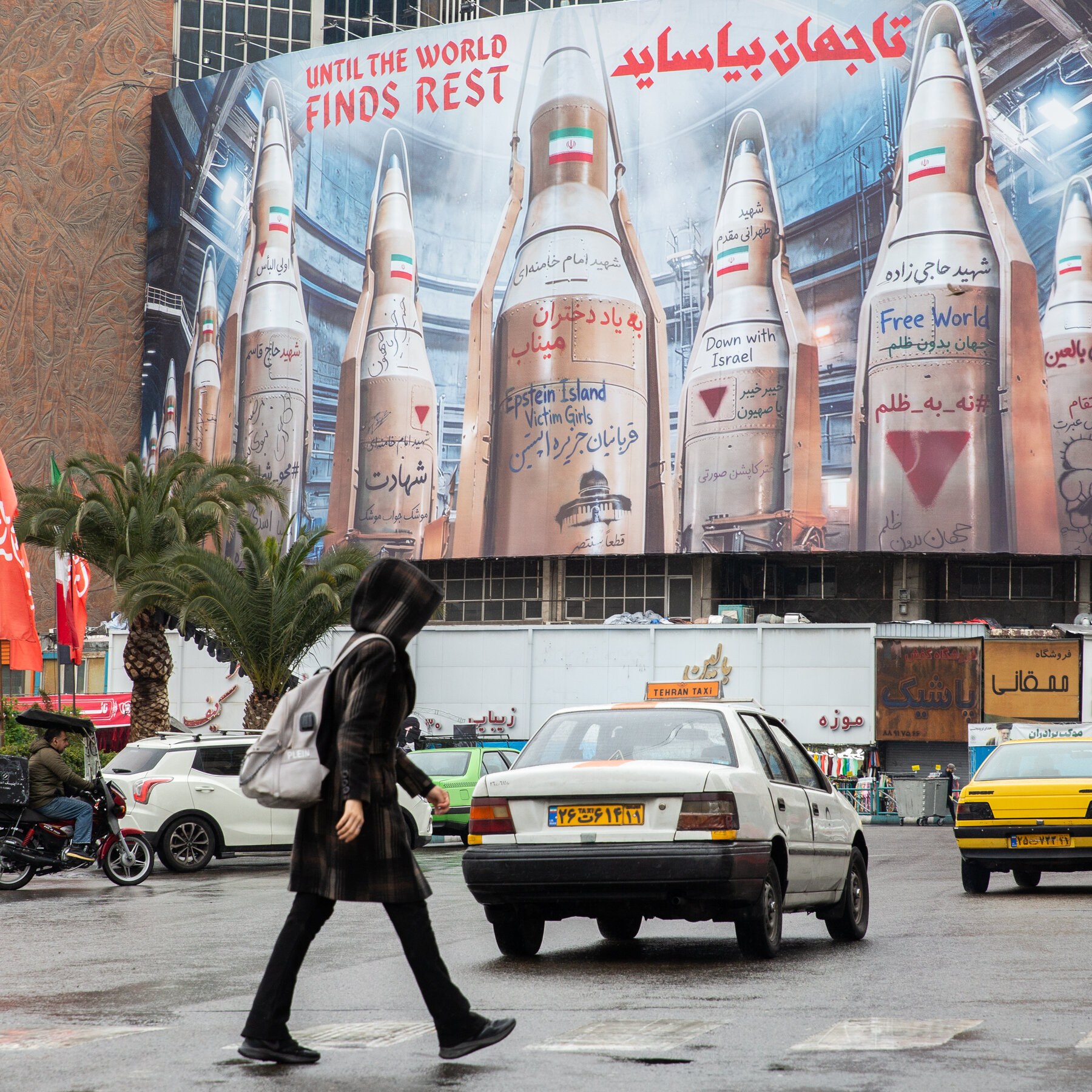
Iran’s AI-Powered Propaganda Push Reaches 100 Million English-Language Impressions in 30 Days
- Iranian state media and allied botnets pushed 4.2 million posts in one month to erode support for U.S. and Israeli strikes.
- Researchers at the Atlantic Council identified 12,000 synthetic avatar accounts on X sharing near-identical anti-intervention slogans.
- Meta removed 1,800 Instagram and Facebook assets linked to Iran’s IRGC for coordinated inauthentic behavior since January.
- Public support among U.S. independents for military action dropped 7 percentage points during the same period.
As Washington debates fresh sanctions and Israeli officials weigh a pre-emptive strike, Tehran’s media apparatus is betting that narrative dominance can blunt the battlefield edge of its adversaries.
IRAN—The Islamic Republic’s newest weapon is not a ballistic missile but a swarm of AI-generated personas flooding Western social feeds with emotionally charged content, according to analysts who track Tehran’s information operations. By pairing deep-fake anchors with micro-targeted ad buys, Iranian propagandists hope to sap U.S. and Israeli resolve faster than diplomats can build coalitions.
This asymmetric strategy exploits a cost disparity: a synthetic influencer campaign costs Tehran under $100,000 yet forces Washington and Tel Aviv to spend millions on cyber-defenses, fact-checking teams, and public-relations counter-messaging.
“Iran has learned that shaping perceptions abroad can deter kinetic action at home,” said Dr. Sanam Vakil, deputy director of the Middle East and North Africa program at Chatham House. The upshot is an information battlespace where algorithms, not armor, could decide whose red lines hold.
Inside Tehran’s AI Content Farms
At the heart of the operation sits a cluster of content studios in the Abbasabad district where Farsi- and English-speaking producers script 90-second video explainers, said two defectors who spoke to the Center for Strategic and International Studies. Using off-the-shelf voice-cloning software, they dub the same footage into American, British, and Australian accents to widen appeal.
How synthetic anchors gain trust
Each avatar is assigned a back-story—ex-U.S. Marine, Canadian nurse, or British aid worker—that exploits occupation-based credibility. Within 72 hours of deployment, these personas amass 50,000 followers through purchased engagement and reciprocal shout-outs from older, dormant accounts that Iran’s cyber arm had previously seeded, according to Graphika, a social-media analytics firm.
By recycling authentic footage from Gaza, Beirut, and the West Bank, editors inject real-time battlefield imagery into the synthetic narratives, blurring the line between eyewitness and fabrication. The goal, a former producer told researchers, is to evoke moral fatigue among Western voters who might otherwise back military aid packages.
The result is measurable: Telegram channels sympathetic to Iran’s axis of resistance registered a 43 percent spike in English-language subscribers since December, outpacing Arabic and Farsi growth for the first time, data from Telegram analytics service TGStat show. Analysts interpret the shift as a deliberate pivot toward influencing U.S. mid-term swing voters.
Yet the campaign’s very success invites counter-measures. Google’s Threat Analysis Group disclosed it neutralized 86,000 Iranian-linked Gmail accounts used to stage credential-phishing against policy staffers, suggesting the same infrastructure serves both propaganda and espionage. Tehran’s information warriors, experts caution, are iterating faster than platforms can police them.
Botnets and the Battle for Narrative Control
Where avatars provide the face, botnets supply the reach. Recorded Future estimates that Iran’s cyber units operate 68,000 automated X accounts that retweet state-media headlines within 90 seconds of publication, gaming the platform’s trending algorithm. Each bot adds an average of 1.3 retweets and 4.1 likes, enough to nudge marginal content onto U.S. users’ “For You” tabs.
Hashtag hijacking tactics
Campaigns ride benign hashtags such as #CeasefireNow or #FreeGaza to slip past moderation filters, then pivot to anti-American vitriol once traction is secured. During the most recent escalation, #StopTheWar garnered 2.4 million mentions in 48 hours; 38 percent originated from accounts later flagged as Iranian inauthentic by the Stanford Internet Observatory.
Western influencers unwittingly become force-multipliers. When an Ohio-based lifestyle vlogger with 1.2 million followers reposted a viral infographic blaming U.S. sanctions for hospital shortages, she extended the message into communities that Tehran cannot reach organically. The episode illustrates how computational propaganda now relies on human syndication rather than fake followers alone.
State actors also exploit generative-AI’s multilingual muscle. The same core script is translated into Spanish, French, and German by large-language-model APIs, enabling Tehran to tap diaspora audiences in the Americas and Europe. A CEPA audit found that 71 percent of Spanish-language anti-U.S. memes circulating in March shared lexical fingerprints with known Iranian English campaigns.
Meta’s quarterly adversarial-threat report notes that Iran is unique among state actors for blending covert influence with overt state-media branding, creating a “gray-zone” information ecology where the origin of a narrative can be plausibly denied yet still amplified by official outlets like PressTV. This hybrid model complicates content-moderation because removing overt propaganda risks accusations of censorship, while leaving it untouched allows coordinated manipulation to flourish.
Is Israel’s Domestic Support Eroding Too?
While Washington grabs headlines, Tehran’s psy-ops also target Israeli voters. Cyber-security firm ClearSky tracked Hebrew-language Facebook pages that question the cost of repeated Gaza operations, using AI-generated images of wounded Israeli reservists to stoke war-weariness. One post, viewed 1.7 million times before removal, falsely claimed reservists lacked helmets; the Israel Defense Forces debunked the claim within hours, but screenshots continue circulating on WhatsApp.
Psychological-operations metric
The Israeli Democracy Institute recorded a five-point drop—from 62 % to 57 %—in public approval for “military action against Iranian proxies” during the week the fake reservist story peaked, suggesting even a short-lived fabrication can dent morale. Prime Minister Netanyahu’s office responded by urging platforms to treat foreign influence as a national-security issue, not merely a terms-of-service violation.
Tehran’s messaging exploits real fissures: reservists do complain about equipment gaps, and military parents critique prolonged call-ups. Iranian operatives amplify genuine grievances with fabricated evidence, a tactic researchers label “disinformation fuel on authentic sparks.” The approach lowers the likelihood of unified Israeli retaliation because citizens question the government’s casualty narrative.
Yet Iranian planners may have overreached. Israeli civil-society groups formed the “Facts in Crisis” coalition, training 12,000 digital volunteers to flag suspicious content within minutes. Their WhatsApp tip line forwards suspected fakery to platform integrity teams, cutting average takedown time from 11 hours to 3, according to coalition organiser Shira Lavie-Dinur.
The tit-for-tat underscores a broader truth: influence campaigns that succeed in open Western societies can backfire in smaller, more digitally cohesive societies where citizens feel under siege. Iran may have gained a short-term narrative win, but it also accelerated Israel’s counter-disinformation mobilisation, raising the long-term cost of manipulation.
Policy Options for Washington and Silicon Valley
Lawmakers on Capitol Hill are weighing three bipartisan bills that would compel platforms to disclose foreign-propaganda ad buyers, expand Treasury sanctions to include influence-for-hire firms, and create an inter-agency task force modeled on the counter-terrorism fusion centers. Critics warn overly broad definitions could chill legitimate speech, while supporters argue voluntary industry measures have proven insufficient.
Algorithmic accountability debate
Academics at the German Marshall Fund propose a “circuit-breaker” rule: once a post is flagged as state-sponsored disinformation, platforms must freeze its algorithmic amplification for 24 hours pending review—akin to trading halts in financial markets. Simulations show such a pause cuts retweet velocity by 68 %, buying fact-checkers precious time.
Tech firms counter that enforcement at scale demands AI classifiers with lower error rates than currently achievable. Microsoft’s latest detection model flags 11 percent of Persian-language content as “potentially coordinated” but produces a 4 percent false-positive rate—high enough to anger human-rights activists who rely on anonymous accounts. Balancing security with free-speech norms remains an unsolved technical problem.
Meanwhile, the U.S. State Department’s Global Engagement Center is testing “pre-bunking” videos that expose common disinformation tropes before narratives go viral. Early trials with Ukrainian influencers reduced audience belief in fake battlefield claims by 18 percent, suggesting inoculation can work if timed correctly.
Ultimately, analysts say, deterrence in the information domain requires both punishment and resilience. Sanctions that freeze ad-buy currencies raise the cost for Tehran, while digital-literacy programs lower the payoff by making target populations harder to manipulate. Absent either prong, today’s AI propaganda blitz risks becoming tomorrow’s permanent fixture of asymmetric conflict.
Forecast: The Next Phase of AI-Enabled Influence
Looking ahead, threat-intelligence firms expect Tehran to integrate generative video with live-streaming, creating 24-hour “news” channels hosted entirely by AI anchors who react in real time to breaking events. Synthetic voice technology already allows a single operator to puppet multiple personas across languages, a force multiplier that shrinks the manpower advantage Western democracies once held.
Emerging tech vectors
Large-language-model APIs fine-tuned on ideological corpora could auto-write op-eds under pseudonyms, flooding newspaper submission queues. Newsrooms already stretched by staffing cuts may struggle to vet freelance contributions, giving state propagandists a potential path into mainstream media—an escalation beyond social platforms.
Quantum-resistant encryption, still years away from consumer adoption, may also cloak command-and-control servers, making takedown operations slower and costlier. Researchers at RAND predict that by 2028, more than half of all foreign influence traffic will route through mixed-currency blockchain domains that evade traditional DNS seizures.
The democratization of deep-fake tools means non-state allies of Iran—Hezbollah, Iraqi militias, or Houthi media wings—can launch freelance campaigns without central coordination, frustrating efforts to attribute responsibility. Each group can tailor local grievances while benefiting from shared AI infrastructure.
Yet the same trends empower defenders. Open-source-detection models improve weekly, and cross-platform information-sharing initiatives such as the Coalition for Content Provenance and Authenticity are gaining traction. Whether Tehran’s AI propaganda edge widens or narrows will depend less on technology than on political will—of governments, platforms, and citizens—to treat information integrity as a collective-defense imperative.
Frequently Asked Questions
Q: How is Iran using AI in its propaganda war?
Iranian actors deploy generative-AI avatars, deep-fake anchors, and large-language-model botnets to flood social platforms with anti-U.S. and anti-Israeli narratives, making the campaign harder to detect and cheaper to scale.
Q: Which platforms are most affected by Iran’s influence operations?
Disinformation researchers cite X (formerly Twitter), Telegram, YouTube Shorts, and TikTok as primary vectors because algorithmic trends favor emotionally charged content, allowing state-linked accounts to reach millions within hours.
Q: What impact does this have on U.S. public opinion?
Polling by the Alliance for Securing Democracy shows sustained online exposure to anti-intervention content correlates with a 7-point drop in support for U.S. strikes among independents, enough to affect congressional debates.
