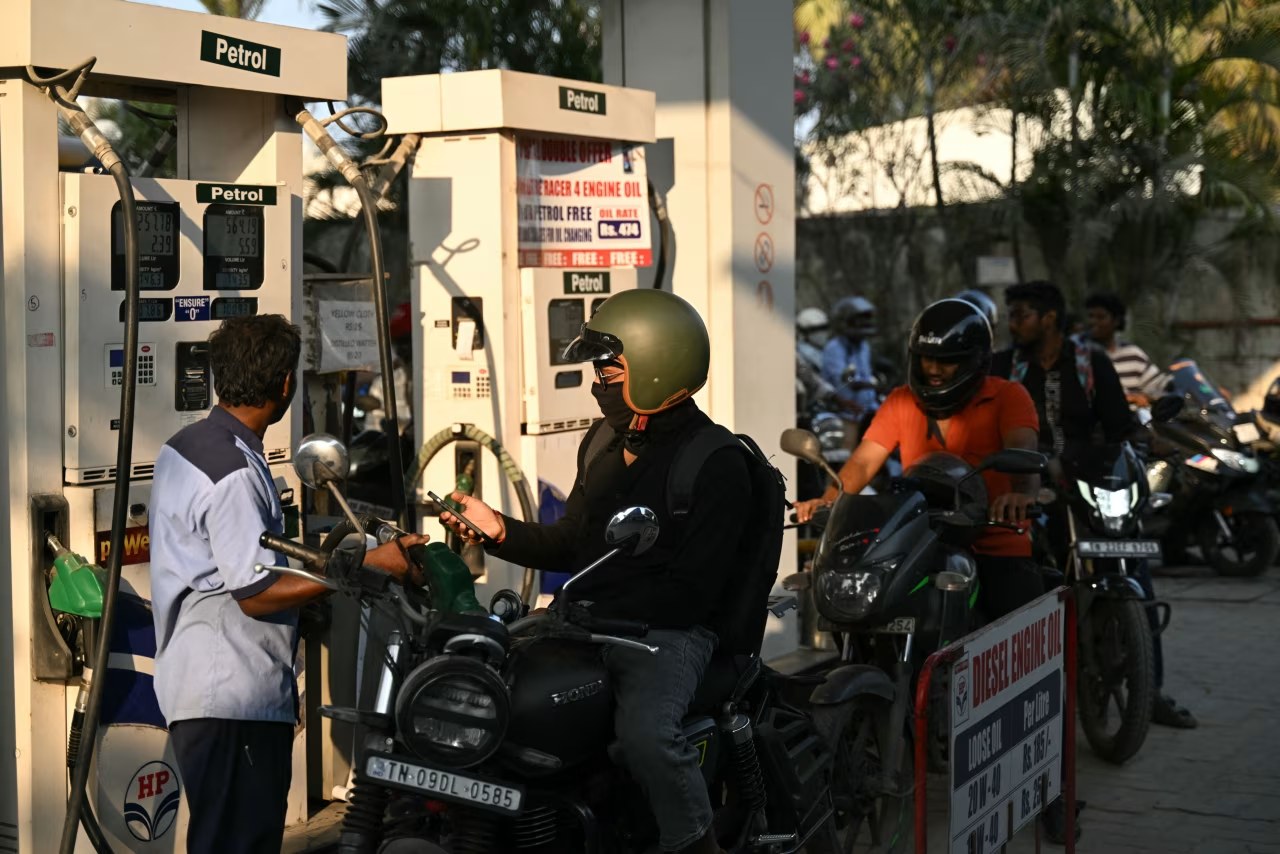
Global Oil Supply Down 10% Amid Iran War, Sparking Asian Economic Woes
- Global oil supply has fallen 10% below pre-war levels due to Iran’s actions in the Strait of Hormuz, according to Oxford Economics.
- Asian factories are reducing production to conserve energy, and some gas stations are imposing fuel purchase limits.
- The blockade of the Strait of Hormuz also severely impacts liquefied natural gas (LNG) crucial for power and fertilizer production.
- Economists foresee similar energy crises affecting import-reliant nations in Europe and Africa.
A Critical Energy Chokepoint Under Siege
IRAN WAR—The intricate web of global energy supply has been severely disrupted, with the war in Iran triggering an oil shock that is already profoundly impacting Asian economies. Factories across the continent are making the difficult decision to curb production, a direct response to escalating energy costs. This economic strain is palpable at the consumer level, with reports of gas stations limiting fuel purchases for drivers, underscoring the immediate and tangible effects of the crisis.
This escalating situation stems from Iran’s strategic blockade of the Strait of Hormuz, a critical artery for international trade. Oxford Economics reports that this action has reduced the global oil supply by a staggering 10% below the levels required before the conflict intensified. This deficit is not merely a statistic; it represents a significant shortfall that is forcing a recalibration of industrial output and consumer behavior across Asia.
The ramifications extend beyond crude oil. The Strait of Hormuz is also a pivotal route for liquefied natural gas (LNG) shipments. This vital resource is indispensable for many nations, forming the backbone of their electricity generation and serving as a key component in fertilizer production. The disruption to LNG flow therefore carries a dual threat: potential power outages and a severe blow to agricultural sectors, with far-reaching implications for food security.
Asia’s Economic Strain: Factories Curtail Production
The cascading effects of the oil shock are particularly acute in Asia, a region with a voracious appetite for energy to fuel its industrial engines. Manufacturers are reporting that the rising cost of oil and its derivatives is forcing them to reassess operational capacity. This isn’t a marginal adjustment; it’s a strategic pivot towards conservation, where production lines are being slowed or halted to mitigate escalating energy expenditures. The logic is stark: continued operation at full capacity would lead to unsustainable financial losses, pushing some businesses to the brink.
The ripple effect is felt keenly at the pump. In several Asian countries, motorists are encountering new restrictions on fuel purchases. Gas stations are implementing policies that limit the amount of fuel a vehicle can take, a measure designed to stretch existing supplies and prevent complete depletion. This rationing, while intended to manage the crisis, introduces significant friction into daily life and commerce, impacting logistics, commuting, and the overall economic activity that relies on readily available transportation fuel.
Economists are drawing parallels to the broader global energy market, noting that the 10% deficit in oil supply identified by Oxford Economics is a significant blow to global demand-fulfillment. This deficit is not evenly distributed; its impact is amplified in regions heavily dependent on oil imports, such as many Asian nations. The situation serves as a stark reminder of the geopolitical vulnerabilities inherent in global energy markets and the profound economic consequences when major transit routes are compromised.
The strain on Asian economies is a precursor, an early warning signal. As Professor Evelyn Reed of the Global Energy Institute has noted, “What we are seeing in Asia is a preview of the challenges faced by nations that are structurally reliant on imported energy. When supply chains are weaponized or disrupted by conflict, the economic fallout can be swift and severe, demanding rapid adaptation and a re-evaluation of energy strategies.” This sentiment highlights the urgency for nations to diversify their energy portfolios and secure more resilient supply chains to weather such geopolitical storms.
Looking ahead, the question remains how quickly Asian nations can adapt their industrial processes and energy consumption patterns to cope with these prolonged supply disruptions. The immediate focus is on navigating the current crisis, but the longer-term implications for industrial competitiveness and economic growth are profound.
Strait of Hormuz Blockade: A Critical LNG Lifeline Severed
The strategic importance of the Strait of Hormuz cannot be overstated, especially in the context of the current global energy crunch. While its role in crude oil transport is widely recognized, its function as a primary conduit for liquefied natural gas (LNG) is equally critical, particularly for nations striving to meet their energy demands. Iran’s blockade has not only choked off oil supplies but has also severely hampered the flow of LNG, creating a multi-faceted crisis that threatens essential services and industrial output.
Many countries depend on LNG for a significant portion of their electricity generation. A disruption to this supply chain directly translates into concerns about power grid stability and the potential for blackouts. This is particularly worrying for developing economies that may have less diversified energy grids and fewer alternative sources to fall back on. The prospect of widespread power outages looms, impacting everything from residential living to the operations of hospitals and critical infrastructure.
Furthermore, LNG is a key feedstock for the production of fertilizers, a vital input for modern agriculture. A sustained reduction in LNG availability could therefore jeopardize agricultural output, potentially leading to food shortages and price inflation. Dr. Kenji Tanaka, an agricultural economist at the Tokyo Institute for Global Food Security, commented, “The dual impact of reduced LNG on both power generation and fertilizer production creates a vicious cycle. It undermines food security at the very moment global supply chains are most vulnerable.” This highlights the interconnectedness of energy, industry, and food production.
Oxford Economics’ assessment that the global oil supply is 10% below pre-war needs underscores the scale of the challenge. This figure, while focused on oil, implicitly accounts for the broader energy market impact. The blockade’s effect on LNG magnifies the economic vulnerability of import-dependent nations, forcing them to scramble for alternative, potentially more expensive, sources or face significant domestic disruption.
The international community is now faced with the difficult task of navigating this complex energy crisis, with the Strait of Hormuz blockade acting as a severe constraint. The immediate challenge is to mitigate the impact on LNG-reliant sectors, but the long-term implications for energy security and agricultural stability require urgent strategic planning.
What are the potential impacts on Europe and Africa?
Economists are sounding the alarm that the energy crisis currently gripping Asia is a harbinger of worse to come for Europe and Africa, regions that share a similar vulnerability: a high degree of reliance on imported oil from the Middle East. The disruption to the Strait of Hormuz, a critical chokepoint for global oil and gas transit, poses a direct and significant threat to the energy security and economic stability of these continents.
Europe, despite its investments in renewable energy, still relies substantially on imported fossil fuels, with a notable portion historically sourced from the Middle East. A sustained reduction in supply or a sharp increase in prices due to the conflict could translate into higher energy bills for consumers and businesses, potentially exacerbating inflation and dampening economic growth. Dr. Anya Sharma, a senior energy analyst at the European Institute for Economic Studies, noted, “The current geopolitical instability is a stark reminder that Europe’s energy diversification efforts, while progressing, have not yet insulated it from shocks originating in key global supply regions. The cascading effects of the Iran-related oil crisis are a serious concern.”
Similarly, many African nations are net importers of oil, using it to power transportation, industry, and electricity generation. The conflict-induced price hikes and supply constraints will disproportionately affect these economies, many of which are already grappling with significant developmental challenges. The increased cost of fuel can cripple businesses, reduce disposable income for households, and strain government budgets as they may need to subsidize energy costs or face social unrest.
Oxford Economics’ finding that global oil supply is 10% below pre-war requirements is a critical metric in this context. This deficit forces a global redistribution and competition for available resources, inevitably driving up prices. For nations with less robust economies and higher import dependency, this scenario can be catastrophic, leading to severe economic contraction and potential humanitarian crises if energy, and by extension food and transportation, become prohibitively expensive.
The current situation is a clear indicator that the global energy market remains intrinsically linked to geopolitical stability. The events unfolding in the Middle East serve as a potent lesson on the fragility of supply chains and the urgent need for robust energy security strategies across all continents, not just those directly affected by the initial conflict.
The looming question for Europe and Africa is how quickly they can pivot their energy strategies and mitigate the impact of this escalating global oil shock before it fully engulfs their economies.
The Economic Fallout: Beyond Production Cuts
The economic repercussions of the oil crisis, ignited by the conflict in Iran, extend far beyond the immediate factory floor and gas station pumps. The disruption in global oil supply, which Oxford Economics quantifies as a 10% deficit, sends shockwaves through interconnected economies, impacting inflation, trade balances, and long-term investment strategies. This is not merely a temporary blip but a systemic challenge that forces a fundamental re-evaluation of economic priorities.
Inflationary pressures are a primary concern. As energy costs rise, so too do the costs associated with transportation, manufacturing, and a wide array of goods and services. This broad-based increase in prices erodes purchasing power for consumers and increases operating expenses for businesses. Central banks in affected regions face a difficult dilemma: how to combat inflation without further stifling economic growth, which is already threatened by reduced industrial output.
The trade balance for oil-importing nations is also set to deteriorate significantly. With higher prices for a critical commodity, these countries will have to allocate a larger portion of their foreign exchange reserves to energy imports. This can lead to currency depreciation, increased national debt, and reduced capacity for other essential imports, such as food, medicine, or capital goods needed for development. The economic strain can be particularly acute for developing nations that may lack the financial buffers to withstand such shocks.
Professor David Chen, an expert in international economics at the University of Singapore, highlighted this interconnectedness: “The oil crisis initiated by the Strait of Hormuz blockade is a stark illustration of how geopolitical events can directly translate into economic vulnerability. It forces us to confront the reality that energy security is inextricably linked to economic stability and that disruptions in one region can rapidly destabilize markets thousands of miles away.” His analysis underscores the global nature of the threat.
The long-term implications also warrant consideration. Sustained periods of high energy prices and supply uncertainty can deter foreign investment, slow down capital expenditure, and necessitate a fundamental shift in industrial strategy towards energy efficiency and alternative energy sources. While this may spur innovation, the transition period is fraught with economic challenges.
The immediate task for policymakers worldwide is to manage the immediate economic fallout, but the imperative to build more resilient energy infrastructures and diversified economies has never been clearer.
Frequently Asked Questions
Q: What is the primary cause of the current oil crisis?
The current oil crisis is primarily driven by the war in Iran, leading to a blockade of the Strait of Hormuz and significantly reducing global oil supply. This disruption has a cascading effect on international markets.
Q: How is the oil crisis impacting Asian economies?
Asian economies are experiencing factory production cutbacks due to increased energy costs. Some regions are seeing fuel shortages at gas stations, forcing limitations on vehicle refueling and impacting daily commerce.
Q: What is the significance of the Strait of Hormuz?
The Strait of Hormuz is a vital chokepoint for global oil and liquefied natural gas (LNG) shipments. Its blockade by Iran drastically curtails the flow of essential energy resources, impacting countries worldwide.
Q: What are the potential consequences for Europe and Africa?
Economists warn that Europe and Africa, which are heavily reliant on Middle Eastern oil imports, could face similar economic pressures. This includes potential energy shortages and increased production costs.
