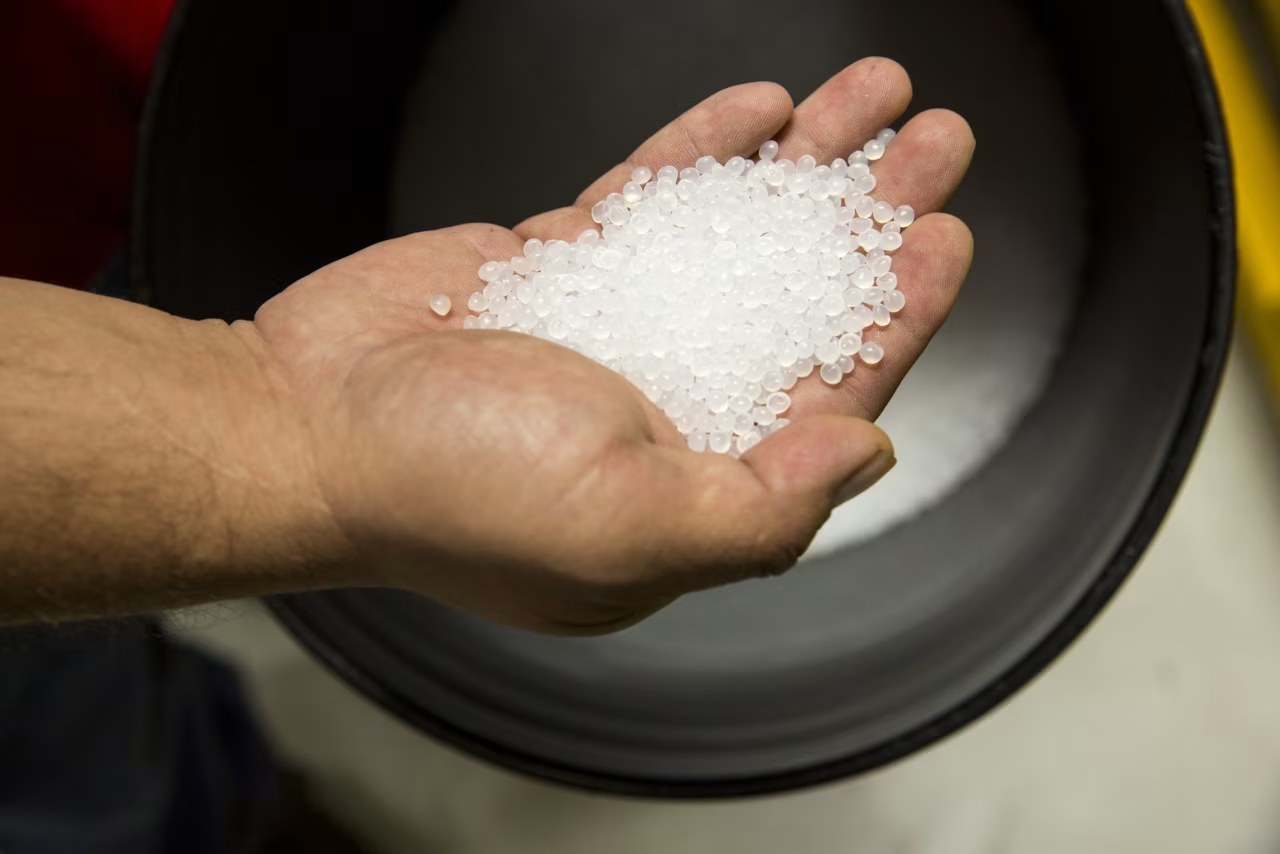
Iran War Drives U.S. Polyethylene Prices Up 25% After Prolonged Slump
- The start of the Iran war coincided with a significant price increase for polyethylene, a foundational plastic material.
- Dow CEO Jim Fitterling noted widespread price hikes across the product two weeks after the conflict began.
- This marks a sharp reversal for the U.S. plastics industry, which had been in an extended period of low prices and stagnation.
- Polyethylene is crucial for everyday items, making its price fluctuations a key economic indicator for the sector.
A Geopolitical Flashpoint Ignites a Dormant Industry
PLASTICS INDUSTRY—The global economic landscape is often shaped by unforeseen events, and the recent commencement of hostilities in Iran has unexpectedly catalyzed a turnaround for the U.S. plastics industry. For months, manufacturers of polyethylene, a ubiquitous plastic essential for countless consumer and industrial goods, had been navigating a challenging market characterized by depressed prices and muted demand. This extended period of doldrums appeared to be the industry’s prevailing reality until geopolitical tensions in the Middle East escalated, triggering a ripple effect that has now reached American shores.
The impact was swift and pronounced. Approximately two weeks after the onset of the Iran war, Jim Fitterling, the Chief Executive of Dow, a titan in the chemical sector and a major producer of polyethylene, communicated a message that resonated differently with investors than the usual reports from the preceding months. The message was one of renewed vitality, signaling a significant shift in market dynamics that had long eluded the industry.
Fitterling’s observation that “We’re seeing prices go up everywhere” was not merely an anecdotal comment; it was a confirmation of a burgeoning trend with profound implications. The demand for polyethylene, which underpins products ranging from detergent bottles to food packaging, had suddenly surged, pushing prices upward across the board. This price recalibration, directly attributable to the war’s commencement, offered a much-needed jolt to an industry that had been grappling with an extended slump.
The Ripple Effect of Geopolitical Instability on Commodity Markets
Global Tensions Translate to Domestic Market Shifts
The conflict in Iran serves as a stark reminder of how interconnected global markets have become. The escalation of hostilities in a region critical to global energy supplies sent immediate shockwaves through commodity markets. For the petrochemical sector, particularly producers of polyethylene, this geopolitical instability translates into a complex interplay of supply and demand dynamics. Disruptions or perceived threats to oil and gas production, the fundamental feedstocks for plastics, invariably lead to price volatility.
Historically, periods of heightened geopolitical tension in the Middle East have often correlated with upward pressure on energy and petrochemical prices. This is due to concerns about potential supply disruptions, increased shipping costs, and a general rise in risk premiums across commodity exchanges. In this instance, the Iran war appears to have triggered such a response, driving up the cost of the raw materials necessary for polyethylene production.
Dow’s CEO, Jim Fitterling, articulated this phenomenon when he noted the pervasive price increases. His statement, made in the wake of the war’s commencement, highlighted that the rising cost of polyethylene was not an isolated incident but a widespread market phenomenon. This suggests that the supply chain, from crude oil extraction to the final polymer pellet, experienced immediate upward price adjustments, reflecting the market’s anticipation of tighter supply or increased production costs.
The implications for the U.S. plastics industry are significant. A sustained rise in polyethylene prices can impact a multitude of downstream sectors. Manufacturers of consumer goods, packaging companies, and automotive suppliers all rely on this versatile plastic. An increase in its cost directly affects their production expenses, potentially leading to higher prices for consumers or a squeeze on profit margins if these costs cannot be passed on. This scenario underscores the vulnerability of even domestic industries to distant geopolitical events.
Furthermore, this price surge offers a critical lifeline to U.S. plastic producers who had been struggling with profitability during the preceding downturn. The extended period of low prices had likely put considerable strain on many companies, potentially leading to reduced investment, capacity rationalization, or even business closures. The sudden increase in market prices, therefore, represents a vital economic stimulus, restoring margins and potentially encouraging renewed investment in production and innovation.
The strategic importance of polyethylene cannot be overstated. It is one of the most produced plastics globally, forming the backbone of packaging for food, beverages, and household chemicals. Its application in agricultural films, pipes, and even medical devices further amplifies its economic significance. Therefore, a price correction in this market has far-reaching consequences, impacting not just the chemical industry but the broader economy.
As the situation in Iran continues to evolve, the stability and trajectory of polyethylene prices will remain a closely watched economic indicator. The current price surge, while beneficial to producers in the short term, also introduces a degree of uncertainty for downstream consumers and raises questions about long-term market sustainability. The industry must now assess how to navigate this new price environment, balancing the immediate gains with the potential for future volatility. The delicate balance between geopolitical stability and commodity market health has once again been brought into sharp focus.
Polyethylene: The Cornerstone of Modern Plastics Production
Understanding Polyethylene’s Crucial Role
Polyethylene, the plastic whose price has recently surged due to the Iran war, is far more than just a simple material; it is a fundamental building block of modern life. Its widespread application across nearly every consumer and industrial sector underscores its economic and practical importance. The recent price fluctuations are thus not merely an abstract financial event but a tangible indicator of the health and direction of a significant portion of the global manufacturing economy.
Chemically, polyethylene is a polymer made from the monomer ethylene. Its versatility stems from its varied densities and structures, allowing it to be tailored for specific applications. Low-density polyethylene (LDPE), for instance, is known for its flexibility and is commonly used in plastic bags and films. High-density polyethylene (HDPE), conversely, offers greater rigidity and is favored for applications like detergent bottles, pipes, and toys. Linear low-density polyethylene (LLDPE) bridges these properties, finding use in stretch films and flexible tubing.
The sheer volume of polyethylene produced globally makes its market dynamics a bellwether for the broader petrochemical industry. According to industry estimates, global polyethylene production capacity has consistently grown over the past decades, driven by increasing demand from developing economies and the material’s cost-effectiveness compared to alternatives. This vast scale means that any disruption or significant price shift in the polyethylene market has cascading effects throughout related industries.
Dow, as cited by CEO Jim Fitterling, is one of the world’s largest producers of polyethylene, underscoring the company’s sensitivity to and influence on market prices. When a major player like Dow observes and reports widespread price increases, it signifies a broad market trend rather than an isolated incident. This suggests that factors influencing polyethylene pricing—such as feedstock costs (primarily natural gas and crude oil), global supply and demand balances, and geopolitical events—are currently converging to drive prices upward.
The recent uptick, linked to the Iran war, is a classic example of how geopolitical events can impact commodity prices. Disruptions, or even the perceived threat of disruptions, to oil and gas supplies from a major producing region can lead to immediate price spikes for derivatives like ethylene and, consequently, polyethylene. This volatility adds a layer of complexity for manufacturers who rely on stable feedstock costs to maintain predictable profit margins.
Moreover, the price of polyethylene is critical for packaging companies, which constitute a major segment of its consumers. From ensuring the freshness of food products to containing household chemicals safely, polyethylene packaging is indispensable. A rise in its cost directly translates to increased operational expenses for these companies, which may ultimately be passed on to consumers in the form of higher retail prices for everyday goods. This demonstrates how a shift in the plastics market can subtly impact household budgets.
The U.S. plastics industry, having endured a period of depressed prices, now finds itself in a more favorable market environment. The price increase, while potentially burdensome for some end-users, offers a much-needed revenue boost for manufacturers. This could encourage further investment in capacity, research and development, and operational efficiencies, thereby strengthening the industry’s long-term prospects. The challenge ahead lies in navigating this new price reality and adapting to the ongoing interplay of global events and domestic market forces.
How Did Dow Chemical Respond to the Shifting Market?
Dow CEO Signals Market Rebound
The pronouncements from Dow CEO Jim Fitterling regarding polyethylene prices represent a critical inflection point for the U.S. plastics industry. His observation, made roughly two weeks after the onset of the Iran war, marked a significant departure from the prevailing sentiment of stagnation that had characterized the market for months. Fitterling’s statement, “We’re seeing prices go up everywhere,” delivered to investors, was more than just an update; it was a signal of a profound market shift and a harbinger of renewed economic activity for Dow and its peers.
For an extended period prior to this announcement, the polyethylene market had been mired in a slump. Prices had languished, impacting profitability and potentially dampening investment in new capacity or technological advancements. This prolonged downturn likely created considerable pressure on companies like Dow, necessitating strategies to mitigate losses and adapt to diminished market demand. The lack of upward price momentum had become the industry’s unwelcome norm.
The sudden and widespread price increases reported by Fitterling indicate that the factors driving the market’s turnaround were systemic rather than isolated. While the Iran war is cited as a primary catalyst, it likely acted upon existing market conditions, perhaps exacerbating supply chain vulnerabilities or increasing the cost of essential feedstocks derived from oil and gas. The interconnectedness of global energy markets means that conflict in one region can swiftly influence the cost of raw materials used in manufacturing thousands of miles away.
Dow’s position as a global leader in polyethylene production means its commentary carries significant weight. When its CEO speaks of broad-based price increases, it reflects not only Dow’s internal market assessment but also provides a strong indication of broader industry trends. This suggests that producers across the board were experiencing similar pressures and opportunities, leading to a unified upward adjustment in pricing strategies.
The immediate implication of these rising prices for Dow and other polyethylene manufacturers is a potential restoration of healthier profit margins. After a period of economic doldrums, this price rebound can provide the financial impetus needed to reinvest in operations, research and development, and potentially expand production capacity. It signals a transition from a defensive strategy, focused on cost-cutting and survival, to a more proactive approach centered on growth and market leadership.
However, the sustainability of this price surge remains a key question for industry analysts and investors. While the current geopolitical situation has provided a boost, relying solely on such external factors for market vitality can introduce long-term instability. Companies must consider strategies that enhance resilience and competitiveness independent of acute geopolitical events, perhaps through diversification, enhanced operational efficiency, or innovation in product development.
Ultimately, Fitterling’s statement serves as a crucial data point, marking a turning point from a prolonged period of market weakness to one of renewed price strength. It highlights the complex interplay between global events, commodity markets, and corporate performance, offering a glimpse into the dynamic nature of the chemical industry. The focus now shifts to how Dow and its competitors will capitalize on this resurgence while preparing for the inherent uncertainties of the global economic and geopolitical landscape.
What Are the Broader Economic Implications of Rising Plastic Prices?
From Bottles to Budgets: The Wider Reach of Polyethylene Costs
The seemingly niche market for polyethylene, a versatile plastic, wields a surprisingly broad influence over the wider economy. When its prices surge, as they have following the Iran war, the effects ripple outward, impacting everything from the cost of basic household goods to the financial health of numerous downstream industries. This interconnectedness underscores why the commentary from Dow CEO Jim Fitterling about widespread price increases carries such significant economic weight.
Polyethylene is a workhorse material, fundamental to the packaging industry. Consider the everyday items found in a grocery store: milk jugs, detergent bottles, shrink wrap for pallets, and countless food packaging solutions all rely heavily on polyethylene. An increase in the cost of this essential raw material directly translates into higher production expenses for packaging manufacturers. These costs are often, though not always, passed on to CPG (Consumer Packaged Goods) companies, and subsequently, to the end consumer in the form of higher retail prices.
Beyond consumer packaging, polyethylene finds critical applications in agriculture, construction, and automotive sectors. In agriculture, it’s used for greenhouse films and silage wraps, impacting food production costs. In construction, its durability makes it suitable for pipes and geomembranes. The automotive industry utilizes it for various components, from fuel tanks to interior parts. Consequently, price hikes in polyethylene can lead to increased costs for infrastructure projects, agricultural output, and vehicle manufacturing, potentially slowing growth in these vital economic areas.
The resurgence in polyethylene prices also signals a shift in market power, benefiting producers like Dow after a period of economic hardship. The prolonged slump had squeezed profit margins, potentially leading to reduced capital expenditure and operational cutbacks. The current price increase offers a much-needed reprieve, enabling these companies to improve profitability, potentially leading to increased investment in research and development, facility upgrades, or even expansion. This can stimulate economic activity within the chemical sector itself.
Furthermore, the price of polyethylene is intrinsically linked to energy markets, particularly natural gas and crude oil, which serve as its primary feedstocks. The conflict in Iran, by potentially disrupting oil supply or increasing shipping risks, directly influences these upstream costs. This highlights the vulnerability of industrial supply chains to geopolitical instability and the complex, often opaque, pathways through which global events impact domestic economies. The surge in plastic prices is, in part, a reflection of heightened energy-related risks.
Economists and market analysts will closely monitor the persistence of these higher prices. If the surge proves temporary, the economic impact might be short-lived, with industries adjusting quickly. However, if the geopolitical tensions continue or lead to sustained shifts in energy supply, the elevated cost of polyethylene could contribute to broader inflationary pressures. This could challenge central banks’ efforts to manage inflation and could necessitate a recalibration of consumer spending habits.
In essence, the story of polyethylene’s price rebound, triggered by the Iran war, is a microcosm of global economic dynamics. It illustrates how distant events can have tangible consequences for everyday products and underscores the critical role of commodity markets in shaping the economic landscape. The industry’s challenge is to harness this renewed pricing power responsibly, ensuring it fosters sustainable growth rather than simply exacerbating inflationary pressures.
The Historical Context of Petrochemical Markets and Global Events
Echoes of the Past: Geopolitics and Petrochemicals
The recent surge in U.S. polyethylene prices, directly linked to the Iran war, is not an unprecedented phenomenon. History is replete with examples of geopolitical instability, particularly conflicts or tensions in major oil-producing regions, significantly impacting the global petrochemical industry. These historical parallels offer crucial context for understanding the current market dynamics and anticipating future trends.
The most prominent historical precedent is the oil crises of the 1970s. Triggered by the OPEC oil embargo in 1973 and exacerbated by the Iranian Revolution in 1979, these events sent crude oil prices skyrocketing. As oil is the primary feedstock for many petrochemicals, including ethylene (the precursor to polyethylene), the cost of plastics also soared. This period demonstrated the profound vulnerability of the plastics industry to geopolitical disruptions in the Middle East, leading to significant economic adjustments and a renewed focus on energy independence and efficiency.
Following these crises, the petrochemical industry underwent significant structural changes. Companies invested heavily in exploring alternative feedstocks, such as natural gas liquids, which became more abundant and cost-effective in certain regions, like North America. This led to a diversification of supply chains, although the Middle East remained a dominant force in global oil and gas production and, consequently, petrochemical pricing. The underlying principle remained: geopolitical stability in key energy-producing regions is paramount for stable petrochemical prices.
More recently, events such as the Gulf War in the early 1990s and various periods of tension in Iraq and other Middle Eastern nations have also contributed to oil price volatility, with subsequent impacts on the petrochemical sector. While the immediate price fluctuations might differ in magnitude and duration compared to the 1970s, the pattern of geopolitical events driving commodity price increases has proven remarkably consistent.
The current situation involving the Iran war echoes these historical patterns. The U.S. plastics industry, having experienced a prolonged period of depressed prices, was arguably in a vulnerable position. The market’s swift reaction to the conflict, as observed by Dow CEO Jim Fitterling, suggests that underlying supply-demand balances were already tight, or that the market was particularly sensitive to any perceived threat to global energy flows. The rapid price ascent underscores that despite advancements in technology and diversification, the industry’s sensitivity to Middle Eastern geopolitical events persists.
Understanding this historical context is crucial for Dow and other petrochemical companies. It informs strategic decision-making regarding feedstock sourcing, investment in new capacity, and risk management. Relying solely on geopolitical events for price increases is not a sustainable business strategy. Instead, companies must build resilience into their operations, perhaps through greater feedstock flexibility, advanced hedging strategies, or by developing higher-value, less commoditized products.
The current price surge, while potentially beneficial for producers in the short term, carries the risk of echoing the economic challenges that followed the 1970s oil crises if sustained. Such prolonged price hikes can fuel inflation, reduce consumer purchasing power, and prompt a renewed search for alternative materials or more localized supply chains. The historical record, therefore, serves as both a guide and a warning for the industry as it navigates the currents of global affairs.
Frequently Asked Questions
Q: How did the Iran war affect the U.S. plastics industry?
The conflict in Iran is directly linked to a significant price increase for polyethylene, a vital plastic. This surge occurred shortly after the war’s commencement, reversing a prolonged period of low prices and stagnation for U.S. plastic manufacturers.
Q: What is polyethylene and why is its price important?
Polyethylene is a widely used plastic found in everyday items like detergent bottles and food packaging. Its price is a key indicator of the health of the broader petrochemical and manufacturing sectors, reflecting demand and production costs.
Q: What was the state of the U.S. plastics industry before the Iran war?
Prior to the conflict, the U.S. plastics industry, particularly the market for polyethylene, was experiencing a downturn. Prices were low, and manufacturers faced sluggish demand, indicating a period of economic doldrums for this significant industrial sector.
Q: Which major companies benefited from the polyethylene price increase?
Dow Chemical, a leading producer of polyethylene, was among the key beneficiaries. CEO Jim Fitterling noted the widespread price increases, signaling a significant turnaround in market conditions that likely benefited other major players in the petrochemical sector as well.
