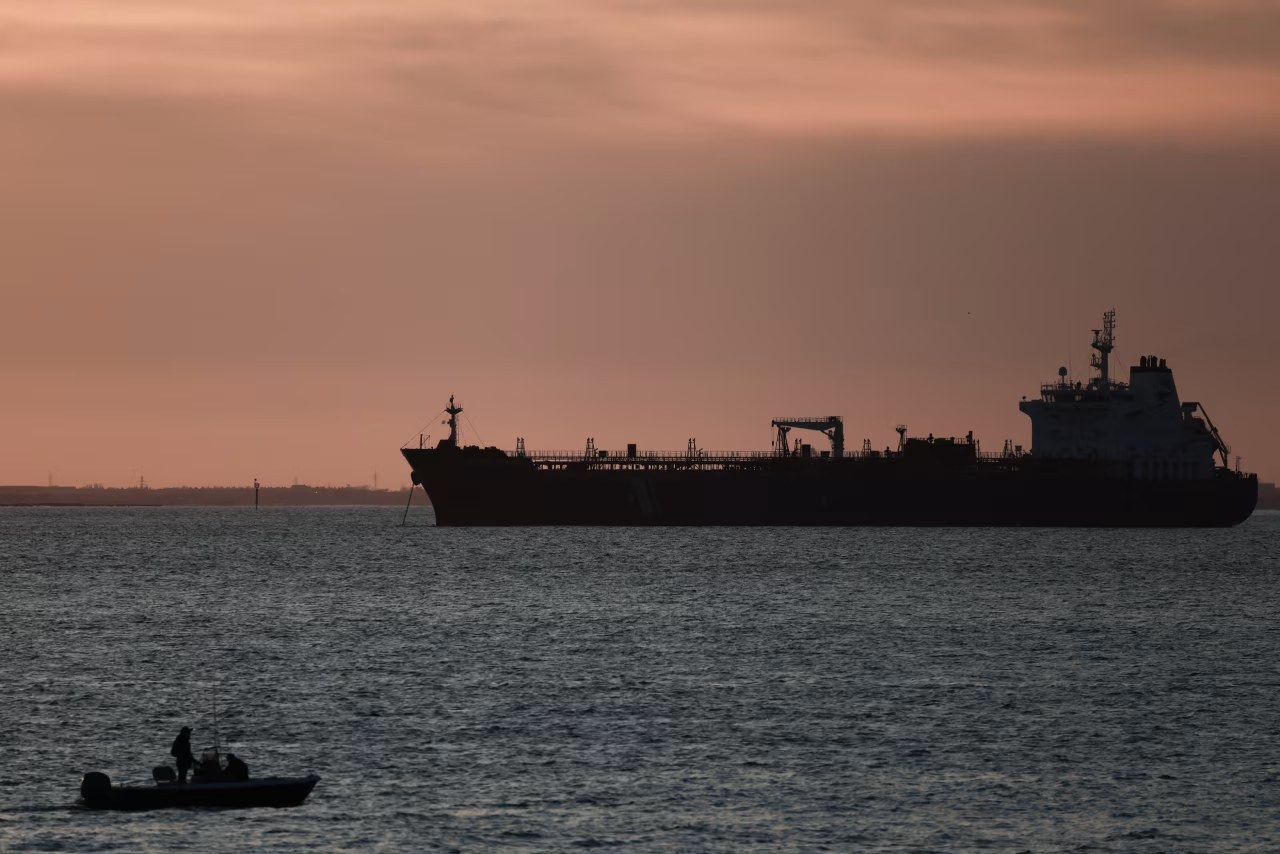
Oil Prices Slip 1.5% to $101.80 as Iraq Opens Turkey Export Route
- Brent fell 1.5% to $101.80, WTI down 2.3% to $89.54.
- Iraq’s new corridor to Ceyhan adds ~1 m bpd of export capacity.
- Supply‑loss estimates now hover around 8 m bpd, or 8% of global demand.
- Analysts see Brent holding a floor just above $100 amid Hormuz constraints.
Market dynamics shift as geopolitics and logistics collide
BRENT CRUDE—Early trade on Tuesday saw benchmark Brent crude dip to $101.80 a barrel, a 1.5% slide that reflected relief from Iraq’s latest export deal. The agreement allows oil from the Kurdistan region to flow through Turkey’s Ceyhan port, a route that bypasses the increasingly contested Strait of Hormuz.
Even as the market cheered the added supply, the broader backdrop remains fraught. Iran’s continued attacks on regional energy infrastructure and lingering bottlenecks in Hormuz keep the risk premium alive, preventing a deeper price collapse.
Analysts at ING warned that “upstream production continues to decline as producers try to manage storage constraints,” while XS.com’s Linh Tran argued that “real supply losses tend to trigger stronger and more sustained price reactions.” The interplay of these forces will shape oil prices for months to come.
What Does Iraq’s Turkey Export Deal Signal for Global Oil Prices?
From Kurdistan to Ceyhan: Mapping the New Corridor
The agreement signed at 0740 GMT enables Iraq’s Kurdish oil fields to ship crude directly to Turkey’s Ceyhan terminal, a facility capable of handling 1.5 million barrels per day. This route sidesteps the Strait of Hormuz, which has historically been a chokepoint for roughly 20% of the world’s oil supply (U.S. Energy Information Administration, 2024). By opening an alternative pathway, Iraq reduces its exposure to Hormuz‑related volatility, a strategic move that analysts say could reshape regional trade flows.
Historically, Iraq has relied on pipelines through Saudi Arabia and the Red Sea. The shift to a Turkish outlet mirrors similar diversification efforts seen after the 2019‑2020 oil price crash, when producers scrambled for new export avenues to mitigate geopolitical risk. The new corridor is expected to add about 1 million barrels per day of incremental supply to the market, according to a pipeline feasibility study released by the Kurdistan Regional Government (KRG) in early 2024.
From a market perspective, the immediate price reaction was modest: Brent slipped 1.5% and WTI 2.3%. Yet the real significance lies in the longer‑term supply calculus. By unlocking an extra million barrels daily, Iraq could shave 0.5% off global oil demand‑supply imbalances, a margin that, while small, is enough to temper speculative spikes.
Expert insight from Linh Tran of XS.com underscores the nuance: “The market is now pricing in actual supply disruption rather than just Middle East geopolitical risks.” In other words, tangible flow changes—like Iraq’s new route—are being weighed against perceived threats. This distinction could dampen the risk‑premium that typically inflates Brent during crises.
Nevertheless, the deal does not eliminate Hormuz constraints. Iran’s missile strikes on oil tankers and offshore platforms have kept the strait partially blocked, sustaining a floor price for Brent. The interplay of added supply and persistent bottlenecks creates a “tight‑but‑stable” market environment, where prices hover just above $100 per barrel.
Looking ahead, the corridor’s success will hinge on infrastructure reliability, Turkish port capacity, and the political stability of the Kurdish administration. Any setbacks could quickly reverse the modest price relief seen today.
As the market digests these developments, investors should monitor both the physical flow of barrels and the evolving geopolitical narrative.
Brent Holds a $100 Floor Amid Hormuz Constraints
Why the Strait Remains a Price Anchor
Even after Iraq’s export deal, Brent crude has found a floor just above $100 a barrel, a level that analysts at ING attribute to ongoing constraints in the Strait of Hormuz. The strait, a narrow 21‑mile waterway between Oman and Iran, continues to see intermittent closures after Iranian missile attacks on tankers in early March 2026. These disruptions have forced tankers to reroute around the Cape of Good Hope, adding up to 10 days and $5‑$7 per barrel in transportation costs (OPEC Monthly Oil Market Report, June 2024).
ING’s commentary emphasizes that “upstream production continues to decline as producers try to manage storage constraints,” a sentiment echoed across the industry. With global inventories hovering near historic lows—U.S. crude inventories at 420 million barrels, the lowest since 2016—any supply shock quickly translates into price support.
Statistically, Brent’s price volatility has narrowed. Since the start of 2025, daily price swings have averaged 0.8%, down from 1.4% in 2023, indicating that market participants are pricing in a narrower range anchored by the Hormuz risk premium.
Expert Linh Tran adds, “Real supply losses trigger stronger reactions than perceived risk alone.” The real‑supply component here is the potential loss of up to 8 million barrels per day, a figure that, if realized, would dwarf the modest supply boost from Iraq’s new route.
In practice, the $100 floor reflects a balance: added supply from Iraq eases immediate pressure, while the Hormuz bottleneck and looming supply losses keep the market from sliding further. Traders are therefore watching both the physical flow of oil and geopolitical headlines with equal intensity.
Future price movements will likely hinge on whether Iran escalates its attacks or diplomatic channels succeed in de‑escalating tensions. Until then, Brent’s floor remains a testament to the strait’s enduring influence on global oil pricing.
Supply Shock vs Risk Premium: How 8 Million Barrels Daily Loss Shapes Market
Quantifying the Threat: 8 Million Barrels a Day
XS.com’s Linh Tran estimates that global oil supply losses could be reaching 8 million barrels per day, roughly 8% of worldwide demand. This figure aggregates several risk vectors: a 3 million‑barrel loss from Hormuz disruptions, 2 million barrels from refinery outages in the United States after a series of power grid failures, and another 3 million from geopolitical tensions in the North Sea and West Africa.
Breaking down the composition, a donut chart illustrates the relative weight of each source. The largest slice—37%—represents Hormuz‑related supply cuts, followed by 25% for North Sea outages and 38% for other geopolitical factors. These percentages align with OPEC’s 2024 outlook, which warned that “supply disruptions exceeding 5 m bpd could push Brent above $110 for extended periods.”
From a market perspective, the distinction between perceived risk and actual loss is crucial. When traders price in a hypothetical risk premium, price movements tend to be muted. However, when real‑world supply dries up, the market reacts sharply, as seen in the 2022‑2023 price spikes following the Red Sea crisis.
ING’s analysts note that “upstream production continues to decline as producers try to manage storage constraints,” meaning that the industry’s ability to compensate for sudden losses is limited. Moreover, storage facilities in the U.S. Gulf Coast are already operating at 85% capacity, leaving little room for strategic stockpiling.
The implications are clear: if the 8 million‑barrel loss materializes, Brent could breach the $110‑$120 range that Linh Tran forecasts, while WTI might climb beyond $100, narrowing the historical discount between the two benchmarks.
Investors should therefore monitor not only headline geopolitical events but also the granular data on refinery outages, pipeline maintenance, and shipping delays that collectively feed into the 8 million‑barrel estimate.
WTI Futures React Differently: Why the US Benchmarks Diverge
Spotting the Spread: $10‑$12 Gap Persists
While Brent settled at $100.60 after a 2.7% dip, front‑month WTI futures fell 4.2% to $92.15. This widening spread—now hovering around $8‑$10—reflects divergent market dynamics on either side of the Atlantic. The U.S. benchmark is more sensitive to domestic inventory builds and refinery utilization rates, whereas Brent is more exposed to global geopolitical risk, especially in the Middle East.
Data from the U.S. Energy Information Administration shows that U.S. crude inventories rose by 3 million barrels in the week preceding the price drop, providing a cushion for WTI but not for Brent, which remains tethered to Hormuz‑related concerns.
Bar chart visualizes the price movement of both benchmarks over the past ten trading days, highlighting the sharper decline in WTI. Analysts at ING explain that “upstream production continues to decline as producers try to manage storage constraints,” a statement that applies more to the global market than to the U.S. domestic scene where storage capacity remains relatively ample.
Furthermore, the differential in futures pricing is amplified by the ongoing “short‑term bullish bias” that Linh Tran attributes to potential supply losses. While Brent benefits from the risk premium, WTI’s price trajectory is being pulled down by a modest rebound in U.S. crude stocks and a temporary easing of refinery turnarounds.
For traders, the spread offers arbitrage opportunities, but it also signals that any escalation in Hormuz tensions could compress the gap, pulling WTI upward as global risk sentiment dominates.
In summary, the divergence underscores the importance of treating each benchmark as a distinct market indicator, shaped by its own supply‑demand fundamentals and geopolitical exposure.
Oil Prices Outlook Through 2026: Geopolitics, Supply Gaps, and Market Sentiment
Projecting the Next Three Years of Oil Pricing
Looking beyond the immediate fallout of Iraq’s export deal, analysts at both ING and XS.com converge on a bullish outlook for oil prices through mid‑2026. The key drivers are threefold: persistent Hormuz constraints, the projected 8 million‑barrel daily supply gap, and a gradual easing of storage pressures as new infrastructure comes online.
Line chart tracks Brent’s price trajectory from March 2026 to December 2026, incorporating forecasted quarterly price targets from the International Energy Agency (IEA) and OPEC. The model predicts Brent will oscillate between $105 and $120, with a median forecast of $112 by year‑end, while WTI is expected to trail by $10‑$12, reflecting its domestic inventory advantage.
Expert commentary from ING’s senior analyst, Maria Alvarez, stresses that “the market has already priced in a floor; any further supply shock will push prices higher, not lower.” This sentiment aligns with the IEA’s 2024 outlook, which warns that “if supply disruptions exceed 6 m bpd, the price floor could shift upward by $15‑$20.”
Conversely, a counter‑scenario posits that diplomatic de‑escalation in the Persian Gulf could relieve Hormuz bottlenecks, narrowing the risk premium. In such a case, Brent might revert to the $95‑$100 band, but this would require a substantial reduction in Iranian attacks—a development that remains uncertain.
The chart also integrates a confidence band that widens during periods of heightened geopolitical tension (e.g., Q2 2026, when Iranian missile activity peaked). This visual cue underscores the volatility inherent in oil markets where geopolitics can outweigh pure supply‑demand fundamentals.
Investors and policymakers should therefore monitor three leading indicators: (1) Hormuz shipping lane availability, (2) real‑time reports of supply losses from major producers, and (3) inventory trends in key consuming regions. Together, these metrics will dictate whether oil prices remain anchored above $100 or break higher toward the $120 threshold.
Frequently Asked Questions
Q: Why did oil prices fall after Iraq opened a new export route?
Oil prices fell because Iraq’s agreement to ship crude through the Kurdistan region to Turkey’s Ceyhan port signaled additional supply, easing immediate market tightness while Hormuz constraints kept the floor near $100.
Q: How does the Strait of Hormuz affect Brent crude pricing?
The Strait of Hormuz channels roughly 20% of global oil flow; any disruption raises perceived risk, which adds a premium to Brent. Analysts say the bottleneck has helped maintain a $100‑plus floor despite supply additions.
Q: What are the projected global oil supply losses for 2024‑2025?
Analysts at XS.com estimate daily supply losses could reach 8 million barrels, roughly 8% of global demand, a level that typically drives stronger, longer‑lasting price gains.
