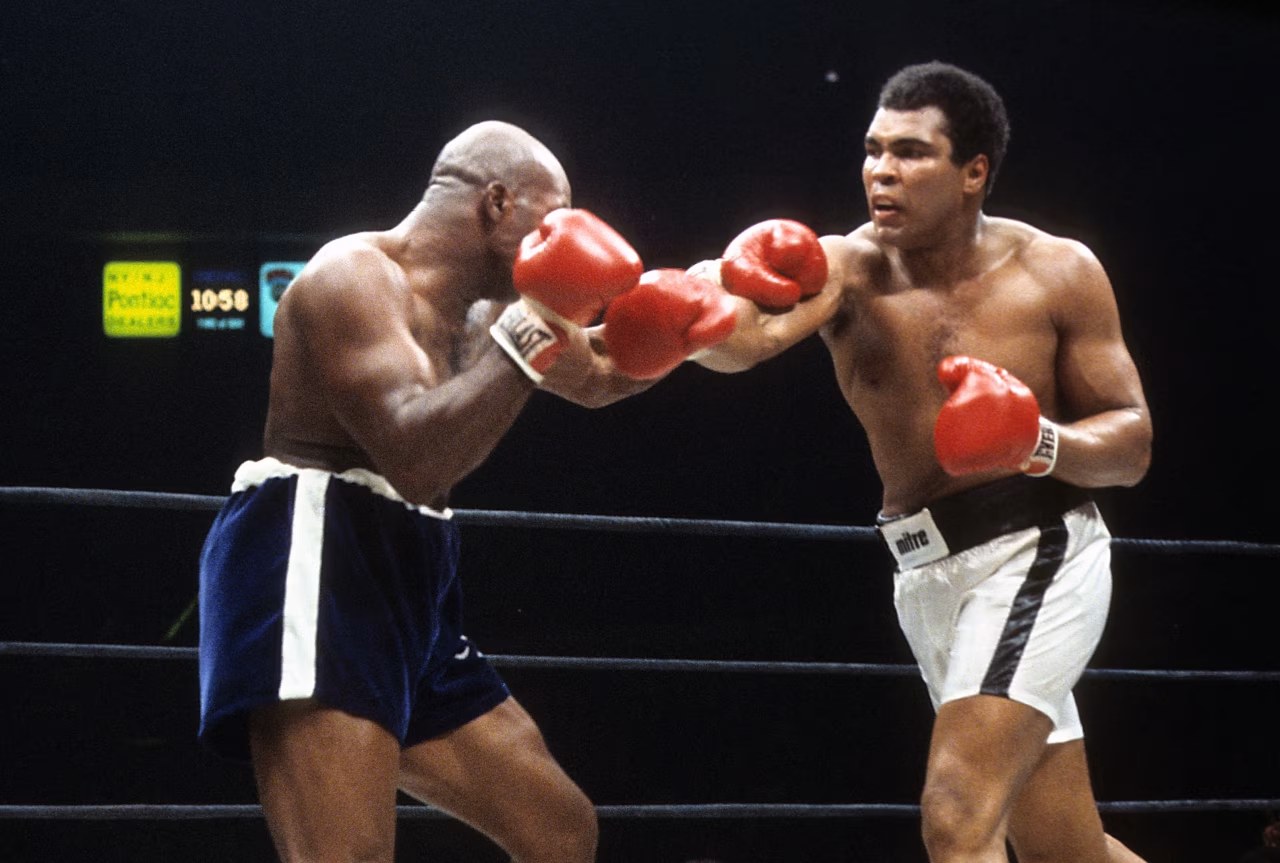
Frank Bisignano’s Two Demanding Federal Roles Overshadowed by a Single Pair of Muhammad Ali’s Shorts
- Frank Bisignano currently holds two critical leadership positions: heading the Social Security Administration and serving as IRS CEO during tax season.
- His distinguished career in the Trump administration now finds him embroiled in a personal dispute.
- The contention involves a valuable piece of sports history: a pair of legendary boxer Muhammad Ali’s boxing shorts.
- A sports collector is the opposing party in this high-profile fight over the cherished Muhammad Ali’s shorts, as reported in 2026.
When Public Service Meets Personal Scrutiny: The Unforeseen Challenge Facing a Federal Heavyweight
FRANK BISIGNANO—In the complex and often unforgiving landscape of federal administration, few individuals navigate the corridors of power with the dual responsibilities currently shouldered by Frank Bisignano. At once the guiding hand of the Social Security Administration and the chief executive overseeing the Internal Revenue Service during its most critical period, Bisignano’s daily docket is, by any measure, extraordinarily demanding. Yet, as a prominent publication revealed in 2026, the pressures of these pivotal roles are now intersecting with a decidedly unexpected challenge: a personal dispute over a piece of highly iconic sports memorabilia, specifically, a pair of Muhammad Ali’s boxing shorts.
This situation casts a unique light on the intricate balance between public duty and private affairs, particularly for figures operating at the highest echelons of government. Bisignano, identified as a “Trump administration heavyweight,” brings a significant profile to his dual federal leadership. The revelation of a private disagreement, now public, with a sports collector over an item as culturally charged as Muhammad Ali’s shorts raises immediate questions not just about the specifics of the dispute, but about the broader implications for a public servant tasked with overseeing agencies that profoundly impact millions of American lives. It is a striking example of how personal interests, even seemingly tangential ones, can suddenly become a focal point of public attention when attached to a figure of such governmental stature.
The convergence of these distinct spheres—high-stakes federal governance and a personal fight over collectible history—introduces a layer of scrutiny that extends beyond typical administrative challenges. For an individual managing the complexities of tax collection for an entire nation and the bedrock of retirement security, the entanglement in a dispute over Muhammad Ali’s shorts underscores the pervasive nature of public visibility. It compels a deeper examination into the responsibilities that accompany such influential positions, and how personal matters, regardless of their origin, can shape public perception and discourse around federal leadership. This unusual confluence sets the stage for an exploration of the myriad dimensions of Bisignano’s public life, the enduring legacy of Ali, and the often-unforeseen implications of high office.
The Weight of Dual Command: Navigating Two Federal Pillars
Frank Bisignano’s professional life in 2026 is defined by an extraordinary duality, placing him at the helm of two of the most foundational and administratively complex federal agencies: the Social Security Administration (SSA) and the Internal Revenue Service (IRS) during the peak tax season. This convergence of leadership responsibilities is, in itself, a testament to his profile as a “Trump administration heavyweight,” signifying a career marked by high-level trust and substantial executive demands. The sheer scale of operations managed by Bisignano is staggering. The Social Security Administration, for instance, is responsible for administering benefits to tens of millions of Americans, managing a budget that accounts for a significant portion of federal spending. Its mandate touches virtually every household, providing retirement, disability, and survivor benefits that form a crucial safety net for the nation.
The Scope of Federal Oversight
Simultaneously, Bisignano’s role as CEO of the Internal Revenue Service during tax season positions him at the forefront of the nation’s financial machinery. The IRS is the federal government’s primary revenue collection agency, tasked with ensuring compliance with tax laws, processing hundreds of millions of tax returns annually, and collecting trillions of dollars that fund government operations. The pressure associated with this role during tax season—a period characterized by intense public interaction, complex regulatory enforcement, and unforgiving deadlines—is immense. As public administration experts frequently observe, leading even one such agency requires a unique blend of strategic acumen, operational efficiency, and a deep understanding of public policy. The challenges of simultaneously steering two such leviathans can create unprecedented demands on any individual, regardless of their experience. The visibility of these roles means that every action, both professional and personal, can be subject to intense public and media scrutiny.
The appointment of a single individual to oversee both the SSA and the IRS during critical periods highlights a governmental strategy focused on high-level executive capacity, yet it inherently introduces an elevated level of personal exposure. The very structure of these positions dictates a profound influence on American daily life, from the calculation of individual tax liabilities to the distribution of essential social welfare payments. Any issue, whether administrative oversight or a private dispute, has the potential to ripple across public perception, impacting confidence in federal governance. This inherent risk is now starkly evident as Bisignano finds himself entangled in a dispute over a pair of Muhammad Ali’s boxing shorts, an incident far removed from the typical operational concerns of his offices. The intersection of these demanding public duties with a personal legal matter illustrates the constant balancing act required of high-ranking public servants, setting a precedent for how such unforeseen challenges might be managed in the public eye.
A Legacy Beyond the Ring: The Enduring Value of Muhammad Ali’s Shorts
The focal point of Frank Bisignano’s unexpected private struggle is not merely an old piece of sportswear, but a relic imbued with profound cultural and historical significance: a pair of Muhammad Ali’s boxing shorts. Muhammad Ali, born Cassius Clay in 1942, transcended the sport of boxing to become a global icon of athletic prowess, political defiance, and social justice. His fights, his famous quotes, and his unwavering stance against the Vietnam War solidified his status as “The Greatest,” making any personal item associated with him a prized artifact. The enduring value of Muhammad Ali’s shorts, therefore, extends far beyond their material worth or their original function in the boxing ring. They represent a tangible link to a figure whose influence shaped generations, embodying moments of athletic triumph, courageous conviction, and pivotal cultural shifts.
The Collectible Market for Icons
In the specialized world of sports memorabilia, items belonging to figures like Ali command exceptional prices due to their rarity, authenticity, and profound connection to historical moments. Experts in the collectibles market emphasize that the value is often driven by a confluence of factors: the athlete’s enduring legacy, the specific event the item is associated with, and its verifiable provenance. A pair of Muhammad Ali’s shorts, particularly if linked to a landmark fight, would be considered not just a collector’s item but a piece of history. This elevates the stakes of any dispute surrounding such an artifact. The very existence of a conflict over this item speaks volumes about its perceived worth, both monetary and symbolic, to a sports collector willing to challenge a high-ranking federal official.
The interest in Muhammad Ali’s shorts isn’t merely about personal acquisition; it’s often about preserving history. Major institutions, museums, and private collectors alike vie for such items, recognizing their role in chronicling human achievement and cultural evolution. The public’s fascination with these items is a testament to Ali’s unique position, not just in sports but in the broader fabric of society. As such, the fight involving Frank Bisignano over these shorts draws attention not only to the immediate parties but also to the broader market dynamics and cultural veneration surrounding iconic figures. This incident serves as a stark reminder that the artifacts of a legend, even a single pair of shorts, can become the unlikely nexus of significant personal and public contention, setting the stage for an examination of the precise nature of such high-stakes disputes.
The Nature of the Fight: Scrutiny for a Public Official
The core of the matter, as reported in 2026, revolves around a “fight over a pair of Muhammad Ali’s boxing shorts” between Frank Bisignano and an unnamed sports collector. While the specifics of this dispute remain undisclosed—whether it pertains to ownership, authenticity, valuation, or a breach of contract—its very existence immediately subjects Bisignano, a leader of the Social Security Administration and the IRS, to an intensified level of public and ethical scrutiny. For any individual, a private disagreement with a collector over a valuable item can be a stressful ordeal. However, for a high-profile “Trump administration heavyweight” holding dual federal appointments, such a personal entanglement carries a unique set of implications that extend far beyond the direct parties involved.
Ethical Considerations for High Office
Government ethics watchdogs and legal scholars frequently highlight the importance of maintaining an unimpeachable public image for officials in positions of significant trust. Any personal dispute, particularly one involving a high-value collectible like Muhammad Ali’s shorts, can raise questions regarding judgment, potential conflicts of interest, or even the perception of distraction from crucial public duties. Even if the dispute is entirely unrelated to his official capacities at the Social Security Administration or the Internal Revenue Service, the fact that a prominent federal leader is publicly engaged in such a fight can detract from the gravitas expected of his office. The transparency and perceived integrity of public officials are paramount, and even the appearance of impropriety, regardless of the merits of the actual dispute, can erode public confidence.
This situation underscores the delicate balance public servants must strike between their private lives and their professional responsibilities. The challenge for Bisignano lies not just in resolving the disagreement with the sports collector, but also in managing the narrative and ensuring that his engagement in this personal matter does not cast a shadow over the critical work of the agencies he leads. The public, understandably, expects its highest officials to be focused entirely on their governmental mandates. As this fight over Muhammad Ali’s shorts unfolds, it inevitably prompts a closer look at the broader implications for the conduct of high-ranking federal employees and the mechanisms in place to address such unique intersections of public and private life, potentially shaping future discussions on executive conduct and personal accountability.
Public Perception vs. Private Affair: A Leader’s Balancing Act
For figures like Frank Bisignano, the leader of the Social Security Administration and IRS during tax season, the line between public and private life is exceptionally thin, if it exists at all. The emergence of a “fight over a pair of Muhammad Ali’s boxing shorts” illustrates this precarious balance, highlighting how an ostensibly private disagreement with a sports collector can rapidly escalate into a matter of public interest and potential scrutiny. In an era of constant media exposure and immediate information dissemination, the actions of a high-ranking government official, particularly one identified as a “Trump administration heavyweight,” are often viewed through the lens of their professional role, regardless of the actual context.
The Public Eye on Private Lives
Political analysts and media strategists often point out that public trust is a fragile commodity, built over time but easily undermined by perceived distractions or controversies, even those unrelated to official duties. A dispute involving a high-value, culturally significant item like Muhammad Ali’s shorts can inadvertently suggest a focus on personal acquisitions rather than the monumental tasks of federal administration. This is particularly challenging for an individual juggling the complex mandates of two critical federal agencies that directly affect the financial well-being of millions of Americans.
The core issue here is not necessarily the legality or morality of the dispute over Muhammad Ali’s shorts itself, but rather its implications for public perception of Bisignano’s leadership. Managing public perception in such a scenario becomes as crucial as resolving the underlying private conflict. Bisignano, already navigating the demanding operational and political currents of the Social Security Administration and the Internal Revenue Service, must now contend with an additional layer of public relations. The challenge is to demonstrate that a private affair, even one of this nature, does not impede his capacity to govern effectively or maintain the public’s confidence in his impartiality and dedication. As this unique situation develops, it will serve as a compelling case study on how public officials at the zenith of their careers grapple with the intersection of their personal interests and the exacting demands of their governmental roles, influencing future dialogues on executive accountability and the limits of public expectation.
What Do Frank Bisignano’s Dual Roles and Dispute Mean for Federal Governance?
The unusual confluence of Frank Bisignano’s dual, demanding roles at the Social Security Administration and the Internal Revenue Service, coupled with his high-profile personal dispute over Muhammad Ali’s boxing shorts, presents a unique set of questions for federal governance in 2026. This situation goes beyond the immediate parties, prompting deeper consideration of the expectations placed upon high-ranking public officials and the potential for private matters to intersect with public trust. As a “Trump administration heavyweight,” Bisignano’s career trajectory underscores a specific approach to executive appointments, often prioritizing individuals with extensive private sector experience or a strong political mandate to drive change across large bureaucratic structures.
Implications for Public Trust and Executive Selection
The management of two such critical agencies—one overseeing the nation’s social safety net and the other its entire tax system—is an undertaking of immense complexity. The mere fact that one individual is tasked with these responsibilities already invites scrutiny regarding focus and bandwidth, a sentiment often echoed by academics specializing in public administration. When a private legal dispute, particularly one involving an iconic item like Muhammad Ali’s shorts, becomes public, it inevitably adds another dimension to this scrutiny. It forces a conversation about the personal conduct of public leaders, the ethical boundaries they must navigate, and whether such private entanglements can distract from the solemn duties of federal service. This episode could influence how future administrations consider dual appointments or how public officials are vetted for roles that demand such a high degree of public confidence.
Ultimately, the saga involving Frank Bisignano, his two demanding jobs, and the fight over Muhammad Ali’s shorts offers a singular lens through which to view the contemporary challenges of high-level public service. It highlights the inherent vulnerability of public figures to personal controversies and the enduring power of iconic figures like Muhammad Ali to generate significant attention, even posthumously. For the federal agencies involved, the immediate task is to continue their vital operations unimpeded by external narratives. However, for the broader landscape of American governance, this incident will likely contribute to ongoing discussions about executive accountability, ethical guidelines for public officials, and the perennial quest to uphold public trust in the institutions that underpin the nation. The eventual resolution of Bisignano’s dispute, and its fallout, will be closely watched as a bellwether for the future of public service ethics.
Frequently Asked Questions
Q: Who is Frank Bisignano and what are his primary roles?
Frank Bisignano holds two significant positions concurrently: he leads the Social Security Administration and serves as the CEO of the Internal Revenue Service during tax season. His dual roles place him at the helm of two of the United States’ most critical federal agencies, managing vast operations and influencing millions of citizens, even as a dispute over Muhammad Ali’s shorts gains attention.
Q: What is the dispute involving Muhammad Ali’s boxing shorts?
The dispute centers on a pair of Muhammad Ali’s boxing shorts, with Frank Bisignano reportedly locked in a fight with a sports collector. The exact nature and value of the dispute over the Muhammad Ali’s shorts are not detailed in the available information, but it underscores the intersection of high-profile public life with private interests.
Q: Why is a dispute over sports memorabilia significant for a public official?
For a high-ranking public official like Frank Bisignano, a dispute over items such as Muhammad Ali’s shorts can attract significant public and media attention. It raises questions about potential conflicts of interest, ethical considerations, and how personal affairs might impact the perception of their ability to execute demanding public duties at agencies like the IRS and SSA.
Q: What is the historical significance of Muhammad Ali’s memorabilia?
Muhammad Ali’s memorabilia, including his boxing shorts, holds immense historical, cultural, and financial value. Ali was not only a legendary athlete but also a profound social activist, making items associated with him highly sought after by collectors and museums alike. His legacy imbues his personal effects with significance far beyond mere sporting artifacts.
