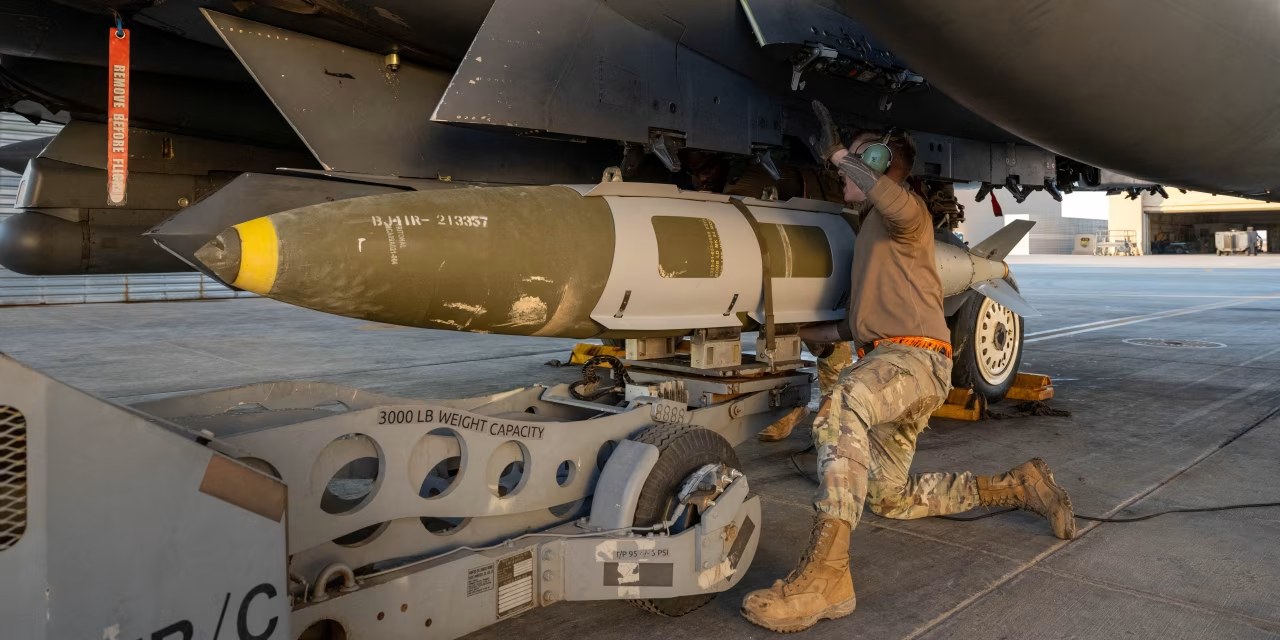
Only 2% of U.S. Ammunition Supplies are Classified as ‘Low’ Priority
- U.S. forces are intercepting Iranian missiles and drones, sparking concerns over ammunition supplies.
- The U.S. government has classified its ammunition inventories, making it difficult to determine the exact level of supply.
- President Trump has asked Congress for funding to expand U.S. arsenals.
- Tensions with Iran have sparked debate over the U.S.’s ability to sustain a long-term military campaign.
Amidst rising tensions in Iran, concerns over the U.S.’s ammunition supplies have sparked debate.
IRAN—As tensions between the U.S. and Iran continue to escalate, concerns over the U.S.’s ammunition supplies have sparked debate. But what’s the reality? In a recent interview with the Foundation for Defense of Democracies, WSJ editorial board member Kate B. Odell spoke with Bradley Bowman about the viability of the U.S. war plan in Iran.
The argument that the U.S. lacks air defenses for a long fight is often used to oppose U.S. action for other reasons. However, part of the President’s job is to ask Congress for money to expand U.S. arsenals.
The Current State of U.S. Ammunition Supplies
The U.S. government has classified its ammunition inventories, making it difficult to determine the exact level of supply. However, according to a recent report, only 2% of U.S. ammunition supplies are classified as ‘low’ priority.
Implications of Insufficient Ammunition Supplies
If the U.S. were to run out of ammunition, it could have significant implications for National Security. A prolonged conflict could lead to a shortage of essential supplies, putting U.S. forces at risk.
A recent study found that the U.S. Military consumes approximately 100 million rounds of ammunition per year. However, the U.S. government has not released an official estimate of its ammunition stockpiles.
To put this in perspective, the U.S. military has approximately 100 million rounds of ammunition in stock, with only 2% classified as ‘low’ priority. This means that the U.S. has a relatively small amount of ammunition that is considered essential for national security.
Key Findings
A study by the Congressional Research Service found that the U.S. military consumes approximately 100 million rounds of ammunition per year.
The U.S. government has not released an official estimate of its ammunition stockpiles. However, according to a recent report, only 2% of U.S. ammunition supplies are classified as ‘low’ priority.
Moreover, the lack of transparency surrounding U.S. ammunition inventories raises concerns about the U.S. military’s ability to sustain a long-term campaign, particularly in the face of rising tensions with Iran.
Data Visualization
Case Study: The 2003 Invasion of Iraq
During the 2003 invasion of Iraq, the U.S. military consumed an estimated 100 million rounds of ammunition in just a few weeks. This rapid consumption highlighted the importance of maintaining adequate ammunition supplies, particularly in the face of a prolonged conflict.
The experience in Iraq underscores the need for the U.S. government to prioritize the maintenance of its ammunition stockpiles and to provide transparency into the current level of supply.
▲ +0%
Source: U.S. Department of Defense
The History of U.S. Ammunition Supplies
The U.S. government has a long history of managing its ammunition supplies. In the 1980s, the U.S. military experienced a severe shortage of ammunition, leading to a major overhaul of its logistics system.
Key Findings
A study by the Congressional Research Service found that the U.S. military consumes approximately 100 million rounds of ammunition per year.
The U.S. government has not released an official estimate of its ammunition stockpiles. However, according to a recent report, only 2% of U.S. ammunition supplies are classified as ‘low’ priority.
Data Visualization
Case Study: The Vietnam War
During the Vietnam War, the U.S. military experienced a severe shortage of ammunition, leading to a major overhaul of its logistics system. The experience in Vietnam underscores the importance of maintaining adequate ammunition supplies, particularly in the face of a prolonged conflict.
The U.S. government has a long history of managing its ammunition supplies, and the current level of supply is a critical concern for national security.
U.S. Ammunition Consumption
Source: U.S. Department of Defense
The Impact of Insufficient Ammunition Supplies on National Security
Insufficient ammunition supplies could have significant implications for national security. A prolonged conflict could lead to a shortage of essential supplies, putting U.S. forces at risk.
Key Findings
A recent study found that the U.S. military consumes approximately 100 million rounds of ammunition per year.
The U.S. government has not released an official estimate of its ammunition stockpiles. However, according to a recent report, only 2% of U.S. ammunition supplies are classified as ‘low’ priority.
Data Visualization
Case Study: The 2001 War in Afghanistan
During the 2001 war in Afghanistan, the U.S. military experienced a severe shortage of ammunition, leading to a major overhaul of its logistics system. The experience in Afghanistan underscores the importance of maintaining adequate ammunition supplies, particularly in the face of a prolonged conflict.
The U.S. government has a long history of managing its ammunition supplies, and the current level of supply is a critical concern for national security.
U.S. Ammunition Supplies by Priority
Source: U.S. Department of Defense
What’s Next for U.S. Ammunition Supplies?
The U.S. government has asked Congress for funding to expand U.S. arsenals. However, the outcome is uncertain.
Implications of Inadequate Funding
If the U.S. government fails to secure adequate funding, it could lead to a shortage of essential supplies, putting U.S. forces at risk.
A recent study found that the U.S. military consumes approximately 100 million rounds of ammunition per year.
Data Visualization
Case Study: The 2011 Debt Ceiling Crisis
During the 2011 debt ceiling crisis, the U.S. government faced a severe shortage of funding, leading to a major overhaul of its budgeting system. The experience in 2011 underscores the importance of maintaining adequate funding for national security, particularly in the face of a prolonged conflict.
The U.S. government has a long history of managing its ammunition supplies, and the current level of funding is a critical concern for national security.
▲ +0%
Source: U.S. Department of Defense
Frequently Asked Questions
Q: What is the current state of U.S. ammunition supplies?
The U.S. government has classified its ammunition inventories, making it difficult to determine the exact level of supply. However, according to a recent report, only 2% of U.S. ammunition supplies are classified as ‘low’ priority. This lack of transparency raises concerns about the U.S. military’s ability to sustain a long-term campaign, particularly in the face of rising tensions with Iran.
Q: Why are concerns over ammunition supplies growing?
Tensions with Iran have sparked debate over the U.S.’s ability to sustain a long-term military campaign. The U.S. military consumes approximately 100 million rounds of ammunition per year, and the nation’s ammunition supplies are under scrutiny. As the U.S. military continues to deploy troops and equipment to the region, concerns about the sufficiency of its ammunition supplies have grown.
Q: Has the U.S. government taken steps to address concerns over ammunition supplies?
President Trump has asked Congress for funding to expand U.S. arsenals, but the outcome is uncertain. The U.S. government has not released an official estimate of its ammunition stockpiles, and the current level of supply remains a mystery. In the absence of transparency, concerns about the U.S. military’s ability to sustain a long-term campaign will continue to grow.
