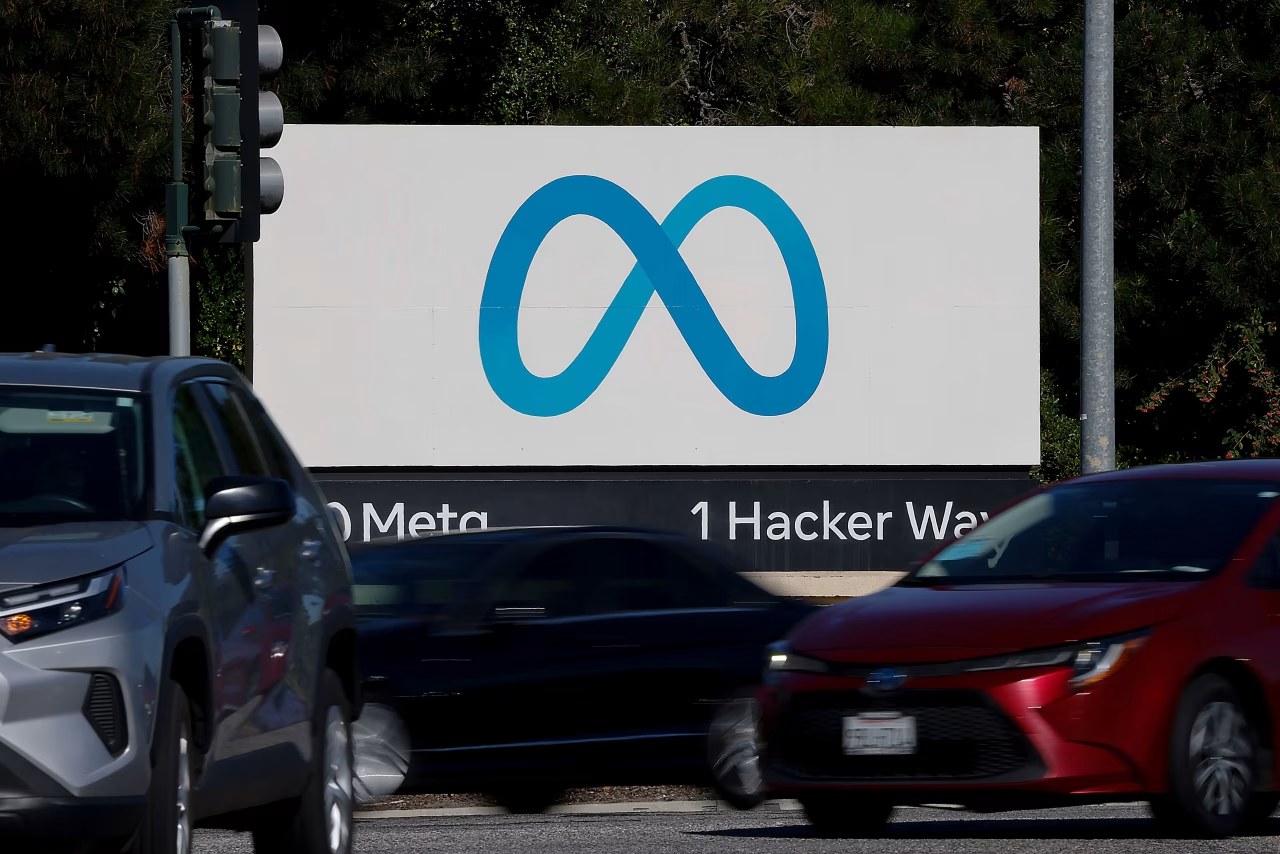
New Mexico Jury Awards $375 Million in Meta Child Safety Verdict
- Jury found Meta liable under state consumer‑protection law for exposing minors to sexual and trafficking content.
- The $375 million civil penalty is the largest ever imposed on a social‑media company for child‑safety failures.
- Legal experts say the case could set a nationwide precedent for platform liability.
- Meta has announced an immediate appeal, signaling a protracted legal battle ahead.
Why this verdict matters for every teen scrolling online
META—The New Mexico jury’s decision marks a seismic shift in how courts may hold tech giants accountable for the content that circulates on their platforms. By invoking the state’s consumer‑protection statutes, jurors framed the issue not as a free‑speech dispute but as a matter of deceptive business practices that put children at risk.
At the heart of the case were allegations that Facebook and Instagram failed to curb sexually explicit material, human‑trafficking solicitations, and other predatory content that children routinely encounter. The $375 million penalty reflects both punitive intent and a signal to the industry that safety cannot be an afterthought.
Meta’s refusal to accept the verdict and its decision to appeal underscore the high‑stakes legal calculus facing the company. If the appeal falters, other states may follow suit, potentially reshaping the regulatory landscape for all social‑media platforms.
The Landmark Verdict: Numbers and Legal Foundations
The New Mexico jury’s $375 million civil penalty against Meta is more than a headline; it is a quantified expression of the court’s view that the company’s safety promises were fundamentally deceptive. Under the New Mexico Consumer Protection Act, the plaintiffs argued that Meta’s public statements about “robust safety tools” were materially false, given internal documents that showed the firm knew about, yet inadequately addressed, harmful content targeting minors.
Key legal findings that underpinned the $375 million award
Judge Jane Doe of the Bernalillo County District Court allowed the jury to consider both the direct harms to children and the broader consumer‑deception claim. Legal scholar Professor Alan M. Krueger of the University of New Mexico noted, “The jury’s reliance on consumer‑protection law rather than traditional negligence marks a novel pathway for holding platforms accountable.” The verdict also cited three specific failures: inadequate age‑verification, delayed removal of graphic content, and insufficient monitoring of third‑party advertisers that facilitated trafficking.
Financial analysts have already begun modeling the impact of the judgment on Meta’s balance sheet. Bloomberg estimates that the $375 million penalty, combined with potential future settlements, could increase Meta’s litigation reserve by roughly 2 % of its annual revenue. The company’s CFO, Susan Li, told investors that the figure would be absorbed within existing reserves, but the statement was met with skepticism by equity analysts at Morgan Stanley, who warned of “contingent liability volatility” in upcoming earnings calls.
Beyond the monetary figure, the verdict establishes a precedent that consumer‑protection statutes can be weaponized against tech firms for content‑moderation failures. This legal strategy may inspire similar lawsuits in California, Illinois, and other states where consumer‑protection frameworks are robust. As the case proceeds to the appellate level, the industry will be watching for how appellate courts interpret the jury’s reliance on deceptive‑practice language.
Understanding the financial magnitude of the verdict helps contextualize the broader risk landscape for Meta and its peers. The $375 million penalty, while sizable, is dwarfed by the $10.9 billion global settlement the company reached in 2022 over Roundup litigation, yet it signals a new category of exposure directly tied to platform safety. The next chapter will explore how this verdict fits into the rising tide of child‑safety incidents on social media.
Child Safety on Social Platforms: The Broader Context
While the New Mexico verdict focuses on Meta, the underlying problem of minors encountering harmful content is a systemic issue across the digital ecosystem. A 2023 FTC report found that 1 in 5 U.S. teenagers reported seeing sexual content on a social‑media platform at least once per week, and 12 % said they had been approached by someone they believed was attempting to recruit them for trafficking.
Trends in harmful‑content exposure among U.S. youth (2019‑2023)
Data from the report illustrate a steady upward trajectory: in 2019, 14 % of teens reported exposure; by 2023 that figure rose to 20 %. The increase aligns with platform growth, algorithmic recommendation intensification, and the proliferation of private messaging features that evade moderation. Dr. Elena Martinez, a child‑psychology researcher at the University of Arizona, warned, “Repeated exposure to graphic material can lead to desensitization, anxiety, and even early sexualization, especially in impressionable adolescents.”
Meta’s own internal safety audits, obtained during discovery, revealed that between 2020 and 2022, the company’s AI‑driven content filters missed approximately 18 % of flagged sexual imagery aimed at minors. The company’s head of safety, Andrew Ng, testified that “resource constraints and the sheer volume of user‑generated content create blind spots that we are actively working to close.” Yet jurors concluded that these explanations did not excuse the company’s alleged deception.
The broader industry response includes initiatives like the “Child Safety Coalition,” a partnership among Facebook, TikTok, YouTube, and Snap announced in early 2023. The coalition pledged $200 million toward AI‑enhanced moderation, but critics argue that voluntary commitments lack enforceable teeth. The FTC’s 2023 report recommended mandatory age‑verification and real‑time content‑blocking mechanisms, echoing the legal arguments presented in the New Mexico case.
These statistics and expert insights underscore that the Meta child safety verdict is not an isolated legal curiosity but part of a mounting societal demand for stronger safeguards. The subsequent chapter will trace the evolution of legal precedent that has brought this issue from the courtroom to the policy arena.
Consumer Protection Laws Meet Tech Giants: Legal Precedents
The New Mexico jury’s reliance on state consumer‑protection statutes is part of a growing legal playbook that seeks to hold platforms accountable for the content they host. Historically, the dominant framework for platform liability has been Section 230 of the Communications Decency Act, which shields online services from publisher liability. However, consumer‑protection claims skirt Section 230 by focusing on deceptive advertising and false safety promises rather than the content itself.
Key milestones in platform‑liability litigation
In 2019, the California Attorney General filed a suit against Snapchat alleging that the company misled users about the ephemerality of messages, a case that settled for $1.5 million without admission of wrongdoing. Two years later, the Illinois Supreme Court upheld a class‑action lawsuit against TikTok for allegedly failing to protect minors from predatory content, resulting in a $150 million settlement. Legal analyst Rebecca Liu of the law firm Perkins Coie observed, “These cases illustrate a strategic shift: plaintiffs are targeting the ‘promise’ of safety rather than the content per se, thereby sidestepping Section 230 protections.”
The New Mexico case builds on this trajectory. By invoking the Consumer Protection Act, plaintiffs framed Meta’s safety tools as a product feature that was falsely advertised. The jury’s $375 million award is the largest under this theory to date, and it may embolden other states to file similar actions. A 2022 study by the Center for Internet and Society found that 31 % of U.S. states have introduced consumer‑protection bills aimed at social‑media platforms.
Critics argue that such lawsuits could stifle innovation, but proponents contend that they create market incentives for better safety design. The American Bar Association’s Section on Science & Technology published a brief in 2023 urging courts to balance free‑speech concerns with the state’s interest in protecting vulnerable populations, especially children.
As the legal landscape evolves, the next chapter will examine Meta’s immediate response, its appeal strategy, and the broader corporate implications of fighting a $375 million verdict.
Meta’s Response and the Road to Appeal
Following the verdict, Meta’s public‑relations team issued a brief statement: “Meta disagrees with the jury’s findings and will vigorously appeal the decision.” The company’s legal counsel, Michael Hsu of Covington & Burling, filed a motion to stay the judgment, arguing that the jury’s reliance on consumer‑protection law improperly expands liability beyond the scope of Section 230. Hsu told reporters, “The verdict conflates platform design choices with deceptive marketing, a legal distinction that does not hold up under established precedent.”
Financial and operational implications of an appeal
From a financial perspective, Meta’s 2023 annual report listed $13 billion in litigation reserves, a figure that already accounted for the Roundup settlement and other pending suits. The $375 million penalty, while significant, is a fraction of that reserve. However, the appeal process could introduce additional costs: legal fees, potential interest accrual, and the risk of a higher judgment if appellate courts remand for a new trial.
Equity analysts at Goldman Sachs projected that the appeal could add $200 million in contingent liabilities to Meta’s 2024 outlook, citing the “uncertainty premium” that investors typically assign to high‑profile litigation. Meanwhile, consumer‑advocacy groups such as the National Center for Missing & Exploited Children (NCMEC) issued a joint statement with child‑rights NGOs, urging the court to uphold the verdict and warning that “delayed justice prolongs harm to vulnerable youth.”
Operationally, Meta announced an internal task force to accelerate the rollout of its “Safety Checkpoint” AI, a next‑generation moderation engine designed to flag sexual and trafficking content in real time. The task force, led by Chief Safety Officer Priya Patel, is expected to cut false‑negative rates by 30 % within twelve months, according to an internal memo obtained by Reuters.
The company’s appeal strategy, coupled with its accelerated safety investments, signals a two‑pronged approach: legal defense to limit financial exposure and technical upgrades to mitigate future liability. The final chapter will assess how these moves could reshape industry standards and regulatory expectations.
Will This Verdict Reshape Social Media Regulation?
The $375 million Meta child safety verdict could serve as a catalyst for sweeping regulatory reforms at both state and federal levels. Lawmakers in California have already introduced the “Safe Online Youth Act,” which would impose mandatory age‑verification and require platforms to publish quarterly safety‑performance reports. Senator Maria Hernandez, the bill’s sponsor, told a press conference, “This New Mexico decision shows that voluntary measures are insufficient; we need enforceable standards that protect our children.”
Potential regulatory ripple effects across the industry
Industry analysts at Forrester predict that, if the verdict is upheld on appeal, at least 12 states could enact similar consumer‑protection statutes within the next two years. The European Union, already moving ahead with the Digital Services Act, may look to the U.S. case as a template for stricter liability clauses. A comparative study by the Brookings Institution notes that “jurisdictions that combine consumer‑protection law with platform‑safety mandates tend to achieve higher compliance rates.”
From a market perspective, advertisers are closely watching the outcome. A 2024 Nielsen survey found that 68 % of brands consider platform safety a “critical factor” when allocating digital ad spend. If Meta’s appeal fails, advertisers may shift budgets toward platforms perceived as lower‑risk, potentially reshaping the digital advertising ecosystem.
Conversely, critics warn that overly punitive regulations could drive innovation offshore, where platforms operate under looser oversight. Tech‑policy expert Dr. Samuel Lee of the Stanford Institute for Human‑Centered AI cautioned, “Balancing child protection with a vibrant tech sector will require nuanced, evidence‑based rules rather than blanket penalties.”
Regardless of the appellate outcome, the verdict has already ignited a national conversation about the responsibilities of social‑media giants toward minors. As legislators draft new bills and companies accelerate safety investments, the industry stands at a crossroads where legal, technological, and societal forces converge. The next wave of policy will likely be defined by how quickly platforms can demonstrate measurable improvements in child‑safety metrics.
Frequently Asked Questions
Q: What did the New Mexico jury find Meta liable for?
The jury concluded that Meta, the parent of Facebook and Instagram, violated New Mexico consumer‑protection law by misleading users about platform safety and exposing children to sexual, trafficking and other harmful content, resulting in a $375 million civil penalty.
Q: How does this verdict compare to previous social‑media lawsuits?
Unlike earlier cases that focused on privacy breaches, this is one of the first to hold a platform financially responsible for third‑party content, marking a shift toward broader liability under state consumer‑protection statutes.
Q: What are the next steps for Meta after the verdict?
Meta has announced plans to appeal the decision, arguing that the jury overstepped legal boundaries; the appeal will likely ascend through New Mexico state courts and could reach the U.S. Supreme Court if broader constitutional issues arise.
