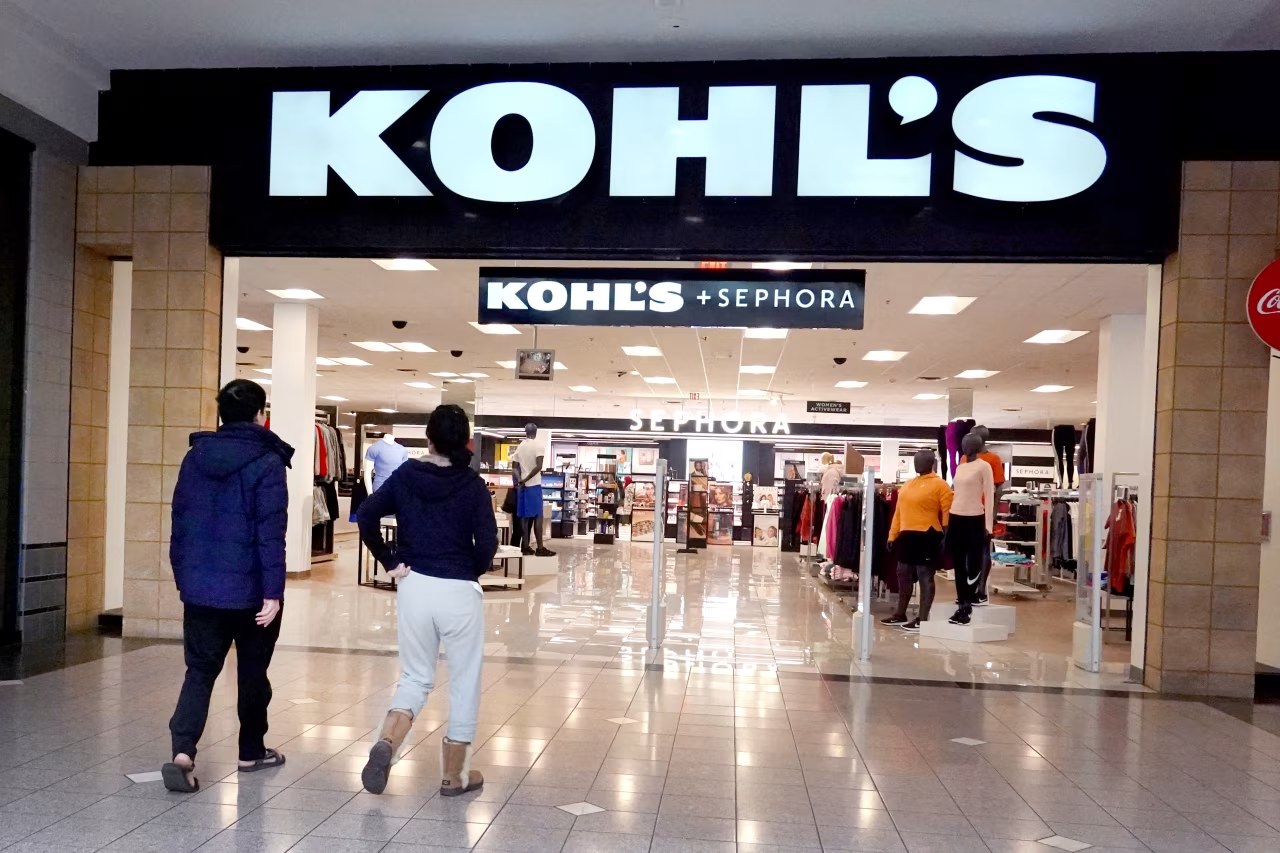
Kohl’s Turnaround Stumbles in Q4, Yet CEO Insists Chain Exits 2025 Stronger
Department-store revival faces fresh questions after softer-than-expected finish to the year
KOHL’S—Kohl’s recovery effort hit turbulence in the fourth quarter, disappointing internal forecasts and reviving doubts about the sustainability of its rebound. Chief Executive Michael Bender told analysts that progress “isn’t always linear,” while insisting the Milwaukee-based retailer closed calendar 2025 in better shape than when the year began. This is a developing story.
- Kohl’s fourth-quarter performance fell short of company projections Michael Bender
- CEO Michael Bender says the chain still ended 2025 on stronger footing than at the start of the year
- Management has not disclosed comparable-sales or profit figures for the quarter
- Turnaround plan remains on track despite recent softness, according to Bender
Fourth-Quarter Setback
Holiday quarter failed to meet company expectations
Kohl’s entered the final months of 2025 promising leaner inventories, fresher merchandise, and sharper pricing. Yet shoppers remained cautious, and promotions failed to ignite traffic, leaving sales below the retailer’s own forecast. The shortfall marks the second consecutive quarter that momentum has lagged, raising concerns that earlier gains could be evaporating. Bender declined to quantify the miss, citing quiet-period restrictions ahead of the full earnings release, but conceded the quarter was “softer than we projected.”
Department stores face a particularly unforgiving environment in late 2025. Consumers are still trading down, buying fewer discretionary items per trip, and shifting dollars to off-price and online specialists. Kohl’s core customer—middle-income moms—also felt the pinch from higher child-care costs and smaller tax refunds, compressing spending budgets. Management responded by accelerating clearance events on seasonal apparel and home textiles, moves that protect market share but erode gross margin. Investors reacted by pushing the stock down in after-hours trading, extending a 12-month decline that has shrunk market value by nearly half.
The fourth quarter is mission-critical for Kohl’s because it generates more than 30% of annual profit in a typical year. Missing holiday expectations therefore reverberates through the entire P&L, making it harder to fund store remodels, digital upgrades, and debt reduction. Bender emphasized that inventory ended January down year-over-year, a sign the company avoided the worst-case scenario of being stuck with mountains of unsold fleece and décor. Still, until Kohl’s publishes full numbers, analysts must rely on supplier checks and credit-card data that suggest comps were flat to slightly negative versus internal guidance of low-single-digit growth.
CEO Argues Underlying Health Is Improving
Inventory discipline and private-label growth cited as wins
Despite the latest stumble, Bender highlighted three areas where he believes Kohl’s has meaningfully strengthened over the past year. First, average unit inventory is down mid-single digits, helping the chain avoid the deep clearance markdowns that eroded margins in 2024. Second, private brands such as Sonoma and Nine West now represent 46% of sales, up from 41% a year ago, giving Kohl’s exclusive product that competitors cannot undercut. Third, expense cuts have lowered selling, general, and administrative costs by roughly $120 million annually, providing flexibility to invest in e-commerce fulfillment and store refreshes. These moves, Bender argued, leave Kohl’s “structurally more profitable” even if top-line growth remains elusive.
Inventory efficiency matters because Kohl’s balance sheet was bloated as recently as spring 2024, when pack-and-hold strategies backfired and freight costs ballooned. Merchants now rely on data-driven buy plans that chase proven sellers rather than speculative fashion statements. The tighter assortments also free selling space for Sephora shops inside roughly 900 locations, a partnership that carries higher beauty margins and drives younger traffic. Early reads show Sephora sales per square foot running double the store average, validating management’s decision to shrink housewares aisles and cede floor space to prestige cosmetics.
Private-label penetration is another strategic lever. Owned brands carry gross margins that are typically 600–800 basis points richer than comparable national labels, allowing Kohl’s to offer sharper opening price points without sacrificing profit. Design teams have shortened lead times to eight weeks for basics such as polo shirts and denim, enabling quick replenishment on hot items. The company is also extending successful labels like FLX activewear into men’s and plus sizes, widening the addressable market while keeping sourcing complexity inside a common supply base.
Cost savings were achieved by renegotiating carrier contracts, trimming corporate headcount, and consolidating four regional distribution centers into two upgraded facilities in Plainfield, Indiana, and Macon, Georgia. Management says the streamlined network reduces transit time to stores by roughly 24 hours, which helps avoid stock-outs during promotional peaks. SG&A as a percent of sales has fallen below 28%, the lowest level since 2017, even though wage inflation remains above 4%. Bender told analysts that further efficiencies are possible once supply-chain automation is fully deployed in 2026.
Investors Still Want Proof
Analysts say consistent sales gains are needed to rebuild credibility
Wall Street has heard turnaround promises from Kohl’s before. A prior strategic plan unveiled in 2023 faltered after back-to-school demand collapsed, leading to the ouster of then-CEO Michelle Gass. Bender, promoted from chief merchandising officer in early 2025, is the third chief executive in five years, and shareholders are demanding evidence that his strategy can deliver durable gains. Credit Suisse retail analyst Grant Salmanson noted that department-store turnarounds historically require at least six consecutive quarters of positive comparable sales, something Kohl’s has achieved only sporadically since 2018. Until the chain posts that streak, Salmanson wrote in a client note, valuation multiples are likely to remain depressed.
Skepticism is reflected in the stock’s forward price-to-earnings ratio of 6.2 times, a 40% discount to the S&P 400 retail index. Short interest stands at 18% of the float, one of the highest levels among mid-cap specialty retailers, implying traders are positioned for further downside. Bond markets are also cautious: Kohl’s 2029 notes trade at a yield of 9.1%, roughly 550 basis points above comparable-maturity Treasuries, a spread that signals concern about leverage rather than imminent default risk. Bender must therefore balance growth investments with debt amortization to avoid a ratings downgrade that could raise borrowing costs even more.
Institutional shareholders have pressed the board to explore asset sales, including the company’s headquarters campus in Menomonee Falls, Wisconsin, and its private-label credit-card receivables. A sale-leaseback of the 1.2-million-square-foot headquarters could net $200–$250 million, analysts estimate, providing cash for share buybacks or store remodels. Yet Bender indicated such moves are “not on the front burner,” arguing that real estate is strategic collateral that supports the revolver and keeps overall interest costs lower. Activists also want clarity on succession planning after the company cycled through three CEOs in five years; directors say an internal bench is being groomed, but no formal timeline has been shared.
What Comes Next
Management vows to ‘stay the course’ on turnaround initiatives
Looking ahead, Kohl’s will focus on narrowing product assortments to proven sellers, expanding its partnership with Sephora inside stores, and testing smaller-format locations in urban markets. Bender said the company will also resume share buybacks once leverage falls below 2.5 times earnings before interest, taxes, depreciation, and amortization, a milestone he believes is achievable by mid-2026. For now, executives are guiding investors to expect a low-single-digit decline in comparable sales for the first quarter, reflecting continued macro headwinds and a lingering consumer thrift mindset. If broader economic conditions stabilize, Kohl’s projects a return to flat or slightly positive comps by the second half of the year, though Bender cautioned that forecasting remains “highly uncertain.”
The Sephora expansion will add roughly 250 additional prestige brands by back-to-school 2026, including Tatcha skincare and Drybar hair tools. Early pilot shops lifted overall store traffic by 8%, with two-thirds of beauty buyers crossing over to purchase Kohl’s private-label apparel on the same trip. Management is negotiating exclusive capsule collections that would give Kohl’s first access to new launches, mirroring the strategy that has made Target’s Ulta partnership successful. Beauty carries gross margins north of 40%, well above the company average, so every point of mix shift is accretive to earnings.
Urban small-format stores—averaging 55,000 square feet versus the traditional 90,000—will debut in Boston’s Assembly Row and Atlanta’s Buckhead neighborhood this fall. The edited boxes emphasize activewear, beauty, and home décor, categories that resonate with city dwellers who lack space for bulky furniture. Leases are shorter and rents are higher, but productivity per square foot is projected to exceed the chain average by 25%. If the concept works, Kohl’s could open 30–40 additional small footprints over the next three years, helping offset mall traffic declines.
Capital allocation priorities remain debt reduction ahead of buybacks. Total borrowings stand at $2.1 billion, down from $2.4 billion a year ago, partly due to free-cash-flow generation and proceeds from the sale of a distribution center in Corsicana, Texas. Achieving the 2.5-times leverage target implies roughly $300 million of additional debt pay-down, a goal Bender believes is “well within reach” if earnings before interest, taxes, depreciation, and amortization grow mid-single digits and working capital stays disciplined. Once the threshold is met, the board will evaluate restarting repurchases, though any program is expected to be modest relative to historical levels that reached $500 million annually.
Leverage Target Before Buybacks Resume
Current (est.)
2.9x EBITDA
Target
2.5x EBITDA
▼ 13.8%
decrease
Source: Kohl’s management guidance
Frequently Asked Questions
Q: What exactly went wrong for Kohl’s in the fourth quarter?
Management has not released hard numbers, but Bender conceded results were ‘softer than expected,’ describing the period as a setback rather than a reversal of the broader turnaround plan.
Q: Is Kohl’s overall recovery still on track?
The CEO stressed the chain ended calendar 2025 stronger than it began, citing progress on inventory discipline, private-label mix, and cost controls even as quarterly sales wavered.
Q: Why does Bender say progress ‘isn’t always linear’?
He used the phrase to temper expectations, explaining that turnarounds involve uneven demand, promotional pressures, and macro volatility, so occasional stumbles do not derail long-term strategy.
Sources & References
- Primary SourceKohl’s Turnaround Stalls in Fourth Quarter, But CEO Remains Upbeat on Progresswsj.com
