Kuwait Oil Production Cut: Storage Hits 100% Capacity, Forcing First Output Slashes in 30 Years
- Kuwait has begun cutting production at multiple oil fields after domestic crude storage tanks hit 100% capacity, according to people familiar with the matter.
- The OPEC founder is now debating whether to limit output and refining to domestic demand levels only, with a final decision expected within days.
- The move signals a broader regional storage crunch that could erase up to several hundred thousand barrels per day from global supply.
- Analysts warn Kuwait’s bottleneck may pressure Brent prices above $80/barrel and ripple through Asian refiners who rely on Kuwaiti exports.
A storage wall in one of OPEC’s oldest producers threatens to tighten a market already jittery over Red Sea disruptions and Russia sanctions.
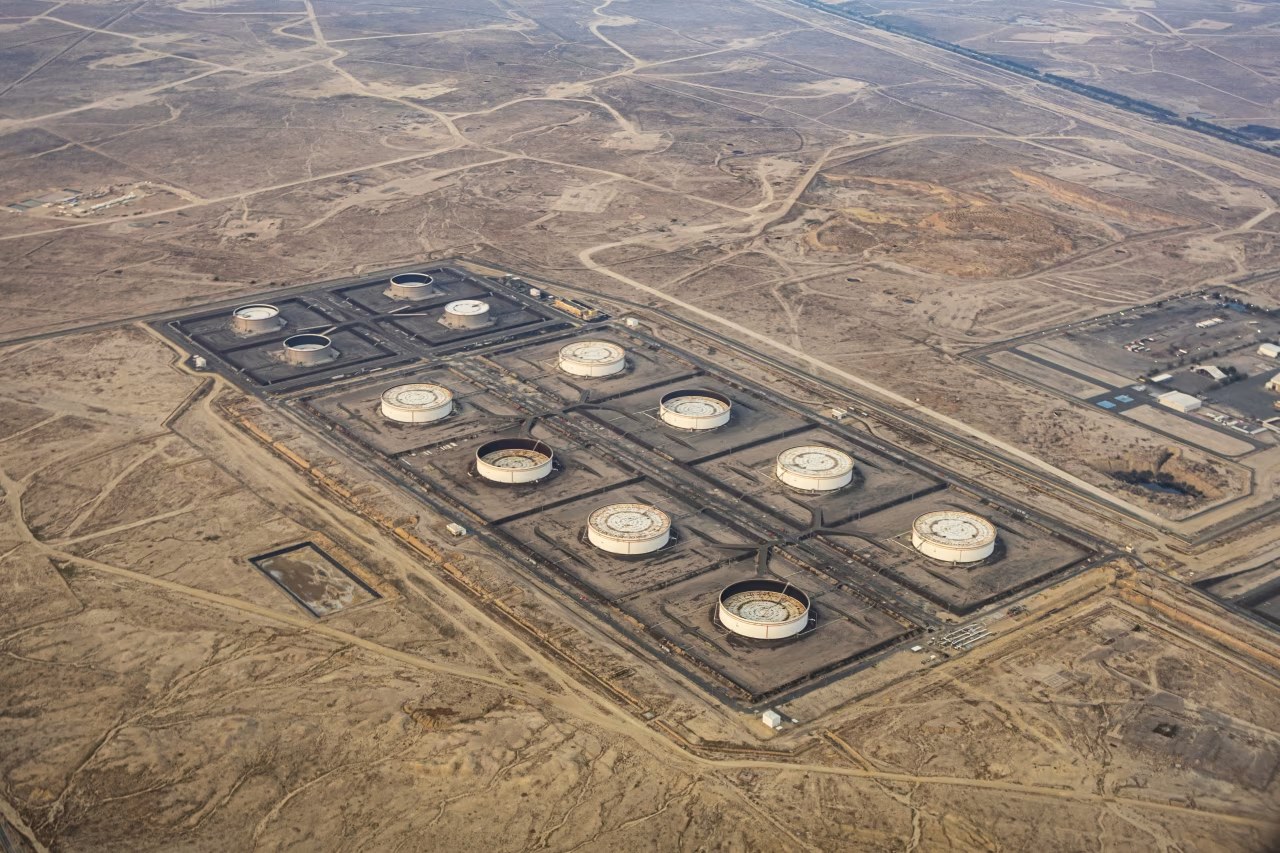
KUWAIT OIL PRODUCTION CUT—Kuwait, the fifth-largest producer inside OPEC, has quietly begun throttling back output at several of its upstream fields after on-land storage depots reached absolute capacity, three people with direct knowledge told Energy Intelligence on Tuesday. The step marks the first time since 1994 that Kuwait has been forced to shut in crude for lack of tank space, underscoring how swiftly the global balance can tip from surplus to shortage.
State-owned Kuwait Petroleum Corporation (KPC) has not disclosed which fields are affected, but engineers say the cutbacks started over the weekend and could deepen within 48 hours if export loadings do not accelerate. “We are basically parking tankers and hoping for clearer heads on quotas,” one refinery manager in Ahmadi said, requesting anonymity because he is not authorized to speak publicly.
The Gulf nation normally pumps roughly 2.7 million barrels per day (Mbpd), according to the latest OPEC Monthly Oil Market Report. Even a 10% reduction equates to 270,000 bpd—roughly the entire daily consumption of Portugal—coming out of a market that analysts at JPMorgan already expect to be undersupplied by 800,000 bpd in the third quarter.
Kuwait Oil Production Cut: Tanks Overflow as Export Routes Stall
Kuwait’s crude tanks hit the brim because its two main export avenues—shipments through the Persian Gulf and the 600,000 bpd pipeline to Saudi Arabia’s Red Sea port of Yanbu—are both congested, according to tanker-tracking firm Kpler. Over the past four weeks, Kpler data show Kuwait exported an average 1.65 Mbpd, down from 1.85 Mbpd in the same period last year. The shortfall left roughly 100,000 barrels per day accumulating in domestic depots that, combined, hold about 65 million barrels.
Storage capacity reached 99.7% on June 1, then 100% by June 3, according to Genscape satellite readings shared with Reuters.
Once tanks are full, field operators must either flare the associated gas—a practice banned under Kuwaiti environmental law—or choke back the wells. Engineers chose the latter at the remote Ratqa and Minagish clusters, where output was trimmed by 30,000 bpd over the weekend, one upstream supervisor said.
The immediate trigger appears to be a delay in crude-loading schedules at the country’s flagship Al-Ahmadi terminal, where three very-large-crude-carriers (VLCCs) idled for more than five days waiting for berths. Port agents say a combination of fog, customs inspections, and a shortage of certified mooring crews slowed operations. Each day of delay backs up another 600,000 barrels into storage.
Implication: Kuwait may have to offer deeper official selling-price discounts to entice Asian refiners to accelerate liftings, eroding the revenue it needs to fund a budget that the International Monetary Fund projects will post a $19 billion deficit this year.
Historical context: The last time Kuwait shuttered production involuntarily was during the 1990-91 Gulf War, when retreating Iraqi forces set fire to more than 700 wells. This time the enemy is logistical, not military, but the fiscal impact is comparable: every 100,000 bpd shut-in costs roughly $2.3 million per day at current Brent prices.
Is OPEC Next? Regional Storage Nears Limits from UAE to Iraq
Kuwait’s predicament is not isolated. Satellite analytics firm Ursa Space Systems estimates that combined crude inventories across Saudi Arabia, the UAE, Iraq, and Kuwait have risen by 42 million barrels since March, the fastest three-month build since the pandemic-induced glut of 2020. Much of that increase stems from lackluster demand growth in China and Europe, leaving Middle East exporters with fewer destination options.
Saudi Arabia’s crude stocks are at 18-month highs; the UAE’s on-shore capacity is 92% full, according to industry monitor Vortexa.
“The whole region is one foggy day away from having to shut in fields,” said Matt Stanley, a Dubai-based tanker broker at Starfuels. “Kuwait just got there first.” OPEC’s collective output last month averaged 27.05 Mbpd, down 90,000 bpd from April but still 700,000 bpd above the target set by the wider OPEC+ alliance, according to survey data compiled by Bloomberg.
Consequence: If Iraq and the UAE also run short of storage, the market could lose an additional 500,000 bpd within weeks—enough to flip forecasts for a mild surplus into a pronounced deficit. Analysts at Goldman Sachs already predict a 1.2 Mbpd supply shortfall in July; simultaneous Gulf shut-ins could double that gap.
Case study: Iraq’s federal marketing agency SOMO warned Asian buyers on May 30 that it may declare force majeure on some Basra crude cargoes if loading delays persist. Basra exports through the Gulf have fallen below 3.0 Mbpd for two straight weeks, the lowest since January.
Expert view: “Kuwait is the canary in the coal mine,” said Amrita Sen, co-founder of consultant Energy Aspects. “If we see more shut-ins, Brent could spike toward $90 before OPEC+ even has time to adjust quotas.”
Refiners Scramble: Asia Loses Kuwaiti Barrels at Peak Demand Season
Kuwait’s reduction lands just as Asian refiners ramp up throughput to meet summer driving and power-generation demand. South Korea’s SK Innovation and Japan’s Eneos both lifted full-term Kuwaiti crude contracts for June, totaling 9 million barrels, according to loading programs reviewed by S&P Global Commodity Insights. Any force-majeure declaration would leave them hunting for replacement barrels from the UAE or even the United States.
Kuwait supplies roughly 12% of South Korea’s imported crude and 8% of India’s, government data show.
Spot differentials for Middle East sour grades have already widened. Kuwait Export Crude (KEC) was offered at a 60-cent premium to Dubai benchmark on June 2, up from a 20-cent premium in May, traders say. The jump signals buyers expect fewer cargoes to be available over the next 30 days.
China, the world’s largest importer, could partly offset the loss by drawing on its 1.1-billion-barrel strategic petroleum reserve. However, Beijing typically prefers to inject—not withdraw—barrels when prices exceed $75/bbl, according to analysts at SIA Energy.
Implication: If Asian importers turn to Atlantic Basin grades, Brent timespreads could flip into steep backwardation, inflating global benchmark prices even if U.S. inventories remain ample.
Case study: Indian refiner HPCL paid its highest spot premium since February for West Texas Intermediate (WTI) Midland this week, traders said, after Kuwaiti suppliers warned of possible delays.
Cash Crunch Looms: Fewer Barrels Threaten Kuwait’s Budget Break-Even
Kuwait’s parliament approved a $104 billion expenditure plan for fiscal-year 2026 based on an average oil price of $70 per barrel and production of 2.7 Mbpd. Every 100,000 bpd shortfall wipes roughly $2.3 million off daily oil income, or $840 million annually, according to back-of-the-envelope calculations by National Bank of Kuwait (NBK).
The IMF estimates Kuwait needs $79/bbl Brent to balance its budget; current front-month futures trade at $80.50.
Finance Minister Abdul Wahab al-Rushaid told lawmakers on May 28 that the treasury collected 4.2 billion dinars ($13.7 billion) in oil revenue during the first four months of 2026, down 6% year-on-year despite higher prices, because export volumes sagged. Further shut-ins could widen the fiscal deficit to 8% of GDP, well above the 5% target.
Downstream, Kuwait is also weighing a reduction in refinery runs. The 615,000 bpd Al-Zour refinery, which started up only last year, may scale back to 75% capacity, cutting domestic fuel exports that generate an estimated $450 million per month at today’s margins.
Expert view: “Kuwait’s breakeven fiscal price is already the second-highest in the GCC after Bahrain,” said economist Dina Mohammad. “If they monetize fewer barrels, debt issuance becomes inevitable.”
What Happens Next? Gulf Producers Face Stark Storage-Quota Dilemma
OPEC+ ministers meet on June 23 to review output quotas. Kuwait’s delegation faces a conundrum: request an official exemption from its 2.55 Mbpd production target—admitting it cannot physically produce that much—or quietly accept deeper voluntary cuts that would tighten the market and push prices higher.
Delegates say Kuwait is unlikely to seek a formal exemption, fearing it would embolden Iraq and Nigeria to flout quotas.
Instead, Kuwaiti officials are lobbying for a collective 500,000 bpd rollback across all members, arguing that global inventories have rebounded above the five-year average. Such a move would legitimize Kuwait’s shut-ins while maintaining OPEC+ cohesion, according to analysts at RBC Capital Markets.
Market reaction: Brent crude futures rose 1.8% to $80.47 on Tuesday, while the six-month timespread widened to $3.70 backwardation, the steepest since January. Traders are pricing in the probability that Kuwait’s lost barrels will not return quickly.
Forward outlook: If regional storage continues to fill, Riyadh may have to trim its own output or accelerate its $110 million expansion of storage depots at Ras Tanura. Either path keeps global supply tighter heading into peak summer demand.
Frequently Asked Questions
Q: Why did Kuwait cut oil production?
Kuwait cut oil production because on-land storage tanks reached 100% capacity, leaving no room for additional crude. The bottleneck forced the country to reduce output at selected fields and consider deeper curbs within days.
Q: How much oil does Kuwait produce daily?
Kuwait normally pumps around 2.7 million barrels per day, making it OPEC’s fifth-largest producer. The new cuts could trim several hundred thousand barrels off that figure until storage space is freed up.
Q: What does Kuwait’s cut mean for global oil prices?
Any unplanned reduction from a major OPEC member tightens global supply at a time when Brent crude is hovering near $80 per barrel. Traders fear Kuwait’s storage crisis could spread to other Gulf producers, adding upside risk to prices.
