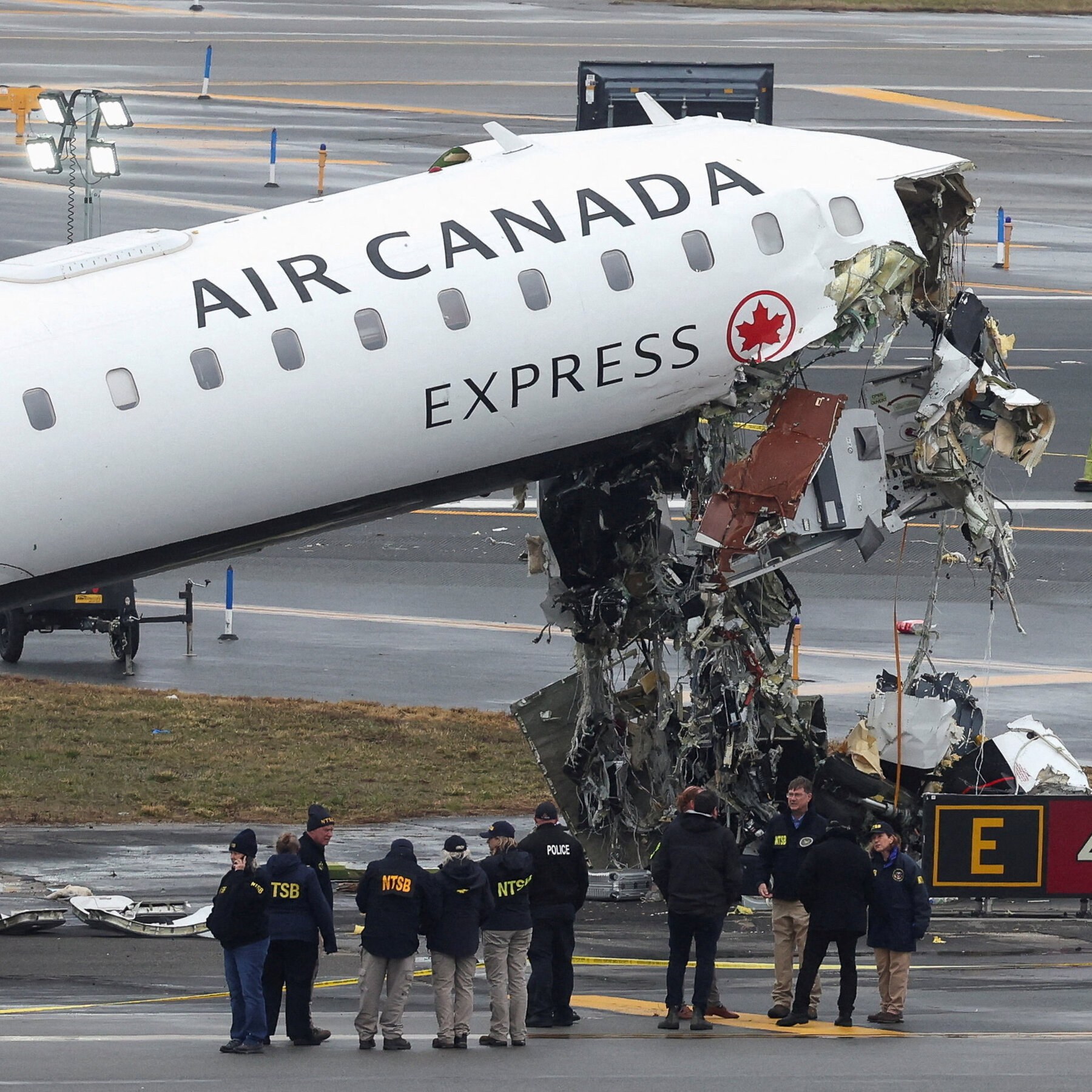
Two Dead, 41 Injured: The Tragic Nine-Second LaGuardia Crash Unfolds
- Two pilots of an airport emergency vehicle lost their lives in the LaGuardia crash.
- A total of 41 individuals were hospitalized following the high-speed collision.
- The emergency fire truck involved notably lacked a standard tracking device.
- Remarkably, all 72 passengers aboard the Air Canada jet survived the impact.
A Stark Intersect of Human Error, Technology Gaps, and Fortuitous Design Amidst Fog
LAGUARDIA CRASH—In the murky, rain-swept darkness of a late Sunday night, the seemingly impossible unfolded at New York’s LaGuardia Airport. An Air Canada jet, carrying 72 passengers and crew from Montreal, descended through dense fog, preparing for a routine landing on Runway 4. Simultaneously, a Port Authority Police Department fire truck, designated Truck 1, was traversing the airfield, part of a convoy responding to an unrelated incident. What transpired next was a nine-second sequence of mounting alarm, culminating in a catastrophic ground collision that would leave two dead and 41 injured.
The events leading to the LaGuardia crash, the airport’s first deadly incident in over three decades, revealed a confluence of factors: adverse weather, critical communication challenges, and a startling technological omission. Yet, amidst the wreckage and the human toll, an astounding outcome emerged. Despite the violent screech of metal on metal and the sheer force of the impact, not a single passenger on the commercial airliner perished, with only five remaining hospitalized by the week’s end.
This deep dive reconstructs the harrowing moments before and after the collision, examining the complex interplay of human decision-making, operational protocols, and the unforgiving physics of aviation accidents. It explores the systemic vulnerabilities exposed by the LaGuardia crash and the remarkable resilience that prevented a far greater tragedy, offering crucial insights into the relentless pursuit of aviation safety.
The Fateful Intersection: LaGuardia’s Runway 4 Under Siege
The late Sunday night air above LaGuardia Airport was thick with rain and fog, conditions that invariably elevate the stakes for all airport operations. On this particular night, two young Air Canada pilots, early in their careers, guided their jet carrying 72 passengers on a route flown more than 200 times a month from Montreal. Meanwhile, two 18-year veteran firefighters from the Port Authority Police Department were in Truck 1, part of a specially trained unit responding to a different emergency: a plane bound for Chicago was grounded with a strange odor on another part of the airfield. These disparate threads of aviation activity were about to converge catastrophically.Converging Paths on a Foggy Night
The LaGuardia crash marked a grim milestone, representing the first deadly accident at the airport in over three decades. This remarkable safety record underscores the inherent challenges of managing a busy urban airport, where precision, communication, and technology must align flawlessly to prevent disaster. Aviation safety experts consistently emphasize the ‘sterile cockpit’ concept and its ground operations counterpart, where clear communication and technological aids are paramount to preventing ground incursions. Such incidents remain a persistent concern for regulators like the Federal Aviation Administration (FAA), highlighting the critical role of ground safety protocols in dense operational environments. At the heart of this incident was the dangerous intersect of Runway 4 and Taxiway D, a common nexus of activity at a bustling airport. The stage was set for tragedy by the poor visibility, the rapid movements of both aircraft and emergency vehicles, and the human element. The initial response to the disabled Chicago-bound plane had drawn multiple emergency vehicles onto the airfield, creating a dynamic and complex environment for air traffic controllers to manage. Understanding the conditions and the personnel involved is crucial to grasping the near-miss that escalated into the LaGuardia crash, and the subsequent investigation would undoubtedly scrutinize every detail of this intricate setup.The Critical Seconds: Air Traffic Control’s Desperate Warning
The events of that late Sunday night narrowed down to a terrifying nine-second window, a period that would forever define the LaGuardia crash. As the Air Canada jet, moving at approximately 130 miles per hour, approached the intersection of Runway 4 and Taxiway D, a chilling realization struck the air traffic controllers in the tower. Two controllers, early in their overnight shift, watched in horror as Truck 1 veered onto the active runway, directly into the path of the landing airliner. Their desperate attempts to avert disaster were captured in a frantic broadcast that would later become a grim centerpiece of the investigation.A 130 MPH Collision Course
‘Stop, stop, stop, stop… Truck 1, stop… stop, stop!’ came the controller’s first urgent warning, seven seconds before impact. This desperate plea underscores the razor-thin margins in aviation, where human reaction time is pitted against the immense speed of modern aircraft. Just three seconds later, with the Air Canada jet still barreling down the runway, the controller’s voice cut through again: ‘Stop, Truck 1… stop!’ But by then, the collision course was irreversible. The series of events illustrates what air traffic control organizations, including the FAA, consistently identify as one of their most challenging roles: maintaining situational awareness across multiple moving elements in dynamic, low-visibility environments. The Air Canada jet, unable to swerve or brake in time, collided violently with Truck 1. The images and audio from those nine seconds paint a stark picture of a tragedy that unfolded rapidly, despite the best efforts of air traffic control. The speed of the jet, coupled with the dense fog and the truck’s unexpected maneuver, left no room for corrective action, cementing the moment as a critical case study in ground movement safety during the LaGuardia crash investigation.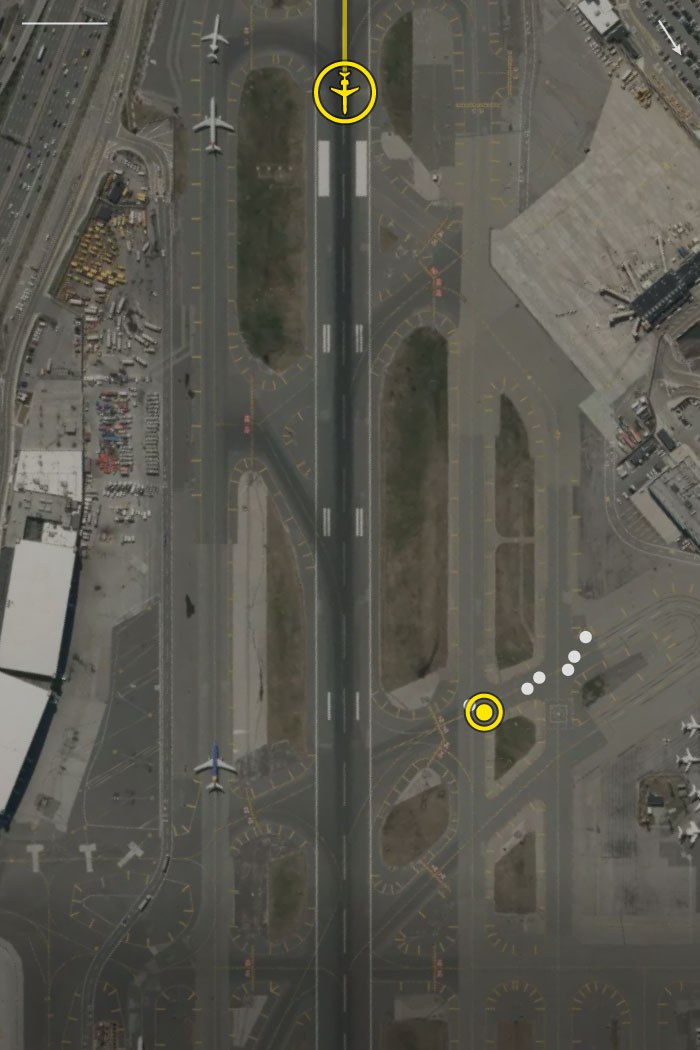
Amidst the Wreckage: The Remarkable Lack of Passenger Fatalities
The immediate aftermath of the LaGuardia crash was a scene of chaos and destruction. In the screeching collision of metal on metal, the two young pilots from the Port Authority Police Department’s Truck 1 lost their lives, becoming the direct fatalities of the tragic incident. Another 41 people were immediately rushed to hospitals with various injuries, highlighting the immense kinetic energy unleashed during the high-speed impact. Among the injured was a flight attendant, who, despite being belted to her seat, was forcefully thrown more than 300 feet from the point of impact, a testament to the sheer violence of the collision.The Human Cost and a Fortunate Outcome
Yet, for all the wreckage and the significant human toll, one fact stood out as nothing short of astounding: no passengers were killed. By the week’s end, only five individuals remained in the hospital, indicating that while many sustained injuries, most were not life-threatening. This remarkable survivability, given such a high-speed collision of heavy machinery, immediately became a focal point for aviation safety analysts. The fact that no passengers perished is a testament to significant advancements in aviation safety, including modern aircraft structural design and stringent safety standards championed by bodies like the National Transportation Safety Board (NTSB) and the Federal Aviation Administration (FAA) over decades. Emergency response coordination, involving veterans from the Port Authority Police Department’s specialized unit, also played a crucial role in evacuating the injured and securing the scene efficiently. This fortunate outcome underscores the layers of safety built into commercial aviation, even when unprecedented events like the LaGuardia crash occur.How Did a Missing Tracking Device Impact the LaGuardia Crash?
A crucial detail emerging from the LaGuardia crash investigation centered on the equipment of Truck 1. The specialized fire truck, designed for airport emergencies, was found to be lacking a tracking device — a piece of technology considered standard at many other airports. This absence immediately raised significant questions about situational awareness on the airfield, particularly given the adverse weather conditions prevailing that night. In an environment where every vehicle movement must be precisely monitored, a missing tracker represents a critical gap.Technology’s Critical Oversight
The absence of a tracking device on Truck 1 immediately drew scrutiny from aviation safety analysts, who have long advocated for universal adoption of advanced ground surveillance technologies across all airport operational vehicles. Organizations like the Air Line Pilots Association (ALPA) often emphasize the importance of such systems in preventing ground incursions, which remain a persistent threat to aviation safety. These devices, often integrated with Airport Surface Detection Equipment (ASDE-X) or other advanced ground radar systems, provide air traffic controllers with real-time, precise locations of all aircraft and vehicles on the airfield, acting as an invaluable layer of protection against collisions. The fact that a vital emergency vehicle, under the jurisdiction of the Port Authority of New York and New Jersey, operated without this ‘standard’ safety feature is a key element that likely hindered the controllers’ ability to fully track its movement and prevent its entry onto Runway 4. This oversight highlights a potential vulnerability in airport ground operations that the LaGuardia crash has brought into sharp focus.Lessons Learned and the Path to Enhanced Airport Safety
The LaGuardia crash, a harrowing blend of dense fog, urgent emergency response, and a fatal misstep, serves as a stark reminder of the complexities inherent in modern airport operations. It underscores how swiftly a chain of seemingly minor factors can escalate into catastrophic consequences, even in highly regulated environments. The confluence of low visibility, the presence of multiple emergency vehicles on the airfield, critical communication breakdowns, and the notable absence of a tracking device on the lead fire truck each contributed to the tragedy. Understanding these intricate layers is essential for preventing future incidents.Strengthening Ground Operations
Following incidents of this magnitude, the National Transportation Safety Board (NTSB) typically initiates comprehensive investigations. These inquiries aim not just at identifying the direct causes of the LaGuardia crash but also at uncovering systemic vulnerabilities. Such investigations often lead to critical recommendations for regulatory bodies like the Federal Aviation Administration (FAA) to enhance operational standards, review existing protocols, and mandate technological upgrades. The lessons drawn from the LaGuardia crash are likely to reinforce the need for advanced ground surveillance systems, improved communication protocols, and rigorous training for both air traffic controllers and ground personnel, ensuring all parties are equipped to navigate the dynamic and often challenging environment of a busy airport. The focus will undoubtedly be on strengthening every link in the safety chain to prevent another devastating LaGuardia crash in the future.Frequently Asked Questions
Q: What was the human toll of the LaGuardia crash?
The LaGuardia crash resulted in the tragic deaths of two pilots from the Port Authority Police Department’s fire truck. Additionally, 41 people, including passengers and crew from the Air Canada jet, were hospitalized, though only five remained by week’s end. Remarkably, none of the 72 passengers on the Air Canada flight lost their lives, a testament to aircraft design and emergency response protocols during the LaGuardia crash.
Q: What critical equipment was missing from the fire truck in the LaGuardia crash?
A key finding from the LaGuardia crash investigation was that the Port Authority Police Department fire truck, Truck 1, lacked a tracking device. Such devices are considered standard at many other airports and are crucial for air traffic controllers to maintain precise situational awareness of ground vehicles, especially during adverse weather conditions like the rainy and foggy night of the LaGuardia crash.
Q: How rare was a fatal accident at LaGuardia Airport?
The LaGuardia crash involving the Air Canada jet and the fire truck marked the first deadly crash at the airport in over three decades. This extended period of safety highlights the rigorous protocols and technological advancements typically in place. The incident spurred renewed scrutiny into how such a rare and tragic ground collision could occur, emphasizing the need for continuous improvement in preventing a future LaGuardia crash.
