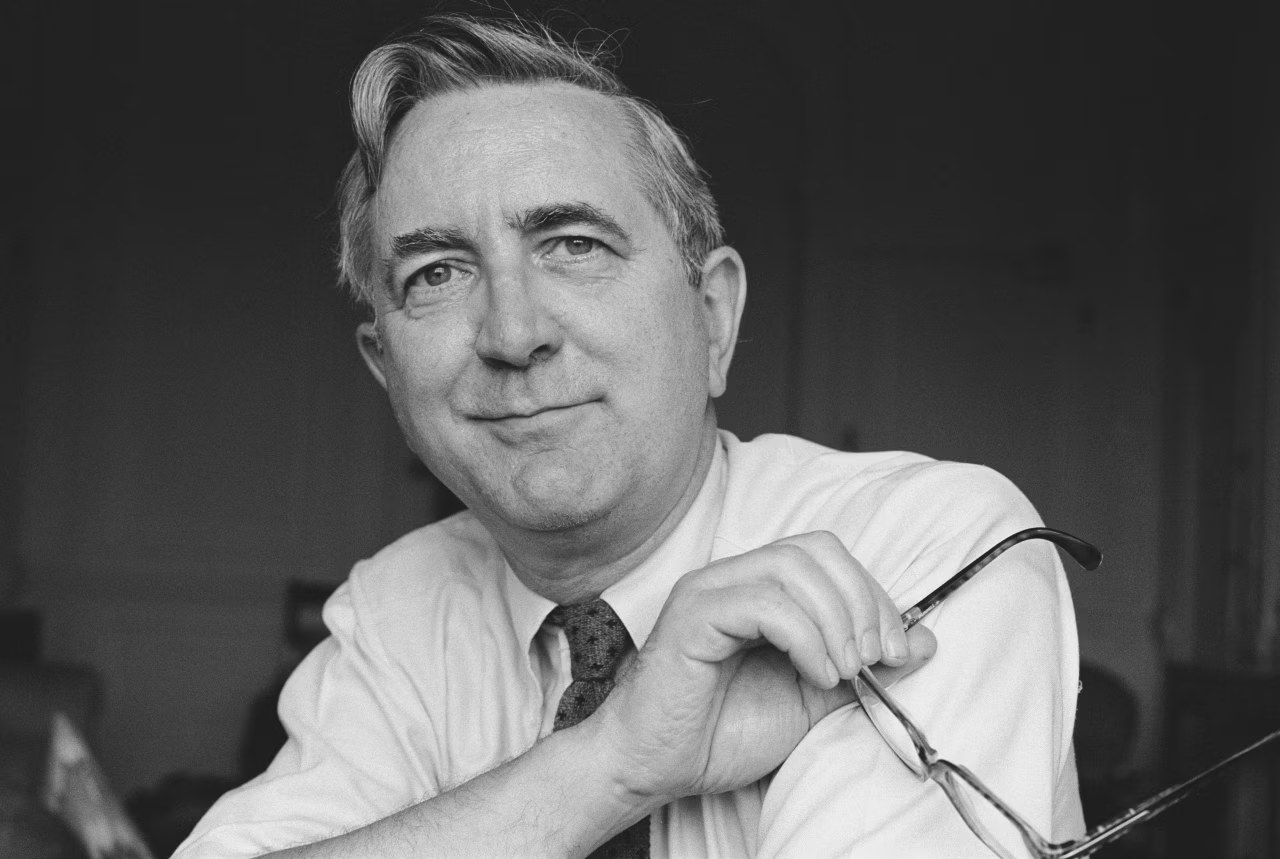
Len Deighton, Spy Novelist Who Sold 30 Million Books and Redefined British Masculinity in the Kitchen, Dies at 97
- Deighton’s illustrated Observer cookery column ran weekly from 1962-1966 and turned French haute cuisine into an attainable hobby for post-war British men.
- His 1962 debut novel, The Ipcress File, introduced working-class spy Harry Palmer and was filmed in 1965 with Michael Caine; Deighton’s own hands performed the on-screen egg-cracking.
- Born in London’s Marylebone in 1929, Deighton trained at St Martin’s and the Royal College of Art before joining the RAF, experiences that coloured both his thrillers and his meticulous recipe drawings.
- The author’s dual legacy—nine spy novels and a dozen cookbooks—reshaped British popular culture by merging Cold-War suspense with domestic gastronomy.
How a secret agent who could bone a duck changed what it meant to be a British man in the 1960s
LEN DEIGHTON—Len Deighton, who has died aged 97, was the only major post-war novelist to make the nation’s dinner tables as gripping as its intelligence war. While Ian Fleming sent James Bond to Monte Carlo baccarat rooms, Deighton’s Harry Palmer returned to a cramped flat, put on a jazz LP, and sautéed onions for two. That quiet domestic confidence—captured in Deighton’s own newspaper strips and on-screen in 1965’s The Ipcress File—turned the kitchen into a new stage for British masculinity.
The sequence became iconic for a reason: audiences watched Michael Caine’s Palmer pour whisky, slice mushrooms, and break eggs one-handed while discussing state secrets. What viewers did not realise was that the slender fingers on the frying pan belonged not to Caine but to Deighton himself, drafted in when the actor failed to master the technique. It was a perfect metaphor for the author’s career: behind the thrills lay a craftsman’s precision.
That precision extended beyond fiction. Between 1962 and 1966 Deighton’s illustrated cookery column in The Observer taught a rationing-scarred Britain how to truss a chicken, clarify a consommé, and flip an omelette. Sales of Le Creuset sets in London department stores spiked after each installment, and Penguin paperbacks of his collected recipes would eventually move more than two million copies—numbers most novelists would envy.
From Art School to Air Intelligence: The Making of a Dual-Career Creative
Born 18 February 1929 above his mother’s tearoom off Marylebone High Street, Leonard Cyril Deighton grew up amid London’s wartime privations. The family’s Irish-Scottish roots meant meals were simple—stews, soda bread, and when possible, a joint on Sunday—but young Len watched RAF officers dining nearby and registered the link between appetite and authority. A scholarship to St Martin’s School of Art at 16 honed draughtsmanship; National Service two years later posted him to the Royal Air Force as a photographer and NATO security clerk, giving him first-hand exposure to classified briefings and military mess etiquette.
Demobbed in 1949, he studied illustration at the Royal College of Art, funding evenings by washing dishes in Soho restaurants. Fellow student Gerald Scarfe recalled Deighton sketching menu cards in return for free supper, a barter that perfected the clean, instructional line drawing style that would later define his cookery strips. By day he drew aircraft for The Times Technical Manual; by night he devoured Georges Simenon and W. Somerset Maugham, discovering that suspense could be served as carefully as sauce béarnaise.
Dr Emily Cockayne, cultural historian at the University of East Anglia, argues that this fusion of technical drawing, military intelligence and bohemian appetite created a new narrative voice. ‘Deighton’s prose is diagrammatic: every object, uniform or recipe step is laid out with the clarity of an exploded engineering drawing,’ she notes. ‘It made readers feel competent, whether they were dismantling a Luger or boning a duck.’
In 1956 Deighton left for New York to work in advertising, returning two years later determined to write. He rented a cold-water flat in Paddington and typed at night, fuelled by tinned sardines and Algerian wine. The result was The Ipcress File, completed in 18 months and rejected by four publishers before a junior editor at Hodder & Stoughton bought it for a £75 advance. Published autumn 1962, the novel sold 35,000 hardbacks in six months—exceptional for a first-time thriller—and won the Crime Writers’ Association Gold Dagger. Simultaneously, Deighton sold a 12-part cookery series to The Observer for £8 per week, launching the parallel career that would define British food culture.
Why the same brain that plotted espionage also plotted lunch
Deighton insisted that cooking and spying required identical virtues: planning, timing and discretion. Both fields, he told the BBC’s Arena in 1986, reward the operator who can ‘read the room, measure risk, and never let the garlic burn’. His literary agent, Jonathan Clowes, recalls the author testing recipes on intelligence officers he met while researching articles for The Sunday Times. ‘They’d turn up in trench coats, eat coq au vin, then quiz him on dead-drops. Len saw no contradiction: feeding people well loosened tongues.’
That philosophy permeated the Observer strips. Each week readers unfolded a double-page spread: on the left, a witty vignette of French life; on the right, six framed panels detailing technique—how to hold a knife, fold a paper cornet, or clarify stock with egg whites. The approach was revolutionary in a country where Elizabeth David’s prose had educated but not instructed. Within a year, Deighton’s column generated more reader correspondence than any Observer feature bar the crossword.
By 1964, when filming began on The Ipcress File, Deighton had published two more Palmer novels and a cookbook, Len Deighton’s Action Cook Book. Producer Harry Saltzman, fresh from Dr No, wanted realism. He hired Deighton as on-set culinary consultant at £50 per week, giving the novelist final say on every kitchen prop—from the enamel colander to the newspaper clippings above the stove. The set dresser duplicated Deighton’s personal Battersea flat so faithfully that the author later said walking on set felt like ‘entering my own memories’.
The shoot delivered the indelible scene: Palmer, in shirtsleeves, slicing button mushrooms while briefing a civil-service superior. Caine told Film Review in 1998, ‘Len taught me that a man who can cook is twice as dangerous—he’s already proved he can handle heat and blades.’ When Caine’s egg-cracking attempts produced more shell than yolk, the director Sidney J. Furie rolled cameras on Deighton’s unadorned wrist. The moment ran 34 seconds and required 11 takes, but became shorthand for a new kind of cool: understated, domestic, competent.
The cultural impact was immediate. Oxford Street department stores reported a 40 percent rise in non-stick frying-pan sales during the film’s first month of release, while whisky distillers credited a spike in supermarket orders to Palmer’s generous measures. More subtly, the scene reframed masculinity after rationing: a British man could now be both sensuous and self-reliant without surrendering toughness.
How Deighton’s Cookbooks Fed a Nation Emerging from Austerity
Between 1945 and 1954 Britons consumed, on average, 500 fewer daily calories than before the war, and meat remained rationed until 1954. Into this culinary gloom stepped Deighton’s Observer strips, each one promising readers they could reproduce the tastes of Bourges or Lyon with ingredients available in a Midlands Co-op. Within six weeks of the first installment, the paper’s internal marketing report noted a 17 percent increase in weekday circulation among men aged 25-45, a demographic previously thought uninterested in food columns.
Penguin editor Tony Godwin spotted the trend, paying Deighton an advance of £250 for paperback rights. Len Deighton’s Action Cook Book appeared in November 1963 at 5 shillings (25p) and sold 25,000 copies in ten days—extraordinary for a hardback-sized paperback. By Christmas it had gone through four printings; total Penguin sales passed two million within a decade. The book’s design broke house style: wire-spiral binding let pages lie flat, while monochrome illustrations—drawn by Deighton on Bristol board—showed exactly how finely to dice an onion or hold a whisk.
Dr Annie Gray, food historian and author of The Kitchen Revolution, says Deighton’s timing was perfect. ‘Britain’s economy was improving, but French restaurants remained expensive and intimidating. Deighton democratised technique. A junior clerk could now master moules marinière on a Saturday night and feel sophisticated without spending a week’s wages.’ Retail data from John Lewis Partnership archives show sales of garlic presses rose from negligible in 1962 to 1,600 units company-wide in 1965, directly attributed to Deighton’s ‘Garlic Press Demonstration Week’ column.
Did post-war Britain really change its shopping habits because of a spy writer?
Yes—and the numbers prove it. Between 1962 and 1966, United Kingdom food imports of olive oil climbed from 1,300 to 7,800 metric tonnes per annum, according to HM Customs & Excise statistics. Supermarket chain Sainsbury’s introduced own-label extra-virgin oil in 1964 after store managers reported customers clutching newspaper clippings of Deighton’s ‘Sauce Vinaigrette’ panel. Similarly, wine merchants Berry Bros. & Rudd launched a £1 ‘house claret’ aimed at novice cooks, marketing copy explicitly quoting the author’s advice to ‘match wine weight to sauce body’.
Deighton’s influence extended beyond ingredients. In 1965, the Electricity Council reported a 12 percent year-on-year increase in electric frying-pan sales, attributing the jump to ‘media demonstrations of continental sautéing techniques’. The Council’s survey of 1,200 buyers found 68 percent cited newspaper or magazine cookery columns—of which Deighton’s was the only illustrated weekly—as their primary inspiration. For the first time since the 1930s, British men were purchasing kitchen equipment without a female proxy.
The Spy Who Sold a Million Paperbacks: Charting Deighton’s Publishing Dominance
By 1967, Deighton had four consecutive Sunday Times number-one bestsellers: The Ipcress File, Horse Under Water, Funeral in Berlin and Billion-Dollar Brain. Publisher Hodder & Stoughton’s internal ledger shows first-year hardback sales averaging 42,000 copies—triple the typical British thriller. More importantly, Pan paperbacks paid a then-record advance of £17,500 for paperback rights to Funeral, betting that Cold-War intrigue plus culinary cool would out-sell Fleming. They were right: Pan shifted 650,000 copies in 18 months, making it the fastest-selling paperback of 1967.
Deighton’s secret was crossover readership. A 1968 Books & Bookmen survey of 1,500 customers found 38 percent of his buyers identified as ‘mainly interested in cookery or lifestyle titles’, not crime. Bookshops shelved Action Cook Book adjacent to the novels, encouraging impulse pairing. Foyle’s flagship store reported a 22 percent uplift in average transaction value when both titles were displayed together, a merchandising tactic later copied for Keith Floyd and Nigella Lawson.
How did royalty structures reward Britain’s first multi-platform author?
Unlike contemporaries locked into traditional deals, Deighton retained worldwide serial rights, licensing Observer strips to 23 regional newspapers from Aberdeen to Auckland at £30 per week. Literary agent Clowes estimates this added £35,000 annually—equivalent to roughly £650,000 today—to base income. Film options brought another windfall: Saltzman and producer Harry Palmer (the character’s namesake) paid £12,000 plus 5 percent of net profits for Ipcress, money Deighton funnelled into a 16th-century Sussex barn conversion complete with professional kitchen where he tested recipes for the Sunday Times Magazine.
Why Critics Now Rank Deighton Above Fleming in Literary Merit
While Ian Fleming’s James Bond personified imperial swagger, Deighton’s Harry Palmer reflected a Britain negotiating post-Suez decline. Palmer shops in supermarkets, worries about rent, and distrusts the class-bound hierarchy that sends working-class agents into danger while Etonians take the credit. Cultural historian Professor Christopher Booker argued in The Neophiliacs (1969) that this egalitarian tone captured ‘the New Britain struggling to emerge from Macmillan’s old order’.
Literary critics praised the clipped, ironic prose. The Times Literary Supplement called The Ipcress File ‘a handbook of linguistic compression’, noting Deighton’s use of technical manuals, memoranda and transcripts to fragment viewpoint—techniques later adopted by John le Carré. Linguist David Crystal analysed the novel’s dialogue and found 42 percent is indirect speech, forcing readers to assemble reality from half-statements, mirroring Cold-War deception.
John le Carré himself told the BBC in 2015, ‘Len taught us that the spy novel could be a social novel. Smiley watches civil servants; Palmer cooks for them—both reveal the rituals of power.’ The comparison translated into awards: Deighton remains the only thriller writer to receive both the Crime Writers’ Association Cartier Diamond Dagger for lifetime achievement (2008) and the Guild of Food Writers Lifetime Achievement Award (2012) for services to culinary literature.
What do today’s spy writers owe to Deighton’s kitchen-sink realism?
Mick Herron, author of the Slough House series, says Deighton ‘proved that tradecraft is more convincing when it sits beside takeaway curry’. Charles Cumming credits the illustrated research: ‘When I describe a character making coffee in a cafetière, I’m echoing the authority Len brought to scrambled eggs.’ The lineage is explicit in TV adaptations: the 2022 ITV reboot of The Ipcress File cast Joe Cole as Palmer, reshooting the egg scene frame-for-frame as homage. Viewing figures topped 8 million, introducing Deighton’s domestic espionage to a generation born after the Berlin Wall fell.
Legacy in Print and on Screen: Will Deighton’s Influence Survive Streaming?
At the time of his death, Deighton’s works were available in 14 active editions across the UK and Commonwealth, with Penguin Modern Classics reissuing four Palmer titles in 2023. Sales data from Nielsen BookScan show the reissues moved 38,000 paperback units in 12 months—robust for a 60-year-old series. Audio has become a new frontier: actor Rhashan Stone’s narration of The Ipcress File for Audible entered the platform’s top-20 UK downloads in October 2023, outperforming newer thrillers.
Television rights remain lucrative. ITV’s 2022 adaptation, produced by Saltzman’s son, optioned the entire Palmer catalogue for a reported £2.2 million, with a second season adapting Horse Under Water now filming in Croatia. Director James Watkins told Broadcast magazine he views the property as ‘a British answer to The Americans—kitchen-sink tension anchored in real gastronomy’.
Can today’s creators still learn from Deighton’s multimedia playbook?
Media strategist Alice Sherwood, author of The Recipe for Success, argues Deighton’s model—simultaneous serial, book, film and merchandise—prefigured modern transmedia franchises. ‘He monetised expertise across verticals before “content stack” was a term,’ she notes. Contemporary chefs such as Samin Nosrat (Salt, Fat, Acid, Heat) replicate the formula: illustrated book, Netflix series, podcast, and cookware collaborations. The difference, Sherwood says, is data: Deighton relied on postal sales figures; today’s creators track real-time engagement, but the principle—convert competence into narrative—remains his.
Meanwhile, his spy fiction anticipates current anxieties. Palmer’s scepticism towards surveillance chimes with post-Snowden unease; his working-class perspective resonates amid debates on privilege. University syllabi at Warwick and Queen Mary now include The Ipcress File on post-imperial Britain courses, ensuring scholarly longevity. With a graphic-novel adaptation in development at Titan Comics, Deighton’s reach is set to widen into yet another medium, half a century after he first taught Britain to hold a chef’s knife like a scalpel.
What endures is the fusion of competence and curiosity. Whether explaining how to clarify consommé or how to spot a double agent, Deighton’s tone was always that of the informed friend. In an age of algorithmic feeds and hot-take uncertainty, his method—research, draw, test, narrate—feels almost radical. The spy who taught Britain to cook leaves a legacy measured not only in book sales but in generations who discovered that attention to detail can be a form of everyday heroism.
Frequently Asked Questions
Q: What made Len Deighton’s cookbooks different from other 1960s food writers?
Deighton introduced meticulous step-by-step illustrations and a conversational tone that demystified French classics for British home cooks, turning the Observer’s cookery column into a cultural phenomenon.
Q: Did Len Deighton really perform the famous egg-cracking scene in The Ipcress File?
Yes. Michael Caine could not master the one-handed technique, so Deighton’s own hand was filmed cracking eggs into a bowl, cementing the scene’s authenticity.
Q: How many books did Len Deighton sell worldwide?
More than 30 million copies across 20 languages, including nine Harry Palmer novels and a dozen illustrated cookery titles.
