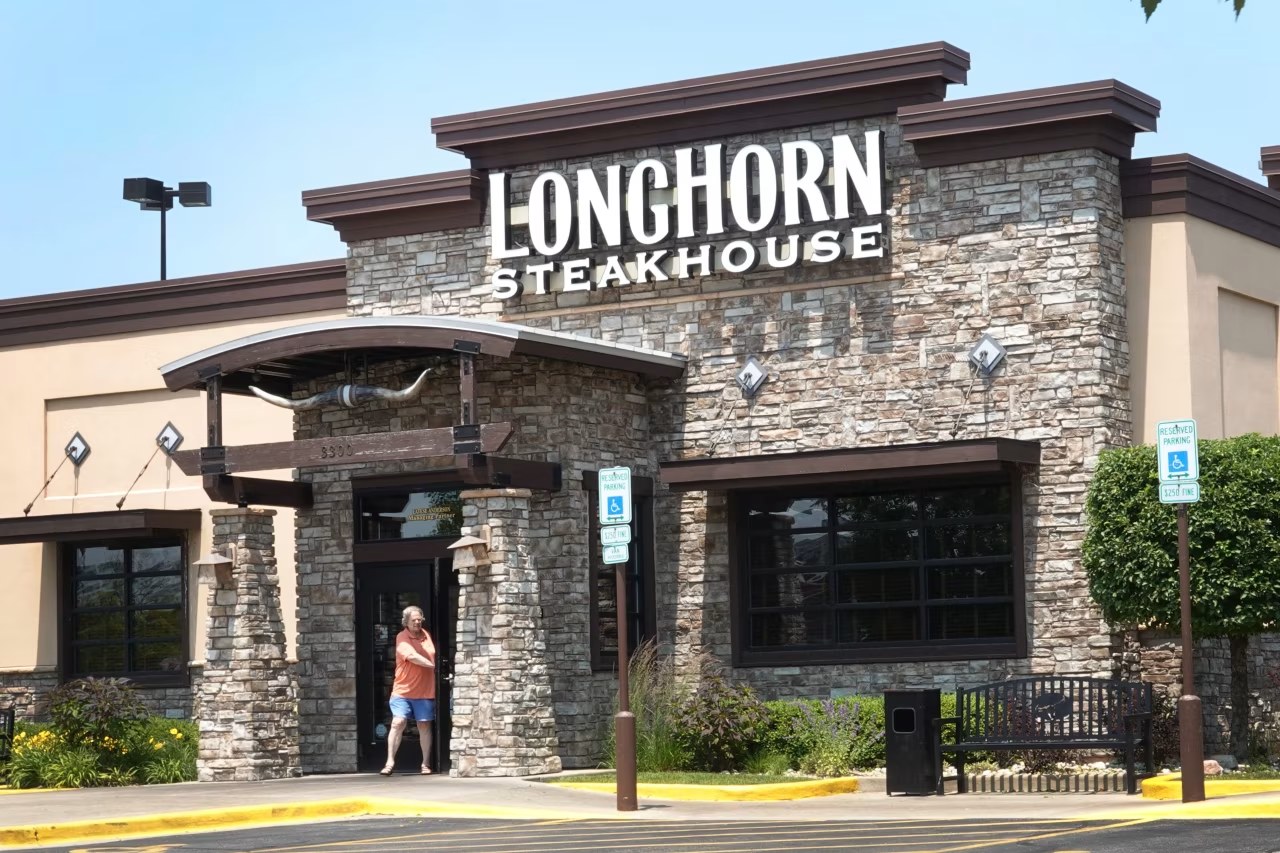
LongHorn Steakhouse Comps Leap 7%, Powering Darden’s Q3 Sales Past $3.1 Billion
- LongHorn Steakhouse same-restaurant sales surged 7% versus 1.5% at Olive Garden.
- Company-wide revenue rose 4.2% to $3.1 billion, beating consensus by $40 million.
- Management blamed three fewer weeks of Olive Garden promotions and winter storms for the chain’s modest gain.
- Darden reiterated full-year EPS guidance of $8.60–$8.90 and total sales growth of 5.5–6%.
Investors cheer steakhouse momentum even as Italian chain’s traffic stalls.
DARDEN RESTAURANTS—Darden Restaurants served up a classic tale of two brands Thursday: steak-and-rib traffic at LongHorn Steakhouse vaulted 7% in the fiscal third quarter, while Olive Garden’s familiar pasta promos fell flat, growing comps just 1.5% and leaving $25 million in potential sales on the table.
The Orlando-based operator of more than 1 900 restaurants still managed to top Wall Street’s top-line forecast, posting $3.1 billion in quarterly revenue, up 4.2% year-over-year. Executives told analysts that disciplined cost controls held restaurant-level margin flat at 16.4% despite wage inflation running above 5%.
Shares in the S&P 500 restaurant bellwether rose 2.3% in after-hours trading as investors bet that LongHorn’s momentum—and an imminent summer advertising blitz—can re-accelerate Olive Garden before the crucial Father’s Day and back-to-school seasons.
LongHorn Steakhouse Outpaces Industry with 7% Comp Gain
LongHorn Steakhouse has quietly become Darden’s growth engine. The 560-unit Western-themed chain posted a 7% same-restaurant sales increase in Q3, its fastest pace since 2018 and well above the 3.2% industry average tracked by Black Box Intelligence.
CEO Rick Cardenas told analysts that weekday lunch and the $16.99 “Dinner for Two” bundle drove traffic positive 4.3%, outpacing check growth of 2.6%. “Guests are trading up from fast-casual burgers to our 11-ounce sirloin,” Cardenas said, noting that LongHorn now generates $4.5 million in average-unit-volume, up from $3.9 million pre-pandemic.
Rural markets shine
Company data show LongHorn comps beat the casual-dining benchmark most in smaller metros—think Billings, Montgomery, and Lubbock—where competitors shuttered locations during Covid-19. BTIG analyst Peter Saleh estimates LongHorn captured roughly 200 basis points of market share in those trade areas over the past 24 months.
The chain’s commodity basket rose only 2% year-over-year, helped by contracted beef prices through calendar 2024. That cost tailwind allowed Darden to expand LongHorn’s store-level margin by 90 basis points to 19.1%, a record for the brand. With 45 new units slated for fiscal 2025, LongHorn is on track to eclipse $2.8 billion in annual system-wide sales.
Industry watchers credit Darden’s data-driven menu engineering. LongHorn’s limited-time “Steak Legend” line—flavors like Nashville Hot Ribeye—carries a 72% food-cost markup versus 64% for core steaks, according to Restaurant Research analyst David Tarantino. Digital ordering, still only 12% of sales, grew 40% year-over-year, lifting off-peak capacity without adding labor hours.
Looking forward, executives plan to test rooftop pickup shelves in suburban Dallas and Tampa this summer, shaving five minutes off wait times and potentially adding two weekday turns per table. If successful, the format could roll out to 200 locations by 2026, adding an estimated $125 000 per store in high-margin incremental sales.
Olive Garden Miss Stems From Fewer Promotions and Winter Storms
Olive Garden’s 1.5% comp increase fell short of internal forecasts by 150 basis points, a miss that CFO Raj Vennam attributed to two controllable factors: the company scaled back unlimited breadstick promotions and ran three fewer weeks of $6 Take Home entrées versus the prior year.
Management estimated the reduced promotions sliced 80 basis points off comps, while severe winter weather in January and February clipped another 50 basis points. “We chose profit over traffic,” Vennam said, pointing to a 40-basis-point rise in Olive Garden’s menu mix from higher-margin items such as the $17.99 Chicken Alfredo family bundle.
Guest count pressure
Traffic declined 0.8% even as average check rose 2.3%, a reversal from Q2 when both metrics were positive. Technomic senior principal David Henkes says Olive Garden’s core guests—suburban families earning $65 000–$90 000—remain value-sensitive. “When McDonald’s and Taco Bell push $5 meals, casual dining loses the penny-pincher,” Henkes notes.
Still, Olive Garden’s 875 restaurants remain highly profitable: store-level margin held at 18.7% as hourly labor improved 30 basis points thanks to new scheduling software. The chain’s off-premise mix stayed elevated at 28% of sales, double 2019 levels, cushioning dine-in volatility.
The promotional calendar is already shifting. March saw the return of “Buy One, Take One” for $13.99, and April brings back the Never-Ending Pasta Bowl at $14.99 with a required beverage purchase. Internal tests show the promo lifts total check average 18% and drives a 5% traffic bump in the first four weeks, according to Mahoney.
Another headwind: grocery deflation. Supermarket pasta sauce prices fell 6% year-over-year in March, Nielsen data show, widening the cost gap between cooking at home and dining out. Olive Garden’s value messaging must now overcome both cheaper groceries and aggressive fast-food deals, a dynamic that could linger into summer.
Can Olive Garden Recapture Traffic Before Peak Season?
Looking ahead, Darden marketing chief Melissa Mahoney said Olive Garden will lean into “Never Ending Pasta Bowls” starting in May, supported by a refreshed television campaign starring actress Jennifer Coolidge. The promotion historically lifts traffic 3–5% in its first four weeks, according to company data.
Management is also accelerating remodels—75 locations will get Tuscan farmhouse facades and new bar areas by August, up from 50 originally planned. Stifel analyst Chris O’Cull estimates remodeled stores post 2–3% comp lifts within a year, adding roughly $35 million in system-wide sales.
Commodity outlook
Chicken and wheat contracts are locked through calendar-year-end at inflation below 2%, giving the brand room to reintroduce value bundles without compressing margin. Darden expects Olive Garden comps to rebound to 3–4% in Q4, a forecast that assumes no major weather disruptions and a modest lift from Easter shift.
If Olive Garden hits that range, the segment would contribute about $5.4 billion in annual revenue, cementing its status as Darden’s cash cow even as LongHorn steals the growth spotlight.
Digital engagement will be key. Olive Garden’s app now hosts 11 million loyalty members, up 25% year-over-year, and push-notification redemptions run 15% versus 8% for e-mail blasts. Mahoney plans to beta-launch a “Pasta Passport” game in July that rewards frequent visits with free appetizers; early tests in Atlanta lifted repeat visits 9% among Gen-Z users.
Off-premise innovation continues. The chain is piloting curbside pickup in Orlando and Dallas where guests can remain in their cars; employees bring orders out in heated bags within three minutes of arrival. If scaled nationwide, management believes curbside could add $200 million in annual sales by capturing time-starved parents who want Italian food without leaving the carpool lane.
Darden Keeps Full-Year Targets Unchanged Amid Macro Fog
Darden left its fiscal 2024 guidance intact: total sales growth of 5.5–6%, same-restaurant growth of 3–3.5%, and diluted net earnings per share from continuing operations of $8.60–$8.90. The midpoint implies a 9% profit increase on a 53-week year, modest by historical standards but prudent given consumer uncertainty.
Executives cited three macro headwinds: California’s $20 fast-food wage (effective April) could pressure labor benchmarks; student-loan repayments resume for 43 million Americans; and grocery deflation makes home-cooking cheaper. Still, CFO Vennam argued Darden’s scale—$11.4 billion in annual purchasing—provides “unmatched pricing power” with suppliers.
Capital allocation
The board approved a new $1 billion share-repurchase authorization, replacing the prior $500 million program with $175 million remaining. Free cash flow guidance of $1.1–$1.2 billion comfortably covers capital expenditures of $550 million, dividend payments of $550 million, and the buybacks. Net debt to adjusted EBITDA stands at 2.3×, below the 2.5× target, giving balance-sheet flexibility for opportunistic acquisitions.
Commodity inflation is cooling. Darden now expects basket costs to rise just 2.5% in fiscal 2024, down from 3% forecast last quarter. Beef, 24% of purchases, is locked through December at 1% deflation; seafood contracts are flat, while produce inflation has eased to 4% from double digits last summer.
Labor inflation remains sticky at 5.5%, but management sees relief ahead. The company is piloting AI-driven scheduling in 200 Olive Garden locations that reduces overtime hours 8% and saves roughly $12 000 per store annually. If rolled out system-wide, the tech could trim 30 basis points from restaurant-level labor costs, equating to $25 million in operating profit.
Real-estate flexibility offers another cushion. Darden owns the land and building at 42% of its locations, an unusually high ratio for casual dining. Sale-leaseback deals could unlock $900 million in liquidity at cap rates near 5.5%, though executives stressed they have “no immediate plans” and would only consider disposals at cap rates below 5%.
What Wall Street Signals Say About Darden’s Next Move
Despite Olive Garden’s Q3 hiccup, most analysts remain constructive. Barclays lifted its price target to $175, implying 12% upside, citing LongHorn’s unit expansion runway and Darden’s 2.8% dividend yield. Of 22 covering firms, 16 rate shares Overweight or Buy.
Options markets imply a 5.5% post-earnings swing, below the 6.2% average over the past eight quarters. Short interest sits at just 2.1% of float, suggesting limited bearish bets. Evercore ISI warns the biggest risk is “macro shock” rather than execution, noting casual-dining stocks historically underperform when unemployment claims rise more than 15% year-over-year.
Valuation snapshot
At 17.5× forward EPS, Darden trades at a 10% discount to its five-year median and a 25% discount to high-growth burger rivals. If management delivers the high end of guidance—$8.90 EPS—shares would fetch 16×, a level that historically attracts income funds. The next catalyst arrives in late June when Darden hosts an investor day outlining fiscal 2025 unit growth plans.
Insider activity is modestly bullish. Directors purchased $1.2 million in stock during March at an average price of $154, their first open-market buys since 2020. Executive compensation remains tied 60% to EPS and 40% to same-restaurant sales, aligning leadership with shareholders.
Quant funds have increased net exposure by 18% since the earnings release, according to Nomura’s flow data, attracted by low volatility and stable dividends. Long-horizon funds like T. Rowe Price have trimmed stakes, citing limited upside if macro softens, but income-oriented ETFs continue to add shares for the 2.8% yield and 15-year dividend growth streak.
Looking ahead, options traders see modest upside. July $165 calls are priced at $3.50, breakeven at $168.50, or 5% above Thursday’s close. Implied volatility of 22% sits below the 27% average since 2020, suggesting complacency. Any guidance raise or acceleration in LongHorn unit growth could trigger a volatility spike and force dealers to hedge, creating additional buying pressure.
Frequently Asked Questions
Q: What drove Darden’s third-quarter sales increase?
A 7% same-restaurant jump at LongHorn Steakhouse offset softer Olive Garden traffic, pushing total quarterly revenue up 4.2% to $3.1 billion.
Q: Why did Olive Garden underperform in Q3?
Executives said the chain ran three fewer weeks of limited-time price promotions plus widespread winter storms kept diners home, trimming comps to 1.5%.
Q: Is Darden raising its full-year outlook?
Management reiterated annual guidance of $8.60–$8.90 EPS and 5.5–6% total sales growth, citing stable commodity inflation near 3% for the fourth quarter.
