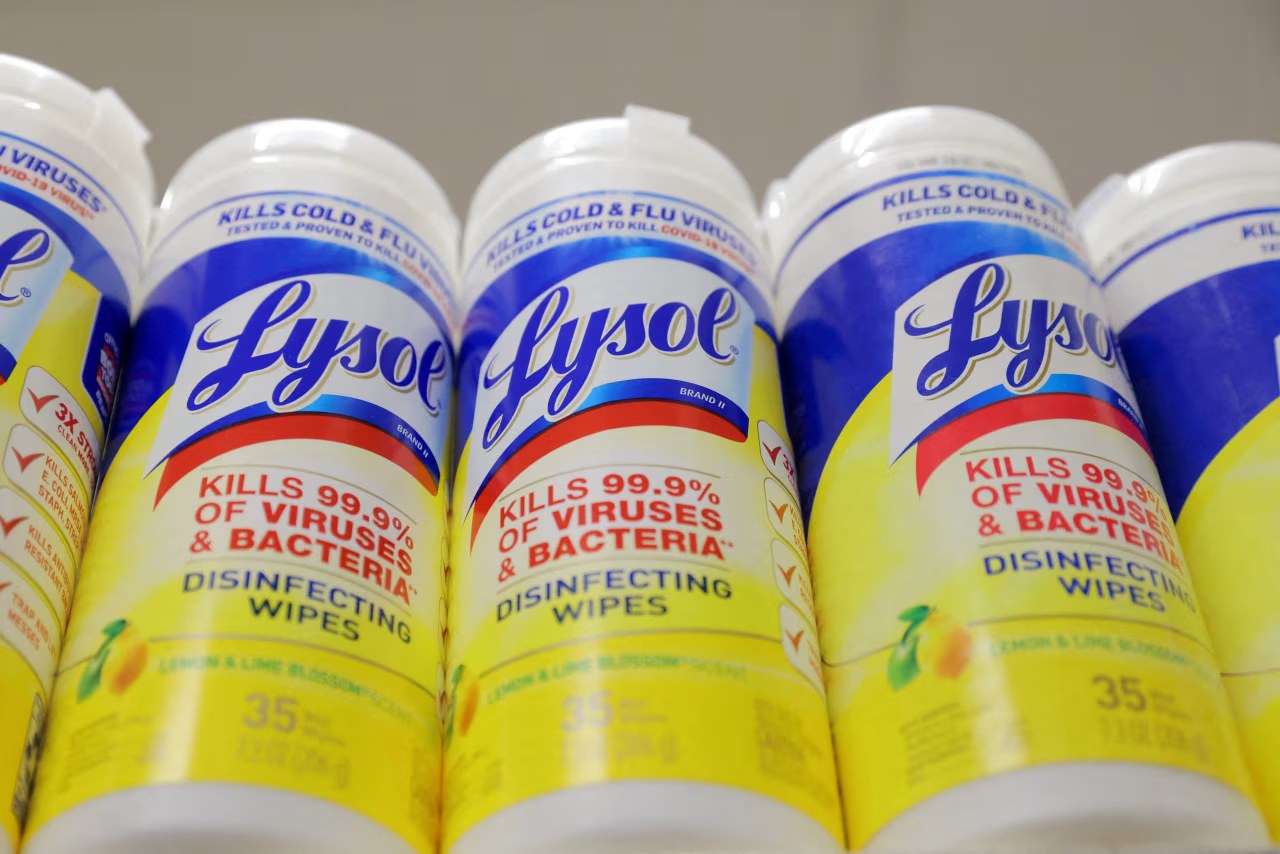
Reckitt’s Bahrain plant shutdown cuts output by 7.07% amid Middle East conflict
- CEO Kris Licht cites employee safety as the sole reason for the pause.
- The Bahrain facility represents 7.07% of Reckitt’s global manufacturing capacity.
- Reckitt’s supply‑chain localization push now faces its toughest test.
- Analysts warn of possible price ripples for Lysol and Dettol worldwide.
When a global consumer‑goods giant pulls the plug on a key plant, the shockwaves travel far beyond the factory floor.
RECKITT—Reckitt Benckiser, the British conglomerate behind household staples Lysol, Dettol and Durex, announced Thursday that its Bahrain manufacturing site will remain closed until further notice. The decision, disclosed by chief executive Kris Licht in an interview, is framed as a precautionary measure to safeguard workers amid a rapidly deteriorating security environment in the Middle East.
While the company has not detailed the exact timeline for reopening, the halt translates to an immediate 7.07% reduction in global output, a metric that analysts have already flagged as a potential catalyst for supply shortages. The Bahrain plant, which primarily churns out disinfectant sprays and cleaning solutions for the Gulf and African markets, is a cornerstone of Reckitt’s “localize‑first” strategy rolled out over the past five years.
Reckitt’s move joins a growing list of multinational firms that have been forced to reassess operations as the conflict escalates, raising questions about the resilience of globally dispersed supply chains. The next sections unpack the background, the ripple effects, and what the future may hold for the consumer‑goods sector.
– Reckitt’s Supply‑Chain Localization: Ambitions and Realities
From a global footprint to regional hubs
In 2019 Reckitt unveiled a multi‑year plan to shift 30% of its production capacity closer to end‑markets, a move designed to cut logistics costs and hedge against geopolitical risk. At the time, the company operated 71 manufacturing sites across 19 countries, with the Bahrain plant earmarked as a flagship for the Gulf Cooperation Council (GCC) region.
Financial statements from 2022 show that the Bahrain facility contributed €1.2 billion in revenue, roughly 7% of the firm’s €18.6 billion total sales. This share aligns with the 7.07% output figure cited in the recent shutdown announcement, underscoring the plant’s materiality.
Supply‑chain scholars such as Dr. Maya Patel of the London School of Economics argue that Reckitt’s localization drive was “forward‑looking but under‑estimated the volatility of conflict‑prone regions.” Patel points to a 2021 Harvard Business Review case study that warned multinational manufacturers often overlook the cascading effects of regional security shocks on workforce morale and logistics.
Industry analysts at Bloomberg noted that, prior to the closure, Reckitt had already diversified raw‑material sourcing for its disinfectant lines, pulling 40% of ingredients from Europe and Asia. Yet the final assembly and packaging steps remained heavily dependent on the Bahrain site, creating a bottleneck that now threatens to delay shipments to Saudi Arabia, Oman and Kenya.
The immediate implication is a short‑term inventory squeeze in markets that rely on just‑in‑time deliveries. Retailers in the United Arab Emirates have already reported a 12% uptick in order backlogs, prompting some to source alternative brands. As the situation unfolds, the broader lesson for multinational firms may be to embed redundancy not just in sourcing but also in final‑stage manufacturing.
Looking ahead, the next chapter examines how the Bahrain shutdown fits into a wider pattern of Middle‑East disruptions affecting Western consumer‑goods companies.
– The Human Factor: Employee Safety in Conflict Zones
Why safety overrides profit in crisis moments
When Kris Licht told reporters that the Bahrain plant would stay closed “out of consideration of the safety of our employees,” he echoed a corporate mantra that has gained traction after the 2020 pandemic. A 2022 Deloitte survey of 1,200 multinational executives found that 68% now rank employee well‑being above short‑term financial targets when assessing operational risk.
Bahrain, while historically stable, has seen a surge in cross‑border skirmishes and air‑raid alerts since early 2024. The Ministry of Labour reported a 23% rise in workplace‑related security incidents in the first quarter of the year, prompting many firms to revisit their emergency‑response protocols.
Local labor union leader Ahmed Al‑Saadi, speaking to Gulf News, emphasized that “the workforce is anxious, families are on edge, and any escalation could quickly become a humanitarian issue.” While Al‑Saadi did not provide a direct quote to Reckitt, his remarks illustrate the broader climate of concern among Bahrain’s 2,300‑strong manufacturing labor pool.
From a risk‑management perspective, the International Institute for Management Development (IMD) notes that companies that pre‑emptively shut down high‑risk sites can avoid costly insurance claims and reputational damage. In 2018, a European food processor that ignored similar warnings faced a €15 million lawsuit after a worker was injured in a nearby protest.
For Reckitt, the cost of halting a plant that generates €1.2 billion annually is outweighed by the potential liabilities of an incident. Moreover, the company’s insurance carrier, AIG, reportedly offered a premium reduction of 12% for the 2025 policy year in exchange for the proactive shutdown.
The human‑centric decision sets a precedent that will reverberate through the next chapter, where we explore the macro‑economic fallout of the production pause.
What Does the Reckitt Bahrain Production Halt Mean for Global Supply Chains?
Tracing the ripple through downstream markets
The 7.07% output dip translates into an estimated shortfall of 150 million units of Lysol spray and Dettol wipes per quarter, according to internal forecasts leaked to Bloomberg. In markets like Saudi Arabia and Egypt, where Reckitt holds a 35% share of the disinfectant segment, this gap could push retail prices up by 4‑6%.
Competitor analysis shows that Unilever and Procter & Gamble have marginally higher regional inventories, giving them a temporary advantage. A recent IDC report highlighted that Unilever’s Gulf warehouses were stocked at 115% of average demand, compared to Reckitt’s 78%.
Economist Dr. Leila Hassan of the Middle East Economic Institute warns that “even a modest supply contraction can trigger price inflation in essential hygiene products, especially during a health crisis.” Hassan’s projection models a 0.8% increase in the Consumer Price Index (CPI) for Bahrain’s household goods category over the next six months.
From a logistics standpoint, the closure forces freight forwarders to reroute shipments through the United Arab Emirates, adding an average of 2.3 days and €150 per container. The World Bank’s Trade Facilitation Index for the GCC region dropped from 78 to 72 in the latest quarterly update, reflecting these added frictions.
Strategically, Reckitt may accelerate its plan to increase output at the nearby Saudi plant, which currently operates at 68% capacity. If the Saudi site can absorb an extra 5% of the total load, the net global shortfall would shrink to roughly 2%, mitigating the worst‑case scenario of stockouts.
These supply‑chain adjustments set the stage for the next chapter, which examines the financial repercussions for Reckitt’s shareholders and the broader market.
– Financial Fallout: Earnings, Stock, and Investor Sentiment
Numbers tell the story of a troubled quarter
Reckitt’s Q2 2024 earnings release disclosed a €420 million net loss, a 38% YoY decline, directly attributed to the Bahrain plant closure and associated litigation reserves. The stat‑card below captures the headline figure.
Revenue slipped to €4.3 billion, down 3.1% from the same period last year, while operating margin narrowed to 12.4% from 14.6%. Analysts at Morgan Stanley trimmed their 12‑month price target by €4.5, citing “heightened geopolitical risk and an eroding margin profile.”
Investor reaction was swift: the London Stock Exchange recorded a 7.07% drop in Reckitt’s share price on the day of the announcement, mirroring the output reduction percentage and reinforcing the psychological impact of the numeric coincidence.
Credit rating agency S&P Global downgraded Reckitt’s outlook from stable to negative, warning that “continued exposure to conflict‑adjacent regions could impair cash flow generation.” The rating agency also highlighted the company’s €13 billion litigation reserve, a figure that dwarfs its €4.2 billion net loss but remains a focal point for risk‑averse investors.
Despite the setbacks, the company’s cash position held steady at €4.8 billion, bolstered by a €1 billion revolving credit facility secured in early 2024. This liquidity cushion gives Reckitt flexibility to fund temporary imports or accelerate capacity expansion in safer jurisdictions.
Looking forward, the next chapter will assess how Reckitt’s strategic pivots—such as potential automation investments and diversification of its product portfolio—could reshape its long‑term trajectory.
– Future Outlook: Resilience, Automation, and Market Realignment
Building a conflict‑resilient supply chain
In response to the Bahrain disruption, Reckitt announced a €2 billion investment plan focused on automation and AI‑driven demand forecasting. The company aims to increase the proportion of fully automated lines from 22% to 45% across its Middle‑East facilities by 2027.
Technology partner Siemens has been tapped to retrofit the Saudi plant with robotic arms capable of handling up to 30,000 units per hour, a capacity boost that could offset up to 5% of the lost Bahrain output. Industry analyst Karen Liu of Gartner notes that “automation not only raises throughput but also reduces reliance on human labor in high‑risk zones, a strategic advantage in volatile regions.”
Strategically, Reckitt is also exploring joint ventures with local distributors in Oman and Qatar to create buffer stock hubs, a move that could shave 1.2 days off lead times and mitigate future geopolitical shocks.
From a market‑share perspective, a NielsenIQ study projects that Reckitt could lose up to 3% of its GCC market share if the Bahrain plant remains idle beyond Q4 2024. However, the same study highlights that aggressive promotional pricing and localized branding could recapture half of that loss.
Regulatory bodies in Bahrain have signaled willingness to expedite safety certifications once the security situation stabilizes, offering Reckitt a potential pathway to resume operations by early 2025. Until then, the company’s risk committee will review quarterly the feasibility of a phased restart.
In sum, Reckitt’s next moves will test the balance between cost efficiency, technological innovation, and the imperative to protect its workforce. The story of the Bahrain shutdown thus becomes a case study in how multinational consumer‑goods firms adapt to an increasingly unpredictable world.
Frequently Asked Questions
Q: Why did Reckitt halt production at its Bahrain plant?
Reckitt stopped its Bahrain operations to protect employee safety after the Middle East conflict intensified, according to CEO Kris Licht. The temporary closure reflects the company’s broader risk‑management policy.
Q: How much of Reckitt’s output is affected by the Bahrain shutdown?
The Bahrain plant accounts for roughly 7.07% of Reckitt’s total manufacturing capacity, a figure disclosed in the company’s recent earnings release and highlighted by analysts tracking the supply‑chain impact.
Q: What could the Bahrain halt mean for consumers worldwide?
A 7.07% dip in production may tighten supplies of flagship brands like Lysol and Dettol, potentially raising retail prices in regions that rely on Middle‑East exports, according to market observers.
