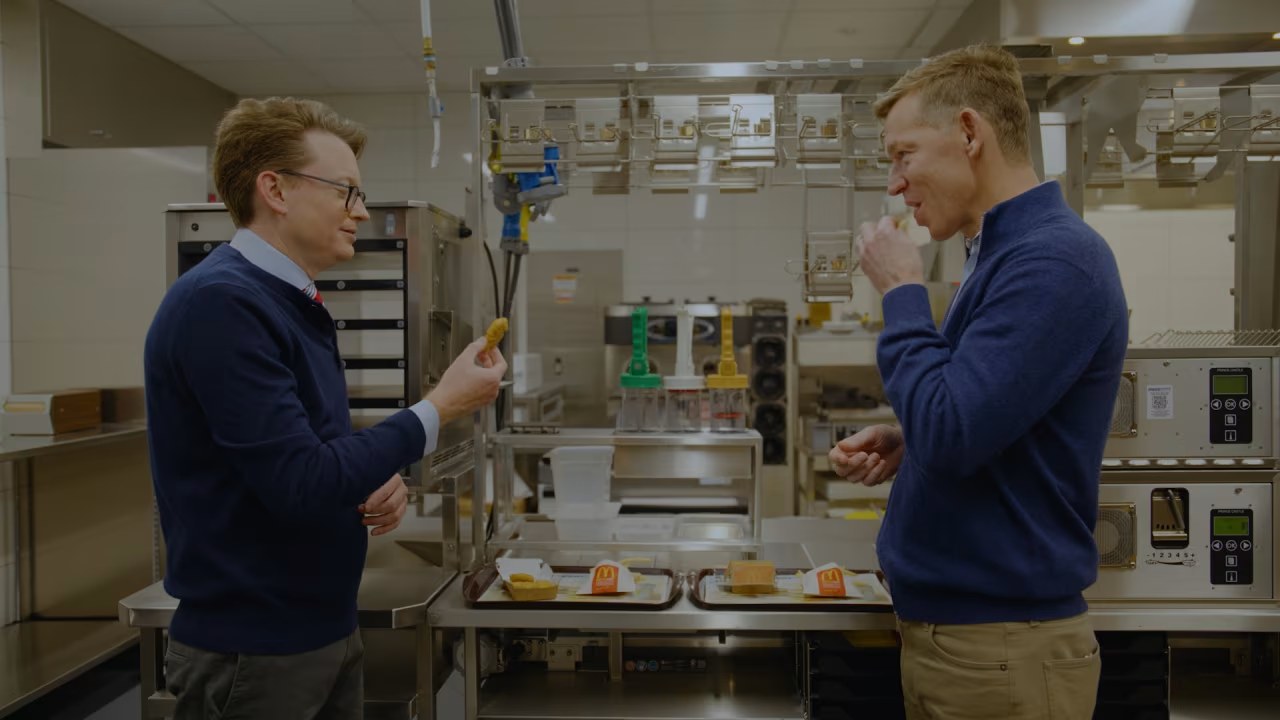
McDonald’s CEO Chris Kempczinski Addresses Viral Burger Taste Test Backlash
- McDonald’s CEO Chris Kempczinski has spoken about a viral burger taste test video that drew significant online backlash.
- This marks his first interview since the incident, discussing his approach to social media engagement.
- The CEO expressed a willingness to appear on camera again despite the public reaction.
- The situation highlights the delicate balance companies must strike with CEO visibility in the digital age.
The digital landscape presents unique challenges for corporate leadership, where even routine actions can spark widespread commentary.
MCDONALD’S—In the fast-paced world of corporate communications, a simple act like a CEO tasting a burger can explode into a viral sensation, complete with its own backlash. McDonald’s Chief Executive Chris Kempczinski recently found himself at the center of such a storm following a video of his burger taste test. The incident, which quickly circulated across social media platforms, prompted a significant public reaction, underscoring the intense scrutiny faced by top executives in the digital era.
This particular event triggered a wave of commentary and criticism, turning a seemingly innocuous corporate video into a subject of widespread debate. The backlash itself became a story, prompting questions about corporate transparency, authenticity, and the effectiveness of social media strategies employed by major brands. The digital echo chamber amplifies both praise and criticism, making every executive action a potential landmine.
In his first public comments addressing the controversy, McDonald’s CEO Chris Kempczinski sat down with The Wall Street Journal. This interview provided a platform for him to discuss his perspective on the viral incident, the ensuing public reaction, and his future approach to engaging with audiences through digital channels. The conversation delved into the nuances of managing a brand’s public image when its highest leader is in the spotlight.
Navigating the Viral Storm: Kempczinski’s First Interview
The Genesis of the Backlash
The stir began with a video featuring McDonald’s CEO Chris Kempczinski engaged in a burger taste test, an act intended perhaps to showcase company products or leadership engagement. However, once released and amplified across social media, the footage unexpectedly ignited a firestorm of public reaction. The precise catalysts for the widespread commentary remain a subject of online discourse, but the speed and intensity with which the video spread are testaments to the power of digital platforms in shaping public perception. According to insights from brand strategy experts like Dr. Sarah Roberts at the University of Cambridge, such viral moments can either bolster brand affinity or create significant reputational challenges, depending on the narrative that takes hold.
CEO’s Direct Response and Media Strategy
In the wake of the viral incident, Chris Kempczinski granted his first interview to The Wall Street Journal. This move signaled a proactive approach to addressing the backlash directly, rather than allowing the narrative to be solely dictated by online discussions. Within this exclusive interview, Kempczinski discussed his personal approach to managing social media and public appearances. He articulated his views on the necessity for corporate leaders to be visible and engage with consumers, even when such engagement carries inherent risks of public critique. This contrasts with more traditional, guarded corporate communication strategies that often shield CEOs from direct public interaction.
The CEO’s Stance on Future Appearances
A key takeaway from Kempczinski’s discussion with The Wall Street Journal was his expressed willingness to appear on camera again. This statement suggests a strategic decision to lean into transparency and direct communication, despite the recent negative attention. For a global brand like McDonald’s, with its vast customer base and complex supply chain, leadership visibility is often seen as crucial. As noted by marketing analyst John Lee, “CEOs who are willing to be seen and heard, even in the face of criticism, can often build greater trust with their audience over time.” Kempczinski’s stance indicates a belief that the benefits of direct engagement outweigh the risks, a perspective that will be closely watched by industry peers and consumers alike.
The Broader Implications for Corporate Leadership
The viral burger taste test incident and its aftermath offer a compelling case study in modern corporate communications. It highlights how quickly digital content can permeate public consciousness and the subsequent pressure on leadership to respond. The situation is not unique to McDonald’s; many executives now navigate a landscape where their online presence, whether intentional or incidental, can define public opinion. Companies like Edelman, a leading public relations firm, consistently report on the growing demand for authentic leadership narratives. Kempczinski’s willingness to address the controversy directly and his openness to future on-camera appearances suggest a strategic commitment to this evolving communication paradigm.
Looking ahead, the way McDonald’s and its leadership continue to manage public perception in the digital sphere will be critical. The company’s ability to learn from this incident and adapt its communication strategies could set a precedent for how other major corporations handle similar online challenges. The next steps in Kempczinski’s social media engagement strategy will undoubtedly be a topic of considerable interest.
What Does This Viral Incident Mean for McDonald’s Brand Image?
The Amplification Effect of Social Media
The rapid spread of the McDonald’s CEO’s burger taste test video underscores the immense power of social media platforms in shaping public discourse. Within hours, the footage transcended its initial context, becoming a meme, a talking point, and a subject of widespread debate across platforms like TikTok, X (formerly Twitter), and Instagram. This amplification is not new; as noted by social media analysis firm Sprout Social in their 2023 report, “Brands must recognize that digital content can reach critical mass instantaneously, necessitating agile and informed response strategies.” The sheer volume of commentary surrounding Kempczinski’s video demonstrates how quickly a single piece of content can influence brand perception on a global scale. The nuances of the original message were often lost amidst the viral sharing, replaced by user-generated interpretations and critiques.
Assessing the Public Reaction and Sentiment
While the exact nature of the “backlash” can be multifaceted, it generally reflects a critical public response to corporate messaging and leadership visibility. For a brand as ubiquitous as McDonald’s, any executive action is subject to intense scrutiny, with consumers often looking for authenticity and relatability. According to a 2024 study by the Pew Research Center on social media trends, users frequently express skepticism towards curated executive content, seeking more genuine interactions. The commentary surrounding Kempczinski’s video likely stemmed from a combination of factors, including perceptions of whether the act was staged, relatable, or genuinely reflective of the company’s values. Understanding the sentiment requires analyzing the diverse range of comments, from direct criticism of the act itself to broader discussions about corporate responsibility and executive compensation.
Kempczinski’s Media Strategy in Focus
The decision by Chris Kempczinski to grant his first interview regarding the viral incident to The Wall Street Journal suggests a strategic pivot towards controlled communication channels. This approach allows for a more nuanced explanation and direct engagement with a reputable media outlet, which can lend credibility to his message. Experts in crisis communications, such as Jonathan Hemlock of PR firm Crisis Management International, often advise leaders to “address controversies directly, but through established channels that can frame the narrative responsibly.” Kempczinski’s willingness to discuss his social media approach openly in this interview is an attempt to reframe the narrative and demonstrate a thoughtful engagement with public feedback, rather than reacting defensively.
The Future of CEO Visibility and Digital Engagement
The incident serves as a potent reminder of the delicate balance that corporate leaders must strike in the age of social media. While visibility can foster connection and trust, it also opens the door to unpredictable public scrutiny. Kempczinski’s stated willingness to continue appearing on camera indicates a commitment to a more open leadership style, despite the recent challenges. This ongoing visibility is crucial for a company like McDonald’s, which relies heavily on consumer perception. As the company moves forward, its ability to leverage these digital interactions effectively, while mitigating potential risks, will be key to maintaining and enhancing its brand image. The long-term impact of this particular viral moment on McDonald’s brand equity will likely depend on subsequent communications and consistent brand messaging.
The company’s future social media endeavors, particularly those involving its CEO, will be closely observed. The question remains whether this experience will lead to a more cautious or a more emboldened approach to executive public relations. The outcome will provide valuable lessons for other global brands navigating similar digital communication landscapes.
How McDonald’s CEO Navigates Social Media Challenges
The Double-Edged Sword of Social Media Exposure
For global brands like McDonald’s, social media represents a powerful tool for direct consumer engagement, but it also harbors potential pitfalls, particularly for their chief executives. The viral burger taste test incident involving CEO Chris Kempczinski starkly illustrates this dichotomy. As highlighted by communications strategist Dr. Anya Sharma from the London School of Economics, “Executives stepping into the digital arena must be prepared for immediate, unfiltered reactions that can significantly impact brand perception.” Kempczinski’s situation exemplifies how a candid moment, intended for public consumption, can rapidly morph into a source of controversy, demanding a swift and strategic response. The speed at which such content travels means that even minor missteps can escalate into major PR challenges.
Kempczinski’s First Interview: A Deep Dive
In his exclusive conversation with The Wall Street Journal, Chris Kempczinski offered his perspective on the viral incident, marking his first public statement since the backlash occurred. This interview provided an opportunity for the McDonald’s chief executive to articulate his philosophy on corporate leadership’s role in social media engagement. He reportedly discussed the underlying intentions behind his on-camera appearances and reflected on the unexpected public reaction. The interview aimed to clarify his position and demonstrate a thoughtful approach to managing his public image and that of the company. As noted by The Wall Street Journal’s own reporting on executive communication, “first interviews post-controversy are critical in setting the tone for future public engagement.”
Learning from the Viral Moment: The CEO’s Perspective
A significant aspect of Kempczinski’s discussion revolved around his willingness to continue appearing on camera, despite the recent negative feedback. This indicates a strategic resilience and a commitment to direct communication as a core element of his leadership strategy. The chief executive’s comments suggest an understanding that executive visibility is increasingly non-negotiable in today’s market, even with the inherent risks. Marketing experts like David Chen, author of ‘Digital Leadership,’ emphasize that “authentic leadership, which often involves direct, unscripted moments, can build stronger connections, but it requires careful calibration.” Kempczinski’s willingness to embrace future on-camera opportunities implies a belief that the benefits of such direct engagement, when managed effectively, outweigh the potential for backlash.
The Impact on Corporate Social Media Strategies
The McDonald’s CEO’s experience provides a contemporary case study for corporate leaders worldwide. It underscores the need for robust social media policies and crisis communication plans that anticipate the rapid dissemination of content and potential for negative reactions. The company’s approach to executive visibility will likely continue to evolve, informed by this incident. As observed by PR firm Weber Shandwick in their Global CEO Reputation Study, “Trust in leaders is increasingly built on perceived authenticity and transparency.” Kempczinski’s candid interview suggests a path forward that prioritizes this authenticity, even if it involves navigating public criticism. The ongoing success of McDonald’s in managing its online reputation will hinge on how well it integrates these lessons into its broader corporate strategy.
Ultimately, the way McDonald’s and Chris Kempczinski proceed following this viral event will be a benchmark for corporate engagement in the digital age. The company’s future communication efforts will likely reflect a nuanced understanding of public sentiment and the power of executive presence in a hyper-connected world.
Frequently Asked Questions
Q: Why did McDonald’s CEO’s burger taste test go viral?
McDonald’s CEO Chris Kempczinski’s burger taste test video went viral after being shared widely on social media platforms. The video drew significant attention and subsequently sparked a backlash among viewers, leading to public discussion and commentary on various online forums and news outlets.
Q: What was the nature of the backlash against the McDonald’s CEO?
The backlash against McDonald’s CEO Chris Kempczinski’s viral video involved a range of public reactions and criticisms shared on social media. While the specific points of contention varied, the general sentiment expressed online often focused on perceptions of authenticity and the CEO’s public presentation of the company’s products.
Q: Will McDonald’s CEO Chris Kempczinski eat on camera again?
In his first interview addressing the viral incident, McDonald’s CEO Chris Kempczinski indicated a willingness to appear on camera again. He discussed how he approaches social media content and his readiness to engage with the public through digital platforms despite the recent controversy.
