MTA Sues Trump Administration After $58.6 Million for Second Avenue Subway Expansion Is Frozen
- The MTA filed suit in the U.S. Court of Federal Claims on March 17, 2026, alleging breach of contract.
- The agency says the U.S. DOT is withholding $58.6 million already appropriated by Congress for the Second Avenue Subway extension.
- MTA leaders call the funding freeze political retaliation against New York Democrats.
- The frozen funds represent 1.5 percent of the $3.8 billion federal commitment to the $6.9 billion project.
Transit agency argues withholding earmarked money violates 2022 grant agreement and federal appropriations law.
SECOND AVENUE SUBWAY—New York’s Metropolitan Transportation Authority, operator of North America’s largest subway network, asked a federal court on March 17 to force the Trump administration to release $58.6 million that Congress set aside for the long-delayed Second Avenue Subway extension. The agency claims the U.S. Department of Transportation is violating a signed 2022 grant agreement and retaliating against the state’s Democratic leadership.
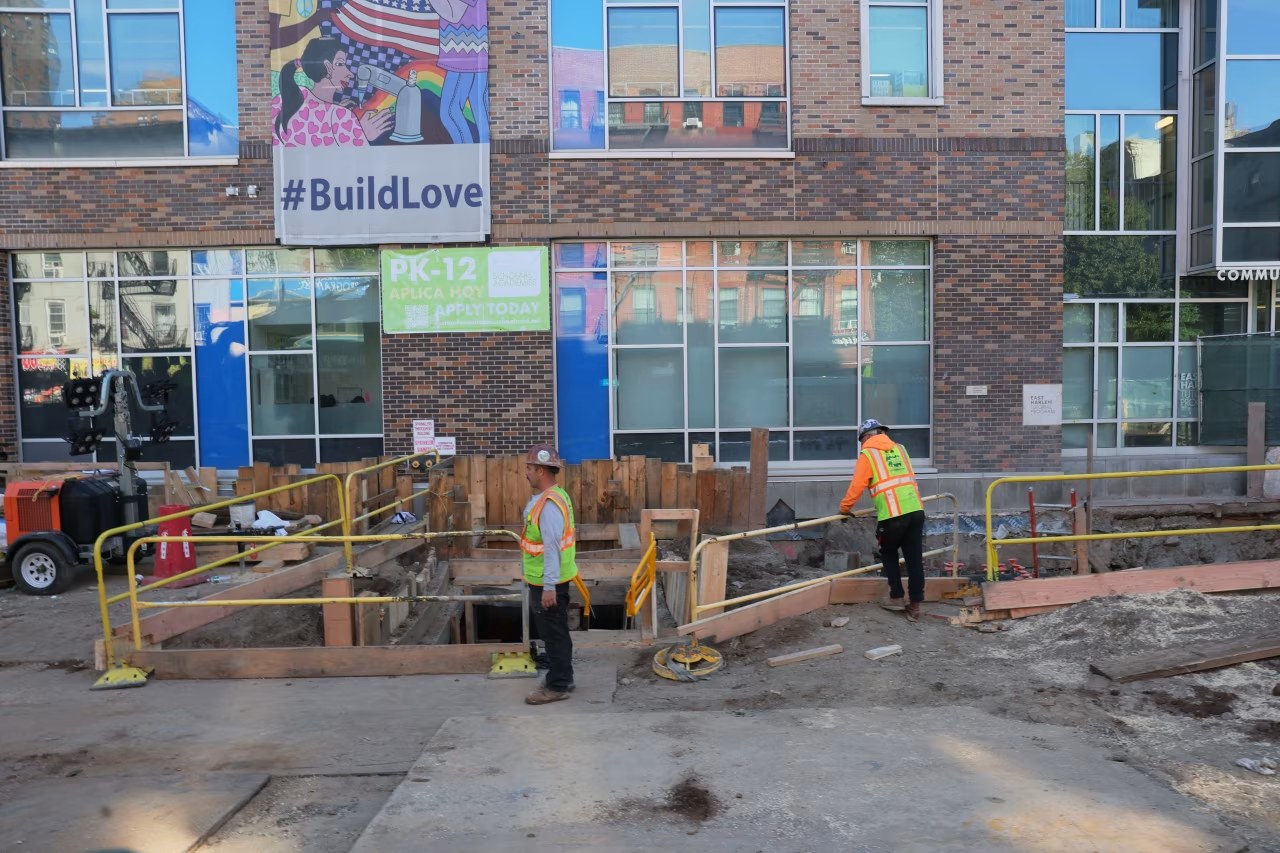
The suit, filed in the U.S. Court of Federal Claims, escalates a standoff that began when federal officials quietly froze the money earlier this year. Project contractors have already mobilized crews and equipment along Second Avenue in East Harlem, where three new stations are planned between 96th and 125th Streets. Any further delay, MTA officials warn, could inflate construction costs and push the 2029 revenue-service target into the next decade.
Legal specialists say the case tests whether a presidential administration can unilaterally claw back transit money that Congress has both appropriated and formally obligated to a specific project. A 2020 Government Accountability Office opinion found that once funds are obligated under a full-funding grant agreement, the executive branch lacks authority to rescind them without congressional approval.
What the Second Avenue Subway Expansion Is—and Why $58.6 Million Matters Now
The Second Avenue Subway is the most expensive linear mile of rail ever built in the United States. Phase 2, now under litigation, will extend the Q line 1.6 miles from 96th Street to 125th Street, adding stations at 106th, 116th, and 125th Streets. When complete, the line is projected to carry 200,000 weekday riders and shave up to 10 minutes off commutes for East Harlem residents who now pack the overcrowded Lexington Avenue express.
The $58.6 million in dispute is a small but strategic slice of the $3.8 billion federal commitment that underwrites the $6.9 billion total cost. The money pays for early-stage utility relocation, street decking, and a 950-foot tunnel boring machine launch box between 110th and 120th Streets. Contractors have already ordered long-lead items such as pre-cast tunnel liners; delaying cash flow exposes the MTA to liquidated-damages clauses that could add tens of millions in penalties, according to internal project-risk schedules reviewed by the agency’s inspector general.
Congress already signed off
Congressional appropriators inserted the funds in the 2022 omnibus spending bill and obligated them through a full-funding grant agreement signed by then-Federal Transit Administrator Nuria Fernandez on August 30, 2022. Once obligated, the money becomes what budget experts call a “legal liability” of the federal government. A 1990 Office of Legal Counsel memo, cited in the MTA’s complaint, states that refusal to disburse such funds constitutes a violation of the Antideficiency Act unless Congress rescinds the money.
“The question is not whether New York deserves the money; Congress already decided that,” said Jeff Davis, senior fellow at the Eno Center for Transportation. “The only lawful way to stop the grant is for Congress to pass a new rescission bill, which has not happened.”
The Trump administration has not publicly stated a rationale for the freeze, but MTA board members note that similar holds have been placed on California’s high-speed rail project and Seattle’s light-rail extension—both in Democratic-led states. The pattern, they argue, suggests a political motive rather than a technical review.
If the court rules for the MTA, the Department of Transportation must release the funds within 30 days and pay any interest accrued during the freeze. If the administration prevails, transit agencies nationwide could face a precedent allowing future grants to be claw back without congressional action, chilling long-term borrowing against promised federal dollars.
Inside the Lawsuit: How the MTA Claims Political Retaliation
The 28-page complaint filed in the Court of Federal Claims paints the funding freeze as part of a broader pattern of retaliatory actions against states whose elected officials have clashed with the White House. The suit cites the administration’s own public statements: at a March 6 campaign-style rally in Sarasota, the president vowed to “make Democratic-run cities pay for sanctuary policies,” singling out New York for special scrutiny.
Under the Administrative Procedure Act, agencies must base funding decisions on criteria articulated in statute or regulation, not political considerations. The MTA notes that the Federal Transit Administration’s last technical review of Phase 2, issued December 2025, rated the project “medium-high” for cost effectiveness and “medium-low” for risk—scores that historically trigger disbursement, not suspension.
Precedent in the Court of Federal Claims
Between 2019 and 2021 the same court ruled against the Trump administration three times when it withheld congressionally appropriated funds for border-wall environmental mitigation, California rail grants, and Ukraine security assistance. Each decision found that once Congress obligates money through a grant agreement, the executive branch lacks discretion to withhold it.
“The pattern is unmistakable: the administration is testing the boundaries of executive power over the power of the purse,” said Sarah Bloom Raskin, former deputy Treasury secretary and now a Duke Law lecturer. “The Court of Federal Claims has repeatedly said the president cannot substitute his priorities for Congress’s once funds are legally committed.”
The MTA is seeking a writ of mandamus compelling the DOT to release the $58.6 million plus statutory interest under the Prompt Payment Act, currently accruing at an annualized 5.2 percent. The agency also reserves the right to seek attorneys’ fees under the Equal Access to Justice Act if it prevails.
Discovery could force DOT officials to produce internal emails and memoranda that reveal whether political appointees overruled career staff who recommended disbursement. Such evidence proved pivotal in earlier cases, including the 2020 Ukraine aid hold that led to the first impeachment of Donald Trump.
Could This Case Redefine How Federal Transit Dollars Flow?
A ruling against the administration would reinforce existing precedent that obligated grants are binding contracts. Conversely, a ruling for DOT could create a new legal theory allowing the executive branch to suspend disbursements without congressional rescission, provided the agency cites a policy rationale—however thin—such as cost concerns or project risk.
Transit finance lawyers warn that even a narrow loss for the MTA could chill municipal bond markets. Agencies routinely pledge future federal grants as security for bond issues; uncertainty over disbursement timing would raise interest rates. Moody’s Investors Service already rates $2.4 billion of MTA transportation revenue bonds A3 with a negative outlook, citing “ongoing political risk from federal funding volatility.”
States watch closely
California’s High-Speed Rail Authority has $3.5 billion in federal grants under threat for similar reasons. Washington’s Sound Transit faces a $200 million hold on Federal Transit Administration funds for its Lynnwood extension. Both agencies filed amicus briefs supporting the MTA, arguing that a precedent allowing arbitrary freezes would “upend decades of reliance interests” and inflate borrowing costs nationwide.
“It’s not hyperbole to say this case could reshape how every transit agency finances megaprojects,” said Beth Osborne, director of Transportation for America, a Washington policy nonprofit. “If the administration can claw back money without Congress, every grant becomes contingent on the whims of whoever occupies the White House.”
The court has scheduled oral argument for September 2026, with a decision expected before the fiscal year ends. Meanwhile, the MTA has cash on hand to keep Phase 2 construction going through December, but officials say further delays would force re-bidding of tunneling contracts at 2027 price levels, adding an estimated $400 million to the project’s cost.
What Happens If the MTA Wins—or Loses?
Victory would compel the DOT to release the $58.6 million within 30 days and could expose the administration to additional claims. The MTA has signaled it will seek interest accrued during the freeze, currently about $2.3 million and climbing. A court order would also restore the grant’s status in FTA’s electronic grant-management system, allowing the agency to draw down reimbursements routinely submitted by contractors.
Defeat would not immediately halt construction; the MTA has front-loaded local funds to cover early work. But officials warn that without certainty on federal reimbursement schedules, the authority would have to defer contract packages for ventilation plants, traction-power substations, and track work—each delay cascading into higher future bids. Internal models show a six-month slip adds roughly $200 million in inflation and restart costs.
Bond-market ripple effects
Municipal-bond investors are pricing in tail-risk scenarios. Spreads on MTA transportation revenue bonds have widened 28 basis points since February, according to data from Refinitiv MMD, equivalent to about $8 million in additional annual interest for every $1 billion borrowed. If the court upholds the freeze, spreads could widen another 15–20 basis points, says analyst Natalie Cohen, former head of municipal research at Wells Fargo.
Conversely, a clear MTA win would likely tighten spreads not only for the authority but for other transit agencies that have pledged federal grants as bond-security. “The market is looking for a signal that grant agreements are enforceable contracts,” Cohen said. “A ruling for the MTA would restore investor confidence and save transit agencies nationwide hundreds of millions in interest costs.”
Whatever the outcome, both sides expect an appeal to the Federal Circuit, prolonging final resolution into 2027. For East Harlem residents who have waited since 1929 for a subway under Second Avenue, the stakes are measured in commutes, not just dollars.
Frequently Asked Questions
Q: Why did the MTA sue the Trump administration?
The MTA claims the Trump DOT illegally withheld $58.6 million already earmarked by Congress for the Second Avenue Subway extension, calling the freeze political retaliation against New York Democrats.
Q: What is the Second Avenue Subway expansion?
The project extends the Q line north from 96th Street to 125th Street, adding three new stations and easing crowding on the Lexington Avenue line.
Q: How much federal money is at stake?
The lawsuit centers on $58.6 million appropriated by Congress and obligated in a 2022 grant agreement, part of a larger $3.8 billion federal commitment to the $6.9 billion project.
Q: Where was the suit filed?
The MTA filed its breach-of-contract complaint in the U.S. Court of Federal Claims, the specialized tribunal for monetary claims against the federal government.
