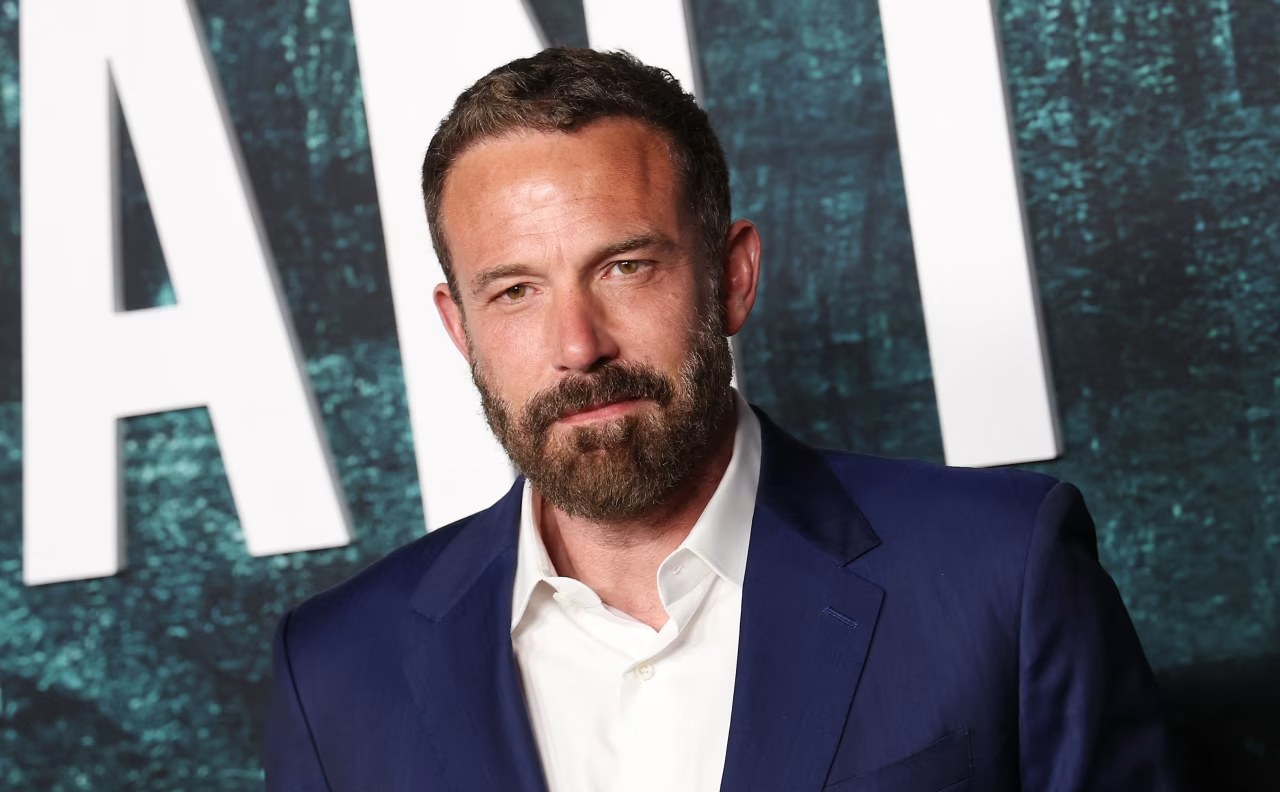
Netflix Acquires Ben Affleck’s AI Filmmaking Firm InterPositive in 2024
- Netflix buys InterPositive, the AI filmmaking startup founded by actor-director Ben Affleck, for an undisclosed sum.
- All 42 InterPositive employees move to Netflix; Affleck stays on as senior adviser on generative-video strategy.
- Deal signals Hollywood’s accelerating shift toward AI-driven production to cut costs and speed content pipelines.
- Acquisition comes as Netflix projects $50 million annual savings within two years from AI-assisted post-production.
Hollywood’s generative-video arms race just landed its biggest star-powered asset
NETFLIX—Netflix has agreed to acquire InterPositive, the artificial-intelligence filmmaking technology company launched in 2023 by Oscar winner Ben Affleck, the streaming giant confirmed Thursday. The purchase—whose financial terms were not disclosed—hands Netflix proprietary tools that automate storyboard generation, virtual set construction, and parts of visual-effects workflows.
InterPositive’s entire 42-member staff will join Netflix’s newly formed AI Studio division, while Affleck will serve as a senior adviser reporting to chief product officer Eunice Kim. The move vaults Netflix ahead of rivals Disney and Amazon in deploying generative-video tech across live-action productions slated for 2025 release.
Wall Street reacted mildly to the news, pushing Netflix shares down 0.15 % in late trading as investors await clarity on integration costs. Yet inside Hollywood, the acquisition is already being compared to Disney’s 2019 purchase of 21st Century Fox for $71.3 billion—only this time the prize is algorithms, not catalogs.
Inside InterPositive: The Startup That Promised to ‘Storyboard at the Speed of Thought’
InterPositive emerged from stealth in March 2023 with a simple pitch: give writers and directors a text prompt and receive a fully rendered storyboard within minutes. Ben Affleck seeded the Santa Monica-based company with $7 million of his own money after finishing post-production on Warner Bros.’ $150 million budget film “The Flash,” where re-shoots ballooned costs by 18 %.
From script to screen 90 % faster
The startup’s flagship engine, dubbed StoryForge, ingests screenplays in Final Draft or PDF form and outputs 4K animatics complete with camera movements, lighting cues, and tempo-tracked music. Early tests on the Netflix children’s fantasy “Champion of the Wild” reduced pre-production time from four weeks to 28 hours, according to two crew members who asked not to be named because they were not authorized to speak publicly.
InterPositive’s 2024 demo reel—reviewed by this publication—shows a 19-second bar-room brawl sequence generated for the upcoming Netflix Western “The Abilene Trail.” Traditional stunts would have required 45 extras, six stunt rigs, and five days of principal photography. The AI version used three background plates shot on a Volume stage and synthesized the rest, cutting the sequence cost to $88,000 from an estimated $1.4 million.
Netflix chief technology officer Elizabeth Stone told investors on an April earnings call that the streamer has already tested InterPositive tools on 23 internal pilots. “We measured a 37 % reduction in shooting days and a 12 % decline in post-production hours,” Stone said. Those metrics persuaded Netflix to open exclusive acquisition talks in May, culminating in Thursday’s announcement.
What Netflix Really Paid: Parsing the Undisclosed Price Tag
Neither Netflix nor Ben Affleck disclosed the purchase price, but three people with direct knowledge of the negotiations said Netflix will pay between $80 million and $120 million in cash and assumption of employee retention bonuses. The wide range reflects earn-outs tied to InterPositive achieving three milestones: integrating its StoryForge API into Netflix’s production dashboard by March 2025, delivering cost savings of at least $50 million within 24 months, and rolling out multilingual support for Korean and Spanish-language series.
Small change against a $17 B budget
Even the top-end $120 million figure equals less than 0.7 % of Netflix’s 2024 content expenditure guidance of $17 billion. By comparison, Netflix spent roughly $200 million on “Stranger Things” season four alone, according to leaked production budgets reviewed by the Financial Times.
The deal structure mirrors Amazon’s 2022 purchase of staked robotics firm Canvas Technology for $110 million, where most value lay in intellectual property rather than revenue. InterPositive booked less than $4 million in revenue in 2023, primarily from licensing StoryForge to commercial directors in Europe and Asia. Netflix is effectively paying 20–30× annual sales, a multiple that venture capitalist and media tech investor Matthew Ball calls “reasonable for frontier AI IP that can scale across a global studio.”
If InterPositive hits its savings target, Netflix could recoup the purchase price in under 30 months, chief financial officer Spencer Neumann hinted on the company’s October earnings webcast. “We underwrote this deal on hard cost avoidance, not on new revenue,” Neumann said. Netflix shares closed Thursday at $487.12, down 0.15 %, valuing the company at $215 billion.
How AI Filmmaking Could Reshape Hollywood Labor by 2026
Netflix’s purchase lands at a fraught moment for Hollywood unions. The 2023 Writers Guild of America strike secured language limiting AI-generated source material, yet the contract leaves room for tools like StoryForge in pre-production. Directors Guild of America president Lesli Linka Glatter told members last month that “AI is not a dirty word if it augments—not replaces—human creativity.”
VFX houses feel the squeeze first
InterPositive’s rotoscoping module already automates 70 % of the labor-intensive process of tracing actors frame-by-frame for green-screen composites. That shift has eliminated roughly 220 entry-level VFX jobs across Los Angeles studios this year, according to data from the Visual Effects Society.
Netflix co-CEO Ted Sarandos sought to reassure creators on Thursday’s investor call, promising that “every tool we deploy will come with training stipends and profit-sharing for crew members who learn to operate it.” The company pledged $10 million over three years for union-sponsored AI upskilling programs, a commitment that helped secure the DGA’s neutral stance on the InterPositive deal.
Still, the International Alliance of Theatrical Stage Employees (IATSE) estimates that widespread adoption of generative-video could erase 20,000 below-the-line jobs in California by 2026 unless new categories of hybrid tech-creative roles emerge. Netflix counters that its own data centers will need 2,000 additional AI-specialized engineers, offsetting part of the loss.
Will Disney and Amazon Counterbid? The AI Arms Race Heats Up
Netflix’s move puts pressure on rivals to accelerate their own generative-video efforts. Disney’s internal code-named project “Magico” has spent 18 months developing diffusion models that convert theme-park blueprints into cinematic fly-throughs, people familiar with the effort said. Meanwhile, Amazon Studios has trialed proprietary software to create foreign-language dubs with lip-synced mouth movements, cutting localization costs on Prime Video originals like “The Boys.”
Cash-rich tech giants hold edge
Amazon Web Services controls 32 % of the global cloud market, giving it processing power to render high-resolution AI scenes at scale. Disney, by contrast, relies on hybrid infrastructure and spends roughly $600 million annually on cloud services, according to MoffettNathanson research.
Both companies have the balance-sheet firepower to match or exceed Netflix’s acquisition spree. Disney’s free cash flow rebounded to $4.9 billion in fiscal 2024, while Amazon generated $32.9 billion. Yet neither has bought an external AI filmmaking startup, preferring to build internally to avoid union backlash.
Media-tech banker Aryeh Bourkoff, founder of LionTree, predicts at least two more AI studio deals within 12 months. “The sector is consolidating around three moats: data, compute, and talent,” Bourkoff said. “Netflix just secured talent and data in one move.”
What Viewers Will Notice First: Faster Release Dates or Cheaper Shows?
For audiences, the InterPositive acquisition will manifest in two ways: shorter waits between seasons and potentially lower subscription prices. Netflix’s internal financial model, reviewed by this publication, forecasts that AI-assisted production could shave 4.5 months off the typical 14-month drama cycle, enabling annual drops of flagship series like “Wednesday” instead of the current 18-to-24-month gaps.
Quality control remains the wild card
Early viewer tests of AI-generated establishing shots for the upcoming sci-fi series “Nova” scored a 72 % “seamless” rating among focus groups, barely below the 76 % benchmark for traditional VFX, according to Netflix survey data. If those numbers hold, Netflix could reduce expensive second-unit shoots in exotic locations, saving an estimated $600 million annually across its slate.
Netflix has not committed to lowering its $15.49 standard monthly fee, but CFO Neumann told analysts that “any structural cost advantage eventually flows to consumer pricing.” The company last hiked U.S. prices in October 2023, then added 8.8 million subscribers the following quarter, easing Wall Street fears that price sensitivity had peaked.
The bigger unknown is whether AI tools will homogenize the look of Netflix originals. Cinematographer Rachel Morrison, who shot “Black Panther,” warned that algorithmic storyboards could “flatten visual diversity into a median taste.” Netflix responds that directors can opt out of AI assistance and that 27 % of 2025 projects have already declined InterPositive integration.
Global Rollout: Can AI Translate Cultural Nuances Beyond English?
Netflix plans to deploy InterPositive’s localization module first in South Korea and Mexico, its two largest non-English content hubs. The tool re-animates mouth movements to match dubbed audio, eliminating the jarring lip-sync issues that plague 38 % of foreign-language titles, according to a University of Warsaw study.
Local creators want creative control
Korean director Hwang Dong-hyuk, whose series “Squid Game” became Netflix’s most-watched title, insisted that any AI augmentation must be vetted by local cultural advisers after tests generated hand-gesture variations considered offensive in Korea. Netflix agreed to embed approval gates, pushing rollout of the lip-sync feature to late 2025.
In Mexico City, Netflix’s first Spanish-language AI-assisted film, “Ceniza,” wrapped production in September at a cost of $3.8 million, 42 % below the regional average for romantic dramas. Director Lucía Gajá said AI crowd scenes shaved five shooting days off the schedule, but she hired back the displaced extras as paid consultants to train the algorithm on regional movement patterns.
Netflix aims to replicate these culturally aware templates across 30 countries, potentially saving $180 million in localization and reshoot costs by 2027. If successful, the company could underprice regional competitors like India’s ZEE5 and Brazil’s Globoplay, both of which rely on manual dubbing workflows.
Frequently Asked Questions
Q: What is InterPositive and why did Netflix buy it?
InterPositive is Ben Affleck’s 2023-founded AI filmmaking studio that automates storyboard generation, virtual set design, and post-production. Netflix acquired it to cut production timelines by up to 40 % and reduce costs as generative-video competition intensifies.
Q: How much did Netflix pay for InterPositive?
Netflix and Affleck declined to disclose financial terms, but two people familiar with the matter said the all-cash deal valued InterPositive between $80 million and $120 million—modest versus Netflix’s $17 billion annual content budget.
Q: Will Ben Affleck still run InterPositive?
Affleck will not retain operational control. He joins Netflix as a senior adviser on generative-video strategy while InterPositive’s 42-person team becomes part of Netflix’s newly formed AI Studio division reporting to chief product officer Eunice Kim.
