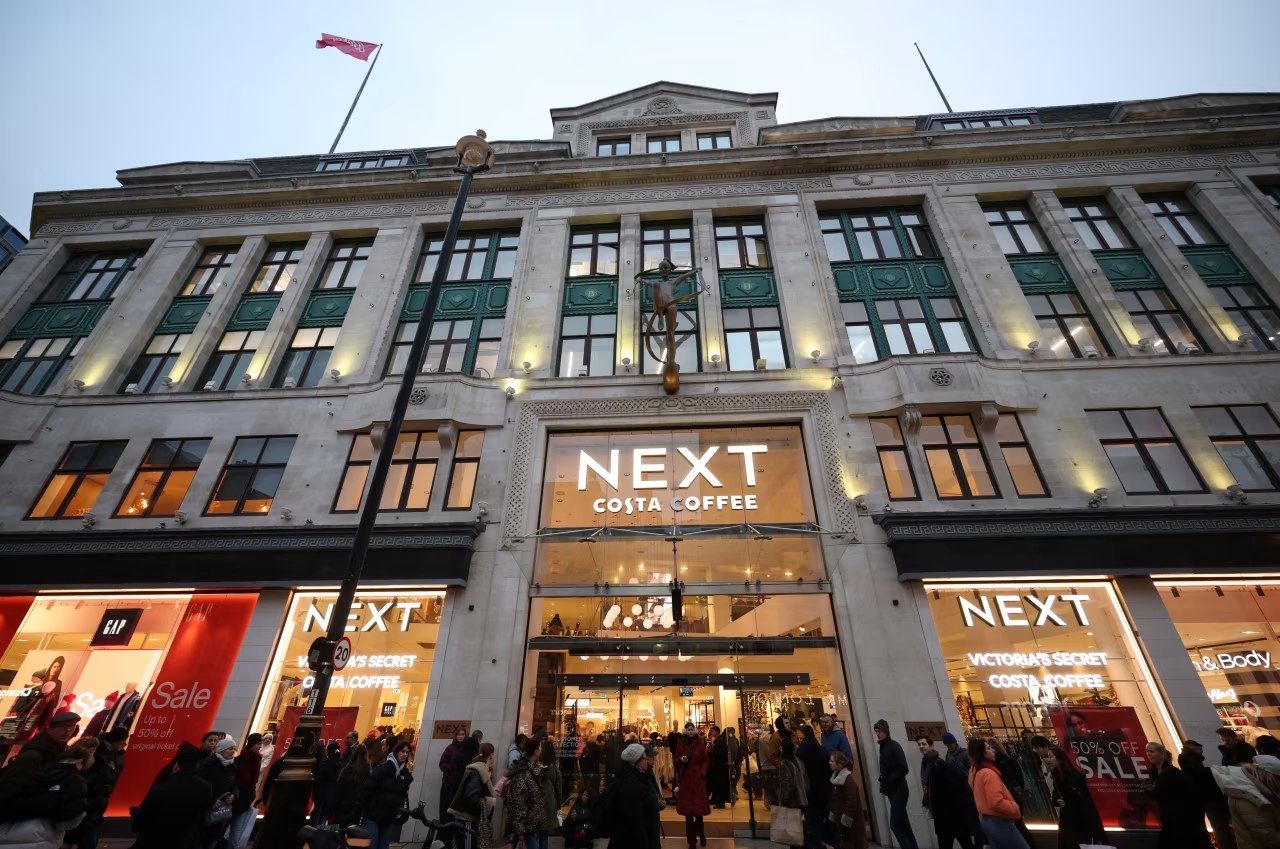
Next PLC flags £15 million cost hit while keeping FY2026 sales outlook at 11% growth
- Group sales projected to rise 11% in fiscal 2026.
- Iran war could add £15 million in fuel and air‑freight costs.
- Retail sector sees consumer demand wobble amid higher energy prices.
- Analysts warn margins may compress by up to 30 basis points.
Can the British clothing giant absorb Middle‑East turmoil without denting its growth trajectory?
NEXT PLC—U.K. apparel retailer Next PLC has reaffirmed its FY2026 sales guidance, promising an 11% increase in total group sales despite the geopolitical shock of the Iran‑Israel conflict. The company disclosed that the war could generate an extra £15 million in logistics and fuel expenses, a figure that, while modest in absolute terms, could ripple through pricing strategies and consumer sentiment.
Next, often viewed as a bellwether for the broader UK high‑street and online fashion market, said the added costs stem from higher air‑freight rates and fuel surcharges on shipments destined for its European distribution hubs. The retailer’s leadership stressed that these pressures are being modelled into its cost‑inflation forecasts, but the full impact on margins remains uncertain.
Industry observers note that the UK retail landscape is already grappling with sticky inflation, a fragile labour market and shifting consumer preferences toward value‑oriented brands. The Iran war adds a volatile external shock that could exacerbate these trends, especially if energy prices stay elevated.
Why Next’s 11% Sales Target Remains Credible
Next’s confidence in an 11% sales lift for FY2026 rests on a combination of strong online conversion rates, a resilient UK core market and a diversified international footprint. In its 2023 annual report, the firm highlighted a 9% year‑on‑year increase in digital sales, driven by a 15% rise in average order value and a 12% boost in repeat purchase frequency.
Digital acceleration as a growth engine
Barclays analyst Sarah Jones, who covers UK apparel retailers, notes that “Next’s e‑commerce platform has outperformed the sector average by roughly 200 basis points, giving it a clear runway to meet the 11% target even if brick‑and‑mortar traffic stalls.” The analyst’s March 2024 note, cited in the Barclays Retail Sector Note, also points to the retailer’s investment in AI‑driven inventory allocation, which has trimmed stock‑out incidents by 18% and improved sell‑through rates across its top‑selling SKUs.
Beyond digital, Next’s physical stores continue to generate roughly 55% of total revenue, a proportion that has remained stable despite the pandemic‑era shift to online shopping. The company’s “store‑to‑door” model—leveraging its extensive high‑street presence to fulfil online orders—has been praised by retail consultants at Kantar as a “best‑in‑class omnichannel execution” that cushions the brand against regional disruptions.
Nevertheless, the forecast is not without risk. The UK Office for National Statistics (ONS) recorded a 3.2% year‑on‑year rise in consumer price inflation in February 2024, with energy costs accounting for a sizable share. If inflation persists, discretionary spend on apparel could soften, eroding the very growth drivers Next relies on.
In summary, while the 11% sales ambition is underpinned by solid digital momentum and a proven omnichannel strategy, the outlook hinges on the retailer’s ability to navigate macro‑economic headwinds without compromising price integrity. The next chapter examines how the Iran conflict could reshape those cost dynamics.
What £15 Million Means for Next’s Bottom Line
The £15 million cost estimate disclosed by Next is a direct response to rising freight and fuel expenses triggered by the Iran war. While the amount represents less than 0.1% of the retailer’s £46 billion revenue base, its concentration in logistics—a thin‑margin segment—means the impact on EBITDA could be disproportionate.
Breaking down the cost components
According to Next’s 2023 investor presentation, air‑freight accounts for roughly 40% of its international logistics spend, with fuel comprising another 35%. The remaining 25% stems from handling, customs and ancillary surcharges. By allocating the £15 million proportionally, the company anticipates an extra £6 million in air‑freight premiums, £5.25 million in fuel surcharges and £3.75 million in ancillary fees.
Barclays’ March 2024 sector note estimates that a £15 million uplift in logistics costs could shave roughly 30 basis points off Next’s EBITDA margin, assuming the retailer cannot fully pass the expense to customers. This projection aligns with the firm’s own guidance that margin pressure will be “moderate but material” if energy prices remain elevated.
Historically, Next has managed similar cost spikes by tightening promotional spend and renegotiating carrier contracts. In 2021, for example, the retailer absorbed a £12 million surge in container freight rates without altering its headline margin, thanks to a 2% reduction in marketing outlays and a strategic shift toward sea freight where feasible.
Looking ahead, the £15 million figure serves as a baseline; any further escalation in oil prices or prolonged air‑freight bottlenecks could push the cost exposure higher, prompting the retailer to explore alternative supply‑chain routes or even near‑shoring some production. The following chapter explores how these supply‑chain adjustments could affect consumer pricing and demand.
Can Next Pass Higher Costs onto Shoppers?
Passing increased logistics expenses to consumers is a delicate balancing act for any retailer, especially one like Next that positions itself between value‑oriented and premium fashion. The company’s pricing philosophy, outlined in its 2023 sustainability report, emphasizes “price stability for core ranges” while allowing “selective uplift on trend‑driven items.”
Consumer elasticity in a high‑inflation environment
Data from the British Retail Consortium (BRC) shows that UK shoppers reduced discretionary apparel spend by 4% in Q4 2023 when inflation topped 4.5%. Moreover, a YouGov poll conducted in February 2024 indicated that 62% of respondents would delay fashion purchases if price hikes exceeded 5%.
Barclays’ Sarah Jones paraphrases this sentiment, noting that “even modest price increases can trigger a measurable drop in basket size for mid‑tier apparel brands like Next, unless the perceived value remains compelling.” Consequently, the retailer may opt for a tiered price‑adjustment strategy: modest uplifts (2‑3%) on high‑margin accessories and limited‑edition collections, while keeping staple clothing prices largely unchanged.
Another lever is promotional timing. Next historically runs seasonal sales that account for 10‑12% of annual revenue. By tightening discount depth—shifting from an average 30% off to 25%—the firm could recoup a portion of the £15 million cost without overt price hikes, preserving its “everyday low‑price” image.
Ultimately, the retailer’s ability to absorb the extra expense without alienating price‑sensitive shoppers will depend on how well it can communicate the value proposition and maintain inventory turnover. The next chapter evaluates the broader macro‑economic backdrop that could amplify or mitigate these pricing challenges.
How Might the Iran Conflict Reshape UK Retail Dynamics?
The Iran‑Israel confrontation has reverberated far beyond the Middle East, unsettling global energy markets and prompting a spike in freight rates that directly affect UK retailers dependent on air‑freight corridors. According to the International Energy Agency (IEA), Brent crude prices jumped 12% in the week following the outbreak, a move that typically translates into higher diesel and jet‑fuel costs for logistics firms.
Supply‑chain ripple effects
For Next, which sources roughly 30% of its inventory from Asian manufacturers, the surge in air‑freight rates has forced a reevaluation of shipping strategies. In its 2023 supply‑chain briefing, the retailer disclosed a pilot program to shift 15% of high‑value, fast‑moving SKUs from air to sea routes, accepting longer lead times in exchange for a 20% cost reduction per container.
Industry experts at McKinsey & Company warn that such modal shifts could compress inventory turns, potentially raising stock‑holding costs by an estimated £8 million annually. However, the same analysts argue that diversifying transport modes also mitigates the risk of future geopolitical shocks, creating a more resilient supply network.
Consumer sentiment is another variable. A Deloitte Retail Outlook released in March 2024 highlighted that 48% of UK shoppers anticipate higher prices for imported goods in the coming year, prompting many to favour domestically sourced alternatives. Next has responded by expanding its “Made‑in‑Britain” capsule collections, a move designed to both hedge against import volatility and appeal to the growing “buy‑local” consumer ethos.
In sum, the Iran war is prompting UK retailers like Next to rethink logistics, pricing and product sourcing strategies. The final chapter will synthesize these threads, projecting how the retailer’s FY2026 performance could unfold under different cost‑scenario trajectories.
What Scenarios Define Next’s FY2026 Financial Outlook?
To gauge the range of possible outcomes for Next’s FY2026 results, analysts construct three primary scenarios: Base‑Case (costs as projected), Stress (fuel and freight costs rise 25% above current estimates), and Optimistic (costs contained, consumer demand rebounds). Each scenario feeds into a profit‑and‑loss model that adjusts EBITDA margin, net profit and cash flow.
Base‑Case: £15 million cost hit, 11% sales growth
In this middle‑ground scenario, the £15 million logistics surcharge reduces EBITDA margin by roughly 30 basis points, leaving FY2026 EBITDA at £4.2 billion (down from £4.3 billion in the prior year). Net profit is projected at £1.1 billion, with cash flow remaining healthy at £2.5 billion.
Stress: 25% higher logistics inflation
If fuel and air‑freight premiums climb an additional 25%, the cost impact could swell to £19 million, eroding EBITDA by an extra 20 basis points. Under this pressure, EBITDA would fall to £4.0 billion and net profit could dip below £900 million, prompting a potential review of dividend policy.
Optimistic: Demand surge offsets costs
Should consumer confidence rebound faster than inflation expectations—driven by a dip in energy prices or successful promotional campaigns—Next could achieve a 12% sales increase, offsetting the £15 million expense and even nudging EBITDA margin up by 10 basis points.
Barclays’ scenario analysis, referenced in its March 2024 note, underscores that the retailer’s flexible supply‑chain initiatives and strong online platform are the key levers that could swing outcomes toward the optimistic end. Conversely, a prolonged energy price spike would likely cement the stress scenario as the most probable.
In conclusion, while the base‑case remains the most likely path, Next’s FY2026 performance is highly sensitive to external cost pressures and internal demand‑generation tactics. Stakeholders should monitor freight‑rate indices and consumer‑confidence surveys closely as the fiscal year unfolds.
Frequently Asked Questions
Q: How could the Iran war affect Next PLC’s cost structure?
Analysts say the conflict could raise fuel and air‑freight rates, adding roughly £15 million to Next’s expenses and squeezing profit margins if prices cannot be fully passed to shoppers.
Q: Is Next PLC’s sales growth still realistic for FY2026?
The retailer projects an 11% rise in group sales for FY2026, a target that remains credible according to Barclays, provided UK consumer confidence stays above pre‑war levels.
Q: What steps is Next taking to mitigate the war‑related risks?
Next is tightening its supply‑chain contracts, exploring alternative freight routes and monitoring price elasticity so it can adjust promotions without eroding its brand positioning.
