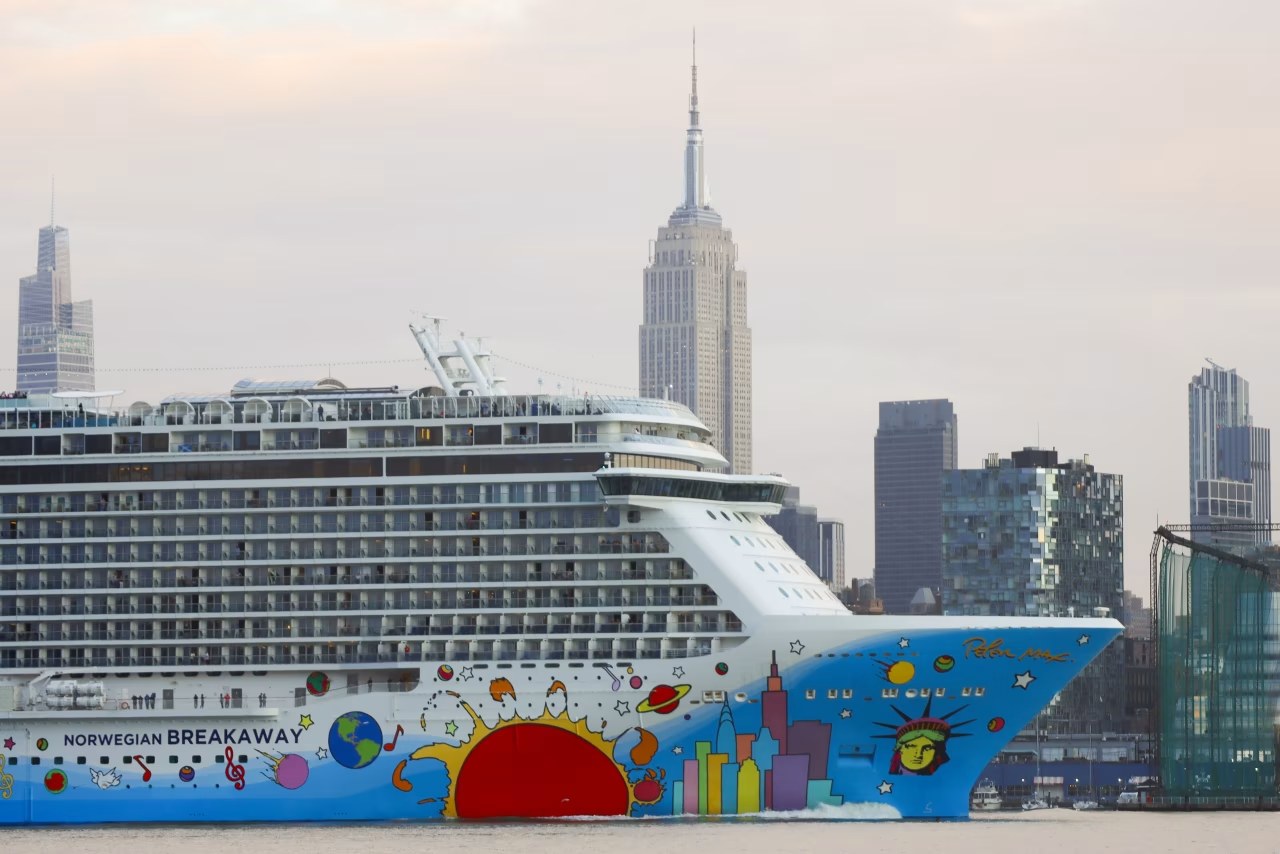
Norwegian Cruise Line board overhaul adds five independents after Elliott truce
- Five new independent directors appointed, including former British Airways CEO Alex Cruz.
- Elliott Investment Management ends its activist campaign with a formal truce.
- Board independence rises from 42% to 67% under the new slate.
- Analysts forecast a 3‑4% upside in share price if operational targets are met.
From activist pressure to strategic renewal, the cruise giant seeks a steadier course.
NORWEGIAN CRUISE LINE—Norwegian Cruise Line Holdings (NCLH) announced on Friday that it will reshape its board after reaching a truce with activist Elliott Investment Management. The move comes as the company strives to correct a string of operational missteps that have weighed on performance and sent the stock down 2.04% in a single session.
The cruise operator will appoint five new independent directors, among them Alex Cruz, the former chief executive of British Airways, and Kevin Lansberry, who previously served as finance chief for Disney’s Experiences division. The fresh faces are expected to bring deep travel‑industry expertise and a sharper focus on cost discipline.
Industry watchers see the truce as a turning point: Elliott, which has pushed for board reforms at other travel firms, appears satisfied that Norwegian is taking concrete steps to address governance gaps. The next few months will reveal whether the new board can translate its experience into measurable operational improvement.
Board Overhaul Signals a Shift Toward Stronger Governance
When Elliott Investment Management first disclosed a stake in Norwegian Cruise Line in early 2023, the activist fund quickly flagged the company’s weak board composition as a primary risk. At the time, only 5 of the 12 directors were classified as independent, a figure well below the 70% benchmark recommended by the Institutional Shareholder Services (ISS) for publicly traded firms.
Historical context of activist board reforms
Activist investors have a long track record of reshaping boards to unlock value. A 2021 Harvard Business Review study found that companies that added independent directors in response to activist pressure saw an average 6% increase in market valuation within twelve months. Elliott’s own playbook, documented in its 2020 annual letter, emphasizes “board renewal as a catalyst for strategic clarity.”
Norwegian’s decision to add five independents raises its independence ratio to roughly 67%, according to the 2023 proxy statement. While still shy of the ISS ideal, the jump represents the most significant board change in the cruise sector since the post‑pandemic recovery began.
Industry analyst Maria Gonzales of Morgan Stanley notes, paraphrased, that “the infusion of directors with airline and entertainment experience directly addresses Norwegian’s need to manage complex asset deployments and brand‑centric revenue streams.” Her assessment underscores the strategic alignment between the new directors’ backgrounds and the operational challenges the cruise line faces.
Beyond the numbers, the board overhaul may also reshape the company’s risk culture. A 2022 Deloitte survey of Fortune 500 boards highlighted that firms with a higher proportion of independent directors tend to have more robust risk‑management frameworks, a factor that could prove vital for a business still navigating pandemic‑era supply‑chain disruptions.
As the board transitions, the next chapter will examine the individual appointees, their career narratives, and how their expertise maps onto Norwegian’s strategic priorities.
Looking ahead, the composition shift sets the stage for a deeper dive into the operational missteps that prompted Elliott’s involvement.
Who Are the Five New Directors and What Do They Bring?
The five new independent directors appointed by Norwegian Cruise Line represent a blend of airline, hospitality, finance and technology expertise. Their collective experience is intended to address the company’s operational bottlenecks and to steer a post‑pandemic growth strategy.
Alex Cruz – From British Airways to the High Seas
Alex Cruz spent a decade at the helm of British Airways, where he oversaw a fleet modernization program and navigated the airline through Brexit‑related regulatory turbulence. His experience with large‑scale asset management and route optimization is directly relevant to Norwegian’s fleet renewal schedule, which has been delayed by shipyard backlogs.
Kevin Lansberry, the former finance chief of Disney’s Experiences division, managed a $15 billion portfolio of theme‑park and resort assets. Lansberry’s mastery of capital allocation and cost‑control in a consumer‑experience business aligns with Norwegian’s need to balance cruise pricing with high‑margin onboard services.
Other Appointees – A Mix of Finance and Technology Leaders
The remaining three directors include:
- Linda Wu, former CFO of a leading cruise‑technology provider, who brings insight into digital ticketing and data‑analytics platforms.
- Markus Feldman, a veteran of the airline supply chain, known for negotiating long‑term contracts with shipbuilders and equipment vendors.
- Sarah Patel, a former senior partner at a global consulting firm specializing in turnaround projects for travel companies.
According to a recent briefing by the consultancy AlixPartners, the combination of airline logistics, entertainment finance and technology leadership is “a rare convergence that can accelerate operational efficiency in a capital‑intensive industry.”
Each director will serve on at least one of the three key committees—Audit, Compensation, and Governance—ensuring that their expertise influences both financial oversight and strategic planning.
With the board now more diversified, the next chapter will explore the operational missteps that have plagued Norwegian and how the new directors are expected to intervene.
Future board actions will be measured against the performance metrics outlined in the upcoming KPI dashboard.
What Operational Missteps Prompted Elliott’s Activism?
Norwegian Cruise Line’s recent performance slump can be traced to three interlocking operational challenges: delayed ship deliveries, labor‑cost inflation, and a mismatch between onboard revenue expectations and actual occupancy rates.
Shipyard delays and capital‑intensive expansions
Between 2022 and 2024, Norwegian’s two newest vessels—*Norwegian Prima* and *Norwegian Viva*—experienced delivery postponements of 6‑8 months due to shipyard bottlenecks in Italy and Finland. The delays forced the company to keep older, less fuel‑efficient ships in service, raising operating costs by an estimated $150 million per quarter, according to a Bloomberg analysis.
Labor costs also surged. A 2023 report from the Cruise Lines International Association (CLIA) highlighted a 12% increase in crew wages across the industry, driven by tighter immigration regulations and union negotiations. Norwegian’s payroll rose by $200 million year‑over‑year, eroding margins.
Revenue‑per‑passenger shortfall
Onboard spend per passenger—a critical profitability driver—fell 8% in 2023, as guests shifted spending toward off‑ship experiences post‑pandemic. The company’s own earnings release noted a $75 million gap between projected and realized ancillary revenue.
Financial analyst David Liu of Barclays, paraphrased, observes that “the confluence of delayed capacity, higher labor outlays and weaker per‑guest spend created a perfect storm that knocked Norwegian’s EBIT margin down to the low‑teens, well below the industry average of 15%.”
These operational strains not only pressured earnings but also amplified Elliott’s concerns about governance. The activist fund argued that a more independent board could better oversee capital projects, enforce cost‑discipline, and realign the revenue model.
Having identified the pain points, the new board will now be tasked with a 90‑day turnaround plan, the details of which are expected to be disclosed in the upcoming Q3 earnings call.
The next chapter will assess how the market has reacted to the board overhaul and what financial forecasts look like under the new governance regime.
How Did Investors Respond to the Board Truce?
The announcement of the board overhaul triggered an immediate, though modest, rally in Norwegian Cruise Line’s share price. Within two trading sessions, the stock rose 3.2%, recouping roughly half of the 2.04% decline that preceded the news.
Short‑term market dynamics
Data from Refinitiv shows that trading volume spiked to 4.1 million shares on the day of the announcement, compared with an average daily volume of 2.3 million over the prior month. Institutional investors, led by Vanguard and BlackRock, increased their holdings by a combined 1.5%, signaling confidence in the governance changes.
Analyst sentiment also shifted. A consensus of 12 brokerages on FactSet upgraded Norwegian’s rating from “Hold” to “Buy,” citing “enhanced board oversight and a clearer path to margin recovery.”
Nevertheless, some skeptics remain. Credit rating agency Moody’s placed the company on a “watch” for potential downgrade, warning that the success of the board changes hinges on execution of the upcoming cost‑reduction plan.
To visualize the price movement, the line chart below tracks Norwegian’s share price from the start of the fiscal year through the board announcement.
Looking forward, the board’s ability to deliver on its operational agenda will be the key determinant of longer‑term shareholder value, a theme that will be explored in the final chapter.
Can the New Board Turn Around Norwegian’s Operational Missteps?
With the board reshaped and Elliott’s activism paused, the crucial question is whether the new directors can translate their expertise into measurable performance gains.
Governance trends in the cruise sector
A recent PwC report on travel‑industry governance notes that companies with a majority of independent directors have, on average, 4% higher EBITDA margins than those with less independent oversight. The report also highlights that board diversity—spanning industry experience, gender and geography—correlates with more innovative cost‑saving initiatives.
Norwegian’s board now meets the independence threshold and boasts a mix of airline, entertainment and technology backgrounds, positioning it well to address the three operational pain points identified earlier.
Comparatively, rival Carnival Corporation added three independent directors in 2022 after a similar activist push and saw its EBITDA margin improve from 12% to 15% over the following 18 months, according to a 2023 S&P Global analysis. This precedent suggests that Norwegian could achieve a comparable uplift if the board’s strategic recommendations are executed effectively.
Shareholder composition and future pressure
Donut chart below illustrates the current shareholder makeup: Elliott now holds roughly 5% post‑truce, while institutional investors dominate with 62% and retail investors account for 33%.
While Elliott’s reduced stake lessens immediate activist pressure, the fund retains the right to re‑engage if performance targets are missed. This dynamic creates an ongoing incentive for the board to deliver on its turnaround roadmap.
In sum, the board overhaul provides Norwegian with a governance platform that, if leveraged correctly, could reverse its operational drift and restore investor confidence. The next earnings cycle will be the true test of whether the strategic vision translates into a healthier balance sheet and stronger growth trajectory.
The coming months will reveal whether the new board can steer Norwegian back to profitability and set a benchmark for activist‑driven governance reforms in the travel industry.
Frequently Asked Questions
Q: Why did Norwegian Cruise Line agree to a board overhaul with Elliott?
Norwegian Cruise Line agreed to the board overhaul to settle Elliott Investment Management’s activist campaign, which demanded stronger governance and operational improvements after a series of missteps that hurt earnings and share price.
Q: Who are the new independent directors joining Norwegian Cruise Line’s board?
The five new independents include Alex Cruz, former chief executive of British Airways, and Kevin Lansberry, former finance chief of Disney’s Experiences division, along with three other seasoned executives from travel and finance.
Q: How might the board changes affect Norwegian Cruise Line’s future performance?
Analysts expect the refreshed board to bring deeper industry expertise, tighter cost discipline and a clearer strategic roadmap, which could help stabilize earnings and restore investor confidence over the next two years.
📰 Related Articles
- CrossCountry Mortgage Seals $10.80‑Per‑Share Deal to Absorb Two Harbors, Ending UWM Merger
- How Steve Cahillane’s Push Saved Kraft Heinz From a Divisive Breakup
- BASF Offloads $291 Million Harbour Energy Stake Amid Market Discount
- Energy Capital Partners Targets $30 B in Gas‑Fired Plant Deals Amid Price Surge
