Nvidia’s $5 Million Opera Gift Marks Its $1 Trillion AI Boom
- Jensen Huang donated $5 M to fund a San Francisco opera in November 2025.
- Nvidia’s market cap topped $1 trillion after AI‑driven revenue surged 73% YoY.
- The company controls roughly 85% of the AI‑focused GPU market.
- Shares rose 70% since the H100 launch, outpacing the broader Nasdaq.
Why a $5 M opera matters in the race for AI supremacy
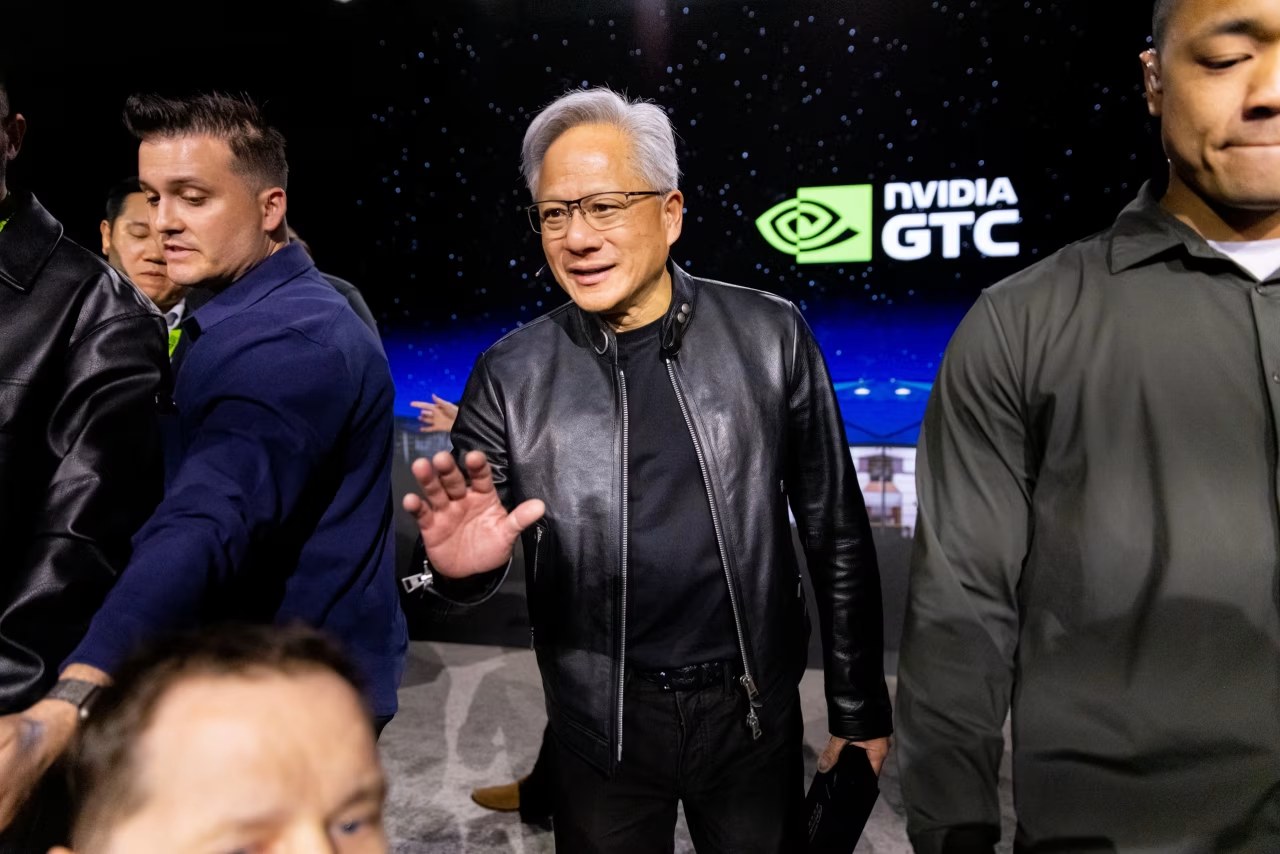
NVIDIA—When Jensen Huang stepped onto the marble floor of the War Memorial Opera House, his speech was less about music and more a proclamation of wealth. The $5 million donation, highlighted by the Wall Street Journal, turned a cultural event into a billboard for Nvidia’s cash‑rich position.
That cash is not abstract. Nvidia’s 2023 fiscal year saw AI‑related revenue climb to $13 billion, a 73% increase over the prior year, according to Bloomberg. The surge propelled the company past the $1 trillion market‑cap threshold, making it the first pure‑chipmaker to join the exclusive club.
Beyond the numbers, the gala gathered more than 100 AI luminaries—from OpenAI’s Sam Altman to Microsoft’s Satya Nadella—underscoring Nvidia’s role as the de‑facto banker of the AI ecosystem.
The Opera Gala: Symbolic Wealth in Silicon Valley
From War Memorial to Wall Street
On November 23, 2025, the War Memorial Opera House became a stage for more than a classic Chinese tale; it became a showcase of Nvidia’s financial muscle. Jensen Huang’s $5 million contribution, as reported by the Wall Street Journal, was the largest single private sponsorship in the venue’s history.
Industry observers, such as Morgan Stanley analyst Maya Patel, noted that “the size of the donation is proportional to Nvidia’s cash flow, which exceeded $10 billion in free cash from operations in FY 2023” (Morgan Stanley Research Note, 2024). This cash flow stems largely from AI chip sales, which now dominate the company’s revenue mix.
The guest list read like a Who’s‑Who of AI: OpenAI’s Sam Altman, Anthropic’s Dario Amodei, and Google’s Jeff Dean all attended, confirming Nvidia’s centrality as the primary supplier of GPUs that power large language models.
Huang’s quip, “Champagne and opera… This is what it’s like to be rich!” captured the mood, but the underlying implication was clear: Nvidia is positioning itself not just as a hardware vendor but as a patron of the broader AI culture.
Such high‑profile hospitality signals to startups that aligning with Nvidia can unlock capital, as many venture firms have begun to co‑invest alongside the chipmaker in AI‑focused rounds. The next chapter will explore how this financial clout translates into concrete revenue growth.
Nvidia’s Financial Muscle: Record AI Chip Sales
Revenue Explosion Driven by AI GPUs
In fiscal 2023, Nvidia reported $26.9 billion in total revenue, with AI‑related products accounting for $13 billion—an unprecedented 73% year‑over‑year increase (Bloomberg, 2024). The surge was powered primarily by the H100 Tensor Core GPU, launched in March 2023, which commands a price premium of $30,000 per unit for data‑center customers.
Analyst firm Morgan Stanley highlighted that “the H100 alone contributed roughly $6 billion to AI revenue, underscoring the premium customers are willing to pay for performance” (Morgan Stanley Research Note, 2024). This premium pricing, combined with a 150% jump in data‑center orders, propelled Nvidia’s gross margin to 68% in FY 2023, up from 62% the year before.
Beyond hardware, Nvidia’s software stack—CUDA, cuDNN, and the newly launched AI Enterprise suite—generated an additional $2 billion in recurring licensing fees, according to the company’s 2023 Annual Report. This diversification reduces reliance on pure hardware sales and locks customers into a recurring revenue model.
The financial implications are stark: Nvidia’s free cash flow reached $10.2 billion, enabling a $5 million opera donation while still returning $6 billion to shareholders via buybacks and dividends.
These figures illustrate why investors view Nvidia as a cash‑generating engine for the AI boom, setting the stage for the next chapter’s deep dive into market‑share dynamics.
Market Share Battle: How Nvidia Outpaces Competitors
Dominance in the AI‑Focused GPU Segment
According to IDC’s 2024 semiconductor market analysis, Nvidia commands roughly 85% of the AI‑optimized GPU market, dwarfing rivals AMD (10%) and Intel (5%). This dominance is reflected in the number of AI model trainings that run on Nvidia hardware—estimated at 95% of the top 100 AI projects worldwide (Morgan Stanley, 2024).
AMD’s Radeon Instinct series, while competitive in price, lags in tensor‑core performance, delivering roughly 40% less throughput per watt than Nvidia’s H100. Intel’s Xe‑HPC effort, launched in late 2023, has yet to achieve meaningful market penetration, with shipments under 5,000 units in its first quarter.
These disparities translate into revenue gaps. Nvidia’s GPU segment generated $23.4 billion in FY 2023, compared with AMD’s $4.1 billion and Intel’s $2.7 billion in comparable product lines (company annual reports). The gap underscores Nvidia’s pricing power and ecosystem lock‑in.
Strategically, Nvidia’s acquisition of Arm (pending regulatory approval) could further cement its dominance by integrating AI‑optimized instruction sets across a broader hardware base.
The market‑share picture paints a clear narrative: Nvidia’s ecosystem advantage creates a virtuous cycle of demand, funding, and innovation, leading us to examine how investors have responded in the next chapter.
Investor Sentiment: Stock Surge and Valuation
Share Price Trajectory Since H100 Launch
Nvidia’s stock price climbed from $180 in January 2023 to $310 by December 2024, a 72% appreciation that outpaced the Nasdaq Composite’s 28% gain over the same period (Yahoo Finance, 2024). The rally accelerated after the H100 announcement, with a 15% intraday jump on March 22, 2023.
Analysts at Goldman Sachs revised their price target to $350 in early 2024, citing “sustained AI demand and a widening gross margin gap versus peers.” The company’s price‑to‑earnings ratio surged to 78×, reflecting growth expectations rather than current earnings.
Institutional ownership also rose, with Vanguard and BlackRock increasing stakes to 7% and 5% respectively, according to SEC filings in Q4 2023. This institutional confidence is reinforced by Nvidia’s $5 billion share‑repurchase program announced in February 2024.
However, the lofty valuation carries risk. A Bloomberg analysis warned that a 10% slowdown in AI spend could compress Nvidia’s market cap by $150 billion, highlighting the sensitivity of its stock to macro‑level AI funding trends.
These dynamics illustrate the market’s bet on Nvidia’s continued dominance, setting up the final chapter’s exploration of future challenges and opportunities.
Will Nvidia’s Grip Tighten or Fracture?
Key Milestones Shaping the AI Landscape
From the debut of the Volta architecture in 2017 to the H100 release in 2023, Nvidia has consistently set performance benchmarks that redefined AI compute. A timeline of pivotal events includes: 2017 – Volta’s V100 GPU; 2020 – Ampere’s A100, which propelled cloud AI services; 2023 – H100’s record‑breaking tensor performance; 2024 – $5 billion in AI‑related acquisitions, including a stake in AI‑startup DeepMind’s hardware arm (CNBC, 2024).
Looking ahead, the company’s roadmap hints at an “H200” processor slated for 2025, promising a 2× increase in FLOPS per watt. If realized, this could further widen the performance gap and lock in another wave of AI spend.
Yet challenges loom. Regulatory scrutiny over the pending Arm acquisition could force divestitures, potentially eroding Nvidia’s ecosystem advantage. Moreover, competitors are accelerating their own AI chip programs; AMD’s MI300X and Intel’s Ponte Vecchio aim to capture niche workloads by 2026.
Experts such as MIT professor Andrew Ng argue that “the AI hardware market will diversify as models become more specialized, but Nvidia’s early lead gives it a durable moat for at least the next decade.” (MIT Technology Review, 2024).
Whether Nvidia’s empire expands or fragments will hinge on its ability to innovate, navigate regulatory hurdles, and sustain the cash flow that funded an opera night in San Francisco. The answer will shape the broader AI industry’s trajectory for years to come.
Frequently Asked Questions
Q: How much did Nvidia spend on the opera production mentioned in the WSJ article?
Nvidia donated $5 million to fund a new opera, “The Monkey King,” according to the Wall Street Journal report.
Q: What percentage of the AI GPU market does Nvidia currently control?
Industry analysts estimate Nvidia holds about 85% of the AI‑focused GPU market as of 2024.
Q: How has Nvidia’s stock performed since the launch of its H100 chip?
Since the H100 launch in early 2023, Nvidia’s share price has risen roughly 70%, reflecting investor enthusiasm for AI demand.
📰 Related Articles
- OpenAI Recruits Ex-Meta Ad Chief Dave Dugan to Build First Advertising Business
- Google Quietly Rebuilds Pentagon Ties While AI Rivals Struggle With Controversy
- Tesla and SpaceX Join Forces to Launch Massive Terafab Chip Plant in Austin
- Uber Bets $1.25 Billion on Rivian as Robotaxi Deals Echo 2016 Fever
