Brent Crude Hits $102.81 – Oil Price Surges Over $100 Amid Iran’s Drone Assaults
- Brent rose 2.6% to $102.81 per barrel on March 14.
- WTI climbed 3.1% to $91.25 per barrel in the same session.
- Iran’s drone interception in Fujairah sparked the price rally.
- U.S. allies rejected President Trump’s call to reopen the Strait of Hormuz.
Why a single drone strike can move a market that trades $2 trillion daily
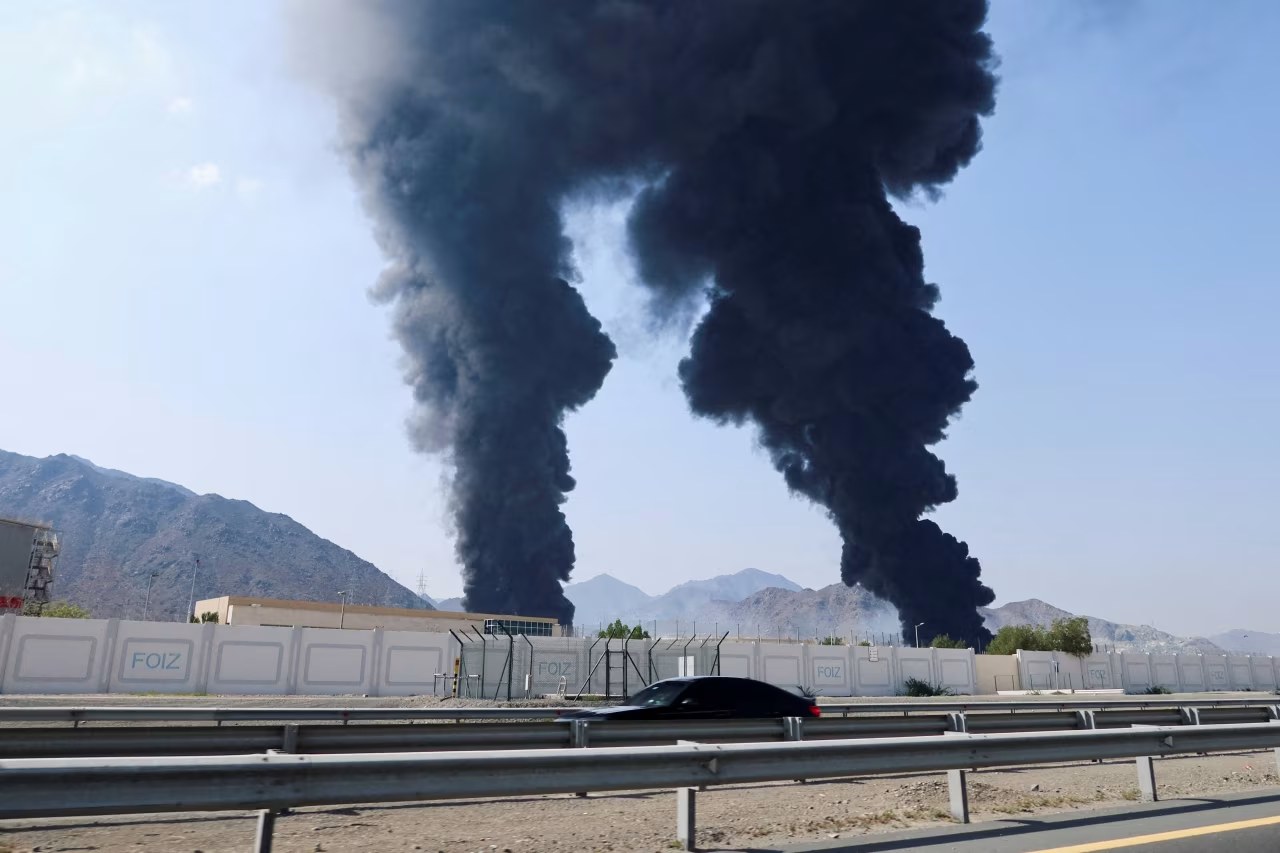
OIL PRICES—When a plume of smoke rose over the Fujairan oil‑industry zone on March 14, traders saw more than a local incident; they saw a potential choke‑point for global supplies. The Wall Street Journal reported that Brent crude, the global pricing benchmark, surged to $102.81, while the U.S. West Texas Intermediate (WTI) benchmark hit $91.25. Both moves reflected a 2.6% and 3.1% intraday gain respectively, the sharpest jumps in weeks.
The price spike came as Iran stepped up a campaign of drone‑borne attacks on pipelines, refineries and port facilities across the Middle East. The attacks coincided with a failed U.S. diplomatic push to reopen the Strait of Hormuz – the narrow waterway that ships roughly 20% of the world’s oil. With vessels temporarily rerouted and insurers hiking freight premiums, the market priced in a near‑term supply squeeze.
Analysts from Bloomberg warned that “the market is pricing in a near‑term supply squeeze that could shave 500,000 barrels per day from global availability.” That sentiment, combined with heightened geopolitical risk, set the stage for oil to breach the $100 barrier – a level not seen since early 2022.
Geopolitical Shockwaves: How Iran’s Drone Strikes Triggered a $100‑Plus Oil Rally
From Fujairah to Futures: The Chain Reaction
The March 14 drone interception in the United Arab Emirates’ Fujairah oil‑industry zone was captured on live feeds, showing debris raining down on storage tanks. Reuters identified the incident as part of a broader Iranian effort to target energy assets that support the global oil supply chain. Within minutes, European futures for Brent crude leapt 2.6% to $102.81 per barrel, while U.S. futures for West Texas Intermediate rose 3.1% to $91.25.
Market participants quickly recalibrated risk models. The CME Group’s CME DataMine reported a spike in open‑interest for contracts expiring in June, indicating that traders were hedging against a possible further tightening of supply. The spike was not isolated; Bloomberg’s Mark Delaney noted, “The market is pricing in a near‑term supply squeeze that could shave 500,000 barrels per day from global availability.” Delaney’s comment, published on March 14, reflects a consensus among commodity analysts that the attacks could temporarily reduce export capacity from the Gulf.
Beyond the immediate price reaction, the incident reignited debate over the resilience of the Strait of Hormuz. The strait, a 21‑mile-wide channel between Oman and Iran, moves an estimated 21 million barrels of oil daily. Historical data from the International Energy Agency (IEA) shows that any disruption—whether from conflict, piracy, or technical failures—typically adds a 1%‑2% premium to global oil benchmarks. In this case, the premium manifested as a $12‑plus per barrel uplift for Brent.
For oil‑producing nations, the rally presented a mixed bag. Saudi Arabia, the world’s largest exporter, saw its daily revenue surge by an estimated $1.2 billion in the first 24 hours after Brent crossed $100. Conversely, oil‑importing economies such as India and Japan faced higher import bills, prompting central banks to flag potential inflationary pressure. The ripple effects underscore how a single geopolitical flashpoint can reverberate through commodity markets, shipping routes, and national budgets.
Looking ahead, the volatility hinges on whether Iran escalates further or if diplomatic channels can de‑escalate. The next chapter examines what a sustained $100‑plus Brent price means for consumers and policymakers worldwide.
What Does a $100 Brent Mean for Global Consumers?
Fuel Costs, Inflation, and the Bottom Line for Households
When Brent climbs above $100, the effect is felt far beyond the trading floor. In the United States, the Energy Information Administration (EIA) estimates that a $10 rise in crude translates to roughly a 2‑cent increase per gallon of gasoline. With WTI at $91.25, the U.S. average pump price was projected to rise by $0.18 per gallon within a week, adding pressure to already tight household budgets.
In Europe, the impact is amplified by higher fuel taxes. The International Energy Agency’s chief economist, Fatih Birol, warned in a March 15 briefing, “Sustained $100‑plus Brent prices will push global inflation higher, especially in emerging markets that rely heavily on oil imports.” Birol’s assessment aligns with recent IMF data showing that oil‑price‑driven inflation contributed 0.4 percentage points to global consumer‑price growth in Q1 2024.
Developing economies are particularly vulnerable. India’s Ministry of Petroleum and Natural Gas projected that a $15 increase in Brent could raise the country’s import bill by $7 billion, potentially widening the fiscal deficit. Meanwhile, Japan’s Ministry of Finance warned that higher diesel costs could erode the profitability of its shipping sector, which accounts for 10% of national GDP.
Corporations are also adjusting. Major airlines such as Emirates and Lufthansa announced fuel‑surcharge adjustments, passing roughly $0.30 per passenger‑kilometer to customers. Shipping firms, meanwhile, have begun to negotiate higher bunker‑fuel contracts, a move that could raise freight rates by up to 5% on key trade lanes.
These dynamics illustrate that a $100‑plus Brent price is more than a headline—it reshapes cost structures across the globe. The following chapter maps the chronology of recent disruptions that have fueled this price environment.
When Will the Strait of Hormuz Reopen? A Timeline of Recent Disruptions
Chronology of Events That Have Shaken the Gulf
The Strait of Hormuz has been a flashpoint for decades, but the spring of 2024 saw an unprecedented cluster of incidents that rattled markets. Below is a concise timeline that captures the escalation leading up to the March 14 price surge.
• March 8 2024 – An Iranian‑launched missile struck a Saudi‑owned tanker near the strait, causing a temporary shutdown of the adjacent anchorage.
• March 11 2024 – Drone activity was reported over the Abu Dhabi‑controlled Al Dhafra airbase, prompting the UAE to temporarily halt offshore loading operations.
• March 13 2024 – Iran announced the deployment of additional “defensive” UAVs to protect its coastline, heightening concerns about collateral damage to commercial vessels.
• March 14 2024 – The Fujairah oil‑industry zone intercepted a drone, producing a visible plume of smoke and debris. The incident coincided with a sharp rise in Brent and WTI prices.
These events were catalogued by OPEC’s Secretary‑General Haitham Al Ghais in a press briefing on March 15, where he warned that “repeated disruptions to the Hormuz corridor could force the market to price in a permanent risk premium.” Al Ghais’s remarks underscore the strategic importance of the strait and the market’s sensitivity to any perceived threat.
Historically, each major disruption has been followed by a 1%‑3% price bump, as documented in a 2022 Bloomberg analysis of Gulf incidents. The current series of attacks, however, is unique in its speed and coordination, suggesting a more sustained impact on oil logistics.
Understanding this timeline is essential for investors and policymakers who must gauge how long the market may remain under pressure. The next chapter explores how U.S. allies are reacting to Tehran’s heightened aggression.
How Are U.S. Allies Responding to Tehran’s Escalation?
Diplomacy, Sanctions, and Naval Posturing
In the wake of Iran’s aggressive drone campaign, U.S. allies have taken a two‑pronged approach: diplomatic rebuke and military readiness. On March 14, the United Kingdom’s Foreign Office issued a statement condemning the attacks and pledged to increase naval patrols in the Gulf. The United Arab Emirates, meanwhile, announced a $500 million boost to its maritime security budget, aimed at bolstering radar and interception capabilities.
U.S. Energy Secretary Jennifer Granholm, speaking at a congressional hearing on March 15, asserted, “We will not allow coercive actions to destabilize global energy markets. The United States stands ready to protect the free flow of commerce through the Strait of Hormuz.” Granholm’s remarks were echoed by the NATO Secretary‑General, who called for a coordinated response among alliance members.
From an economic standpoint, the coordinated response has already manifested in market behavior. Bloomberg’s commodity desk noted a modest rise in U.S. shale output forecasts, with an estimated 300,000 barrels per day of additional production slated for the second quarter. Conversely, Saudi Arabia’s Ministry of Energy signaled a temporary cut of 200,000 barrels per day to preserve domestic inventories amid the heightened risk.
These production adjustments are captured in the comparison chart below, which juxtaposes the projected output changes of the United States and Saudi Arabia for the next two quarters. The data, sourced from the U.S. Energy Information Administration and Saudi Arabia’s Ministry of Energy, highlights how geopolitical shocks can quickly translate into strategic shifts in supply.
The allied response underscores a broader theme: while diplomatic avenues remain open, the specter of a prolonged closure of the Hormuz corridor forces both producers and consumers to hedge aggressively. The final chapter will assess whether these measures are enough to keep oil prices anchored above $100 or if further volatility is inevitable.
Will Oil Prices Stay Above $100 Amid Ongoing Tensions?
Analyst Outlooks and the Risk of a Prolonged Premium
Looking forward, the consensus among major banks and research houses is that Brent will likely hover near the $100 mark for the remainder of 2024, barring a dramatic de‑escalation or an unexpected supply shock elsewhere. Goldman Sachs’ senior commodities strategist, Michael Wilson, projected in a March 16 note, “We expect Brent to trade in a $95‑$105 range through year‑end, with upside risk tied to any further escalation in the Gulf.” Wilson’s forecast aligns with a Bloomberg survey of 12 analysts, where 8 predicted a sustained premium above $100.
The line chart below tracks Brent’s price trajectory over the past twelve weeks, illustrating the sharp spike in mid‑March and the subsequent stabilization around $101‑$103. The chart draws on daily closing prices from the CME Group, providing a clear visual of the market’s response to geopolitical headlines.
Beyond price, the broader macroeconomic implications are significant. The IMF’s World Economic Outlook, released on March 14, warned that “persistent high oil prices could push global inflation back toward 4% by year‑end, complicating central‑bank policy cycles.” For emerging markets, especially those with large current‑account deficits, the risk of capital outflows intensifies as debt‑service costs rise.
Policy makers are therefore walking a tightrope. The U.S. Treasury has signaled a willingness to impose additional sanctions on entities facilitating Iran’s drone program, while also urging a diplomatic corridor to keep the strait open. European Union officials have called for a joint maritime security framework, aiming to reduce the likelihood of accidental engagements.
In sum, the oil market’s near‑term trajectory will be shaped by three variables: the intensity of Iran’s attacks, the cohesion of allied diplomatic and military responses, and the flexibility of global supply to absorb shocks. Should any of these factors tip unfavorably, the $100‑plus price level could become the new normal rather than a temporary blip.
Frequently Asked Questions
Q: Why did Brent crude rise above $100 on March 14?
Brent jumped to $102.81 after Iran stepped up drone attacks on key infrastructure, tightening perceived supply and prompting traders to price in a short‑term shortage.
Q: How do attacks on the Strait of Hormuz affect global oil markets?
The strait carries roughly 20% of world oil trade; any disruption raises freight costs and forces buyers to seek alternative routes, driving benchmark prices higher.
Q: What are analysts forecasting for oil prices after the recent spikes?
Most analysts expect Brent to hover near $100 for the next 8‑12 weeks, with price swings tied to the intensity of Iran’s operations and diplomatic responses.
📰 Related Articles
📚 Sources & References
- Oil Holds Above $100 as Iran Escalates Attacks Against Key Infrastructure
- Iran’s Drone Campaign Sends Oil Prices Soaring, Bloomberg Reports
- IEA Warns of Inflationary Pressure from Higher Oil Prices
- OPEC Secretary‑General Haitham Al Ghais on Middle‑East Tensions
- Goldman Sachs Oil Outlook: $100‑Plus Brent Likely Through Year‑End
