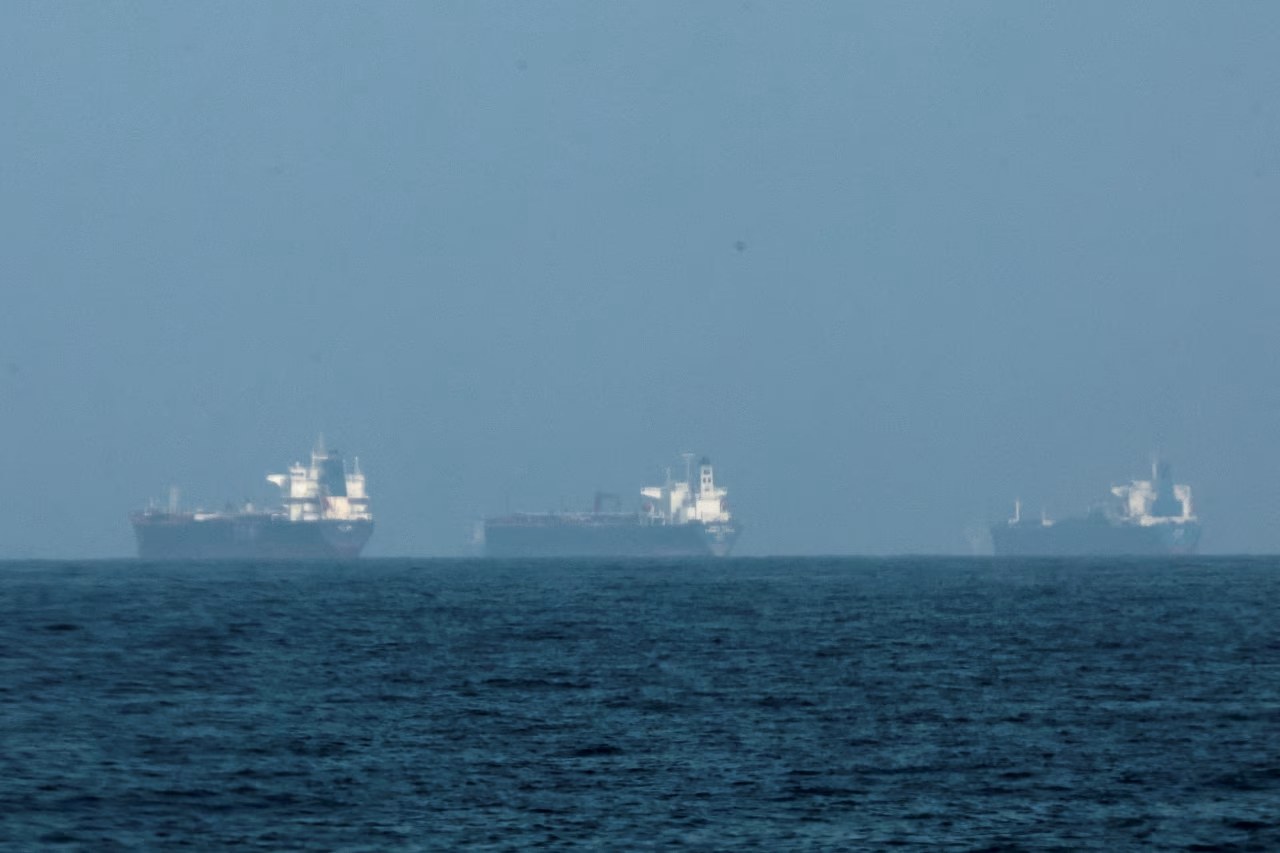
Oil Prices Surge 7% as Iran War Forces Closure of Strait of Hormuz
- Brent crude jumped 7% to $92 per barrel, the steepest rise in six months.
- U.S. S&P 500 fell 2.4%, marking its worst day since March 2022.
- Strait of Hormuz, handling ~20% of world oil, is effectively shut.
- Analysts warn of cascading effects on inflation and global growth.
Investors watch the Middle East flashpoint as energy markets wobble.
IRAN WAR—The widening war in the Middle East has forced a de facto closure of the Strait of Hormuz, the narrow waterway that ships roughly one‑fifth of the world’s oil. The disruption sent oil prices surging, with Brent crude climbing 7% to $92 a barrel within hours.
Higher energy costs immediately rippled through equity markets. The S&P 500 slipped 2.4%, while European and Asian indices each logged losses between 1.8% and 2.9%, extending a sell‑off that began earlier in the week.
For U.S. investors, the surge feels like a homecoming shock: a commodity shock that threatens to ignite broader convulsions across the world economy, from rising freight rates to higher consumer prices.
What Does a Closed Strait of Hormuz Mean for Global Oil Supply?
Since the early 2000s, the Strait of Hormuz has been a strategic chokepoint for crude exports from Saudi Arabia, Iran, the United Arab Emirates, and Kuwait. In 2023, the strait carried an estimated 21 million barrels per day, roughly 20% of global oil flow. The recent military escalation has effectively halted tanker traffic, creating an immediate supply shortfall.
Historical precedents and modern vulnerabilities
During the 2019 tanker attacks and the 2020 pandemic‑induced slowdown, temporary closures nudged Brent prices up by 3%–4% each time. The current closure, however, is more extensive because combat operations have rendered the waterway unsafe for commercial navigation, according to Reuters field reports.
Supply analysts at the International Energy Agency (IEA) estimate that a full‑scale shutdown could shave 1.5‑2 million barrels per day from the market, a gap that would need to be filled by strategic reserves and alternative routes such as the Cape of Good Hope, which adds 10‑12 days to voyage times.
The immediate effect is a price shock that reverberates through downstream markets. Refiners face higher feedstock costs, while airlines and logistics firms confront rising jet fuel and bunker fuel prices, eroding profit margins across sectors.
As the war drags on, the risk of a prolonged supply crunch grows, prompting central banks to monitor inflationary pressures more closely. The next chapter will explore how these price dynamics are already reshaping equity markets worldwide.
How Are Stock Markets Absorbing the Oil Shock?
Equity markets reacted within minutes of the oil price surge. The U.S. S&P 500 fell 2.4%, led by energy‑intensive sectors such as airlines, transportation, and chemicals. In Europe, the STOXX 600 dropped 2.1%, while Japan’s Nikkei 225 slipped 1.9%.
Sector‑by‑sector breakdown
Energy producers saw a modest gain, with ExxonMobil up 1.2% and Chevron rising 0.9%, reflecting higher revenue expectations. Conversely, consumer discretionary stocks like Amazon and Walmart fell 2.8% and 2.5% respectively, as analysts flagged higher logistics costs.
Financials were also hit hard. Banks with large exposure to oil‑linked loan portfolios recorded a 1.5% decline, as credit risk premiums widened. The ripple effect extended to emerging‑market indices, where Brazil’s Bovespa and South Africa’s FTSE AJI fell over 3% amid fears of imported inflation.
Market volatility, measured by the CBOE VIX, spiked to 28.4, the highest level since early 2022, indicating heightened investor anxiety. The surge also prompted a wave of stop‑loss orders, amplifying the sell‑off.Looking ahead, the durability of the equity decline will hinge on whether the Strait of Hormuz remains closed and how quickly oil inventories can be replenished. The next chapter examines the macro‑economic fallout of sustained high oil prices.
Will Inflation Accelerate as Energy Costs Rise?
Higher oil prices translate directly into consumer price pressures. The U.S. CPI, which includes energy at a 7% weight, is projected to rise an additional 0.4 percentage points this month, according to the Federal Reserve’s latest forecasts.
Global price transmission
In Europe, the Eurozone’s Harmonised Index of Consumer Prices (HICP) already reflects a 0.6‑point uptick in energy costs, pushing headline inflation toward 5.2%—the highest level in a decade. Asian economies, heavily reliant on imported oil, face similar upward pressure, with Japan’s core CPI expected to edge up to 3.8%.
Transport and logistics are the first channels of transmission. Freight rates on the Asia‑Europe route have risen 12% since the Hormuz closure, while airline fuel surcharges added $15‑$20 per ticket on trans‑Atlantic flights.
Policymakers now face a dilemma: tightening monetary policy to curb inflation could stifle growth already weakened by higher energy bills. Central banks in the UK and Canada have hinted at earlier rate hikes, while the Fed remains cautious, watching the oil market for signs of stabilization.
The inflation trajectory will shape consumer spending patterns, which in turn affect corporate earnings and stock valuations. The following chapter will trace the historical context of oil‑driven economic shocks.
Can Strategic Reserves and Alternative Routes Mitigate the Shock?
Governments possess strategic petroleum reserves (SPR) that can be tapped to ease short‑term supply gaps. The United States holds roughly 714 million barrels in its SPR, enough to cover about 30 days of domestic consumption.
Release plans and market response
Following the Hormuz closure, the U.S. Energy Department announced a release of 30 million barrels over the next 30 days, a move designed to cap price spikes. Historical data shows that SPR releases typically dampen price gains by 1%–2% per million barrels released.
European nations, lacking comparable reserves, are turning to alternative shipping lanes. The Cape of Good Hope route, while longer, can accommodate up to 3 million barrels per day, albeit at higher freight costs—estimated at $12 per barrel versus $4 on the Hormuz corridor.
China’s state‑owned enterprises are also stockpiling oil in inland terminals, creating a parallel buffer that could offset some demand pressure in Asian markets.
While these measures provide temporary relief, they are not a panacea. The scale of the Hormuz disruption—potentially cutting 1.5‑2 million barrels per day—exceeds the immediate capacity of reserves and alternative routes, suggesting that price volatility may persist.
Next, we explore the broader geopolitical ramifications of a prolonged Hormuz shutdown and what it means for future energy security strategies.
Is the World Heading Toward a New Energy Security Paradigm?
The de facto closure of the Strait of Hormuz has reignited debates about global energy security. For decades, policymakers assumed that the narrow waterway, despite its strategic importance, would remain reliably open.
Shifts in policy and investment
In the United States, the Department of Energy has accelerated funding for domestic shale projects, allocating $2 billion for enhanced oil recovery initiatives aimed at reducing reliance on Middle Eastern imports.
Europe, meanwhile, is fast‑tracking renewable energy targets. The European Commission announced an additional €15 billion in subsidies for offshore wind, hoping to lower the bloc’s oil import share from 30% to under 15% by 2030.
Asian economies are diversifying supply chains, investing in liquefied natural gas (LNG) terminals, and exploring strategic partnerships with African oil producers to create new trade corridors.
Strategically, nations are also revisiting naval escort policies. The U.S. Navy has increased carrier‑group deployments in the Gulf, while the United Kingdom has pledged to maintain a permanent maritime presence to safeguard commercial shipping.
These moves signal a transition from a single‑point dependency model to a multi‑layered security framework that blends domestic production, diversified import sources, and accelerated clean‑energy adoption. As the Hormuz situation evolves, the world’s energy architecture may never be the same.
With markets already feeling the strain, the next wave of policy decisions will determine whether the current surge in oil prices becomes a fleeting blip or a catalyst for lasting change.
Frequently Asked Questions
Q: Why are oil prices surging amid the Iran war?
Oil prices surge because the widening Iran war has forced a de facto closure of the Strait of Hormuz, a chokepoint that moves about 20% of global oil shipments, tightening supply and driving prices higher.
Q: How have global stock markets reacted to the oil price spike?
Global stock markets have fallen sharply as higher oil costs squeeze corporate margins, with major indices dropping between 1% and 3% on the day of the surge.
Q: What could a prolonged closure of the Strait of Hormuz mean for the world economy?
A prolonged closure could raise shipping costs, fuel inflation worldwide, and trigger a chain reaction of reduced consumer spending, potentially slowing growth in both emerging and developed economies.
