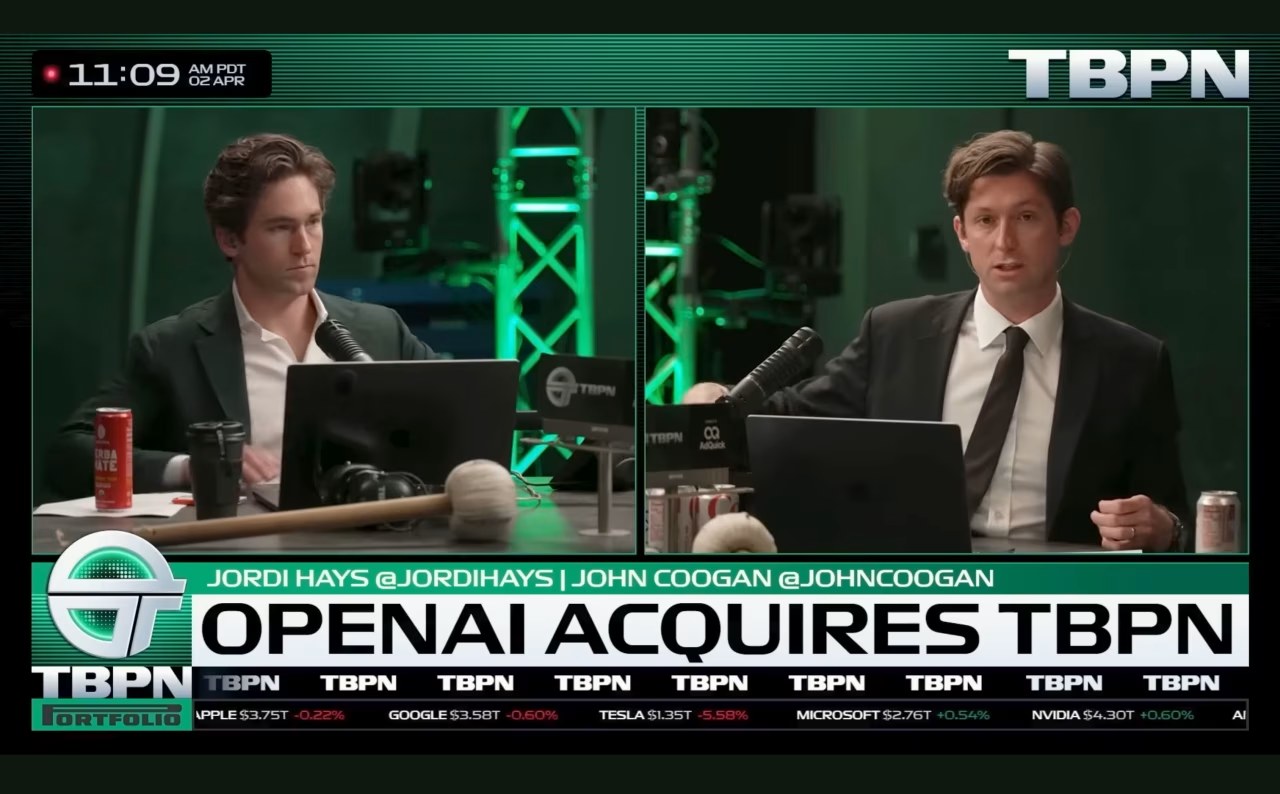
OpenAI’s Strategic TBPN Acquisition Marks a Pivotal Shift in Tech Media Influence
- OpenAI has strategically acquired ‘TBPN,’ a prominent online video show known as Silicon Valley’s ‘hottest news show.’
- A top OpenAI executive’s appearance on TBPN in December demonstrated the show’s unique ability to articulate the company’s message effectively.
- The acquisition signals OpenAI’s proactive effort to directly shape the public narrative surrounding its rapidly evolving artificial-intelligence models.
- This move represents a significant investment in content creation and distribution, moving beyond traditional PR strategies for a major AI developer.
As artificial intelligence reshapes industries and societies, the battle for public perception has intensified, leading OpenAI to make an unprecedented move to control its own story.
OPENAI—In a landscape increasingly defined by rapid technological advancements and intense scrutiny, OpenAI, a vanguard in artificial intelligence development, has executed a strategic maneuver that reverberates through both the tech world and the media industry. The company has moved to acquire ‘TBPN,’ an online video program celebrated in Silicon Valley as ‘tech’s hottest news show.’ This unexpected pivot from core AI development to media ownership underscores a growing imperative among leading technology firms: the direct control of public narrative in an era of unprecedented innovation and public debate.
The impetus for this significant OpenAI TBPN acquisition became notably apparent following a key event in December. A senior OpenAI executive made an appearance on ‘TBPN’ to discuss the launch of a new artificial-intelligence model. According to internal observations, the hosts of the online show displayed a profound grasp of the nuanced messages OpenAI was keen to disseminate globally, a testament to ‘TBPN’s’ unique communicative efficacy. This direct observation served as a potent catalyst, highlighting the show’s unparalleled capacity to translate complex technological advancements into digestible, impactful narratives.
For weeks leading up to this decisive move, the buzz within OpenAI’s leadership circles, particularly from its top new executive, centered on the compelling talk show. The recognition that ‘TBPN’ possessed an innate understanding of the company’s strategic communication objectives solidified the case for integration. This acquisition is not merely a diversification of assets but a calculated investment in influence and direct engagement, aiming to bypass traditional media intermediaries and directly shape public understanding of AI’s future.
The Strategic Calculus Behind OpenAI’s TBPN Acquisition
The decision by OpenAI to acquire ‘TBPN’ is far from a whimsical venture; it represents a meticulously calculated strategic calculus in the fiercely competitive and often misunderstood realm of artificial intelligence. At its core, the OpenAI TBPN acquisition is about narrative control and direct communication, a necessity for a company at the bleeding edge of a technology with profound societal implications. The company’s top new executive had been keenly observing the show’s impact, recognizing its unique ability to cut through the noise of Silicon Valley and convey intricate details about advanced AI models with clarity and resonance.Navigating the Complexities of AI Communication
In December, when a senior OpenAI executive appeared on ‘TBPN’ to unveil a new artificial-intelligence model, the interaction proved pivotal. The critical observation was that ‘the hosts understood the message OpenAI was trying to get out into the world.’ This seemingly simple statement carries immense weight, suggesting that ‘TBPN’ offered a rare platform where OpenAI felt its vision and technological advancements were accurately and effectively communicated. In an industry frequently grappling with misinterpretations, fear-mongering, and complex technical concepts, such a direct and understanding conduit becomes invaluable. Industry analysts often point to the difficulty in conveying the nuances of AI development to a broad audience, making specialized, trusted platforms like ‘TBPN’ highly desirable assets for companies like OpenAI. This strategic imperative to manage public perception is especially critical for developers of generative AI, which has seen both unprecedented adoption and significant ethical debates. For OpenAI, ensuring that its innovations—like new AI models—are presented in a balanced and informed manner can directly impact regulatory discussions, investor confidence, and public acceptance. The acquisition of ‘TBPN’ allows OpenAI to not only disseminate information but also to foster a community of informed discourse around its products and the broader future of AI. This is a clear move towards integrated content strategy, blending product announcements with genuine industry dialogue. By bringing ‘TBPN’ in-house, OpenAI is effectively securing a dedicated, high-quality channel for thought leadership and direct engagement. This approach minimizes the potential for misrepresentation that can sometimes occur through third-party media, giving the company an unprecedented level of editorial influence over how its story is told. Such a move aligns with a broader trend seen across tech giants who are increasingly investing in proprietary content and direct-to-consumer communication channels, underscoring the value of owning the narrative in a rapidly evolving technological landscape. The long-term implications of this strategy could redefine how major tech entities engage with their audiences, moving towards an era of integrated media and technology ecosystems.TBPN’s Rise: From Silicon Valley Buzz to AI Bellwether
Before the momentous OpenAI TBPN acquisition, the online video show carved out a significant niche, earning the moniker of ‘tech’s hottest news show’ within the hyper-competitive ecosystem of Silicon Valley. This ascent was not accidental but rather a product of an editorial approach that resonated deeply with its target audience: the tech cognoscenti, investors, and innovators who populate the industry. Its success stemmed from an ability to transcend superficial reporting, offering instead a depth of analysis and a nuanced understanding that was reportedly lacking in broader media outlets.The Appeal of Authentic Tech Journalism
What made ‘TBPN’ stand out in a crowded digital media landscape? Digital media analysts suggest that specialized, platform-native content often thrives by offering genuine insight and access that larger, more generalist publications may struggle to replicate. ‘TBPN’ likely excelled in providing precise, context-rich discussions around emerging technologies, attracting influential guests, and fostering a community of engaged viewers. Its format as an ‘online video show’ suggests a modern, accessible approach to content delivery, appealing to the visual and on-demand preferences of a tech-savvy audience. This kind of platform becomes especially critical for complex fields like AI. The ability of ‘TBPN’ hosts to understand and articulate ‘the message OpenAI was trying to get out into the world’ is a testament to their expertise and the trust they had cultivated within the industry. This trust is a potent currency in media, enabling deeper conversations and more effective dissemination of information, which is precisely what attracted OpenAI’s top new executive. The show’s credibility served as a powerful magnet, drawing not just viewers, but also the attention of the very companies it covered. In an environment where technical breakthroughs rapidly become mainstream topics, but often without adequate contextualization, ‘TBPN’ seemingly filled a crucial void. Its capacity to unpack the intricacies of a new artificial-intelligence model, as observed during the OpenAI executive’s December appearance, highlights its role as an educational and interpretive bridge. This function makes ‘TBPN’ more than just a news show; it positions it as a key influencer in shaping how cutting-edge technology is perceived and understood by critical stakeholders. The insights gleaned from TBPN’s success could well inform future models of specialized media, particularly as more niche, high-impact technologies emerge.Shaping the Narrative: What Does OpenAI’s TBPN Acquisition Mean for AI’s Future?
The OpenAI TBPN acquisition represents a significant escalation in the battle for narrative control within the artificial intelligence sector, a domain ripe with both promise and peril. For a company like OpenAI, whose advancements in generative AI are constantly pushing societal boundaries, the ability to directly frame public discourse is paramount. This strategic move allows OpenAI to preemptively address concerns, clarify technical complexities, and ensure a consistent message about its new artificial-intelligence models, as observed during the December broadcast.Beyond Traditional Public Relations
Historically, technology companies have relied on traditional public relations firms and media outreach to convey their messages. However, the rapidly evolving nature of AI, coupled with a skeptical public and regulatory bodies, necessitates a more direct and unmediated approach. The insight gained from the OpenAI executive’s experience on ‘TBPN’ – that ‘the hosts understood the message OpenAI was trying to get out into the world’ – underscores a critical need for channels that not only report but also deeply comprehend and contextualize AI developments. This acquisition moves OpenAI beyond mere PR to becoming a content producer with inherent editorial influence. In a competitive landscape dominated by tech giants like Google, Microsoft, and Meta, all heavily investing in AI, the control over public perception can be a decisive differentiator. While other companies often host their own blogs or conferences, owning a respected, independent-leaning media platform like ‘TBPN’ offers a unique advantage. It enables a more organic, interview-driven format that feels less corporate and more journalistic, even under corporate ownership. This strategic leverage is particularly crucial as OpenAI continues to release increasingly sophisticated AI models, each with its own set of technical details and ethical considerations that require careful communication. AI ethicists and communication experts have long highlighted the importance of transparency and responsible discourse in AI development. By taking charge of a media outlet, OpenAI can directly foster these conversations, albeit with the inherent tension of being both the subject and the platform. This model could set a precedent for how other major AI players engage with the public, potentially leading to a fragmentation of tech journalism where each major player cultivates its own media ecosystem. The implications for independent reporting and the diversity of voices discussing AI are profound, prompting questions about the future landscape of tech media.The Blurred Lines: When AI Developers Become Media Owners
The acquisition of ‘TBPN’ by OpenAI inevitably blurs the traditional lines separating technology developers from independent media entities, sparking a critical discussion about journalistic integrity and editorial autonomy. When a company, particularly one as influential and scrutinized as OpenAI, takes ownership of a platform lauded as ‘tech’s hottest news show,’ it introduces a complex dynamic. This new paradigm raises questions about how the public will perceive the objectivity of information emanating from a source now directly controlled by a subject of its own reporting.Challenges to Journalistic Independence
Journalism ethics professors often emphasize the importance of an independent press to hold powerful entities accountable. The OpenAI TBPN acquisition challenges this principle by creating an inherent potential for conflict of interest. While OpenAI may pledge editorial independence, the very act of ownership can cast a shadow of doubt. Viewers might question whether critical stories about OpenAI or its competitors will receive the same scrutiny as they would from a truly independent outlet. This is not to suggest malintent, but rather to acknowledge the structural pressures that can arise when a corporate parent oversees a news operation. Historically, examples of corporate ownership of media outlets have shown varying degrees of success and controversy. Some parent companies maintain strict firewalls, while others exert more subtle influence. For ‘TBPN,’ a show praised for its insightful discussions of new artificial-intelligence models, its credibility was built on a perceived impartiality and deep understanding of the tech ecosystem. Maintaining this credibility under OpenAI’s ownership will be a significant test for both the acquired show and its new parent company, particularly given the intense public interest in AI ethics and safety. The precedent set by the OpenAI TBPN acquisition could reshape the landscape of specialized tech journalism. Instead of a diverse ecosystem of independent voices, we might see more tech giants acquiring or creating their own media channels, leading to a more fragmented and potentially less critical media environment. This trend could particularly impact how nuanced debates around AI governance, bias in algorithms, and the broader societal implications of AI are presented to the public. The delicate balance between a company’s need for direct communication and the public’s right to unbiased information is now squarely in the spotlight, necessitating careful consideration of transparency and journalistic standards in this new era.Beyond the Headlines: What OpenAI’s TBPN Acquisition Signals for the Future of AI Communication
The reverberations of the OpenAI TBPN acquisition are likely to extend far beyond the immediate headlines, signaling a transformative shift in how artificial intelligence companies communicate with the world. This bold move by OpenAI, to acquire ‘tech’s hottest news show,’ suggests a future where direct-to-audience communication becomes not just a preference but a strategic imperative for organizations at the forefront of technological advancement. The company’s top new executive clearly saw the value in a platform capable of authentically conveying messages about new artificial-intelligence models.The Rise of Integrated Content Ecosystems
Futurologists and tech prognosticators foresee an era where traditional distinctions between content creators, distributors, and technology developers continue to dissolve. The OpenAI TBPN acquisition exemplifies this trend, showcasing a future where leading tech firms cultivate integrated content ecosystems. These ecosystems will not only disseminate information but also facilitate interactive dialogues, educational content, and perhaps even AI-generated news segments, all under the direct purview of the technology developer. This could lead to highly personalized and immersive media experiences tailored to specific audience segments. This strategy is particularly potent for AI, a field that demands continuous education and explanation to a public that is often both fascinated and apprehensive. By owning a platform like ‘TBPN,’ OpenAI gains the agility to respond to breaking developments, correct misinformation in real-time, and host in-depth discussions with its researchers and thought leaders. The effective communication observed in December, when ‘the hosts understood the message OpenAI was trying to get out into the world,’ highlights the power of this direct engagement to shape understanding and build trust in a complex, rapidly evolving domain. Looking forward, this acquisition could inspire a new wave of media consolidation where specialized news outlets become targets for the very industries they cover. The implications for the diversity of perspectives on AI are significant, raising the stakes for truly independent journalism to continue offering critical, unbiased analysis. Ultimately, the OpenAI TBPN acquisition is a harbinger of a future where influence is directly tied to the ability to control and craft one’s own narrative, pushing the boundaries of corporate communication and media ownership in the digital age.Frequently Asked Questions
Q: What is the significance of OpenAI’s TBPN acquisition?
OpenAI’s TBPN acquisition represents a strategic shift for the leading AI developer, aiming to gain direct control over its public messaging and shape the narrative surrounding artificial intelligence. This move allows OpenAI to communicate directly with a tech-savvy audience, bypassing traditional media filters, and ensures its key messages about new AI models are understood effectively by Silicon Valley.
Q: How does OpenAI’s TBPN acquisition impact tech journalism?
The OpenAI TBPN acquisition blurs the lines between AI developers and independent media, raising questions about journalistic autonomy and editorial independence. While providing a direct conduit for company news, it also establishes a precedent where tech giants might increasingly own the platforms that report on them, potentially influencing the broader landscape of tech journalism and public discourse on AI ethics and development.
Q: What motivated OpenAI to acquire ‘TBPN’?
OpenAI was motivated by ‘TBPN”s demonstrated ability to effectively convey its complex messages about new AI model releases to a crucial audience. An OpenAI executive’s positive experience on the online video show in December highlighted the hosts’ deep understanding of the company’s communication goals, making the OpenAI TBPN acquisition a clear move to leverage an established, influential platform for strategic narrative control.
